

Year-long IDF closure said to bolster settler violence by only barring Palestinians’ allies
Closed military zone imposed near Duma for a full year, a longer-than-normal move that critics say is not being enforced against settlers, letting them assault villagers while activists are kept away
 Add ToI as a Preferred Source on Google
Nurit Yohanan is The Times of Israel's Palestinian and Arab world correspondent
In early April, Thaabet Maslam was attacked by Israeli settlers while outside his home with three others in the small hamlet of Khirbet al-Marajim, about halfway between Jerusalem and Nablus.
In security camera footage, Maslam can be seen standing with his phone out, attempting to film three men who had arrived there, one of whom is armed with a gun. When the armed settler snatches the phone away, Maslam grabs it back and a minor scuffle ensues, with both sides swinging sticks at each other for a few seconds. The man with a gun points it at the Palestinians and then quickly retreats with his two companions.
The IDF responded to the incident, saying that “a report was received of Israeli civilians who attacked Palestinians in the area. A local security coordinator – Ravshatz – who was nearby was dispatched and conducted a search, but found no evidence.”
In terms of settler violence, the incident is relatively tame, especially as compared to the severe beatings, arson attacks and deadly shootings carried out by Israelis against Palestinians in the West Bank, which have grown more numerous and brazen in recent months.
But unlike other violent encounters, the one involving Maslam took place in an area the Israel Defense Force had declared a closed military zone, meaning entry is prohibited to anyone other than soldiers or residents.
Ostensibly designed to prevent friction between Palestinians and Israelis, critics say the entry bans are often selectively enforced against Israeli activists seeking to protect locals from violent settlers, leaving Palestinians exposed to continued harassment and worse. According to Palestinians and activists, the situation has already prompted dozens of families to leave the area.
“Settlers are allowed to enter the military zone, but activists are not,” Maslam told The Times of Israel.
Yesterday in Marajam near Duma, settlers ATTACKED Palestinians inside a closed military zone ????
It was proclaimed by the Army on Monday but enforced only ob activists, while settlers keep herding their cattle near the Palestinian homes, harassing and attacking them. pic.twitter.com/DMx6iINkhM
— Herd of Justice (@JustHerds) April 9, 2026
Closed military zone orders are generally issued on an ad-hoc basis, and usually for a limited period of time. In the case of the closed zone around Khirbet al-Marajim, just south of the Palestinian town of Duma, the order has been in place since March, and earlier this month the army made the unusual move of extending it until April 2027.
The IDF said in response that a closed military zone order had been imposed in the area of the village of Duma due to a high number of friction incidents and repeated disturbances in the area.
The statement added that, “As a rule, the IDF enforces the closed military zone order equally against anyone who violates it. The purpose of the enforcement is to maintain order and prevent friction in the area.”
Escalating violence
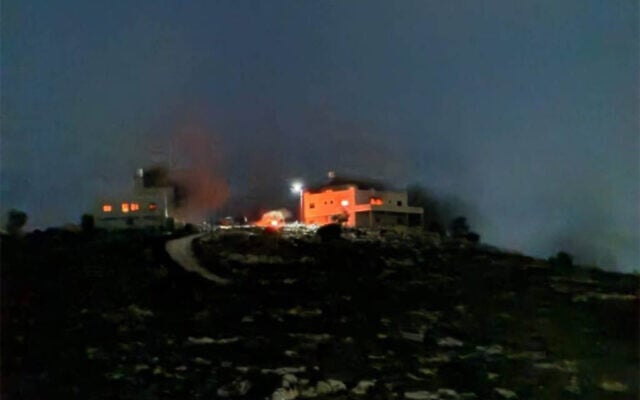
A collection of fewer than a dozen ramshackle homes, animal pens and other structures on a scrubby hillside, Khirbet al-Marajim is one of several mostly Bedouin communities near Duma that have come under increasing attack from nearby settlers.
The hamlets, home to some 200 people, are situated in the West Bank’s Area C, where Israeli civil and security authorities have full jurisdiction. In recent years, activists say, settlers intent on expanding their reach have increasingly sought to drive Palestinians from Area C through a campaign of harassment and violence. The crusade has already resulted in the depopulation of nearly 60 small herding communities like Khirbet al-Marajim, according to Israeli NGO B’Tselem.
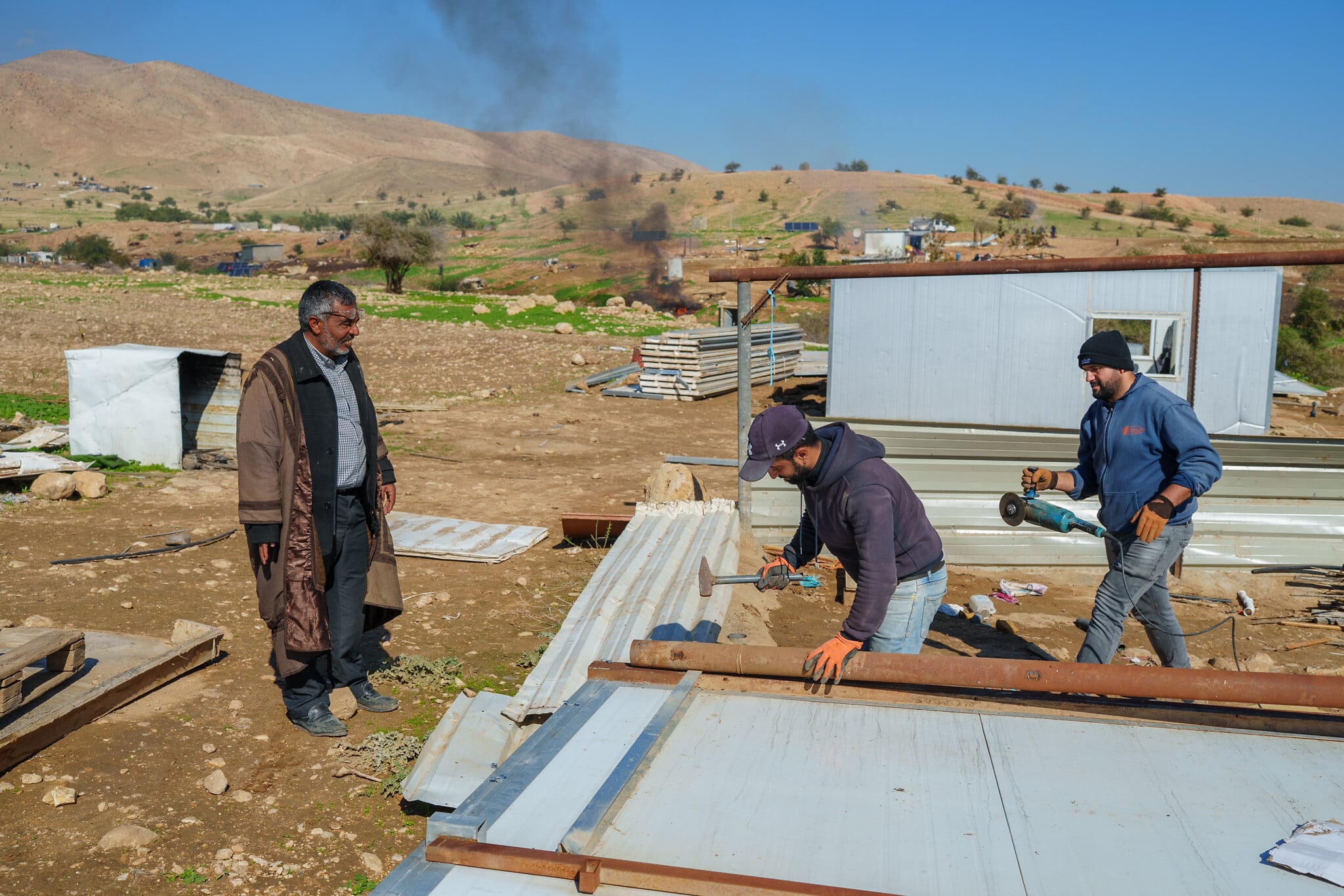
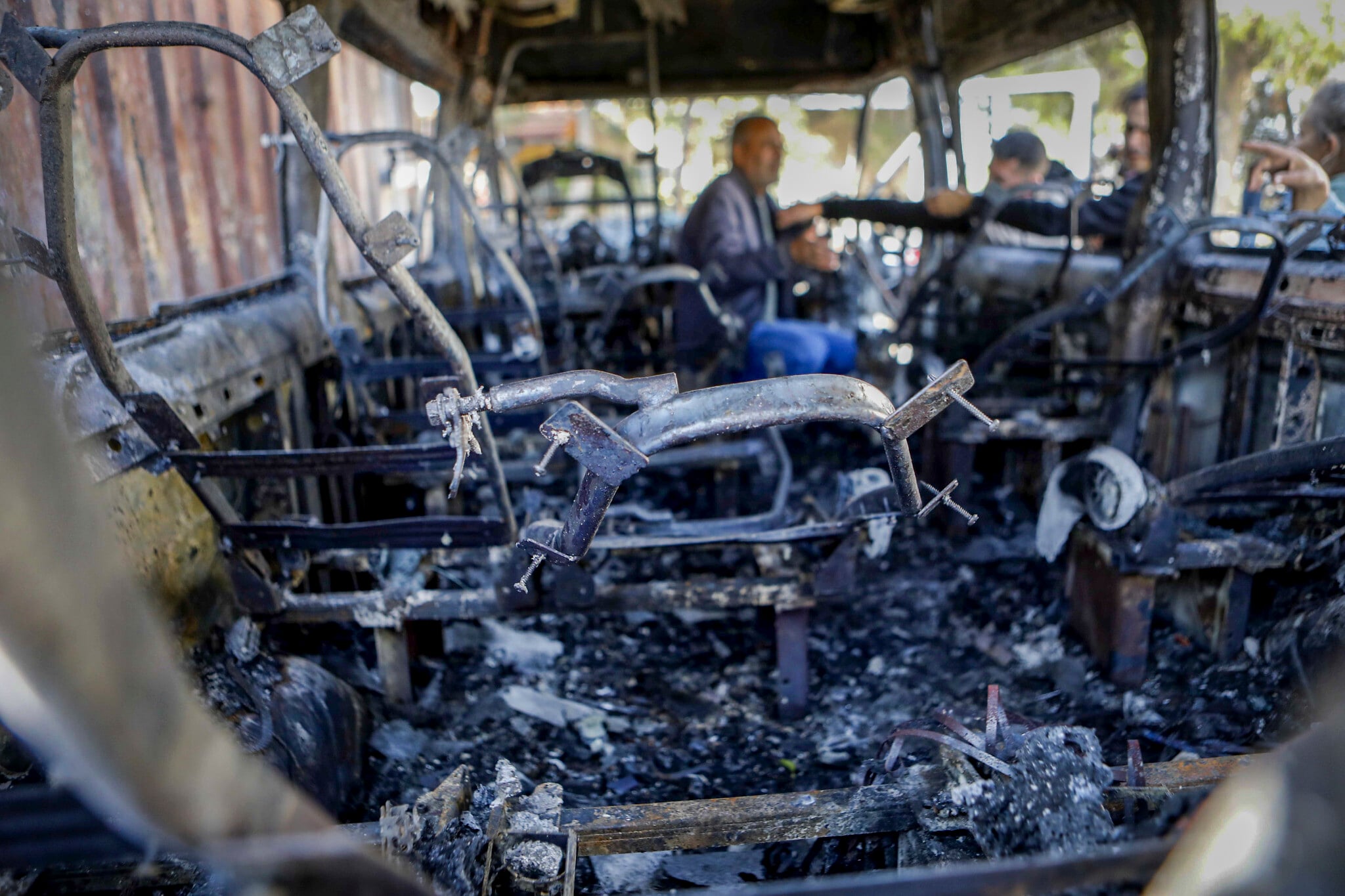
Maslam’s family has lived in Khirbet al-Marajim for decades. He said that about two months after the October 7, 2023, massacre, settlers began assaulting the village and neighboring communities. “They beat us, burned equipment, burned a house, burned a house with two children — my brother’s children, who survived — burned a car, stole livestock,” he said.
According to residents and activists with Torat Tzedek, a faith-based Israeli group that seeks to protect Palestinians from settler violence, the attacks have escalated in recent months.
Yotam, an Israeli activist who requested that his full name not be published, said that starting in January, settlers from an outpost established in the area over the summer began attacking area residents and activists with pepper spray on a near-daily basis. Yael Rozmarin, another activist, said club-wielding settlers had raided communities on several occasions, damaging or stealing residents’ property.
On March 3, the IDF imposed a closed military zone order on all the communities surrounding Duma, following a chaotic confrontation between settlers and activists a day earlier.
Edited video published by left-wing activist Adele Shoko showed teens identified as settlers, including one with a bloody lip, yelling, head-butting and swatting at Israelis attempting to protect Palestinians there during the incident.
According to Rozmarin, the settlers, who had come from a nearby outpost, beat Yotam and deployed pepper spray against both of them.
Soldiers eventually arrived, firing in the air to break up the melee. Four Palestinians and one Israeli activist were arrested and then released later that evening without charges. No settlers were arrested.
The IDF said in response to the incident that “troops were dispatched to the area following a report that Palestinians had thrown stones at Israeli civilians present at the scene. Upon arrival, the forces acted to disperse both the Israeli civilians and the Palestinians from the area”.
Closed to activists, open to settlers
Within hours of the order being issued, three families left the area and moved to Duma, citing the violence and fears that it would now only intensify with the loss of assistance from friendly Israelis.
The families, consisting of 25 people, had only just arrived from Ein Rashash, a village to the south that residents fled in late 2023 due to settler attacks.
“Without the activists, we wouldn’t have [lasted] five minutes,” said Raad Zuabra, one of the residents who moved. “They documented [attacks] and protected us. The activists left, and then we left.”
Despite the closed military order, activists and locals say settlers have continued to enter the area to carry out attacks.
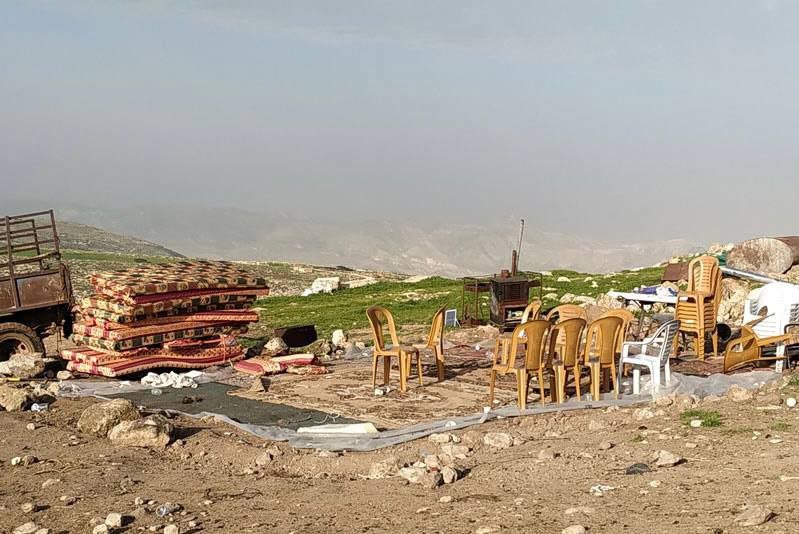
Residents said that soon after the three families left, settlers came back and ransacked one of their homes. Footage showed extensive damage, including smashed solar panels.
“The settlers came and destroyed everything in one of the abandoned homes,” Zuabra said.
The IDF said in response to the incident that IDF forces were dispatched to the scene and conducted searches in the area, but no findings were identified.
Aside from the incident this month, Maslam’s security camera also captured footage on March 14 of a settler attacking his father near the entrance to his home. According to Maslam, the assailant maced his father with pepper spray in the attack.
After settlers returned this month, Maslam said he called the Palestinian District Coordination Office, which is supposed to liaise between Palestinians and Israeli law enforcement. He also called the police. But nobody showed up, he said.
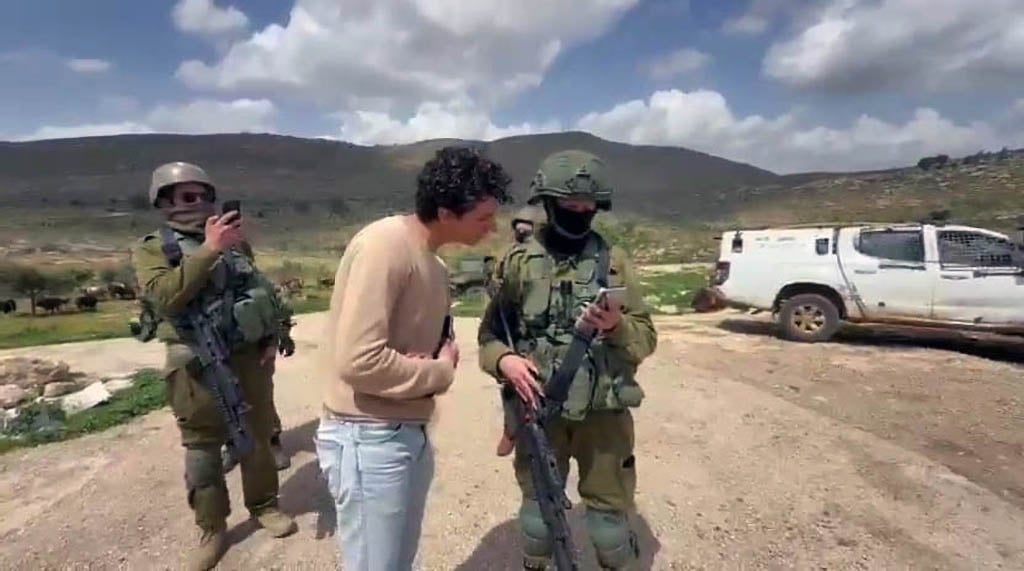
The alleged double standard keeping activists but not settlers away under the closed military zone was seemingly documented in another video, this one recorded by activist Ofek Sivoni as he visited the area on March 17.
In the footage, soldiers are seen telling him to leave the area due to the order, while in the background, a man identified as a settler can be seen, prompting Sivoni to question the troops about the uneven enforcement.
“He is allowed to be here, and you are not,” the soldier is heard telling Sivoni.
According to the activist, the soldier also told him, “That’s how it is, because I decide who stays and who doesn’t.”
The IDF told The Times of Israel in response that “this was a human error stemming from the soldier’s lack of familiarity with the details of the order. The details of the order have since been clarified to the soldier.”
Sivoni said he was in Duma later, and could see that the same settler was still being allowed to remain.
Zuabra told The Times of Israel that a hoped-for return to his home can only occur if activists are no longer blocked from assisting them.
Longer orders, higher fears
The army typically issues closed military zone orders during times when Palestinians or settlers undertake activities liable to bring them into increased contact, raising the chances of friction.
Though the army does not publish information about where and when such orders are issued, they appear to be most common during the olive harvest season, when Palestinians enter groves that might bring them closer to settlements or outposts than normal. Such orders rarely last beyond a few months.
Aside from the order affecting the villages around Duma, the army has only issued year-long closed military orders zone two other times in recent years, according to experts.
In mid-2024, the army imposed such an order on a small area between the Palestinian town of Jaba and the settlement of Geva Binyamin, just north of Jerusalem. And late last year in imposed a year-long order a few kilometers further north, near the Palestinian town of Mukhmas.
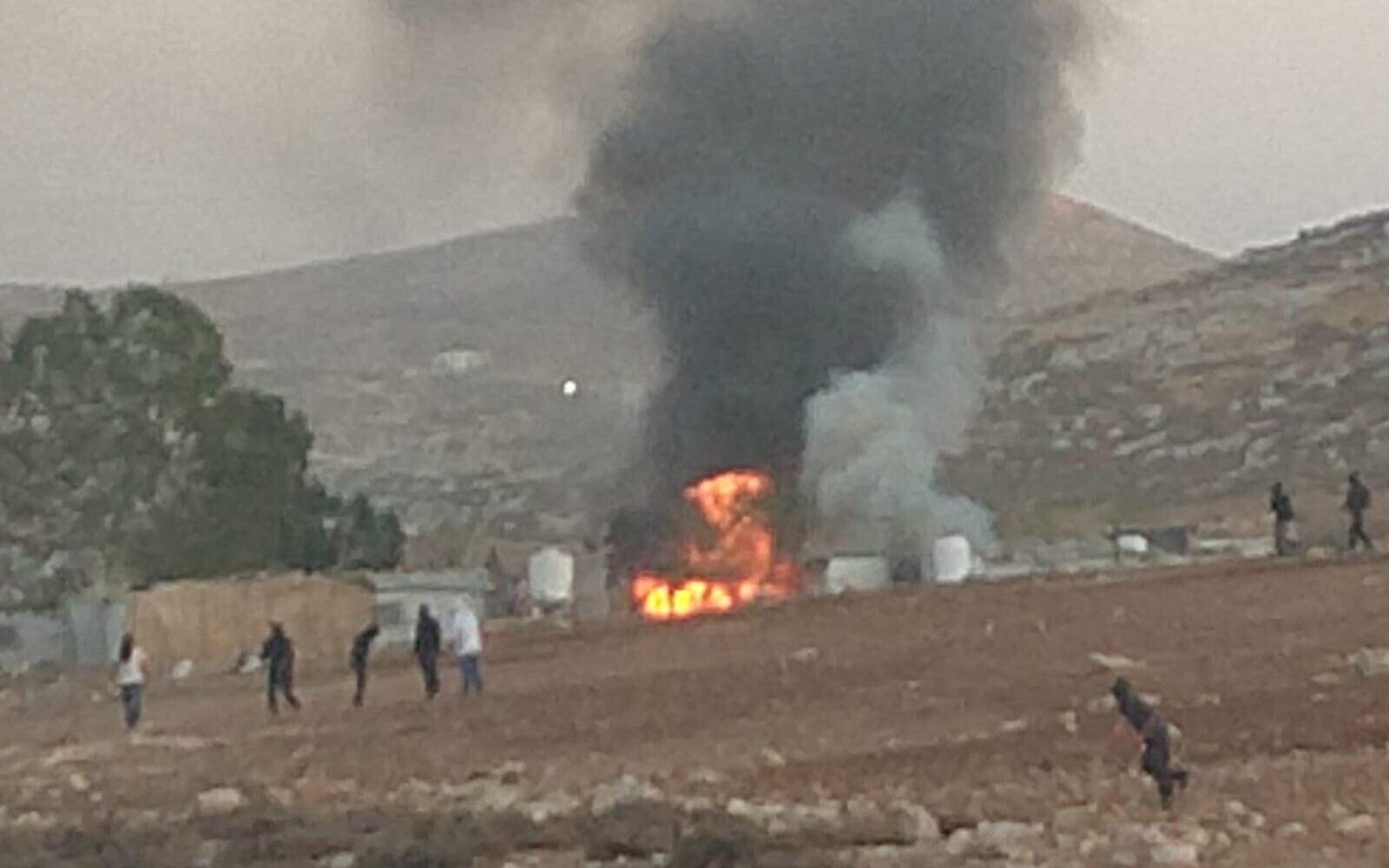
In both cases, the orders came after violence occurred on a scale well beyond what is happening in Duma, including repeated arson attacks on Palestinians’ homes.
Yotam, who is also active in the Mukhmas area, said that there, too, he had seen the order only being enforced against activists, and not against settlers.
Attorney Roni Pelli of the left-wing Yesh Din NGO said she had witnessed the same phenomenon in an agricultural area around the Palestinian town of al-Mughayyir, where an order issued during the olive harvest in October is only set to expire in July.
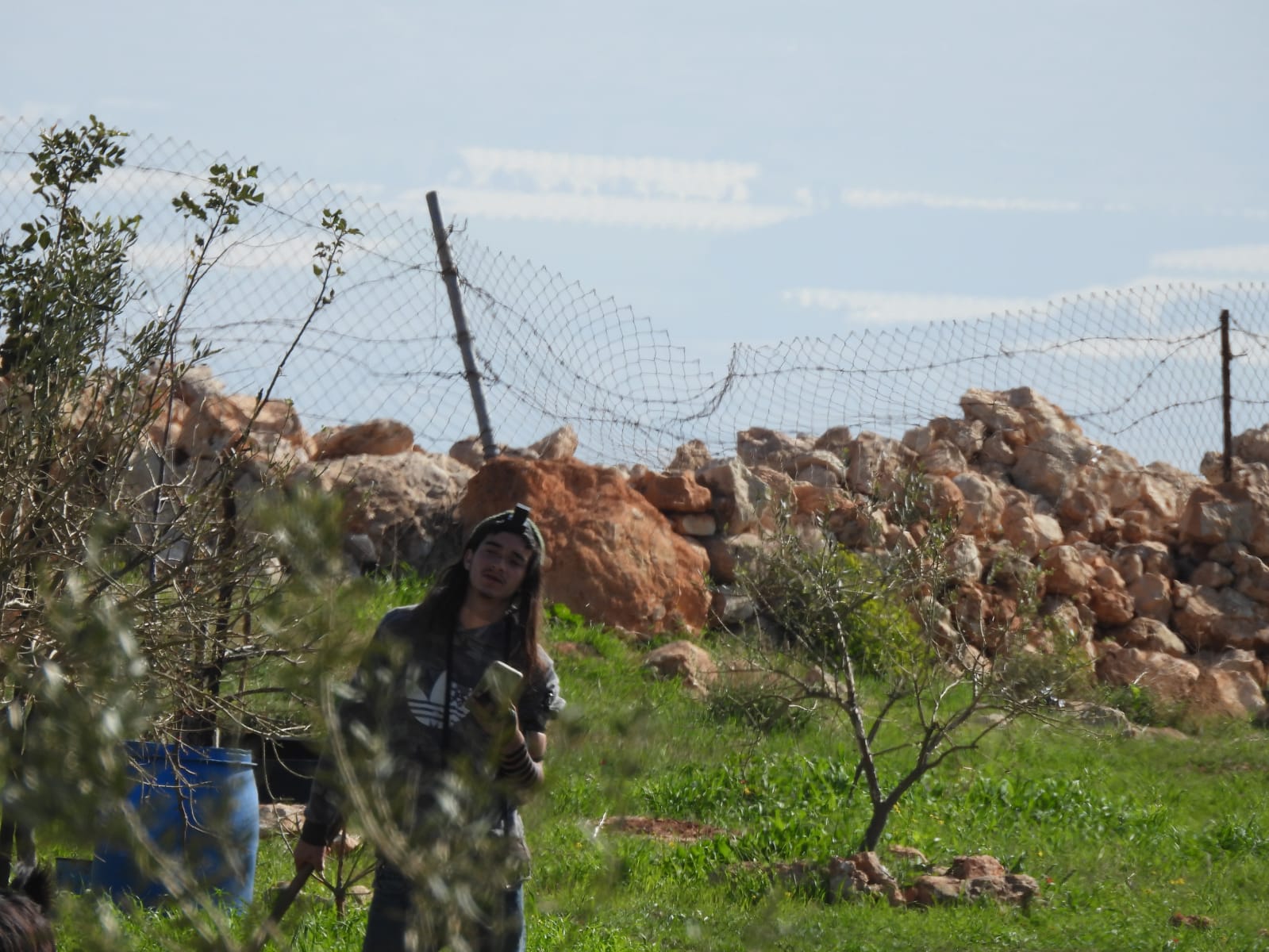
“The one-sided enforcement prevents Palestinians — if they do not live in the area — and also those assisting them from entering,” said Pelli, who is seeking a court injunction to lift the order. “But settlers are not prevented from entering. So in effect, it transfers the use of the land from the Palestinian owners to settlers.”
Rabbi Arik Ascherman, who heads Torat Tzedek, told The Times of Israel that the group is not opposed to the military order, as long as it is enforced against settlers as well.
He said Torat Tzedek may petition the High Court to lift the order near Duma over the lack of enforcement against settlers entering the area. The decision is dependent on whether the Civil Administration, the Defense Ministry unit that governs Area C, agrees to a request filed last week for three activists to be exempted from the military closure.
No response has yet been received.
Though the violence in areas around Duma has not reached the level of other places, residents and activists who spoke to The Times of Israel worry that the longer the military order lasts, the more dangerous the situation will become, with activists unable to act as a check on settler violence.
There is “a great, immense and terrible fear among residents,” Rozmarin said.
“In Khirbet al-Marajim, threats have risen sharply recently — with pepper spray and clubs. They aren’t used to this,” she added.
To Maslam, the situation underlines the degree to which those in Israel with the power to clamp down on settler violence are instead abetting their campaign of dispossession.
“It’s not like you can fight the settlers through the law — the army and the police do not enforce what is written in the law,” he alleged. “The settler is protected.”
“The one who expels me is not just the settler, it’s the entire state that does not want me here,” he continued. “It is the one driving me out.”






The Times of Israel Community.