

Government opens bidding to build 1,200 homes in controversial E1 settlement project
Construction in area east of Jerusalem would split up West Bank and deal blow to hopes for a contiguous Palestinian state; Peace Now: Tender seeks to tie next government’s hands
 Add ToI as a Preferred Source on Google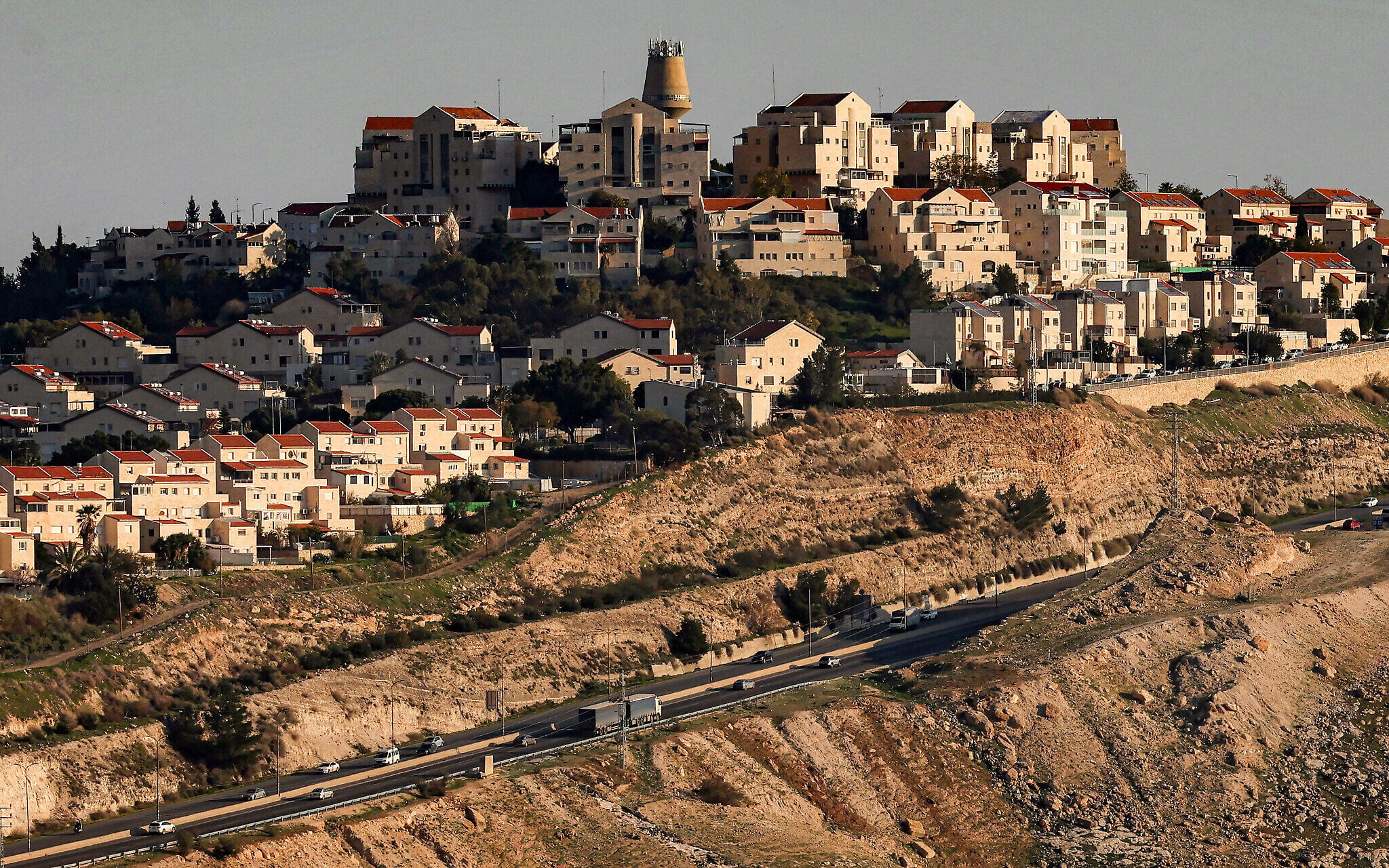
The government on Tuesday issued a tender for the construction of seven residential compounds housing 1,234 housing units in the E1 area east of Jerusalem, where Israeli settlement activists seek to divide the West Bank.
The tender published by the Construction and Housing Ministry gives contractors until October 19 to bid on the project — a week before the October 27 parliamentary election.
The housing units in the tender are some of the roughly 3,400 E1 housing units that were greenlit last August. Finance Minister Bezalel Smotrich lauded the E1 expansion plan at the time, saying it “practically erases the two-state delusion” by splitting up the territory that would be slated for a Palestinian state.
The Peace Now settlement watchdog, which together with other organizations challenged the expansion plan in the Supreme Court, said on X that “at the height of the election period, the government is trying to realize the settler right wing’s vision of annexation, and tie the hands of the next government.”
It added that implementing the E1 expansion plan would isolate “dozens of Bedouin communities, including Khan al-Ahmar, and lead to their expulsion from their land.”
Peace Now also charged that the tender was published “in violation of an express commitment by the state.”
According to the group, the State Attorney’s Office in July told petitioners against the expansion that no E1 construction tenders were expected in the next two to three months, and that there would be an early notice in case of any changes.
“A single month later, the tender opened with no early notice,” Peace Now said.
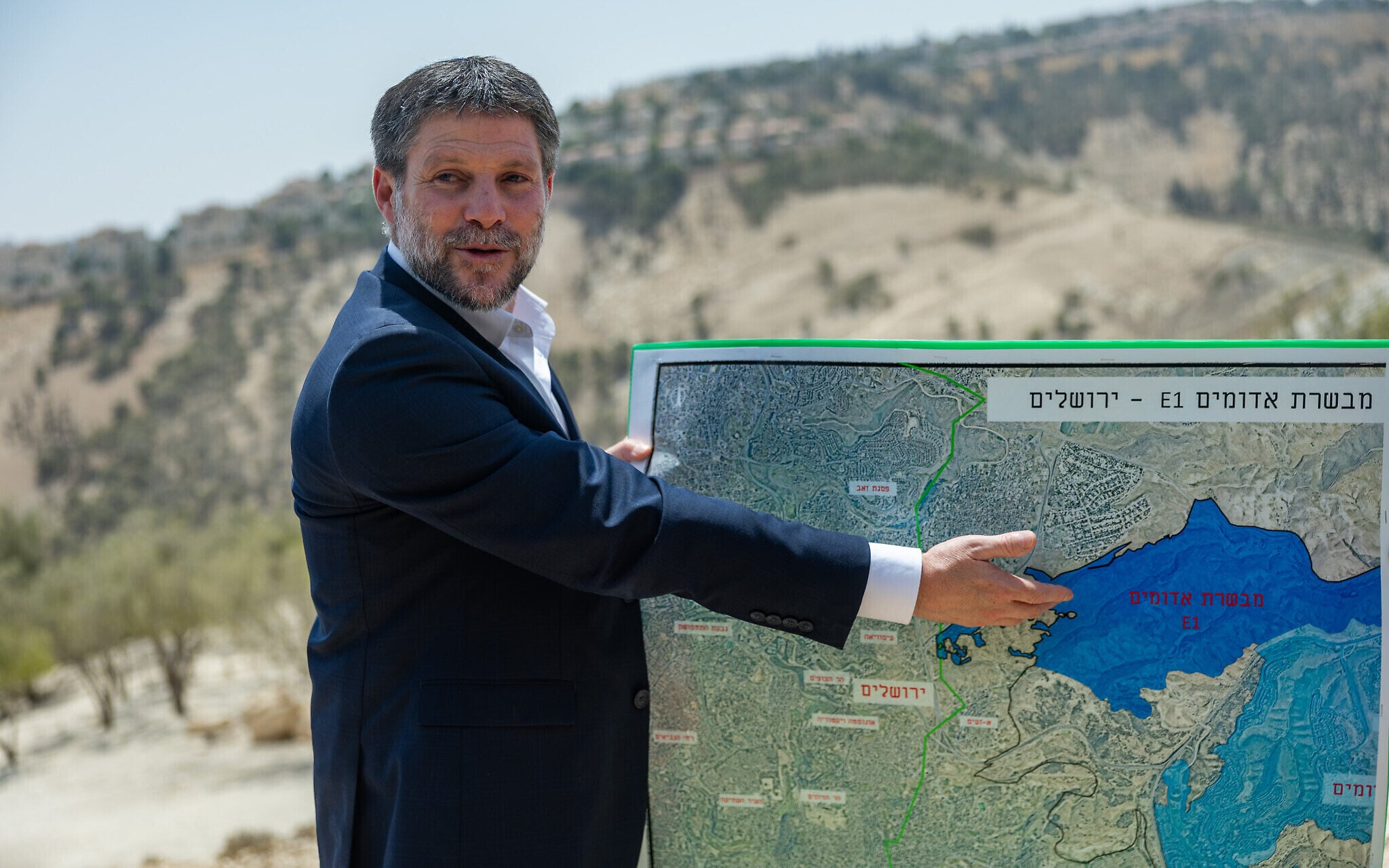
The E1 expansion connects the Jerusalem and Ma’ale Adumim areas, while seemingly scuttling the prospect of a contiguous Palestinian presence between the population centers of Bethlehem, East Jerusalem and Ramallah — long considered the basis for a Palestinian state.
The project was frozen for long years amid fierce opposition from the international community, including past US administrations, which feared that building a new settlement neighborhood on the mostly empty tract of land would rule out the establishment of a contiguous, viable Palestinian state.
Agencies and Jeremy Sharon contributed to this report.






The Times of Israel Community.