

Kushner: Israel must improve Palestinians’ lives if it wants ‘integration’ into region
Envoy says US believes Hamas acting in good faith, searching for remaining hostage bodies; Witkoff: Netanyahu’s phone call with Qatari PM was ‘pivotal’ step in reaching Gaza deal
 Add ToI as a Preferred Source on Google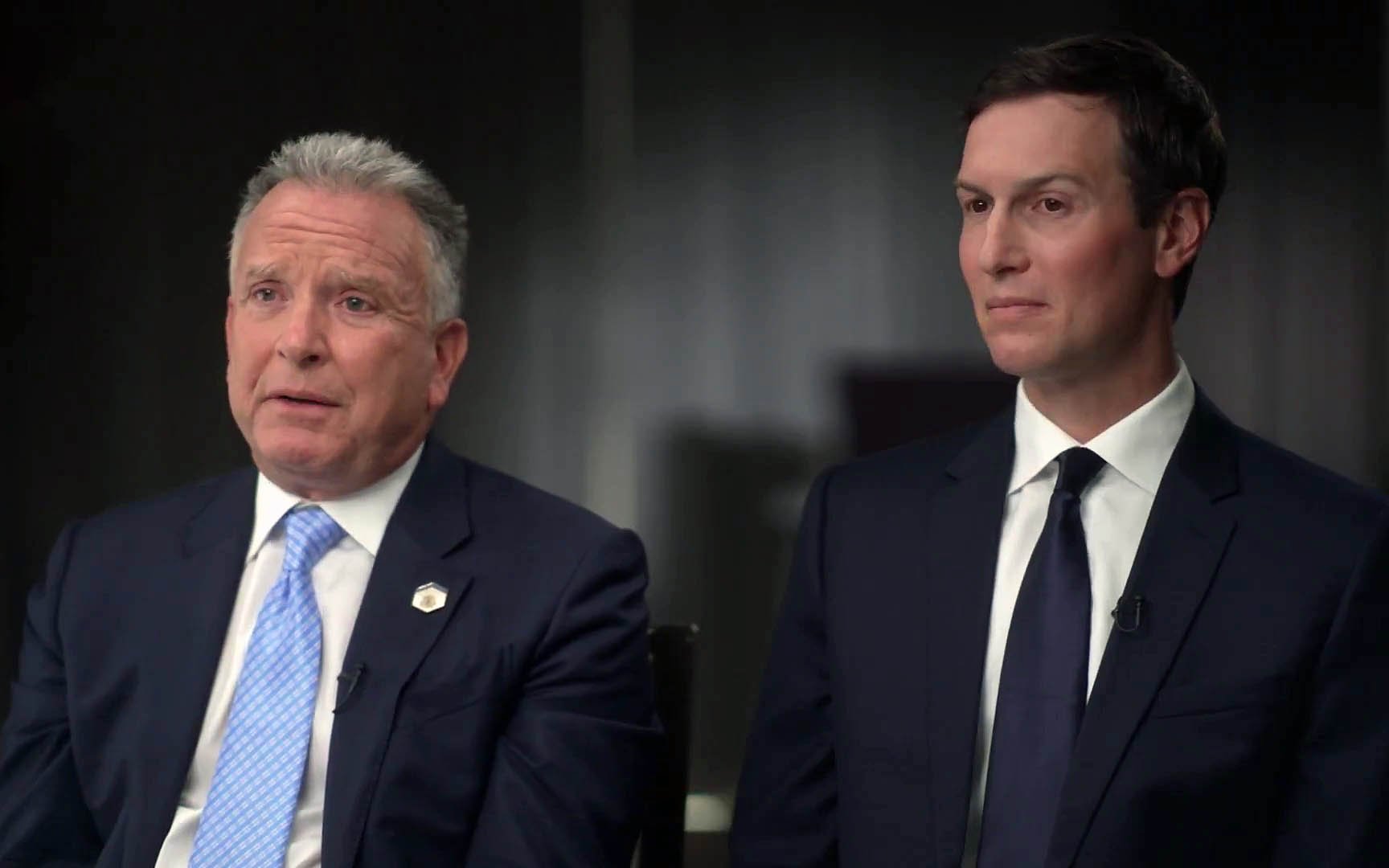
Israel must start aiding the Palestinians and help improve their quality of life if it wants to become fully integrated into the Middle East “now that the war is over,” said Jared Kushner, US President Donald Trump’s son-in-law and adviser, in an interview alongside US special envoy to the Middle East, Steve Witkoff.
“The biggest message that we’ve tried to convey to the Israeli leadership now is that, now that the war is over, if you want to integrate Israel with the broader Middle East, you have to find a way to help the Palestinian people thrive and do better,” Kushner told CBS’s 60 Minutes in the interview broadcast Sunday evening.
He said that he and Witkoff were “just getting started” with relaying this message to Israel.
Regarding Kushner’s vision for the Palestinian people, and what he believes allowing them to “thrive” would look like, Kushner said that the US is “focused on creating a situation for joint security and economic opportunity for Israelis and Palestinians so that they can live side by side in a durable way.”
“What you end up calling it over time, we’ll allow the Palestinians to determine that themselves,” he said, in answer to a question about a path to Palestinian statehood.
The discussion with CBS was the first wide-ranging interview that Kushner and Witkoff have given since the start of the first stage of a ceasefire they brokered that broadly saw an end to the fighting in Gaza and the release of all the living hostages held in the Strip.
As of Monday, Hamas has yet to return 16 of the 28 deceased hostages that were still in Gaza when the first phase of the ceasefire deal came into effect on October 10.
The terror group has said it is unable to immediately locate the remaining bodies due to the level of destruction in the Gaza Strip, but Israel has accused the terror group of lying, claiming that it has access to most of them and could hand them over at any time.
Pressed on whether he believes Hamas is “acting in good faith — seriously looking for the bodies,” Kushner answered in the affirmative.
“As far as we’ve seen from what’s being conveyed to us from the mediators, they are so far,” he said. “That could break down at any minute, but right now — we have seen them looking to honor their agreement.”
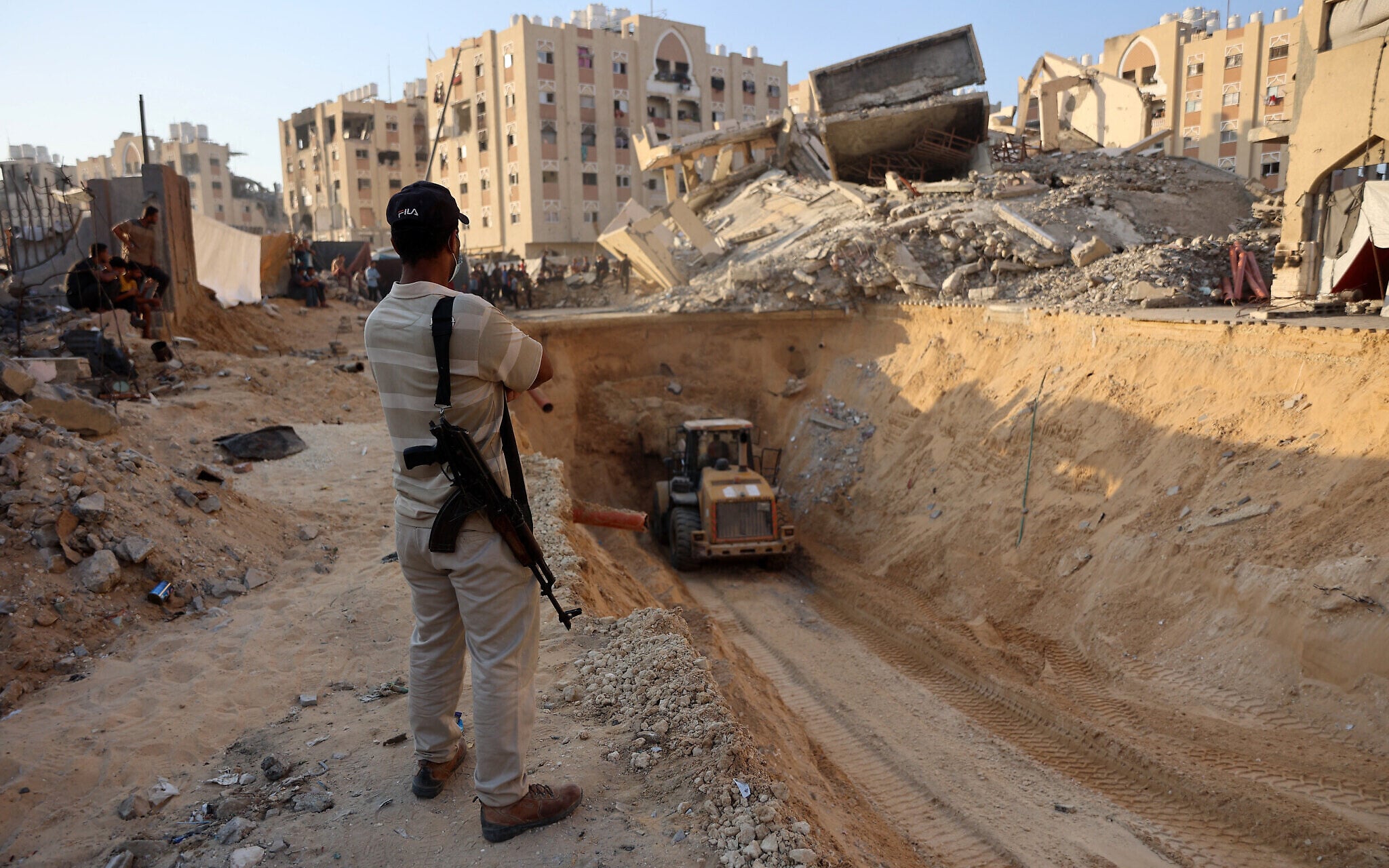
Addressing the conflicting accounts and the US’s role in navigating the differences, Kushner said there has been “a very intense effort on behalf of our joint center with Israel and with the mediators in order to convey whatever information Israel has on the whereabouts of the bodies to the mediators and to Hamas — in order to retrieve them.”
The US is trying to “push both sides to be proactive in terms of finding a solution instead of blaming each other for breakdowns,” he said.
It was unclear when the interview was filmed exactly, but it was a number of days ahead of the events of Sunday, when a deadly attack on IDF troops in the southern Gaza Strip, and a subsequent wave of retaliatory Israeli strikes, threatened to shatter the fragile truce. The IDF later announced a resumption of the ceasefire.
Netanyahu’s ‘pivotal’ apology to Qatar
The two top US envoys also discussed the process and the steps that led to the announcement of the first stage of the ceasefire deal, with Witkoff saying that Prime Minister Benjamin Netanyahu’s apology to his Qatari counterpart for the Israeli strike in Doha on September 9 was a crucial step.
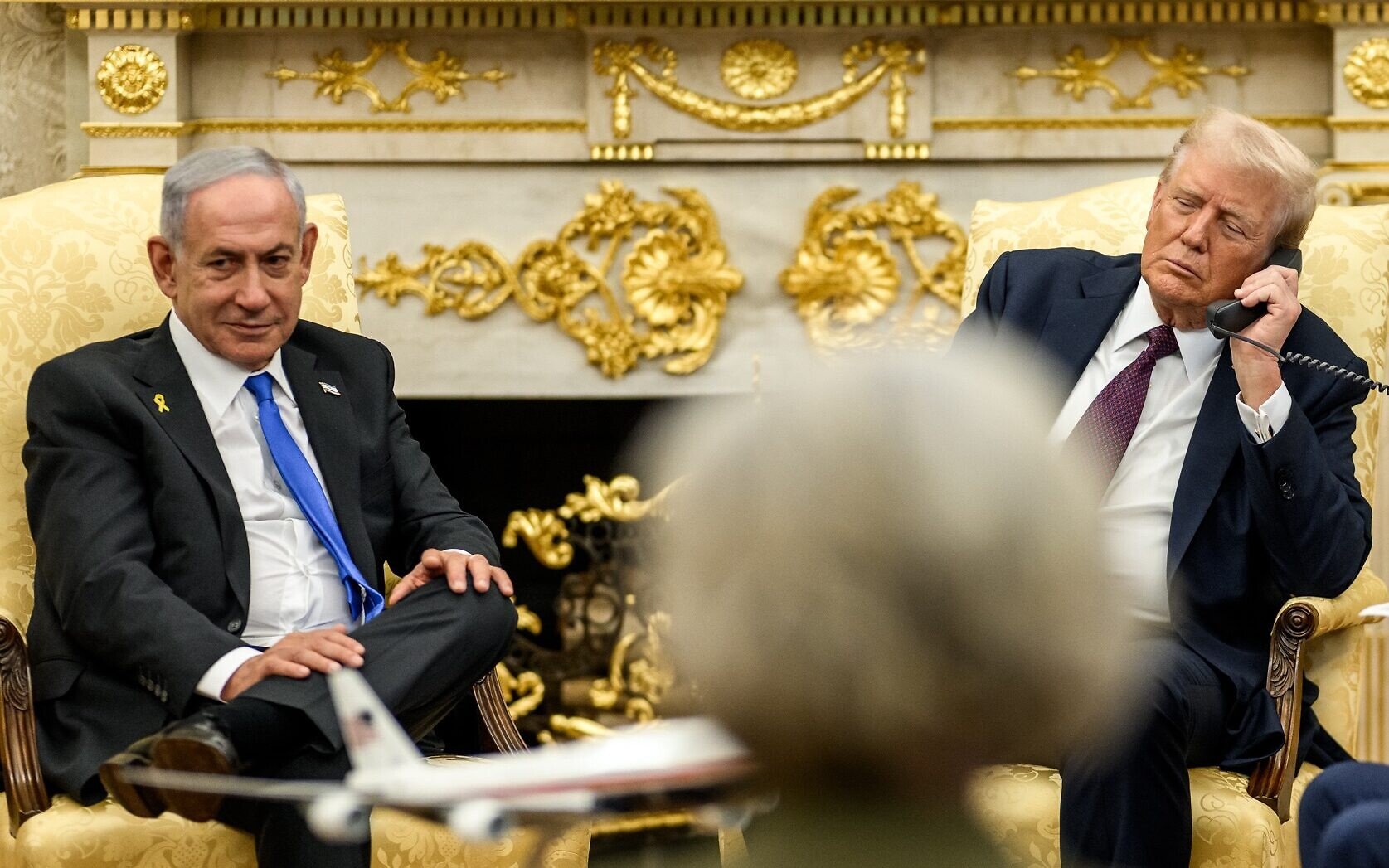
Netanyahu phoned Qatari Prime Minister Mohammed bin Abdulrahman bin Jassim al-Thani while visiting Trump at the White House on September 29, to apologize for targeting a meeting of the Hamas terror group’s political leadership in Doha.
The strike, which Witkoff said left the American team feeling “a little bit betrayed,” failed to kill any of the key Hamas leaders it had been targeting and led to Qatar refusing to continue acting as a mediator between Israel and Hamas in negotiations.
Trump said after the incident that he was “very unhappy” with Israel over the strike on “strong” US ally Qatar, and that he did not receive a meaningful advance warning from Israel. He has since committed the US to defend Qatar in case of a future attack.
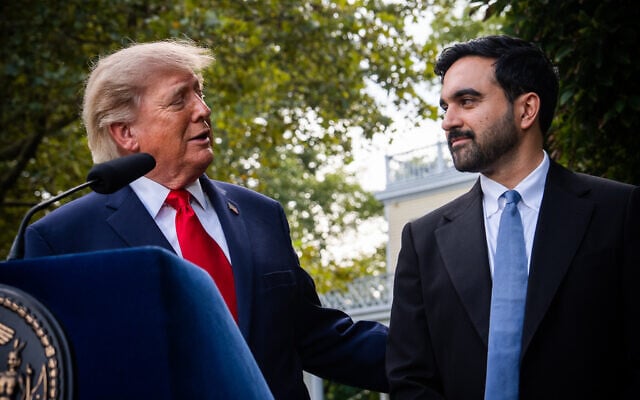
Shortly after Netanyahu apologized to al-Thani under Trump’s watchful gaze, the White House released its plan for ending the war in Gaza and said both Israel and the Arab world had accepted it.
Netanyahu’s apology to al-Thani was “pivotal,” Witkoff told 60 Minutes. “It was the linchpin that got us to the next place. It was really, really important that it happened.”
Asked whether Trump had to push Netanyahu to apologize, Kushner said the Israeli premier “wasn’t [going to] do anything, or say anything, or agree to anything he didn’t feel comfortable with,” and that he knew that the apology was “what needed to be done at that moment to make peace.”
“The apology needed to happen. It just did,” Witkoff chimed in. “We were not moving forward without that apology. And the president said to him, ‘People apologize.'”

Kushner added that the phone call between Netanyahu and al-Thani led to the formation of a “trilateral mechanism between the countries, which didn’t happen before.”
“I believe over time Israel and Qatar could actually turn out to be incredible allies in the region to advance things forward,” he suggested.
Connection with Hamas leader
Witkoff also talked of his personal connection with a senior leader from Hamas, and said that Trump had been happy for them to meet personally with officials from the terror group in order to secure a deal to end the war.
It was reported last week that Witkoff and Kushner met directly with senior Hamas official Khalil al-Hayya and other Hamas leaders at the Four Seasons Hotel in Sharm el-Sheikh, Egypt, to avoid a logjam in negotiations and seal the hostage release and ceasefire deal.
He said he approached Trump, along with Kushner, to ask if the US president would be “comfortable with allowing us to go and meet with Hamas” if it would lead to a deal.
“That was the question we asked him and the entire foreign policy staff,” Witkoff said. “And the answer came back: ‘If you feel that you can get to a deal, of course. Why wouldn’t I encourage you to get into that room and get it finished?'”
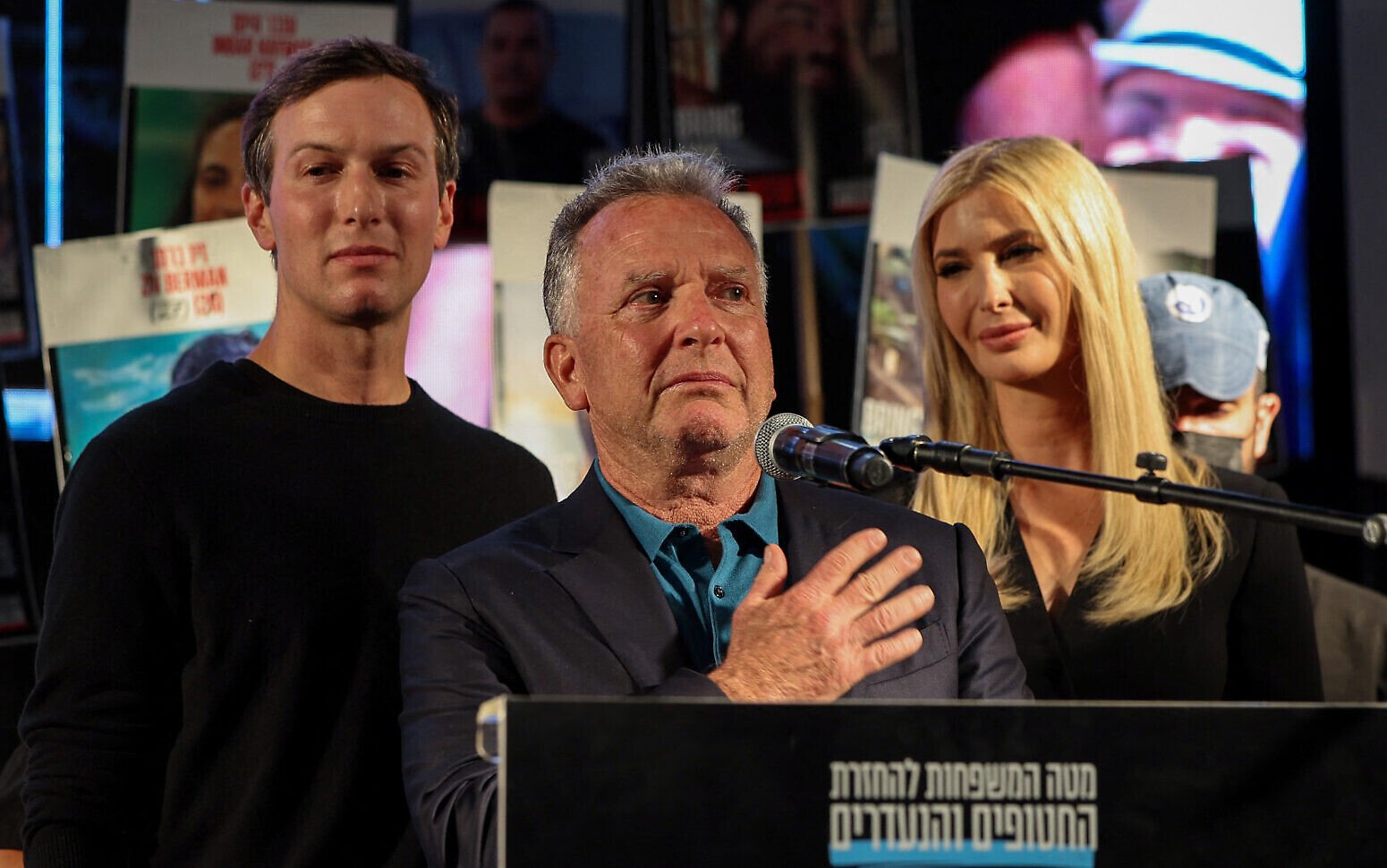
He said that, in his opinion, Trump had been “very, very comfortable” with the possibility of the two advisers meeting directly with Hamas, calling the president’s decision to allow the meeting to go ahead “courageous.”
Witkoff said that when he entered the room for the meeting with the Hamas delegation, he found himself sitting directly next to al-Hayya.
“We expressed our condolences to him for the loss of his son,” said Witkoff. “He mentioned it. And I told him that I had lost a son, and that we were both members of a really bad club, parents who have buried children.”
Witkoff’s late son Andrew died at the age of 22 of an opioid overdose. Al-Hayya’s son Himam al-Hayya was killed in the Israeli airstrike on Hamas headquarters in Doha.
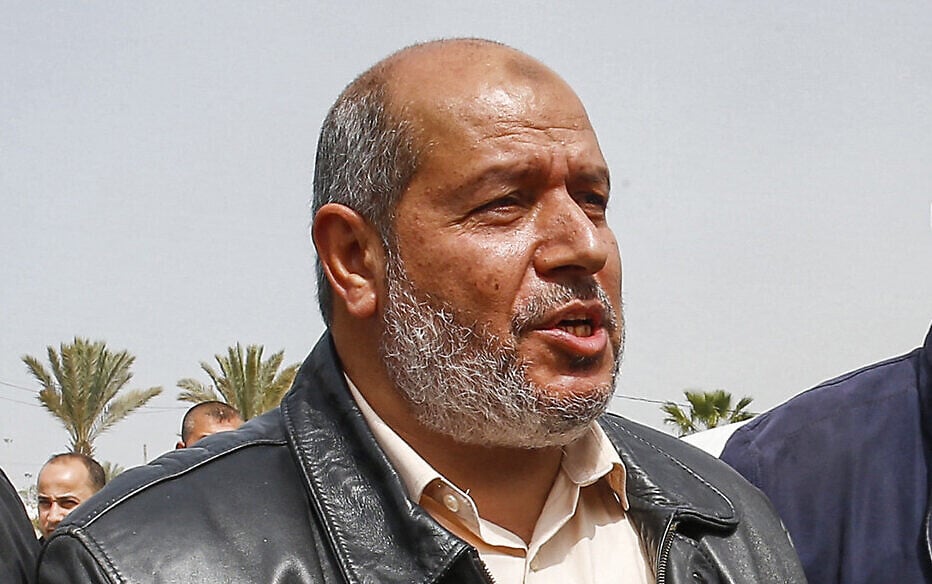
Kushner described watching the conversation between Witkoff and al-Hayya, whom he describes as a “hardened” person who has “been through two years of war.”
“They green-lit an assault that raped and murdered and did some of the most barbaric things,” he said of Hamas and the October 7, 2023, massacre that sparked the two-year war in Gaza. “They’ve been holding hostages while Gaza’s been bombed. And they’ve withstood all the suffering.”
“But when Steve and him spoke about their sons, it turned from a negotiation with a terrorist group to seeing two human beings kind of showing a vulnerability with each other.”
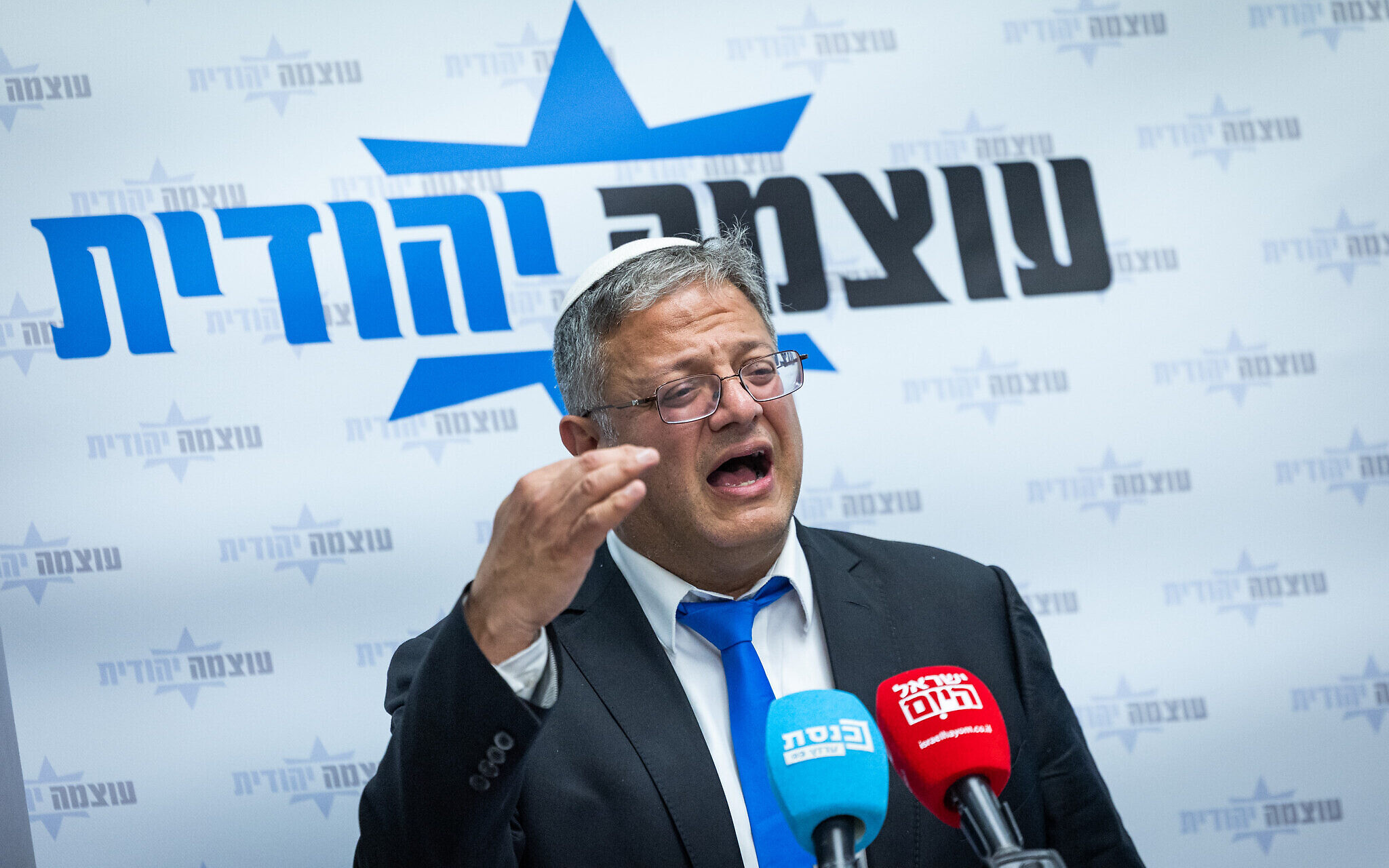
Witkoff said he also discussed his late son with National Security Minister Itamar Ben Gvir when he and Kushner attended a cabinet meeting on the Gaza deal. The US envoy said it was an “emotionally charged situation” with the far-right leader, who was against the agreement.
“I talked to Gvir [sic] about my boy. I always feel I’m in these situations because my son Andrew puts me in them. And I talked to him about my son,” Witkoff said.
“And I wouldn’t say he was dismissive, but he was talking about all the death and all the carnage in Israel. And I was saying to him, ‘At some point you gotta let it go. You — we just can’t play the victim all the time.’ And I was explaining to him how I was able to let it go with regard to my boy. And so I had this sort of moment with him.”
Conflict of interest or trusted relationships
Witkoff and Kushner were also asked about any potential conflicts of interest, given the fact that both of them have done billions of dollars worth of deals with Gulf states, some even as negotiations over Gaza were ongoing.
Kushner responded that there have been no examples provided of times in which they have done anything that was not in the interest of the US.
“What people call conflicts of interests, Steve and I call experience and trusted relationships that we have throughout the world. If Steve and I didn’t have these deep relationships, the deal we were able to get done, that freed these hostages, would not have occurred,” he said.





The Times of Israel Community.