

Labor’s Shmuli spars with former colleague Stav Shaffir for ditching party
Dust-up comes with polls showing Labor dipping perilously close to the threshold for entering Knesset
 Add ToI as a Preferred Source on Google
A spat between the current and former no. 2 lawmakers in the Labor party, Itzik Shmuli and Stav Shaffir, respectively, escalated on Saturday and Sunday, highlighting the party’s dismal political state as it struggles to avoid being erased in the September elections.
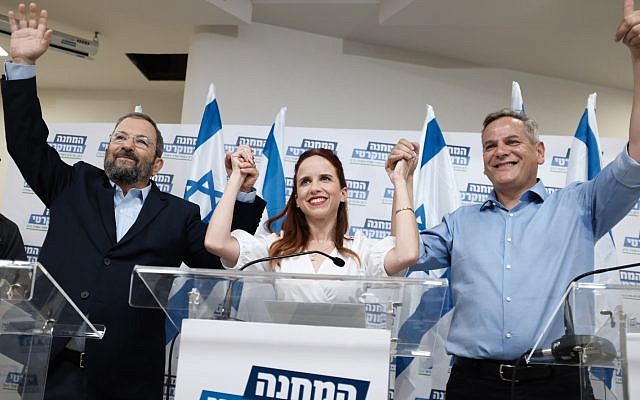
Stav Shaffir, who defected from Labor last week to help form the new Democratic Camp alliance with Meretz and Ehud Barak’s Israel Democratic Party, urged her former party to join the new faction.
“Even though I was hurt by [Shmuli’s] behavior and lies, we’re not playing these games now. I call on Shmuli and the entire Labor party to join us,” she told Army Radio in an interview Saturday night.
Shmuli and Shaffir had a high-profile spat in late June when both ran in the party’s July 2 leadership primary, which was ultimately won by returning defector Amir Peretz.
Shmuli responded to Shaffir’s call with a resounding “good riddance.”

“Stav, stop this obsession,” he wrote on Twitter on Saturday night.
“Throughout the campaign you spread the libel and lie that my call for alliances [with other parties] was meant to ensure my place in the Knesset, and not some higher purpose… And who then left the party in its darkest hour for a cushy job?? The idea was to join an alliance as a party, not to make a personal exit,” he charged.
He added: “Keep your opinions to yourself. Goodbye and good riddance.”
Shmuli then posted a late-June report in which Shaffir warned of his own purported plans to abandon Labor.
At the time, Shaffir told a Channel 13 interviewer that Shmuli was ready “to sell out the party in order to get the number-four slot in another party.”
The quarrel comes as Labor faces new polls from the past week showing it at just five Knesset seats, perilously close to the 3.9-seat threshold for entering the Knesset.
The six seats it picked up in April marked a record low for the storied faction, whose previous incarnations led Israel for nearly 30 years after the country’s founding.
Labor is also conflicted over leader Peretz’s decision to merge with former lawmaker Orly Levy-Abekasis’s Gesher party, which is further to the right on the political spectrum and had failed to win enough votes to enter the Knesset in April’s elections.
Facing growing scrutiny after the Democratic Camp alliance was announced, and despite vows he would not join with the far-left, Peretz reportedly began meeting with leaders in the new left-wing alliance late last week to discuss a potential tie-up.
According to Channel 12 news, Peretz met with Meretz MK Issawi Frej and IDP member Noa Rothman on Thursday, telling them he could join the Democratic Camp if it would help the center-left secure a majority in the 120-seat Knesset.
“If me merging brings 60 seats to the bloc, I’m with you,” Peretz was quoted as saying.
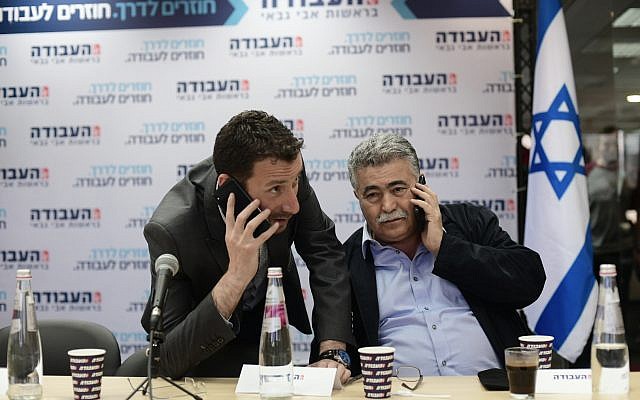
Unconfirmed reports have claimed that Shmuli, too, has been looking to leave Labor. While Shmuli has praised the Democratic Camp and called for Labor to merge with it, the Kan public broadcaster reported Friday that he is considering an offer to join the Blue and White party, which finished with a 35-seat tie with Prime Minister Benjamin Netanyahu’s Likud in the April elections.
The report did not give any details on the offer.
The upcoming September 17 vote was called after the Knesset voted to dissolve itself after Netanyahu failed to form a government before the legal deadline of May 29. By forcing new elections, Netanyahu avoided the prospect of any other lawmaker having a shot at forming a ruling majority and replacing him as prime minister.
The decision to schedule a fresh vote marked the first time in Israel’s history that an election failed to produce a new government.







The Times of Israel Community.