

Lapid is the Gaza operation’s political winner, but can this be converted to votes?
Caretaker PM has shown his ability to lead a limited military operation, but in a country where security is necessary but not sufficient, he’ll need to do more for election success

 Add ToI as a Preferred Source on Google
Carrie Keller-Lynn is a former political and legal correspondent for The Times of Israel
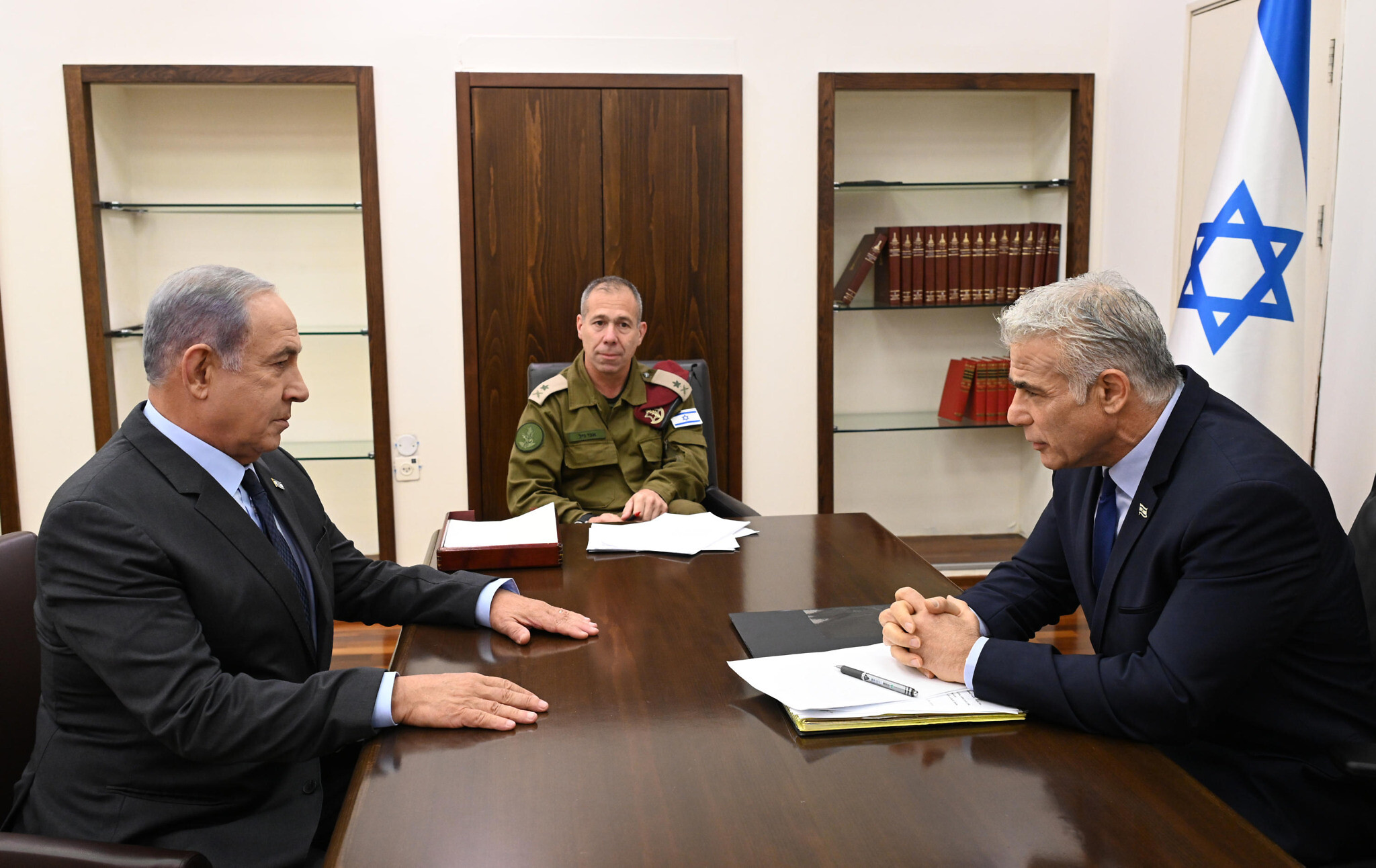
They say a picture is worth a thousand words, but can it be worth Knesset seats?
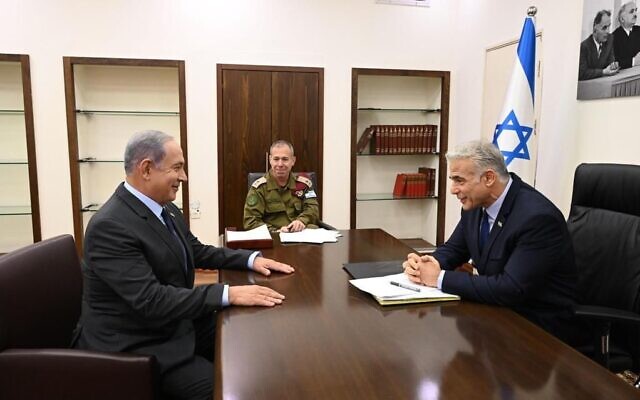
On Sunday, Prime Minister Yair Lapid achieved what his predecessor, Naftali Bennett, failed to do for a year: Lapid was photographed delivering a security briefing to opposition leader Benjamin Netanyahu.
This election season, Netanyahu is once again campaigning on the perception that only he can ensure Israel’s security. Following his ouster last year after 12 consecutive years as premier, Netanyahu has spent the past year lambasting Bennett and Lapid for being unable to tackle security. Lapid has a particularly soft underbelly in the matter, being a rare Israeli prime minister without serious security chops.
The photographed briefing, and Lapid’s handling of the military conflict in Gaza that precipitated it, begin to address some of the interim prime minister’s political shortcomings. However, Lapid will have to work hard to expand his potential bloc if he wants to transform his caretaker premiership into a permanent one come November.
Led by Lapid and Defense Minister Benny Gantz, the three-day Operation Breaking Dawn may be considered one of Israel’s more successful Gaza incursions precisely because of how little it achieved. In contrast to several past conflicts, Operation Breaking Dawn set attainable, concrete goals, and once they were met, ended. Palestinian Islamic Jihad was a weaker opponent than Hamas, and the operation was focused on ending specific terrorist threats against southern Israel rather than routing out broad terror capabilities. While the Israeli military holds that 27 Gazan civilians were killed in the fighting — 16 of whom the Israel Defense Forces say were killed by misfired Islamic Jihad rockets — the operation ended before a mass civilian incident occurred and without deaths in Israel.
As is customary in security crises, the majority of Jewish Israeli politicians put their politicking aside and rallied around the IDF and the state. From Friday to Sunday, Israelis felt a brief reprieve from cross-bloc mudslinging, and politicians on the Netanyahu-allied right made some of their most positive statements in support of leaders they spent the past year trying to topple.
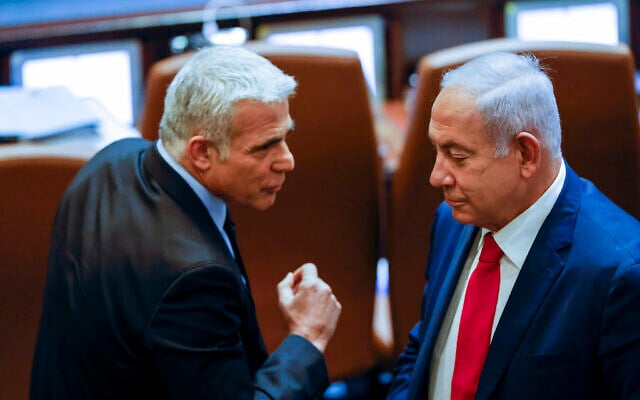
Netanyahu focused his remarks on support for the IDF and security forces, and he did the responsible thing and met with Lapid for a security briefing. Although as opposition leader he is expected to receive regular security briefings from the prime minister, Netanyahu refused to do so over the past year of Bennett and Lapid’s government, not wanting to abandon his elder statesman of security image for a picture of being lectured by a political rival.
True to form, however, Netanyahu released a message after the briefing to say that he offered advice from his experience in addition to receiving the update from Lapid. Perhaps Netanyahu’s reported insistence on releasing a version of the briefing photo where the two leaders are smiling collegially was to reinforce the narrative of two equals meeting.
Far-right Religious Zionism leader Bezalel Smotrich made perhaps his most complimentary remarks this year toward Lapid and Gantz, when he told Army Radio on Monday that the two “acted excellently” in preserving the operation’s element of surprise by not convening the security cabinet beforehand. On Sunday, Smotrich released a statement lending his backing to the Lapid-led government to continue its operation, amid the first whispers of the negotiated ceasefire that is now in effect.

While Lapid has passed this first test, a three-day limited operation against the poor man’s Hamas is not a track record of reliably leading security matters. Security is a necessary but not sufficient condition to be Israel’s prime minister. The majority of Jewish Israelis — like their politicians — rally around the state and its military when security is threatened. He reassured voters who would consider him regardless, and while post-operation polls have yet to be published, it’s unlikely that ideological right-wing voters will shift to Lapid over his performance.
The latest polls have Lapid’s center-left bloc hovering in the low 50s in the 120-seat Knesset, without the Islamist Ra’am party or Ayelet Shaked’s new Zionist Spirit. Lapid would need more seats to pull Ra’am into a broad coalition — at least 61 seats are needed for a coalition — as his partners are unwilling to rely on the Islamist party to be its majority-determining votes given that security and ideological issues tend to put pressure on coalition discipline.
While he might pull more centrist or left-wing voters, this does not help Lapid maintain his chair, because the game is about forming a bloc rather than just maximizing his party’s taking.
Although his campaign team says that Lapid’s Yesh Atid party is going for every vote, Lapid is unlikely to carve off a serious chunk of right-wing votes.
To form a government come November, Lapid may use his now more robust political deck to try to increase the size of the pie for his bloc, by drawing in new voters who were undecided or sitting out this upcoming election — the fifth in three and a half years — and perhaps now less wary of the prime minister’s ability to safeguard Israel’s security.




The Times of Israel Community.