

 From the Liveblog of
Tuesday, January 20, 2026
From the Liveblog of
Tuesday, January 20, 2026
IDF official: 30,000 currently designated as draft evaders, but true number much higher
 Add ToI as a Preferred Source on Google
Sam Sokol is a former political correspondent at The Times of Israel. He was previously a reporter for the Jerusalem Post, Jewish Telegraphic Agency and Haaretz. He is the author of "Putin’s Hybrid War and the Jews"
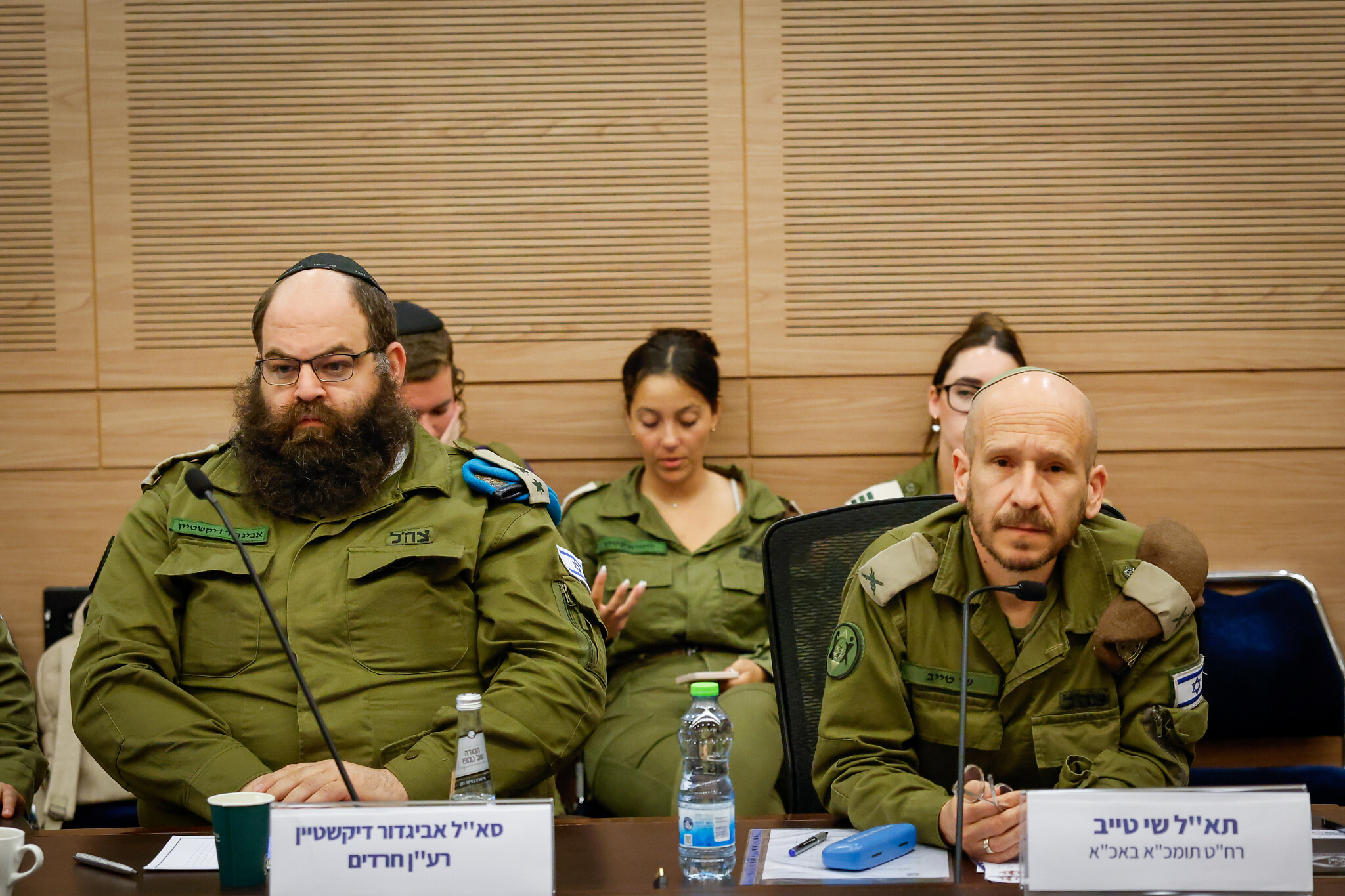
There are currently 30,000 Israelis designated as draft evaders, half of whom are identified as members of the ultra-Orthodox community, while the religious affiliation of the rest cannot be determined with certainty, Lt. Col. Avigdor Dickstein, head of the Haredi branch of the IDF’s Personnel Directorate, tells the Knesset Foreign Affairs and Defense Committee.
Of that second half, some are from the general public and some from the ultra-Orthodox community. The number of designated evaders is expected to rise by many thousands over the coming month, he says.
Some 80,000 ultra-Orthodox men aged between 18 and 24 are currently believed to be eligible for military service, but have not enlisted. The Israel Defense Forces has said it urgently needs 12,000 recruits due to the strain on standing and reserve forces caused by the war against Hamas in Gaza and other military challenges.
Testifying before the Knesset State Control Committee in mid-September, the head of the IDF’s Personnel Directorate said the military’s efforts to crack down on ultra-Orthodox draft dodgers have been ineffective. However, Dickstein told the Kan public broadcaster last week, after over 530 Haredim enlisted within one week, that the mass issuance of draft orders to Haredim and subsequent enforcement, including imprisonment, has been “unequivocally effective” in boosting enlistment numbers.
Dickstein’s comments today come as the committee rushes to complete a marathon series of discussions on the government’s proposed yeshiva student exemption bill. If passed into law, the bill would grant renewed service exemptions to full-time yeshiva students while purportedly increasing conscription among graduates of Haredi educational institutions.
It would also effectively reset the status of yeshiva students who ignored call-up orders over the past year, while yeshivas would immediately receive half of their pre-ruling funding, easing economic and legal pressure on the community. Committee legal adviser Miri Frenkel Shor has objected to such an arrangement, arguing that canceling existing legal proceedings and judgments is a highly exceptional step, which does not apply to the entire population that is required to report. This effectively means that Haredim who broke the law by refusing to report when ordered will receive immunity, while non-Haredi evaders will not.
Shor called on the committee to examine extending this provision to the general population.
Addressing the committee, Cabinet Secretary Yossi Fuchs argues that shortening mandatory military service and working to create a “small and smart army” was a mistake. This needs to be fixed in tandem with passing the law regulating Haredi conscription, he argues.









The Times of Israel Community.