

Love, the sabra way
Israelis are marking Valentine’s Day in increasing numbers. Is it a change of heart or just another opportunity to buy?
 Add ToI as a Preferred Source on Google
Jessica Steinberg, The Times of Israel's culture and lifestyles editor, covers the Sabra scene from south to north and back to the center
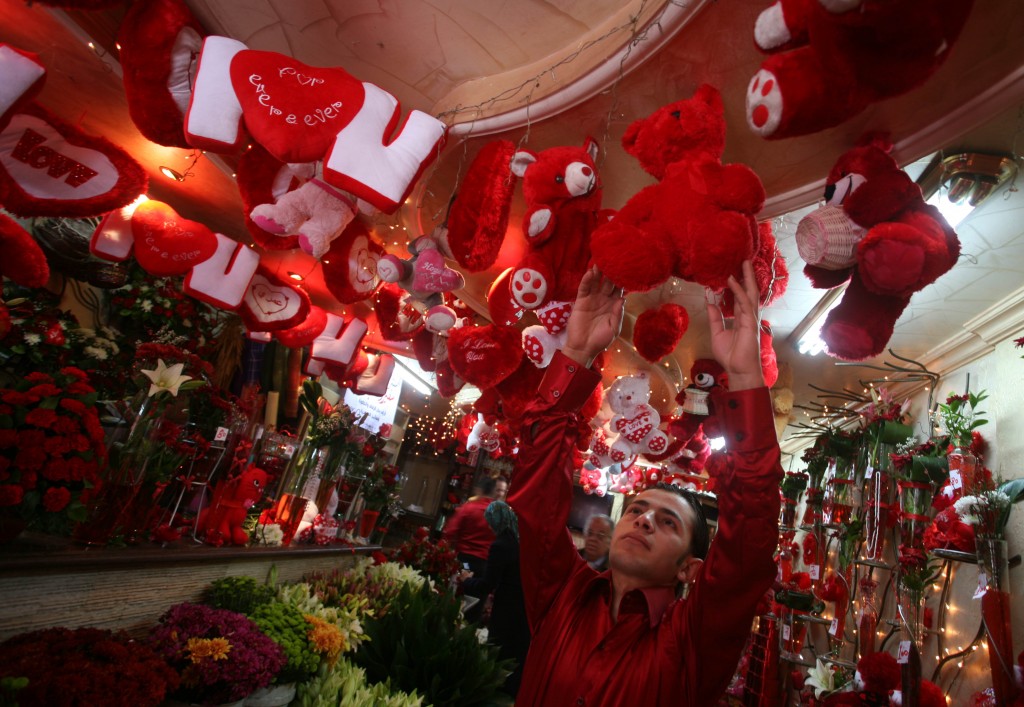
February 14 is here, and with it comes Valentine’s Day, now celebrated in Israel as it is in most corners of the global village. Malls are festooned with red-and-white heart balloons, chocolatiers advertise Valentine’s gifts and even my children’s kindergarten teacher marked the occasion, bringing in a tree branch she found with heart-shaped leaves.
The holiday of love — a pagan festival with Roman roots that was Christianized and much later commercialized by the Hallmark greeting card company — wasn’t known in Israel until the last decade. In fact, Israel has its own holiday of love, Tu B’Av, celebrated in the summer and with roots dating back to the Talmudic era.
Like most secular holidays that have migrated here, Valentine’s Day is just a reason to celebrate, a siba l’mesiba, said University of Haifa sociologist Oz Almog.
“It’s the influence from the US, and the fact that Israel is more global now,” Almog said. “Valentine’s Day is about love and love is a strong component in marketing, because it creates another reason to buy presents, to celebrate your loved one, your family, your couplehood.”
Almog compares Israeli Valentine’s Day activities to the recent trend of partying on Sylvester, the local name for New Year’s Eve. Along the same lines, he points to Israelis celebrating birthdays according to the Gregorian or Western calendar, rather than the Hebrew calendar which was once the more common custom.
“We don’t consider these holidays to be Jewish holidays, and we take out the religious values that may be inherent in them,” he said. “We’re just taking advantage of the celebration opportunities.”
In Tel Aviv, where celebrations of secular holidays with roots from abroad tend to be more common than in a more traditional city like Jerusalem, several stores and designers are hosting special sales for Valentine’s Day.

Handbag designer Gili Rozin, who creates retro-style bags for men and women out of industrial plastic under her Medusa label, thought it was a great idea to host a pre-Valentine’s Day sale at her Dizengoff Boulevard studio, where people can usually buy by appointment only.
“It’s different from a regular sale,” Rozin said of the five-day event, which included gift options from local chocolatier Ika. “It’s an opportunity to take advantage of a celebration, to buy something for your boyfriend or girlfriend. No one takes it seriously here, they’re celebrating in quotation marks, they know that it’s a funny thing to celebrate.”
Medusa’s partner in the event, chocolate maker Cohen, has found that marking Valentine’s Day is good for sales, as the Israeli public “loves excuses to spoil each other.”

“I usually avoid any kitsch in my chocolates,” said Cohen, whose truffles are created according to French methods. “So I add a little touch of red to the chocolates, use some heart shapes, just as I do on Tu B’Av,” Israel’s traditional holiday of love.
Cohen does find that the Valentine’s Day sales show up in her bottom line, creating one of her annual peaks in sales.
“We do it every year because people like it,” she said. “It’s just a chance to mark another day.”
According to Almog, many holidays worldwide are experiencing a globalization effect, being celebrated everywhere but in each place with a local accent.
“Israelis take what they like from any non-Israeli holiday, and make it theirs,” he said. “We have a young generation whose motto is, you live once, so party now.”








The Times of Israel Community.