

Palestinian prisoners’ portraits underscore absence
Crowds hoist photos of their imprisoned loved ones at protests in support of the hunger strikers
 Add ToI as a Preferred Source on Google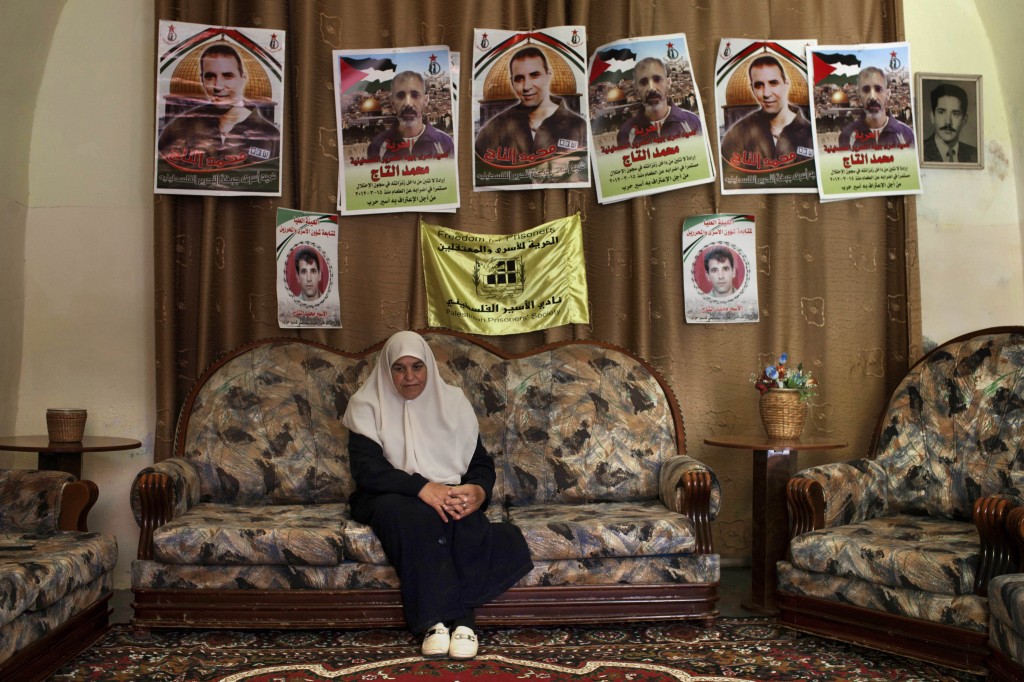
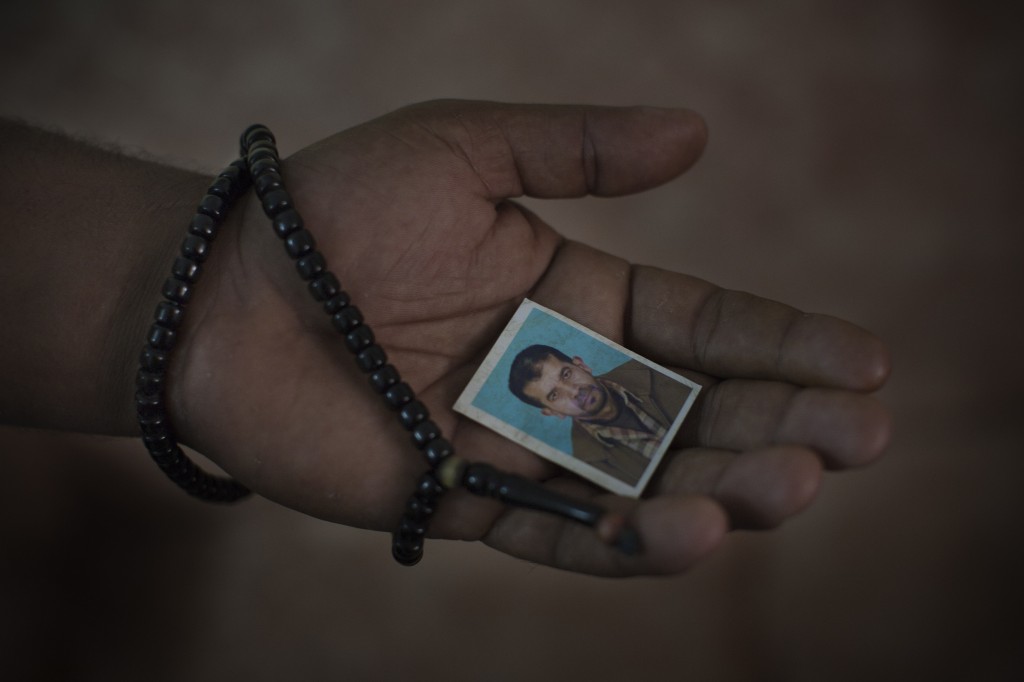
KUFR RAI, West Bank (AP) — For the hundreds of Palestinian families who have a relative in Israeli detention, a photograph is the only real contact with their loved ones.
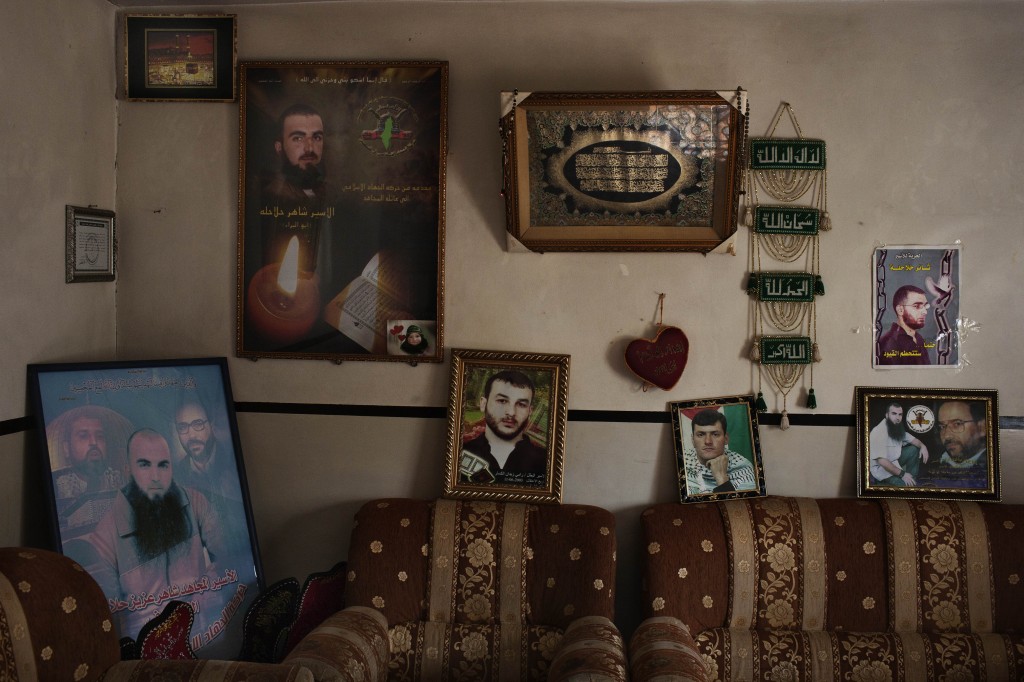
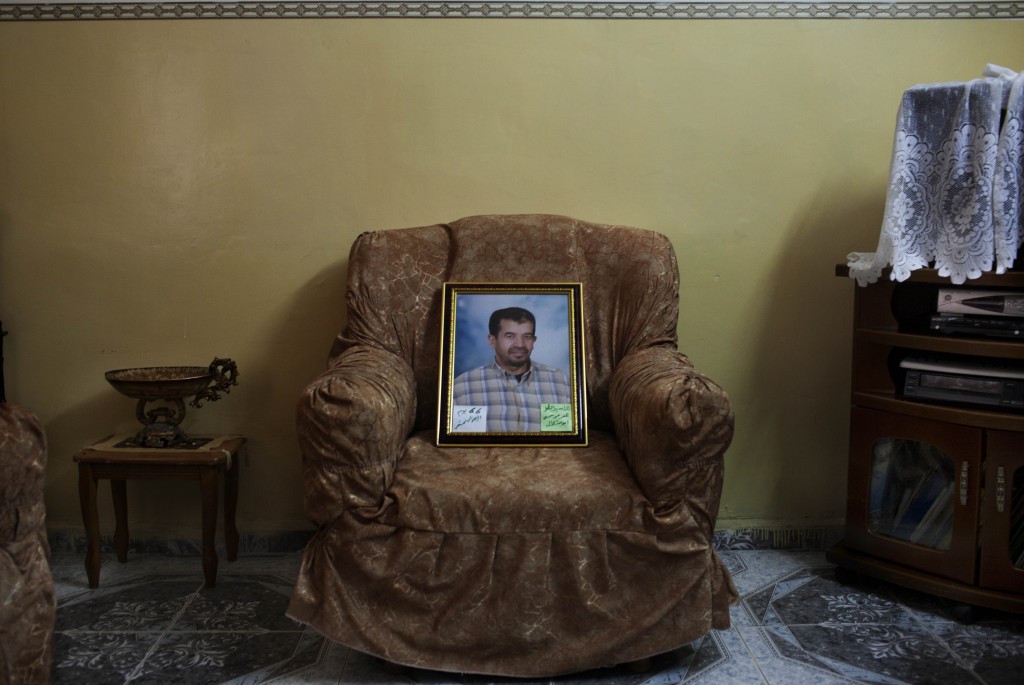
In homes, the images are usually decked in elaborate frames alongside the portraits of dead ancestors, marking the conspicuous absence of the prisoners.
The fate of the prisoners, always an emotional issue in Palestinian society, has become an especially poignant rallying point over the past month as more than 1,000 men imprisoned by Israel have staged a hunger strike. It is one of the longest and largest hunger strikes that Palestinians have ever undertaken.
About 1,600 prisoners have refused food for nearly a month. A smaller core of 10 have refused to eat for 50 to 76 days. Many of the longer-fasting strikers are receiving liquid infusions to keep them alive.
-
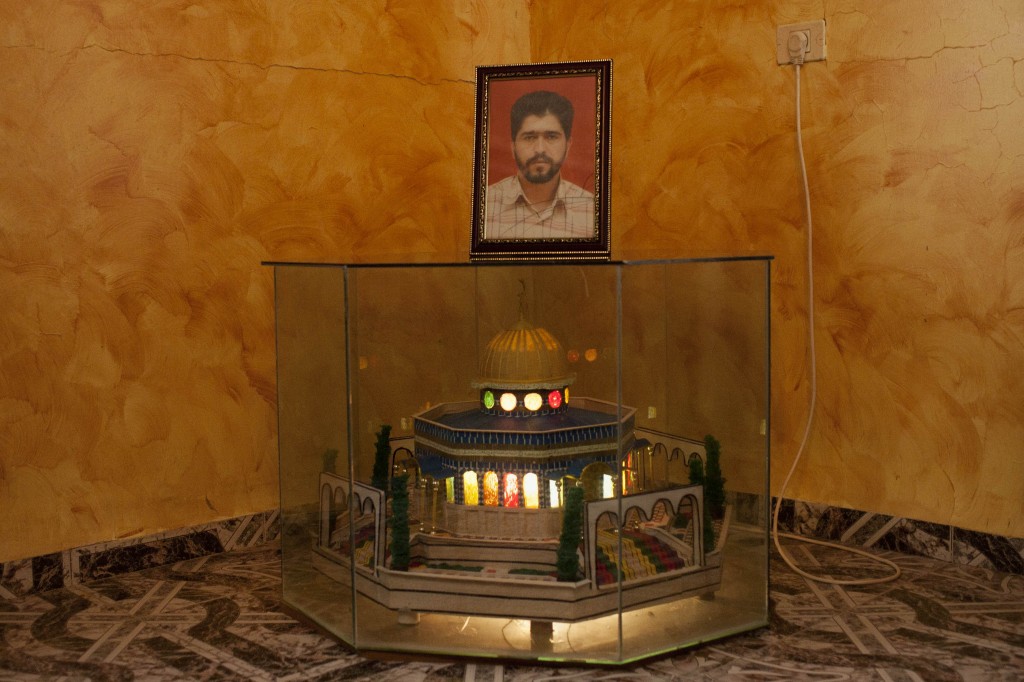
- A picture of Palestinian Jaffar E’zedin sits on top of a model of the Dome of the Rock which he had made while doing a previous prison sentence, at his family home in the West Bank village of Arrabeh. Jaffar is imrisoned in Israel without charges and is on a hunger strike since the second day after his arrest on March 25. (photo credit: AP/Bernat Armangue)
-
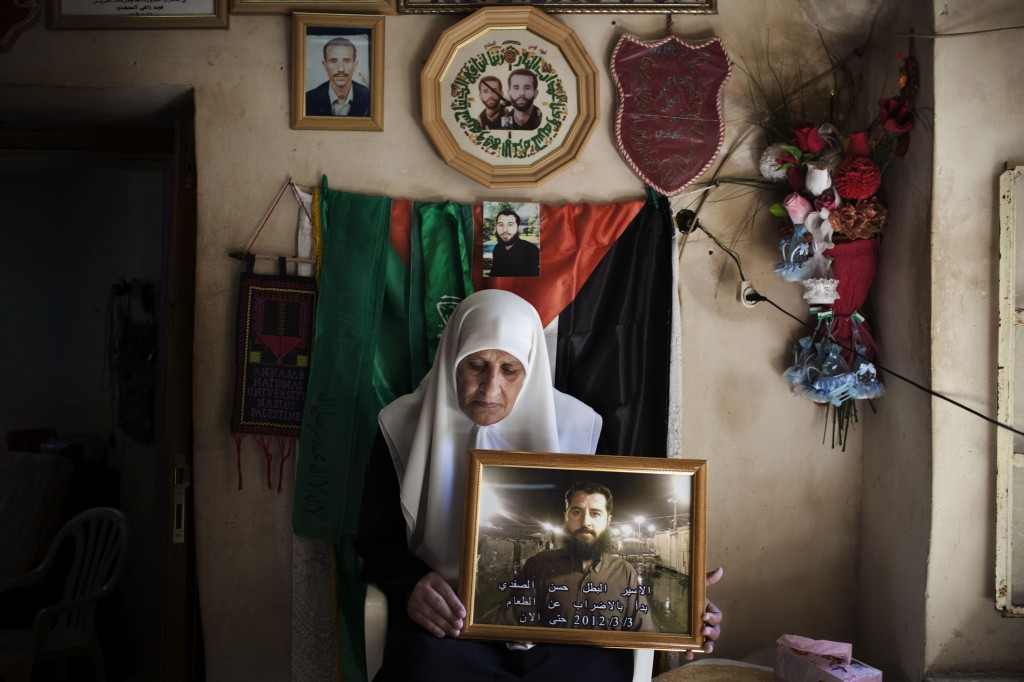
- Harbiya al-Batall holds a picture of her 33 year old son Hasan Safadi at their family home in the West Bank city of Nablus. Hasan Safadi was arrested on June 29 and is held without charges since. Hasan is on a hunger strike since March 3. (photo credit: AP/Bernat Armangue)
-
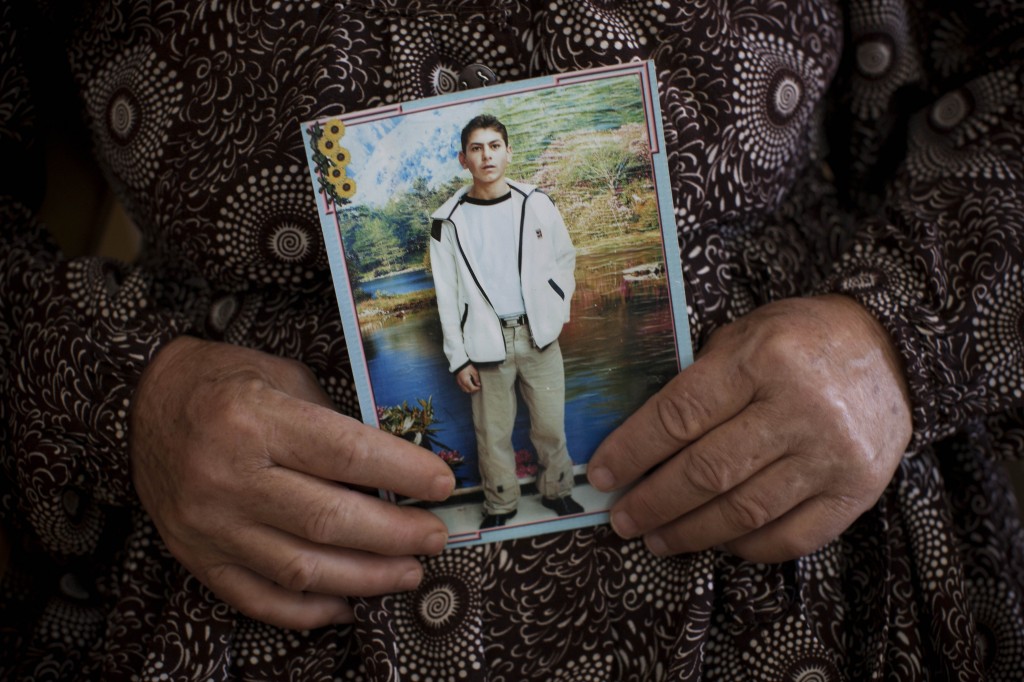
- Missadeh Diab, 65, holds a picture of her son Bilal at her home in the West Bank village of Kufr Rai. Bilal Diab was arrested in August 2011 and held without charges since. Bilal is on a hunger strike since Feb. 28. (photo credit: AP/Bernat Armangue)
-
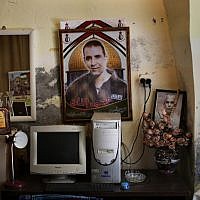
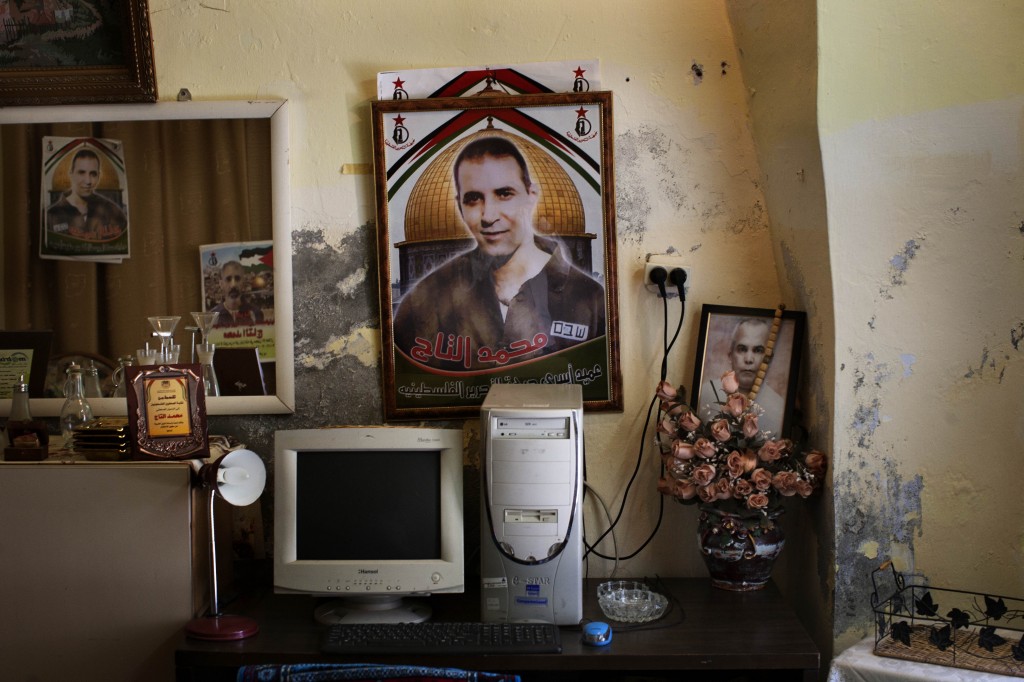
- Pictures of Muhammed al-Taj, jailed in Israel and on a hunger strike since March 15, are seen at his family’s house in the village of Tubas, near Jenin. (photo credit: AP/Bernat Armangue)
-
- Pictures of Palestinian friends and relatives jailed in Israel are displayed on the living room of the Halahleh family house in the West Bank Village of Kharas near Hebron. Thaer Halahleh is in administrative detention for the past 24 months and is on a hunger strike for well over 70 days. (photo credit: AP/Bernat Armangue)
-
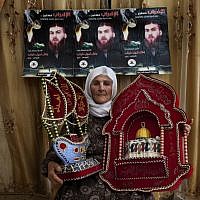
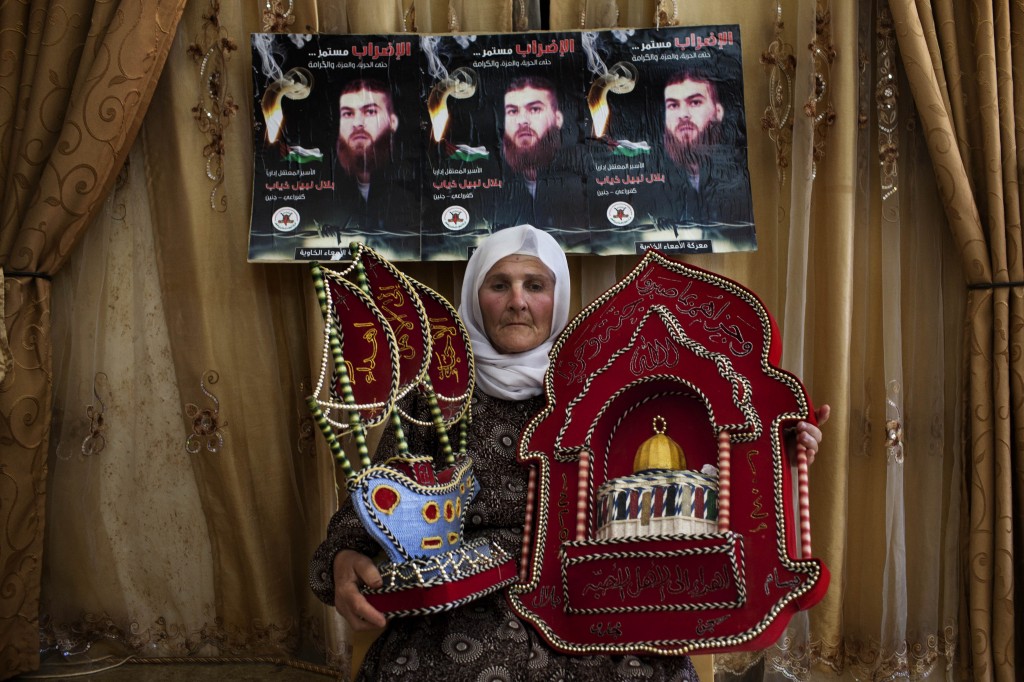
- Missadeh Diab, 65, poses with presents made by her sons while they were in Israeli jails, at her home in the West Bank village of Kufr Rai. The posters in the background show her son Bilal and read in Arabic, “the strike will continue, Bilal Nabil Diab.” (photo credit: AP/Bernat Armangue)
-
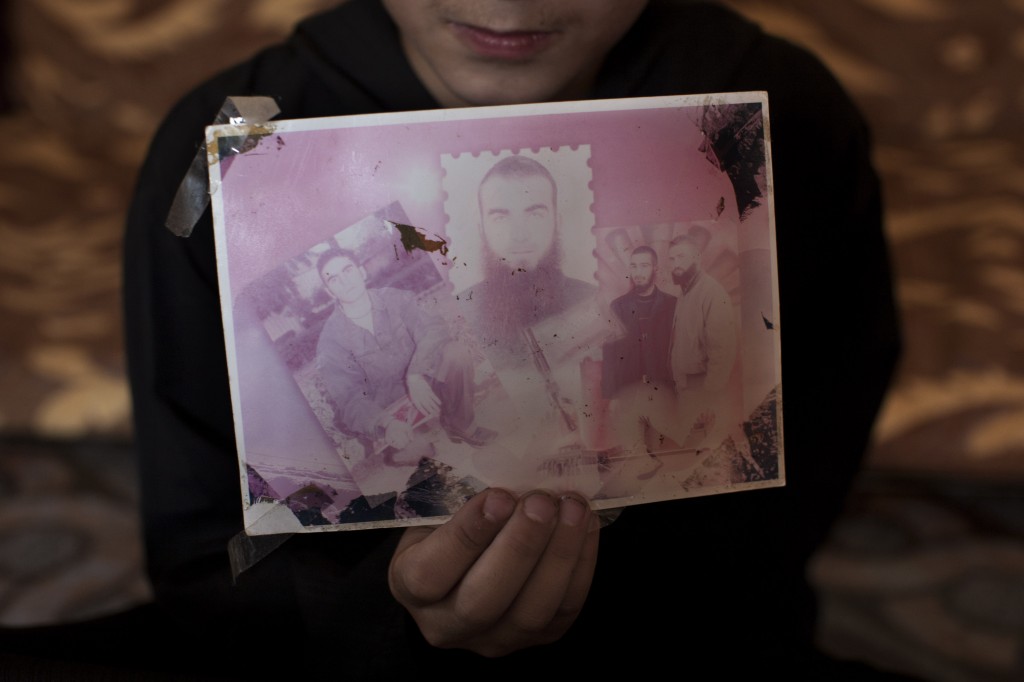
- Bara, a daughter of Thaer Halahleh, holds a picture of her father, center, and her uncles inside the family house in the West Bank Village of Kharas near Hebron. Thaer is in administrative detention for the past 24 months and is on a hunger strike for well over 70 days. (photo credit: AP/Bernat Armangue)
-
- A picture of Omar Abu Shallal, who was detained without charges on Aug. 15, 2011 and is on hunger strike since March 3. (photo credit: AP/Bernat Armangue)
-
- A picture of Palestinian Omar Abu Shallal, jailed in Israel and on a hunger strike since Aug. 15, sits on the sofa in the living room of his family house, in the West Bank city of Nablus. (photo credit: AP/Bernat Armangue)
The hunger strikers form at least a one-third of the Palestinian prisoner population. Among them are 300 people being held in open-ended detention without charge, a policy called “administrative detention.” Israel uses the policy to hold Palestinians they believe pose an immediate risk to security.
Israel says that many of the hunger strikers have been convicted of deadly attacks on Israelis or other violent crimes.
Still, the hunger strike seems to reflect a shift of sorts. While Palestinian militant groups refuse to renounce violence, they have begun to adopt nonviolent tactics, saying they are inspired by the success of mass protests during the Arab Spring uprisings across the Middle East over the past year and a half.
Officials on both sides say negotiations are under way to end the strike.
Large crowds gather in the West Bank and Gaza Strip nearly every day in support of the hunger strikers. Activists and relatives hoist large photos of their imprisoned loved ones.
Palestinian mothers and wives carry the heaviest burdens. They head single-parent households in the absence of their husbands.
Mothers, often poorly educated from rural villages in the West Bank, struggle to secure jail visits.
Families from Gaza, ruled by the Islamic militant group Hamas, are prohibited from entering Israel entirely to visit their loved ones. For them, the photographs are even more meaningful.
Every week in Gaza, dozens of Palestinian women clutching large portraits of their sons protest at the local Red Cross office, demanding to visit their imprisoned children.
Some Palestinian families have a series of siblings in prison. In those living rooms, there are often a string of portraits of men who resemble each other, gazing into space. The portraits are often twinned by handicrafts that the prisoners make in jails.
The importance of these photographs is underscored in the demands of the hunger-striking prisoners. Their chief demands are an end solitary confinement and administrative detention, and to allow families from Gaza to visit their loved ones.
They also want the right to be photographed with their families.
Copyright 2012 The Associated Press.







The Times of Israel Community.