

Physician’s assistant at Sheba in critical condition with COVID-19
Woman, 33, apparently contracted disease from asymptomatic patient who had been in non-coronavirus ward, raising questions about protective equipment for other hospital workers
 Add ToI as a Preferred Source on Google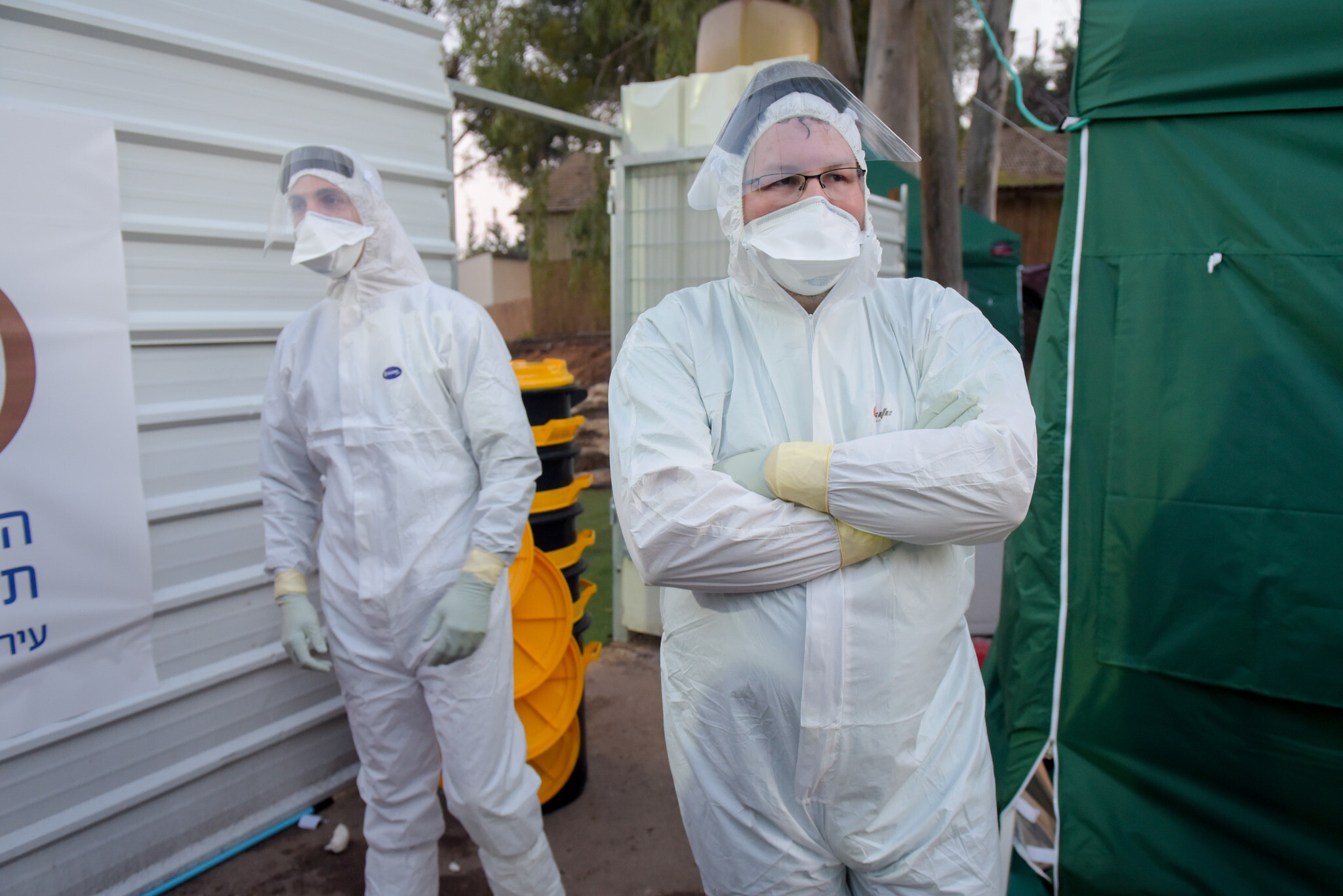
A physician’s assistant at a hospital near Tel Aviv is in critical condition after being infected with the coronavirus.
The 33-year-old woman is on an ECMO life support machine that replaces the function of the heart and lungs, Sheba Medical Center in Ramat Gan said Saturday.
The case is reportedly the most serious among Israeli medical practitioners since the coronavirus crisis began.
According to Health Ministry statistics published Saturday morning, 1,328 medical staff are currently in quarantine after having come in contact with coronavirus carriers.
Over 13,000 COVID-19 cases have been confirmed, including 113 people on ventilators. It is not know how many of those who have become sick are health workers.
Channel 12 reported that the woman was infected after treating a patient who had yet to be diagnosed with COVID-19, the disease caused by the coronavirus.
A spokesperson for Sheba confirmed to Channel 12 that the PA was wearing a regular surgical mask, not an N95 mask, because she was not in a ward where coronavirus patients are being treated.
Mirsham, the Israeli Medical Residents Association, told Channel 12 that had she been wearing an N95 mask, she might not have become sick. The mask has a higher level of filtration, but hospitals around the world have been dealing with shortages of them and other protective equipment.
“We have been warning for weeks that the main problem is the protection of medical staff in non-coronavirus departments,” said Mirsham in a statement. “Patients are not always admitted with respiratory symptoms and sometimes they are completely asymptomatic [for coronavirus]. … Medical teams in internal medicine departments must have sufficient personal protective equipment. If they continue to work without sufficient protective equipment more more staff will be infected.”
According to the US Centers for Disease Control and Prevention, surgical masks provide barrier protection against droplets including large respiratory particles, but do not effectively filter small particles from the air and do not prevent leakage around the edge of the mask when the user inhales. N95 masks form a seal around the nose and mouth and block at least 95 percent of very small (0.3 micron) particles.









The Times of Israel Community.