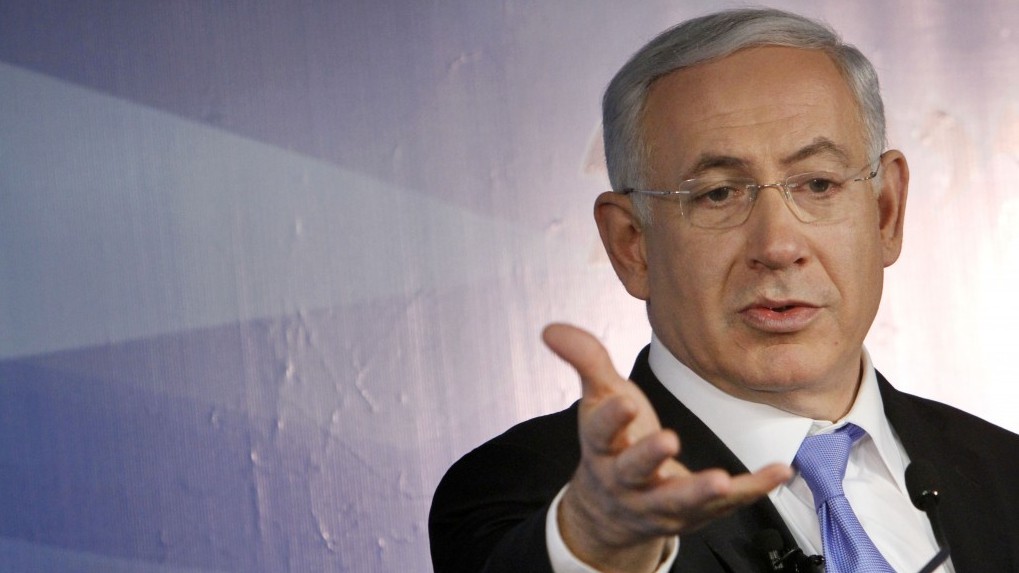
Benjamin Netanyahu (photo credit: Miriam Alster/Flash90)
Iran is using negotiations to “try to delay and mislead” the West, Prime Minister Benjamin Netanyahu said Sunday following a meeting with his Italian counterpart.
“Our policy concerning Iran hasn’t changed,” said Netanyahu to Prime Minister Mario Monti. “The demands from Iran must be made clear –- to remove enriched material, to halt [uranium] enrichment and dismantle the facility in Qom.”
He added that Israel would be following the upcoming talks on Iran’s nuclear program, which EU foreign policy chief Catherine Ashton confirmed Sunday would take place in Istanbul on April 14.
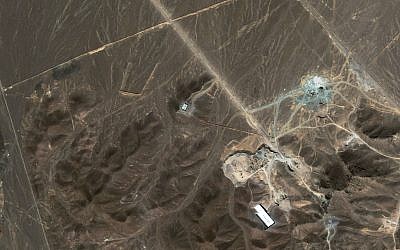
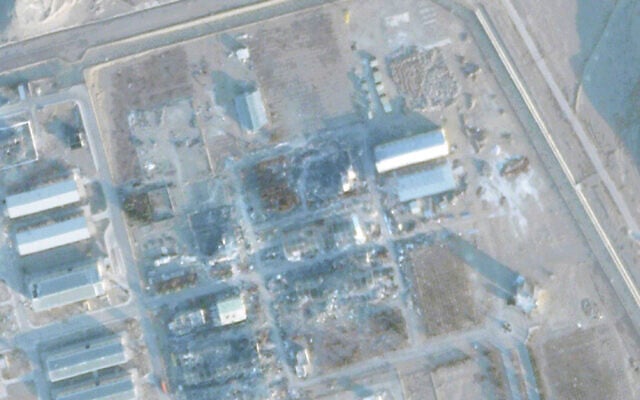
A file satellite image taken Sunday Sept. 27, 2009, provided by DigitalGlobe, shows a suspected nuclear enrichment facility under construction inside a mountain located north of Qom. (photo credit: AP)
Iran remained adamant Sunday that it would not close its Fordo nuclear power facility, which is built deep inside a mountain near the holy city of Qom. In an interview with the Iranian Students’ News Agency, the head of Iran’s Atomic Energy Organization also said that the Islamic republic will not give up higher-level uranium enrichment. Such demands are “irrational,” said Fereydoon Abbasi Davani.
“If they do not threaten us and guarantee that no aggression will occur, then there would be no need for countries to build facilities underground. They should change their behavior and language,” he told the official media outlet.
Get The Times of Israel's Daily Editionby email and never miss our top stories
The demands regarding the facility in Qom and the enrichment of uranium were announced Saturday in a front-page New York Times article, which quoted anonymous United States and European Union diplomats.
The Associated Press contributed to this report.
Advertisement
We can't do this work alone.
The war with Iran has been draining for all of us in Israel. But when I heard about a high casualty incident – ballistic missile impacts in Arad and Dimona that left nearly 200 people wounded – I drank a cup of coffee, packed a bag, and headed south.
There, I spoke with Shilgit, the head of an after-school program for underprivileged youth. Standing outside her destroyed center, Shilgit said it was a miracle that no children were hurt and spoke about the community coming together in the hours since.
As a Times of Israel reporter, I’m committed to telling stories of resilience like Shilgit’s. But my colleagues and I can't do this alone. If you value work like this,please consider joining our reader support group, The Times of Israel Community. Your financial support is essential to keep real human reporting like this going.
We’re really pleased that you’ve read X Times of Israel articles in the past month.
That’s why we started the Times of Israel - to provide discerning readers like you with must-read coverage of Israel and the Jewish world.
So now we have a request. Unlike other news outlets, we haven’t put up a paywall. But as the journalism we do is costly, we invite readers for whom The Times of Israel has become important to help support our work by joining The Times of Israel Community.
For as little as $6 a month you can help support our quality journalism while enjoying The Times of Israel AD-FREE, as well as accessing exclusive content available only to Times of Israel Community members.
Thank you, David Horovitz, Founding Editor of The Times of Israel