

Police step up enforcement as infections in June’s first 10 days surpass May
Another 175 cases identified in last 24 hours; 31 patients are in serious condition; officers dish out hundreds of fines for those not wearing masks in public
 Add ToI as a Preferred Source on Google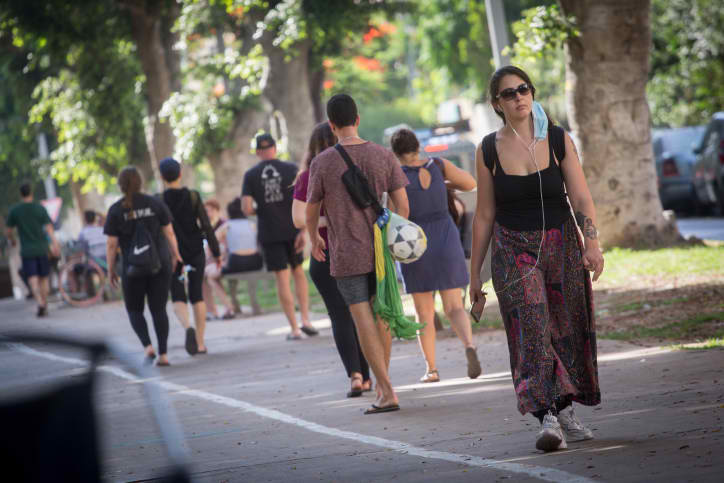
The Health Ministry on Wednesday said 175 new coronavirus cases were confirmed in the past 24 hours, as Israel continued to experience a significant rise in infections.
The number of active cases has surged to 2,869, after having dipped below 2,000 last month. The number of cases diagnosed in the first 10 days of June was 1,253, surpassing those in the entire month of May, which reported 1,186 cases.
Thirty-one patients were in serious condition, including 22 on ventilators. Another 42 were in moderate condition and the rest were displaying mild symptoms. The ministry said 14,817 tests were conducted on Tuesday. No additional deaths were reported, keeping the toll at 299.
Amid the jump in cases, police were stepping up enforcement against Israelis failing to wear masks in public, handing out hundreds of fines, according to Channel 12.
The number of mask fines distributed on Wednesday, 381, was four times higher than on any day last week, the report said. The fine for not wearing a mask in public is NIS 200 ($60).
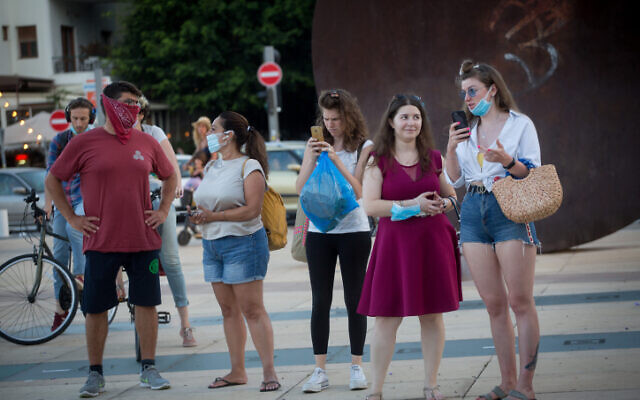
Police have also fined more businesses who failed to heed the emergency rules. Fines for businesses range from NIS 2,000 to NIS 5,000 ($580-$1,450).
Earlier in the week, 179 cases were identified in a 24-hour period, the highest number of daily cases diagnosed since late April. Officials have bemoaned a slackening of public observance of virus rules, though lawmakers and policy leaders have also flouted health guidelines.
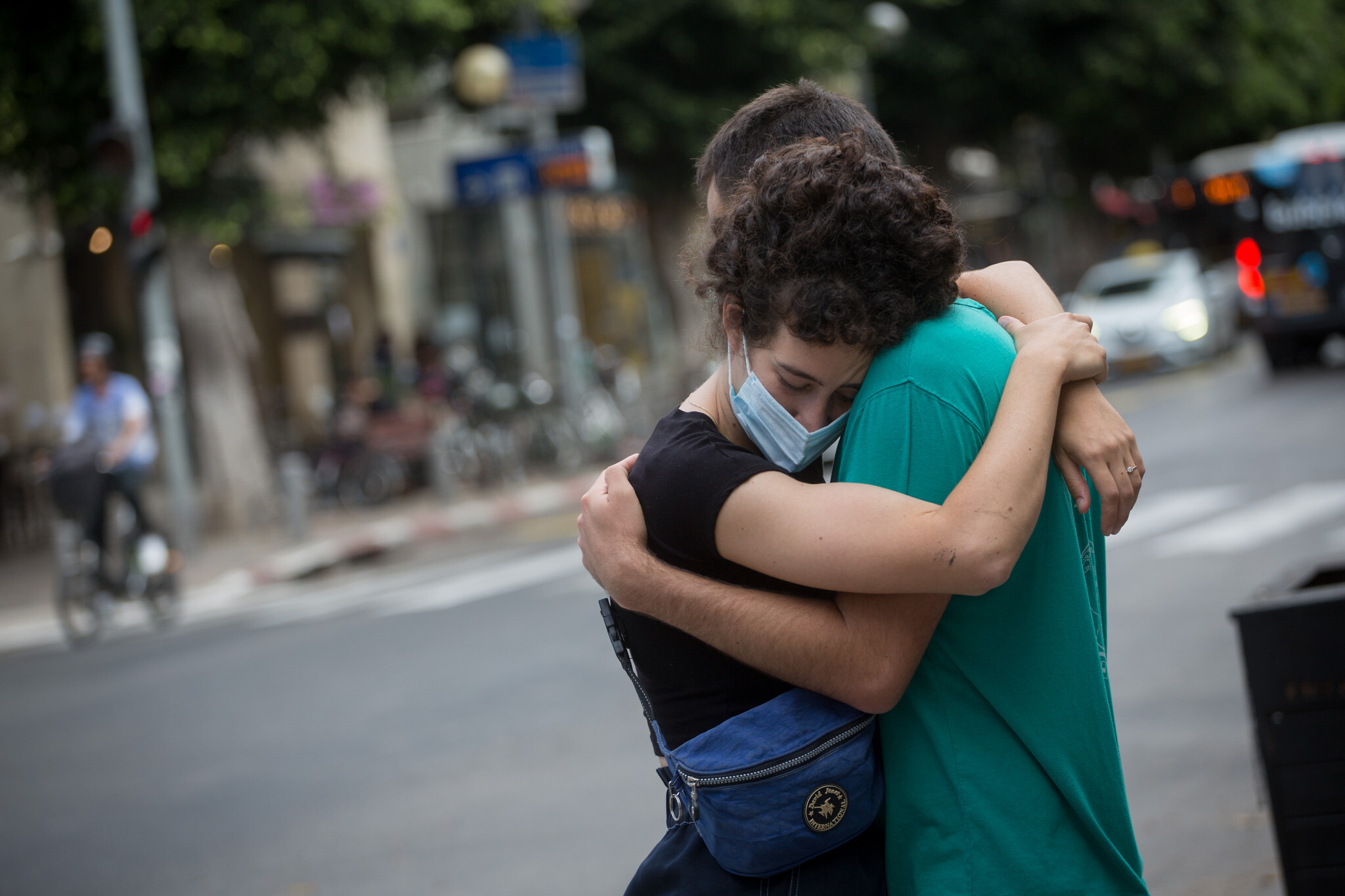
On Tuesday, Prime Minister Benjamin Netanyahu ordered stepped-up enforcement of social distancing rules, including giving city officials the power to join police in enforcing mask-wearing and rules against large gatherings. A day earlier, the government decided to freeze plans for a further easing of restrictions that would have allowed trains, cinemas and arts venues to open.
According to a statement from the Prime Minister’s Office, local authority inspectors and qualified Population and Immigration Authority inspectors will now enforce the wearing of masks, and stop gatherings held against regulations.
In addition, they will have powers to check adherence to the so-called Purple Badge standard for businesses and commercial centers, and work to enforce quarantines for people diagnosed with the coronavirus and those they have been in contact with.
The statement said the Federation of Local Authorities will prepare a training program for city inspectors and the Justice Ministry will carry out any legislative procedures necessary to grant the inspectors the powers they would need.
Health officials have attributed much of the recent rise in new cases to schools, which reopened in May after a two-month closure.
The government last week decided against closing all schools, but said it could use targeted closures anywhere a coronavirus case is found.
The number of students and teachers who contracted COVID-19 in a new outbreak centered in schools on Wednesday climbed to 433, according to the Education Ministry.
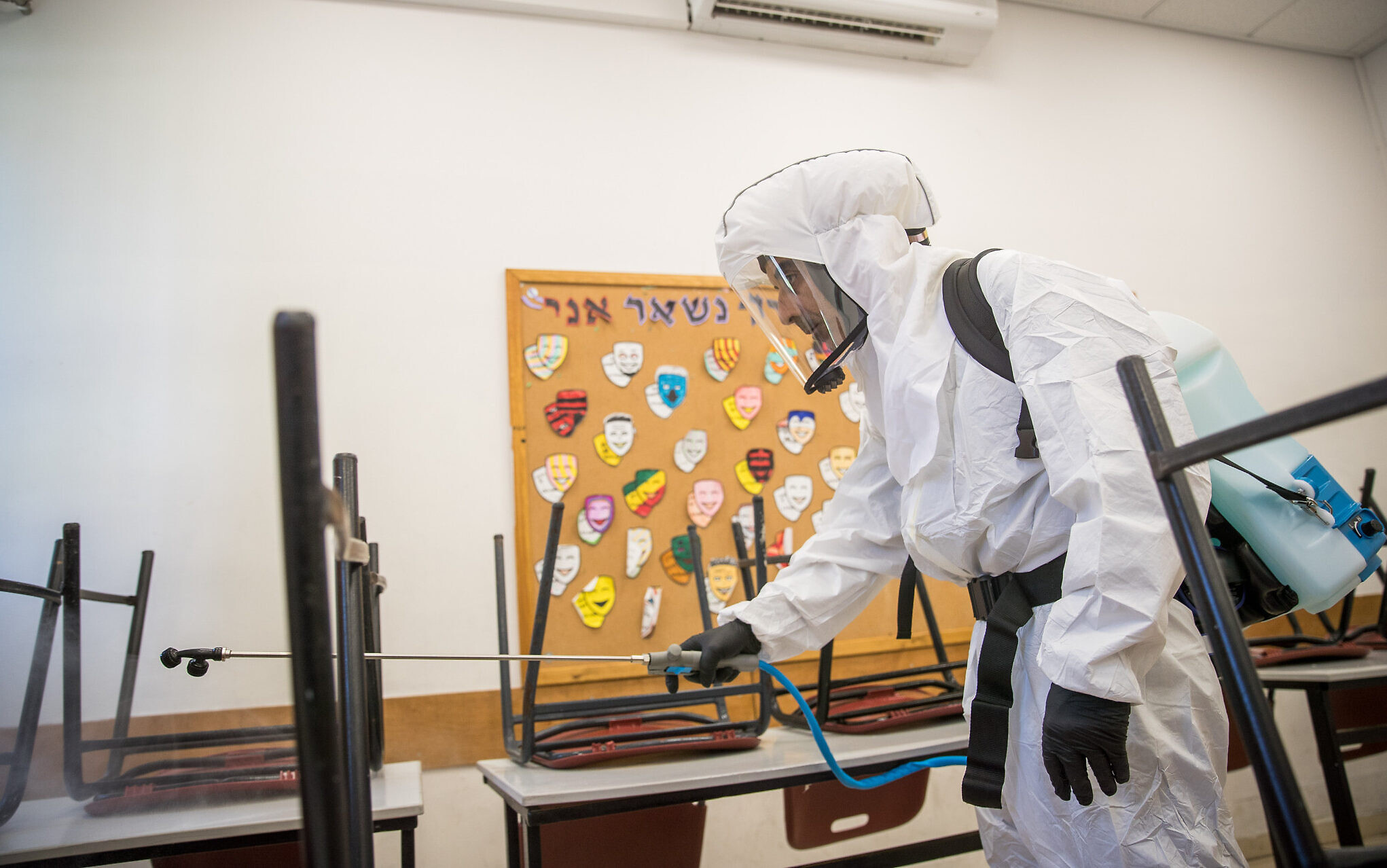
Nearly 24,000 are in quarantine after 144 schools shut down following the discovery of virus cases.
A Jerusalem high school that has seen a wide outbreak will begin to reopen on Thursday. Over 150 students and staff at the Gymnasia Rehavia school have been infected with COVID-19.
The school will reopen primarily for 11th and 12th graders who must complete their matriculation exams. The school principal told Channel 12 that only small groups of students will return in the first phase of reopening, rather than the full classes that preceded the outbreak.
Israel on Wednesday extended its entry ban for non-Israelis who are not permanent residents until July 1, according to Channel 13.
Globally, the coronavirus has killed at least 411,588 people since it emerged in China last December, according to a Wednesday tally from official sources compiled by AFP.
At least 7,254,140 cases of coronavirus have been registered in 196 countries and territories. Of these, at least 3,214,600 are now considered recovered.
The tallies, using data collected by AFP from national authorities and information from the World Health Organization (WHO), probably reflect only a fraction of the actual number of infections. Many countries are testing only symptomatic or the most serious cases.
In Israel, a recent preliminary batch of random tests for coronavirus antibodies in the population indicated that some 200,000 Israelis, 2.5 percent of the population, may have had the virus — more than ten times the confirmed number of patients.
The United States is the worst-hit country with 112,006 deaths from 1,979,893 cases. At least 524,855 people have recovered.
After the US, the hardest-hit countries are Britain with 40,883 deaths, Brazil with 38,406 fatalities, Italy with 34,043 deaths and France with 29,296 dead.



The Times of Israel Community.