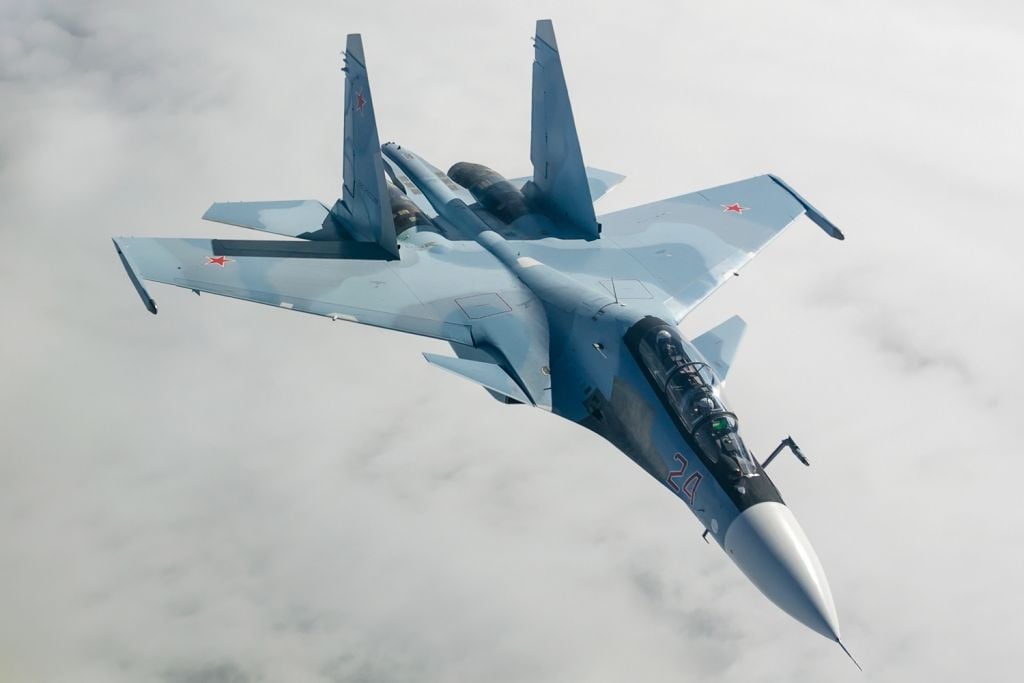
Russian Air Force Su-30SM (Alex Beltyukov / Wikipedia)
Russia is set to supply several Sukhoi Su-30SM multi-role fighter jets to Iran as part of an arms deal between the two countries, a high-ranking official in the Russian Federal Service for Military-Technical Cooperation said Wednesday.
The Sukhoi Su-30SM, according to Sputnik, is capable of air-to-air and air-to-ground strikes and can be equipped with a wide variety of precision munitions.
According to the Russian news site Sputnik, a source in the Iranian Defense Ministry said the country’s Defense Minister Hossein Dehghan, who arrived Monday in Moscow, had planned to discuss the deal with Russian officials during his visit.
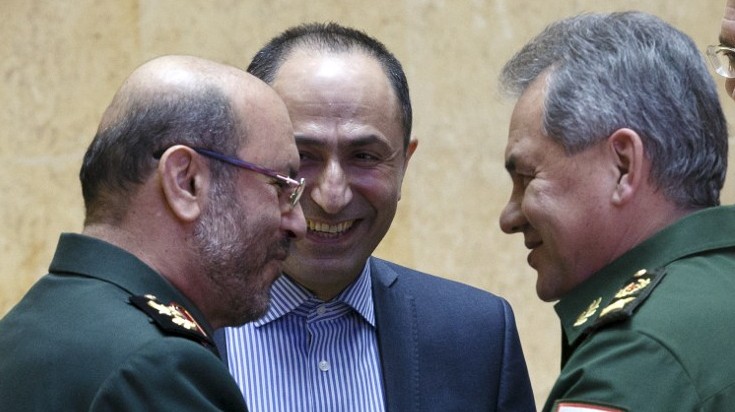
On Tuesday, Dehghan met with Russian President Vladimir Putin, Deputy Prime Minister Dmitry Rogozin, Defense Minister Sergei Shoigu, and other officials.
Russian Defense Minister Sergei Shoigu (R) and Iranian Defense Minister Hossein Dehghan (L) shake hands during their meeting in Moscow, Russia, on February 16, 2016 (AFP / POOL / VADIM SAVITSKY)
Dehghan is set to take part on Thursday in a ceremony in Astrakhan on the Caspian Sea to mark the first delivery of Russian S-300 air defense system to Iran.
Get The Times of Israel's Daily Editionby email and never miss our top stories
Iran and Russia have reinforced their military and nuclear cooperation since the signing in July of a landmark accord between Tehran and world powers over the Iranian nuclear program.
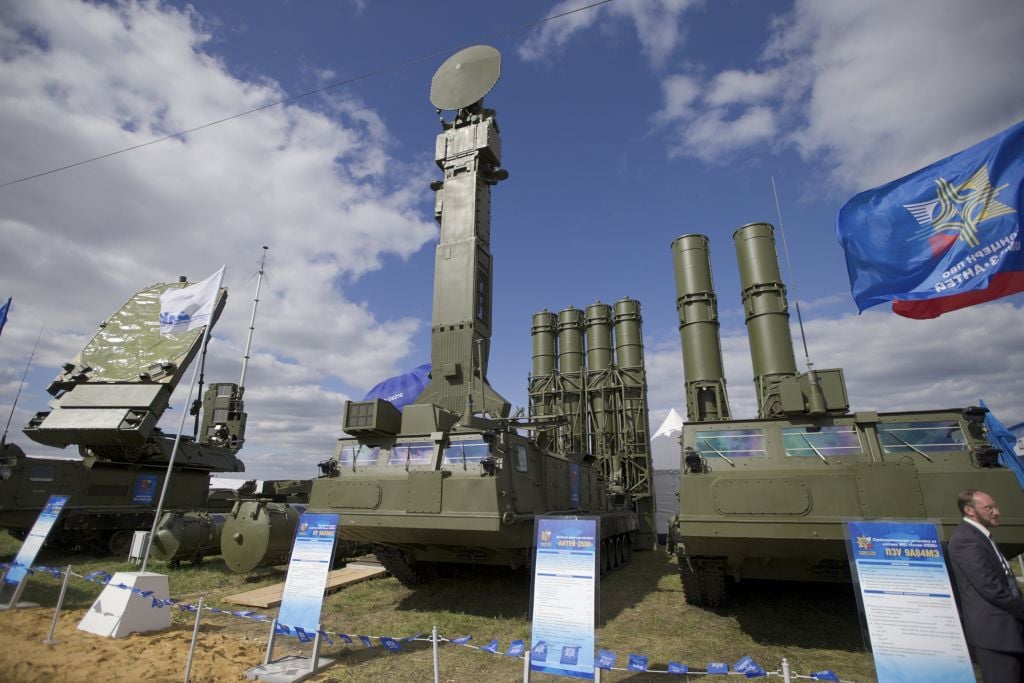
A Russian air defense missile system Antey 2500, or S-300 VM, is on display at the opening of the MAKS Air Show in Zhukovsky outside Moscow, August 27, 2013. (AP/Ivan Sekretarev, File)
Russia has authorized the delivery of S-300 anti-aircraft batteries to Iran, despite the strong opposition of Western powers. Some Russian sources said the system could be delivered as early as Thursday, although the accuracy of the reports was unclear.
On November 23, Moscow lifted a ban on the sale and delivery of technological materiel tied to the nuclear industry after a meeting between Russian President Vladimir Putin and Iran’s leader Hassan Rouhani.
Advertisement
AFP contributed to this report.
Help us report truthfully on social media
As a multimedia journalist, my job is to take the quality, fact-based journalism produced by The Times of Israel newsroom and make it accessible across every platform — from Instagram posts to podcasts to short-form videos.
This is how many, especially young people, consume news these days. But misinformation is rampant on social media. Our team at ToI produces accurate, responsible short-form reporting on Israel and the Jewish world.
If you believe in the importance of factual social media journalism, please consider joining our reader support group, The Times of Israel Community. Your financial support is essential to sustain responsible multimedia reporting.
We’re really pleased that you’ve read X Times of Israel articles in the past month.
That’s why we started the Times of Israel - to provide discerning readers like you with must-read coverage of Israel and the Jewish world.
So now we have a request. Unlike other news outlets, we haven’t put up a paywall. But as the journalism we do is costly, we invite readers for whom The Times of Israel has become important to help support our work by joining The Times of Israel Community.
For as little as $6 a month you can help support our quality journalism while enjoying The Times of Israel AD-FREE, as well as accessing exclusive content available only to Times of Israel Community members.
Thank you, David Horovitz, Founding Editor of The Times of Israel


 Add ToI as a Preferred Source on Google