

Saber rattling and sick kids
Israeli papers abound with leftover news of a retaliatory airstrike on Syrian regime positions and a persistent crisis at Hadassah
 Add ToI as a Preferred Source on Google
Tamar Pileggi is a breaking news editor at The Times of Israel.
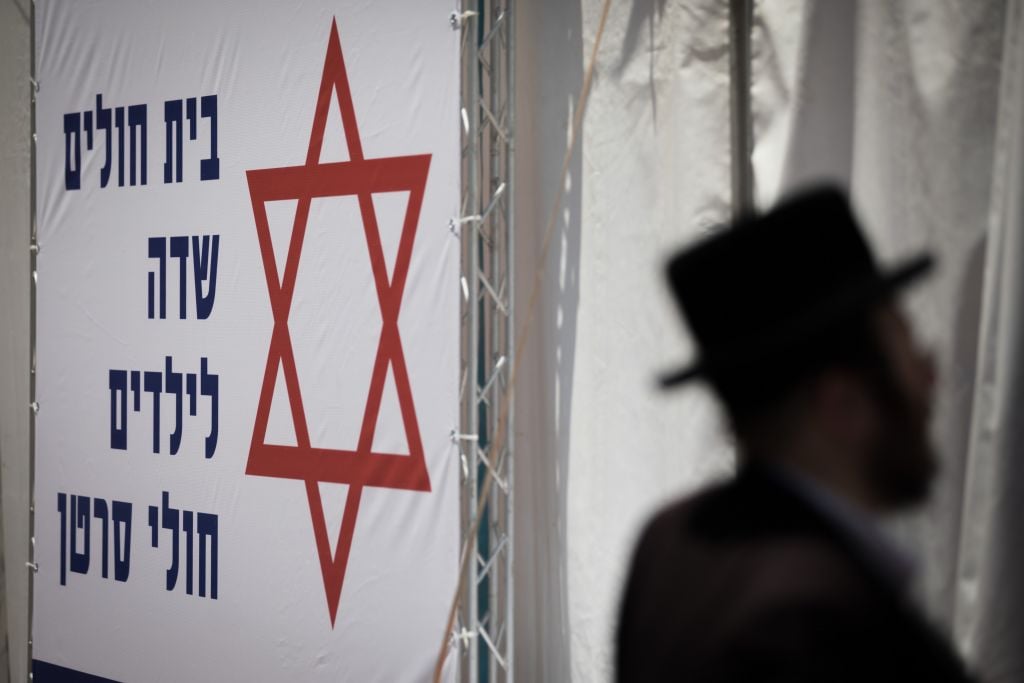
Leftover news of Israel’s weekend retaliatory airstrikes on Syrian military positions, and the never-ending crisis gripping a Jerusalem pediatric cancer ward, dominate the Hebrew-language press on Sunday.
As usual, the tabloid Yedioth Ahronoth has no qualms tugging at readers’ heartstrings, covering its front page with the names and pictures of sick kids affected by the deadlock between management and doctors at Jerusalem’s Hadassah Medical Center.
Under the headline “Don’t let us die,” the daily highlights the struggles of young patients and their families left in limbo by the ongoing crisis.
“For these kids battling cancer, it really doesn’t matter who is responsible for the crisis at the hemato-oncology unit,” it charges in its lead story.
Over the last several months, most of the senior doctors and residents at Jerusalem’s only cancer ward for children have quit their jobs, leaving only the nurses and a handful of replacement doctors. The physicians quit over their objection to a plan that would allow doctors to operate on pediatric bone marrow transplant patients in the same department as adult patients, a practice that they said was likely to increase child mortality rate.
From 11-year-old Ayelet to 3-year-old leukemia patient Nia, Yedioth profiles over a dozen kids and interviews their parents, who describe the difficulty of moving their children to other hospitals mid-treatment.
Also leveling Harsh criticism of the ongoing spat is Israel Hayom, which slams the Health Ministry’s “incomprehensible” handling of the crisis.
In a column, the paper’s health correspondent, Ron Reznick, bitterly chastises the Health Ministry for failing to support the doctors in their protest and contending they aren’t motivated by professional considerations.
“What kind of investigation has the Health Ministry conducted on this matter? Of course they have done less than the minimum, and have not even summoned the doctors to testify and explain their decision, one which is supported by witnesses, facts, and hospital protocols,” he writes.
Next to Reznick’s column, a particularly sardonic cartoon shows an emaciated child whose life-saving IV drip is tangled by a knot caused by the doctors and management, while a seemingly unaffected nurse tending to him says, “Hang in there sweetheart, the High Court is on the way!”
Haaretz, meanwhile, has bigger fish to fry, with the front page of its Sunday edition mostly dedicated to the weekend flare-up on Israel’s northern border.
According to the paper, Israel has warned Tehran it “will not tolerate” the continued arming of Hezbollah, Iran’s proxy in Lebanon (and now Syria too).
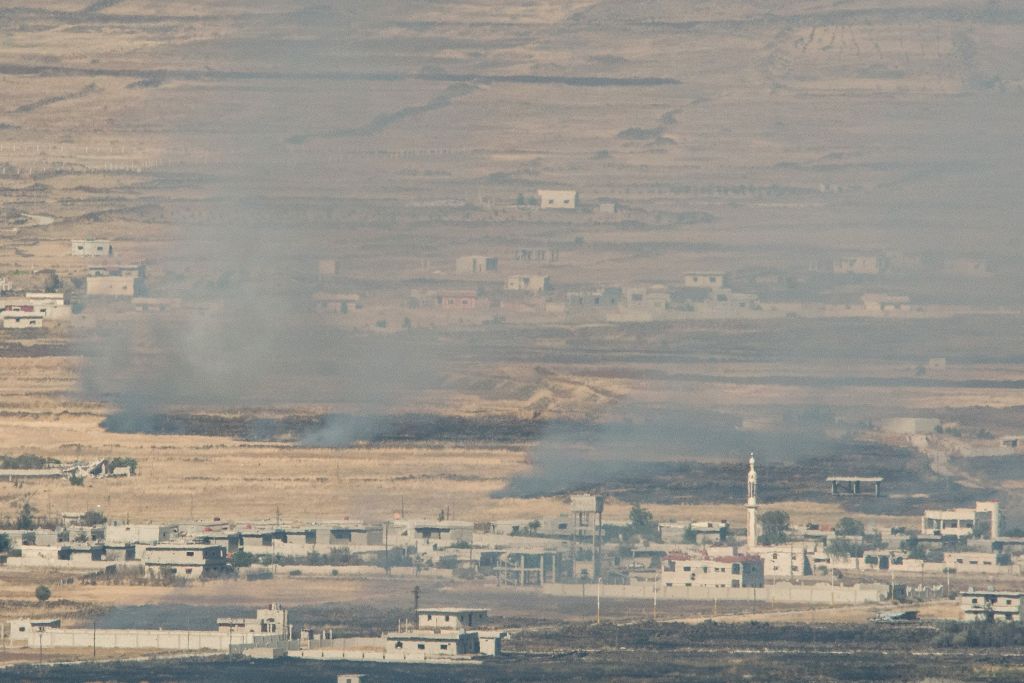
On Saturday afternoon, several mortar shells exploded in an open area in the Golan Heights near the border with Syria, in what is believed to have been errant fire from factions fighting each other across the border. Israel in response carried out retaliatory airstrikes against the Syrian regime positions, reportedly killing 2 soldiers.
Israel Hayom reports that Israel is preparing to revamp hundreds of bomb shelters along the northern border in response to the recent attack. The free daily says the project will cost tens of millions of shekels and would also see local municipalities sanctioned for not allocating funding for the project.
In its coverage of Saturday’s cross-border events, Yedioth strikes a markedly less dramatic tone, highlighting the Israeli public’s relative calm in the face of increased tensions.
Despite being ordered to stay away from the border area after the attack, Israelis flocking to the Golan for hikes and fruit picking appear unaffected by the saber-rattling, the paper says.





The Times of Israel Community.