

Scientists tracking impact as desalinated water flows into Sea of Galilee for first time
Laboratory head says amounts of water entering lake still small, any effects will be identified upstream; ‘We haven’t seen anything yet that would make us say stop the flow’
 Add ToI as a Preferred Source on Google
Sue Surkes is The Times of Israel's environment reporter
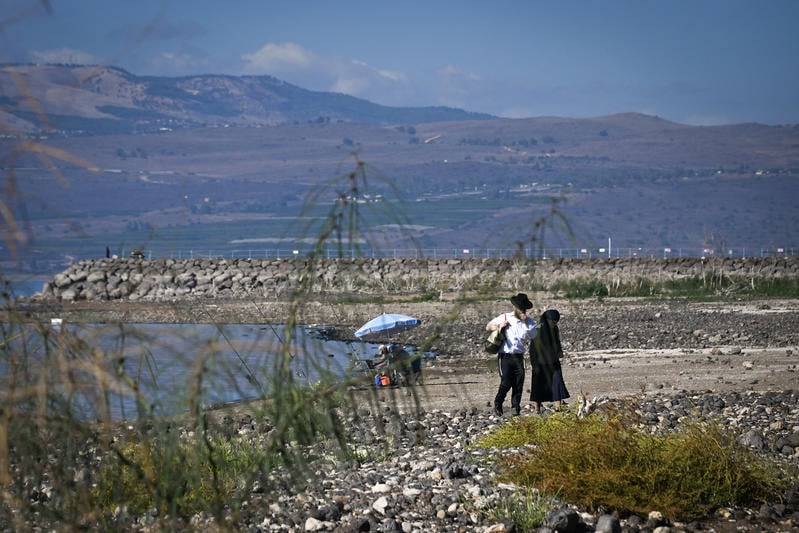
Scientists have begun testing the ecological impact of the desalinated water being pumped into the Sea of Galilee as part of a groundbreaking project aimed at halting the lake’s decline.
In what is believed to be the first example in the world of topping up a freshwater lake with processed seawater, 1,000 cubic meters (264,000 gallons) of desalinated water began flowing into the country’s largest sweet water lake and main emergency drinking water source every hour on October 23. This is expected to raise the lake’s level by around 0.5 centimeters (0.2 inches) per month.
Tests conducted before the project’s implementation indicated that the saltless seawater would not have any particularly negative effects on the lake’s ecosystems.
However, it is only now that scientists from the Kinneret Limnological Laboratory can start analyzing and assessing the chemical and biological impact of the new water flow in real time.
The laboratory’s director, Yaron Be’eri Shelvin, explained that researchers will be examining the effect of chlorine, which is routinely added to water passing through the national water system.
Their main focus, however, will be on the chemical and biological materials the water picks up after it emerges from the pipes into the Ein Ravid spring, some four kilometers (2.5 miles) northwest of the lake, and flows into the seasonal Tsalmon Stream before entering the lake at a delta.

“We are checking what the water picks up from the dry stream bed on its way to the Sea of Galilee,” Be’eri Shelvin said. The researchers would focus on the presence and quantity of nutrients such as nitrogen and phosphorus, also looking for traces of micronutrients such as silica, iron, and sulphates, and for fecal coli bacteria emanating from livestock excreta or sewage leaks.
Excess nitrogen and phosphorus can lead to algal blooms, which can deprive aquatic life forms of light and harm fish.
As algae form the base of the lake’s food chain, the scientists will be analyzing them for changes that could be linked to the desalinated water.
Samples are being taken from several points along the stream, and from three locations in the lake’s delta, Be’eri Shelvi said.
“We will need months of data, at the very least, before we can start talking about any trends,” he went on, adding that the monitoring would continue for at least a year.
“If there are any effects, they will be minimal as the amounts of water entering the lake are very small, and we haven’t seen anything so far that would make us say, ‘stop,'” he continued.
“The lake contains four billion cubic meters of water. You need a lot more water with a lot more contaminants to cause harm. If anything is alarming, we will see it in the delta, where the stream meets the lake.”
The project was conceived toward the end of several disastrous drought years, between 2013 and 2018, when the lake’s level approached an all-time low.
Last winter, Israel received only half of its yearly average rainfall, with many places in and around the Sea of Galilee receiving just 40% of the average or less, according to the Israel Meteorological Service.
It marked a stark shift from several previous years, which had seen sufficient rain to fill the lake to levels not seen for years.
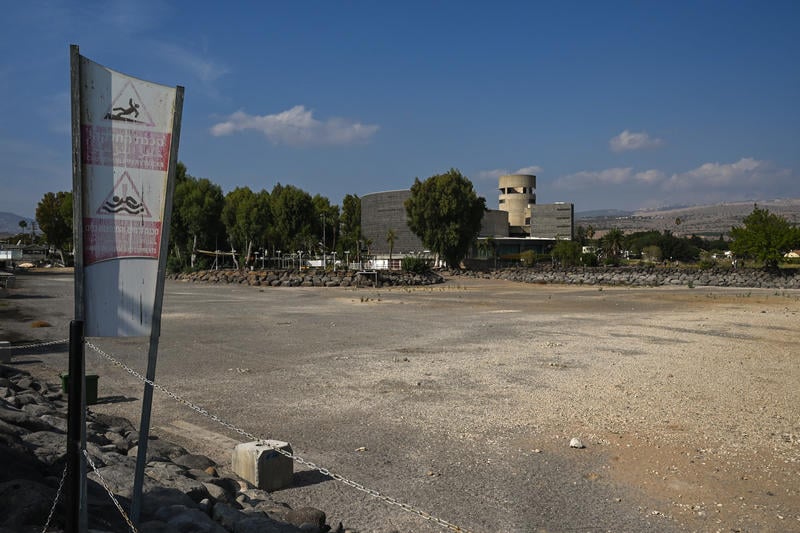
Over the past year, signs of falling water levels at the lake have been clearly visible along its beaches, with large expanses of sand, rock, and soil that would normally be submerged now exposed.
The Sea of Galilee lies in the Syrian-African rift valley, below sea level. On. Monday, the lake’s level was at 213.435 meters (700.2 feet) below sea level, having risen above the lower red line of minus 213 meters, the lowest point the water level can drop before pumping risks damaging the ecosystem.










The Times of Israel Community.