

Skiing on the edge of Syria’s war
Within sight of a brutal civil war and surrounded by IDF soldiers on patrol, Jews and Arabs nevertheless flock to Israel’s only ski resort atop the Golan Heights’ Mount Hermon — braving the threat of errant shells and hoping for peace across the border
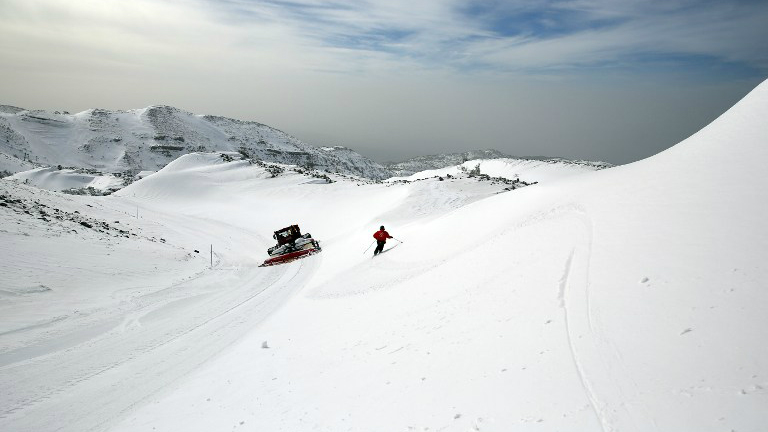
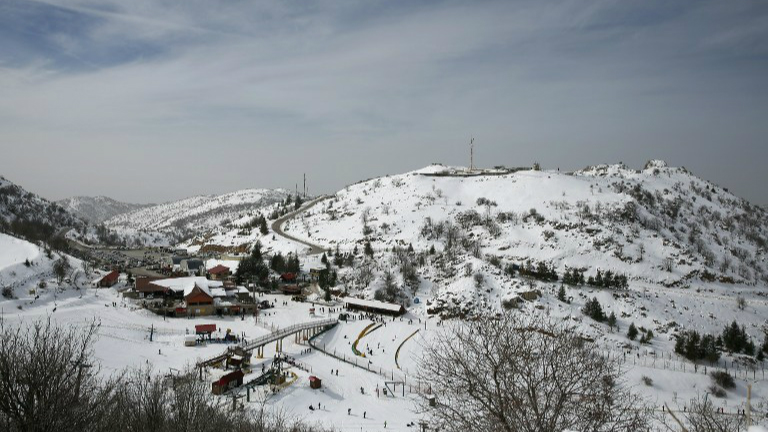
AFP – The snowy ridge of Mount Hermon separates two worlds. In one, Syria’s war rages. In the other, Israeli tourists slalom down ski slopes or drink mulled wine to the sound of techno music.
On a clear day Damascus is visible from the top of the ski lift 2,200 meters (7,200 feet) above sea level in the Israeli-occupied Golan Heights where tourists reapply their sunscreen.
The Syrian capital is only 40 kilometers (25 miles) away but there is no access to it as Israel and Syria are still officially at war.
Israel captured most of the Golan Heights from Syria in the 1967 Six Day War and later annexed the territory in a move not recognized by the international community.
For Israelis, the Hermon range, straddling Lebanon and the Syrian and Israeli-held sectors of the Golan, is a highly strategic area under close surveillance.
But every year when the snowflakes fall, Mount Hermon becomes a ski resort unlike perhaps any other in the world.
Skiers thinking of venturing off-piste are discouraged by the large signs warning of landmines, while in the distance antennas mark vast Israeli military bases. Soldiers are everywhere.
Chair lifts are close to military outposts where soldiers scan the horizon with binoculars.
“If Syrians want to infiltrate here then they should be very good skiers,” jokes Nabir Abu Saleh, head of the ski patrol station, pointing to the steep slope forming a natural buffer adjacent to the Syrian side.
“And if it is summer, they would have to be motocross champions.”
Shells falling
The Israeli army is less fearful of infiltration than of stray shells fired by the Syrian military or rebels.
“We have already had to evacuate the site on several occasions. We’re very well organized,” Liron Mills, the director of the site, told AFP.
“We do not feel the war here. It is protected. There is the army, the police and we are in complete coordination with them,” says Mills, who is also a ski instructor with reservists for the Israeli army.
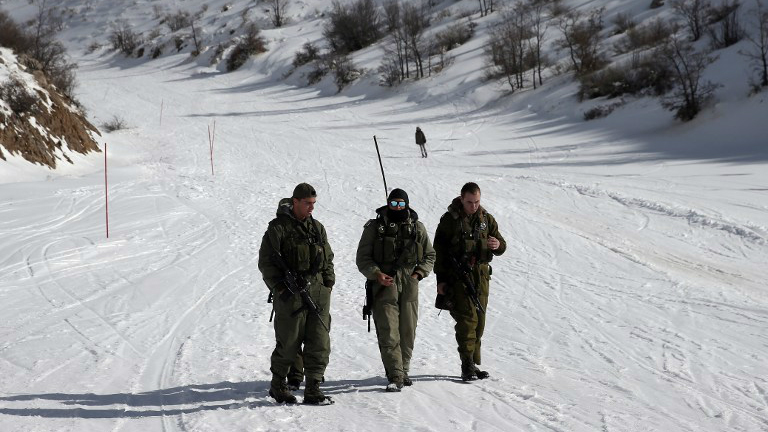
In his spare time, he introduces the 30 young conscripts deployed to the area to ski basics.
Despite their white camouflage dress, soldiers are easily identified in the resort carrying guns and more often than not driving a snowplow amid skiers.
Israel, more known for its southern desert, is not a country famed for its expertise in winter sports.
But the country’s only resort and its 14 slopes — which range from green to black — are able to accommodate up to 8,000 visitors a day.
Itay, 28, took a day off from Tel Aviv and made the three-hour journey to test the year’s first snow and feel “like I am on holiday abroad.”
“We have not stopped taking the bus because it could be blown up, or stopped surfing because there could be another war, like the French didn’t stop going to concerts because there were attacks,” he said, reflecting a widespread mindset among Israelis accustomed to violent conflict.
‘The Lebanon chairlift’
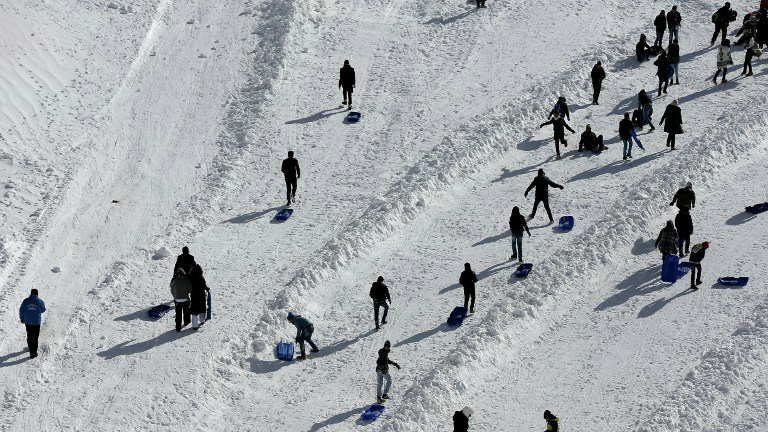
“There is not much snow in Israel. So coming here is an attraction. We just want to have fun,” said Amir Cohen, who brought his children sledging.
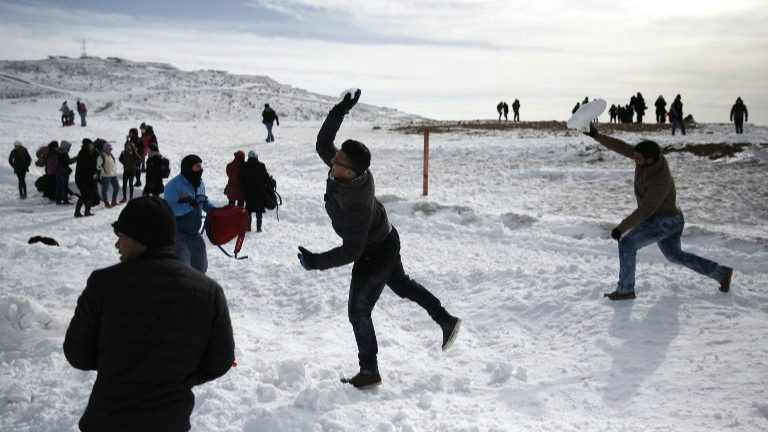
On the slopes a cross section of society includes veiled Muslim women, ultra-Orthodox Jews and UN soldiers on leave from monitoring duties nearby. The most dangerous projectiles traded here are in general snowballs.
“Anyway the bombings, you hear them far louder in the villages below than here,” said Fayad Abu Saleh, who is, like the majority of other employees at the site, from one of the neighboring Druze villages.
Druze Arabs, who belong to an offshoot of Shiite Islam, are divided between Syria, Lebanon and Israel.
“Our dream is that one day this region will be safer and at the turn of a piste you can end up in Syria, and then back to the station to get the Lebanon chairlift,” sighed Nabir Abu Saleh, the ski patrol chief.
“Every day when you go up here, we think of what is happening in Syria — children and refugees who sleep in tents in the cold. We come with our equipment, our suits, and you can still feel the cold. But them?”
“Yet we cannot do much from here. We just want it to end as soon as possible.”



The Times of Israel Community.