

John Farahi: A life of courage, conviction, and commitment to Israel
Born into a traditional Mizrahi Jewish family in Iran, he grew up with a strong sense of identity long before he ever heard terms like “Orthodox,” “Reform,” or “Conservative.”
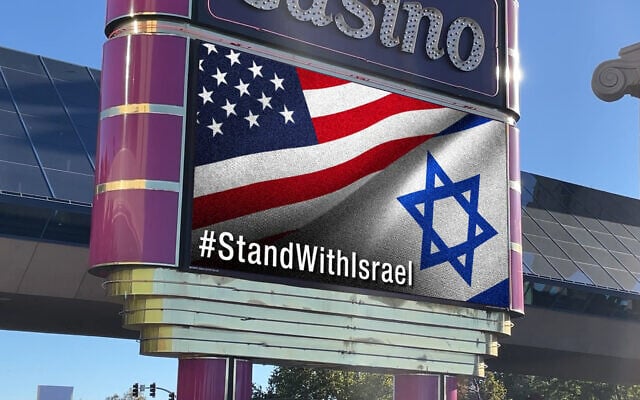
In an era when many public figures, even within the Jewish community, choose silence and to abstain from condemning anti-Israel rhetoric, philanthropist and businessman John Farahi has done the opposite. As Jew-hatred increases worldwide and Israel faces unprecedented challenges, Farahi has raised his voice—boldly, unapologetically, and with a sense of historic duty — even going as far as to place a giant billboard featuring an American and Israeli flag with the words “Stand With Israel” outside one of his businesses. When asked why, his response is simple: “Silence”, he says, “is a disgrace to our people.”
Farahi speaks from a place of deep memory and lived experiences. Born into a traditional Mizrahi Jewish family in Iran, he grew up with a strong sense of identity long before he ever heard terms like “Orthodox,” “Reform,” or “Conservative.” His connection to the land and people of Israel began early. He vividly recalls his first visit in 1960, when he flew from Tehran and watched fellow passengers cry as the plane descended toward the land their ancestors had prayed toward for thousands of years. “Everyone on that plane was crying,” he says. “I’ve watched what has happened on that incredible, holy land for over 60 years.”
For the Nevada-based Farahi, Jewish history is not an abstract concept—it’s a lived reality. He speaks passionately about the archaeological records that affirm more than 3,000 years of Jewish presence in the Land of Israel, long before the rise of Islam or the modern nation-states of the Middle East. To those who question Israel’s legitimacy, he has one message: “learn the history!” “Ignorant fools,” he calls those who deny Israel’s right to exist. “We have evidence—coins, pottery, ruins from the First and Second Temples. If anyone is indigenous to that land, it’s us [the Jewish People].”
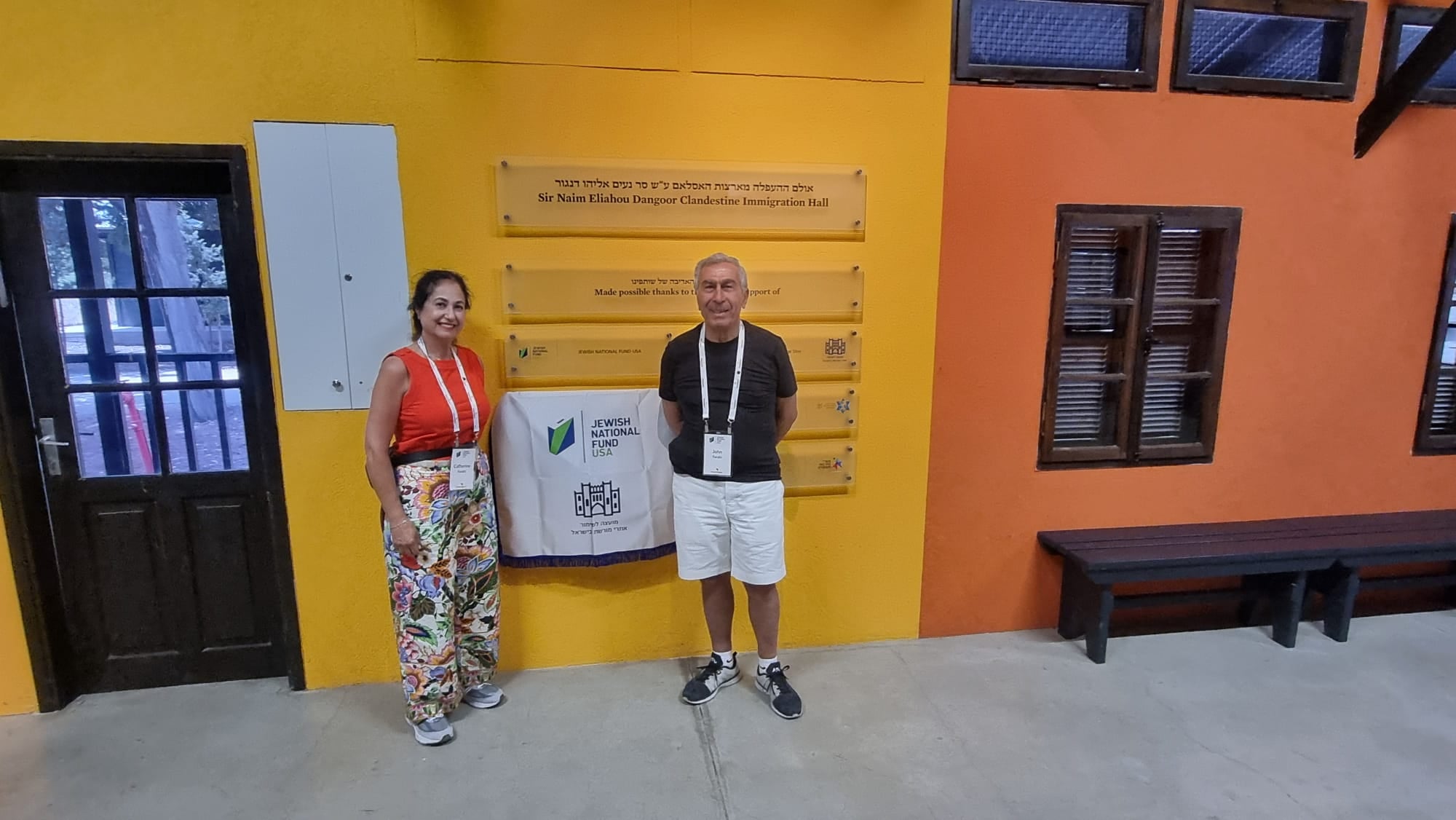
This sense of conviction guides Farahi’s philanthropy, including his strong support for the ‘Atlit Detention Camp’ heritage site, a pre-state clandestine immigration camp preserved by Jewish National Fund-USA. As a Mizrahi Jew, he feels a particular responsibility to highlight the often-overlooked story of Jews who fled or were expelled from Muslim countries. “Half of Israel,” he notes, “comes from Mizrahi and Sephardi backgrounds. The world must understand that.”
Initially built by the British in the late 1930s, the Atlit Detention Camp held clandestine Jewish immigrants intercepted at sea—many of them Holocaust survivors by 1945. While European aliyah has received significant attention, the parallel story of Jews fleeing persecution in Arab and Muslim countries has long been overlooked.
Thanks to Farhi’s philanthropic support, the new Exhibit Hall of Clandestine Immigration to Israel from Muslim Countries was created by Jewish National Fund-USA and the Society for Preservation of Israel Heritage Sites (SPIHS) to correct this imbalance and honor the hundreds of thousands who journeyed by land from Turkey, Syria, Lebanon, Iraq, North Africa, Iran, Yemen, and beyond. Many were captured and detained at Atlit after risking everything for the chance to live freely in Israel.
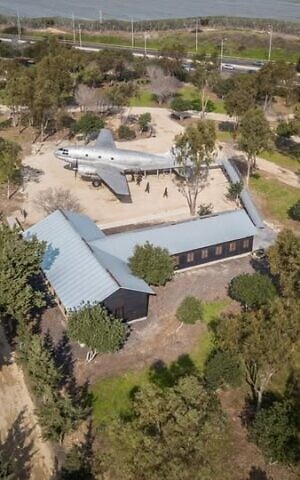
In 2017, a C-46 Commando aircraft—the same model used in the daring 1947 Operation Michaelberg airlift from Baghdad—was brought to Atlit, adding an immersive historical experience alongside the camp’s restored barracks, educational films, archives, and the Galina Ship installation.
Executive Vice-Chairman of SPIHS, Noa Gefen, explains: “A historical injustice was done to these communities [Jewish refugees from Muslim countries] … We’ve worked actively to correct that imbalance.” She adds: “Thanks to the generosity of John Farahi, these projects honor the contribution of Sephardi and Mizrahi communities from Muslim countries to the story of Israel’s independence and beyond.”
Family is central to Farahi’s philosophy. All four of his children, he says proudly, are “committed Zionists and proud Jews,” a result of a home filled not merely with ritual but with meaning. “We taught our children our history, not only the tragedies but the accomplishments. If you raise a proud Jew, you raise a Zionist.”
For decades, Farahi has led groups to Israel—governors, university presidents, community leaders—believing that a single visit can change a life. “A picture is worth a thousand words,” he says. “People come back as ambassadors.”
His message to fellow philanthropists is unequivocal: take responsibility. “We are small in number—15 million Jews in a world of billions. Those of us living comfortably outside Israel must support our brothers and sisters whose children serve in the Israel Defense Forces and risk their lives. Each of us can do something. Some more, some less. But we all must do our share.”
Reflecting on the future, Farahi recalls a meaningful message a rabbi once told him, “Who is a Jew? Someone whose grandchildren are Jewish.” Farahi holds tightly to that idea. “We must focus on the next generation,” he says. “We must take responsibility.”
It is a fitting message from a man who has spent his life doing exactly that.
To support Israel’s modern heritage sites, visit jnf.org/SPIHS