

Turkey grounds Syrian plane en route from Moscow
Ankara suspected aircraft carried arms for Assad; inspectors find military communications equipment
 Add ToI as a Preferred Source on Google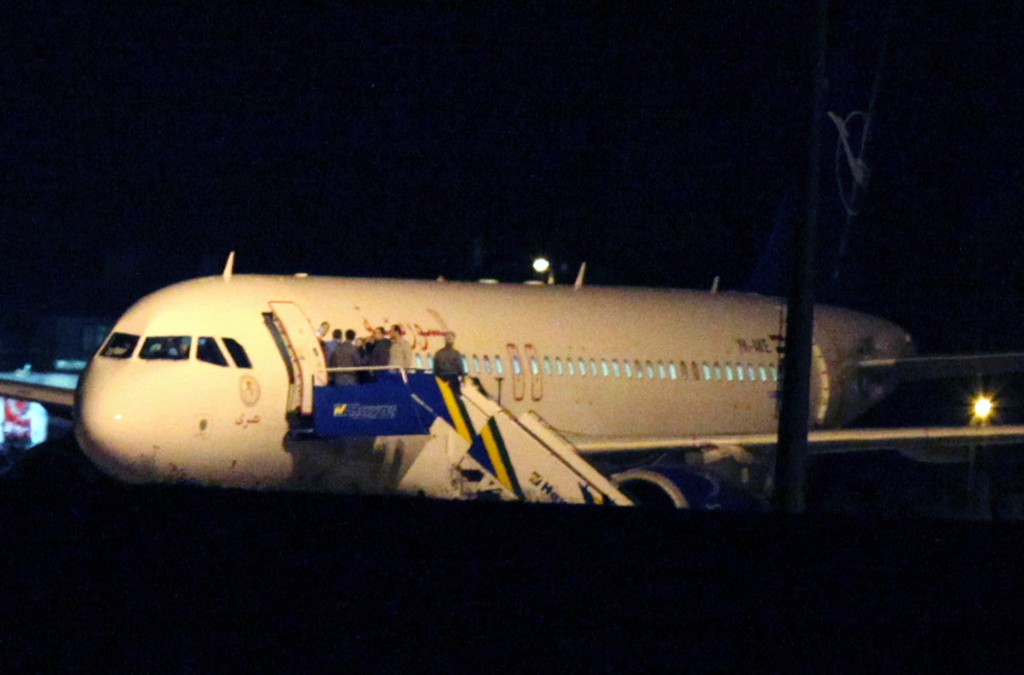
Turkish authorities on Wednesday grounded a Syrian civilian aircraft flying from Moscow to Damascus on suspicion that it was shuttling “heavy weapons” to President Bashar Assad. Inspection of the plane by Turkish Authorities yielded military communications equipment and “parts that could be used in missiles,” according to a report in Today’s Zaman.
Turkish F-16 fighter jets scrambled and intercepted the Airbus A-320 carrying 35 passengers after it entered Turkish airspace. The Turkish Air Force forced the jet to land at Ankara’s Esenboğa airport.
A Turkish Foreign Ministry official confirmed that a Syrian plane was forced to land at Ankara airport, and that authorities were “inspecting the plane” but would not provide further information.
The search of the Syrian aircraft’s cargo revealed no heavy weapons as earlier suspected, but yielded military communications devices and parts that could be used in missiles. Turkish authorities reportedly confiscated the material before allowing the plane to continue its journey to Damascus.
Turkish Foreign Minister Ahmet Davutoglu told Turkey’s state-run TRT television in Athens the plane was forced to land because of information that it may be carrying “certain equipment in breach of civil aviation rules.” He added that it was Turkey’s right according to international law to search civilian aircraft suspected of bearing military materials.
Russia has supplied the Syrian military with the majority of its arms and ammunition for decades and has rejected UN Security Council attempts to levy sanctions against the Assad regime.
The Russian government currently has approximately $4 billion worth of arms contracts with Damascus. Russia’s arms sales to Syria over the past decade constitute 10 percent of Russia’s global arms exports, and Syria is currently Russia’s top customer in the Middle East, according to a 2012 report by the Center for Analysis of World Arms Trade.
The move comes amid heightened tensions between Turkey and Syria, which have been exchanging artillery fire across the volatile border in the past week.
Earlier Wednesday, Turkey’s military chief vowed to respond with more force to any further shelling from Syria, keeping up the pressure on its southern neighbor a day after NATO said it stood ready to defend Turkey.
Gen. Necdet Ozel was inspecting troops who have been put on alert along the 910-kilometer (566-mile) border with Syria after a week of cross-border artillery and mortar exchanges escalated tensions between the neighbors, sparking fears of a wider regional conflict.
Turkey has reinforced the border with artillery guns and also deployed more fighter jets to an air base close to the border region since shelling from Syria killed five Turkish civilians last week.
“We responded and if (the shelling) continues, we will respond with more force,” the private Dogan news agency quoted Ozel as saying during a visit to the town of Akcakale.






The Times of Israel Community.