

EU’s top diplomat: Palestinian state may need to be imposed on Israel from outside
Borrell argues ‘actors too opposed to reach an agreement autonomously’; US says ‘no way’ to ensure Israeli security without a Palestinian state after Netanyahu rejects notion
 Add ToI as a Preferred Source on Google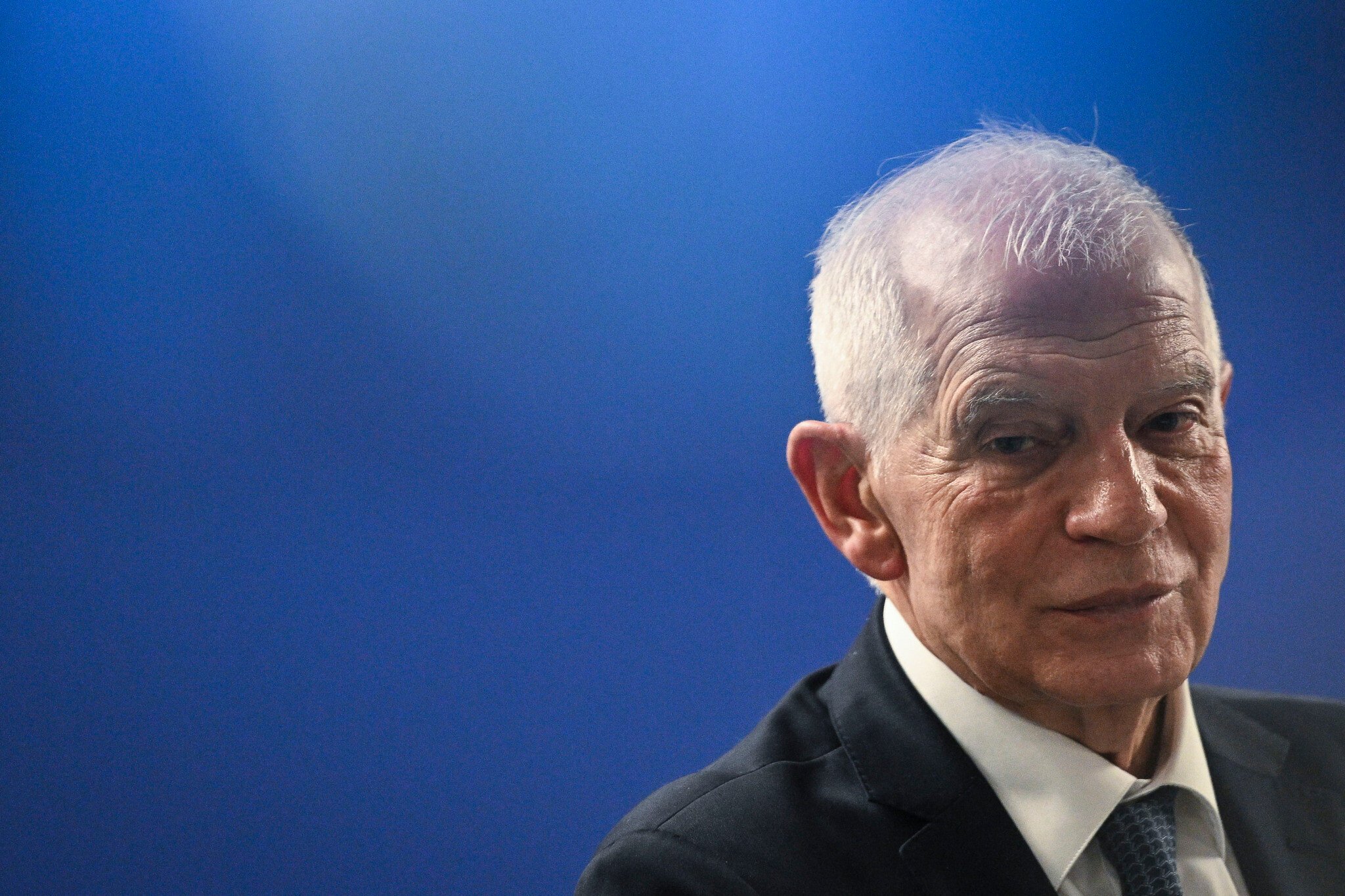
European Union foreign policy chief Josep Borrell said on Friday that the only peaceful solution to the Israeli-Palestinian conflict included the creation of a Palestinian state, and he suggested this might need to “be imposed from the outside,” without Israel’s agreement.
Borrell, in a speech at the University of Valladolid in Spain, said that without international intervention, the “spiral of hate will continue generation after generation,” according to multiple Spanish media outlets.
“The actors are too opposed to be able to reach an agreement autonomously,” Borrell said. “If everyone is in favor of this solution, the international community will have to impose it.”
Earlier, US State Department spokesperson Matthew Miller said there was “no way” to solve Israel’s long-term security challenges in the region and the short-term challenges of rebuilding Gaza without the establishment of a Palestinian state.
International pressure for advancing the two-state solution has intensified in the wake of the October 7 Hamas attacks on Israel and the Israel-Hamas war in Gaza.
But while some international actors believe the violence only underlines the need for a peace deal, Israeli leaders argue the attack highlighted the extreme danger of an autonomous Palestinian entity near its population centers. And amid soaring support for Hamas among Palestinians in the wake of the atrocities, there appears to be little appetite in the Israeli public for peace efforts.
Moreover, Israel fears any boon to Palestinians in the wake of October 7 will only serve Hamas and other extremists a victory, showing violence and terror produce results.
Speaking at a news briefing, Miller said Israel had an opportunity right now as countries in the region were ready to provide security assurances to Israel.
“There is no way to solve [Israel’s] long-term challenges to provide lasting security, and there is no way to solve the short-term challenges of rebuilding Gaza, of establishing governance in Gaza and of providing security for Gaza, without the establishment of a Palestinian state,” US State Department spokesman Matthew Miller said upon being asked to respond to Netanyahu at a press briefing.
Hours earlier, Netanyahu had been pressed on an NBC News report that said the US was planning for a post-Netanyahu era after he rejected a proposal that would’ve seen Saudi Arabia help with the reconstruction of Gaza after the war and normalize relations with Israel if Jerusalem agreed to create a pathway for an eventual Palestinian state.
Netanyahu said he had told Washington he objected to any Palestinian statehood that did not guarantee Israel’s security, as the country reels from the devastating attacks.
“I clarify that in any arrangement in the foreseeable future, with an accord or without an accord, Israel must have security control over the entire territory west of the Jordan River. That’s a necessary condition,” Netanyahu said in Tel Aviv.
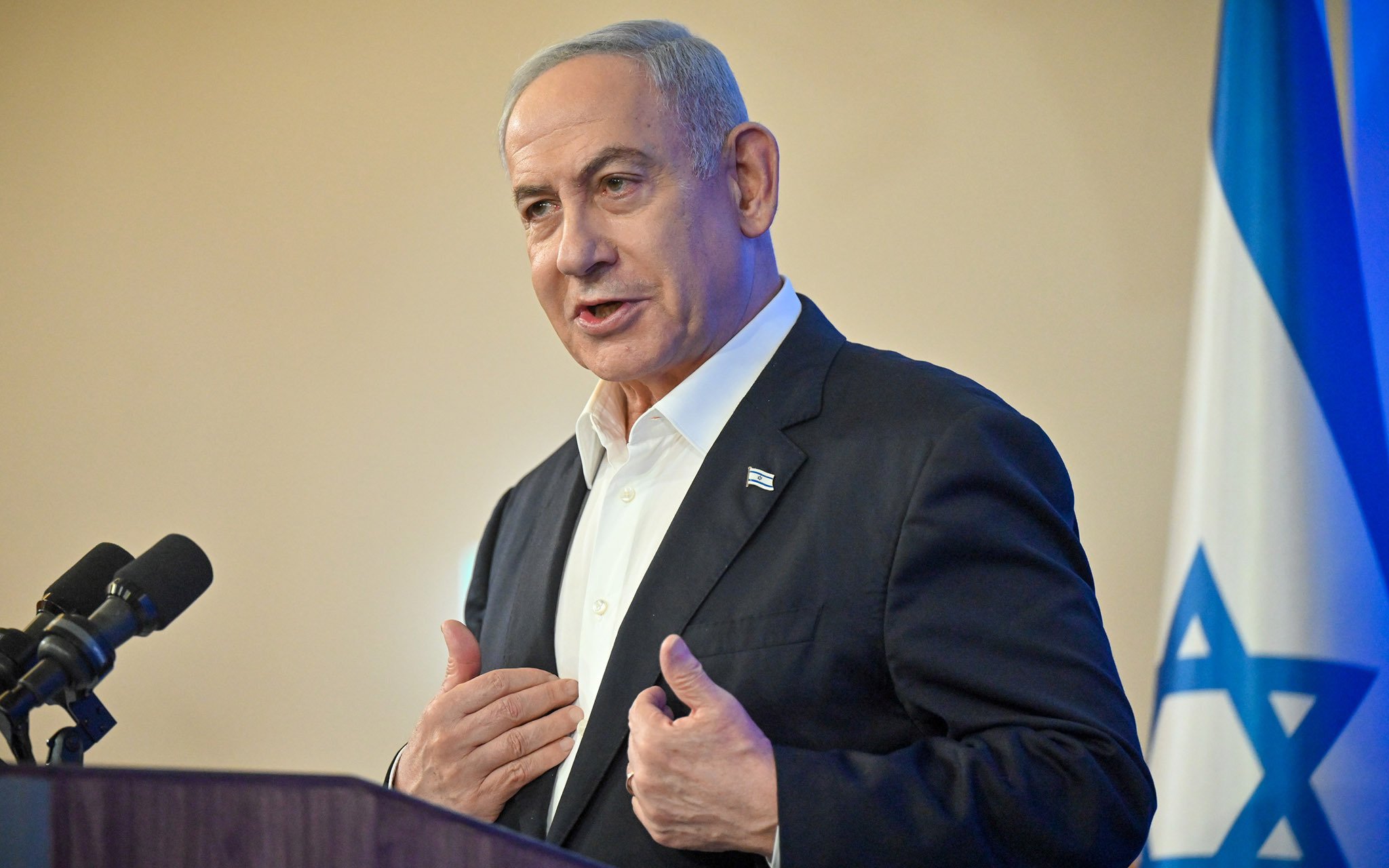
He added that the lack of Palestinian statehood had not stood in the way of normalization agreements with Arab states a few years ago and that he still intended to add more countries to those accords.
Netanyahu boasted of having stood up to American pressure in the past and said those who speak of a post-Netanyahu era are referring to one in which a Palestinian state will be established, again suggesting that his continued tenure as prime minister is what is standing in the way of a two-state solution.
For his part, Miller said that in meetings with Arab leaders during his trip to the Middle East last week, US Secretary of State Antony Blinken managed to secure commitments from countries in the region who said “they would participate in the reconstruction of Gaza, that they would participate in helping establish Palestinian-led governance of Gaza but that they would only do that if there was a tangible path to the establishment of a Palestinian state.”
“For the first time in its history, you see the countries in the region who are ready to step up and further integrate with Israel and provide real security assurances to Israel and the United States is ready to play its part too, but they all have to have a willing partner on the other side,” Miller continued.
“There is a historic opportunity that Israel has to deal with… and we hope the country will take that opportunity,” he added.
Israel and its biggest backer the US appear at odds now, with Netanyahu and his largely right-wing coalition rejecting the establishment of a Palestinian state even though Washington maintains that the two-state solution is the only feasible way to bring lasting peace to the region.
Despite the disagreements, US support for longtime ally Israel “remains ironclad,” Miller said.
“This is not a question of the United States pressuring them to do anything. This is about the United States laying out for them the opportunity that they have.”
Meanwhile, a spokesperson for Palestinian Authority President Mahmoud Abbas said there can be “no security and stability in the region” without a Palestinian state, also in response to Netanyahu’s speech.
“Without the establishment of an independent Palestinian state with East Jerusalem as its capital on the borders of 1967, there will be no security and stability in the region,” Palestinian state news agency Wafa quoted Abbas’s spokesperson Nabil Abu Rdeineh as saying Thursday. The Palestinians seek Gaza, the West Bank and East Jerusalem — which were captured by Israel in 1967 — for their state.
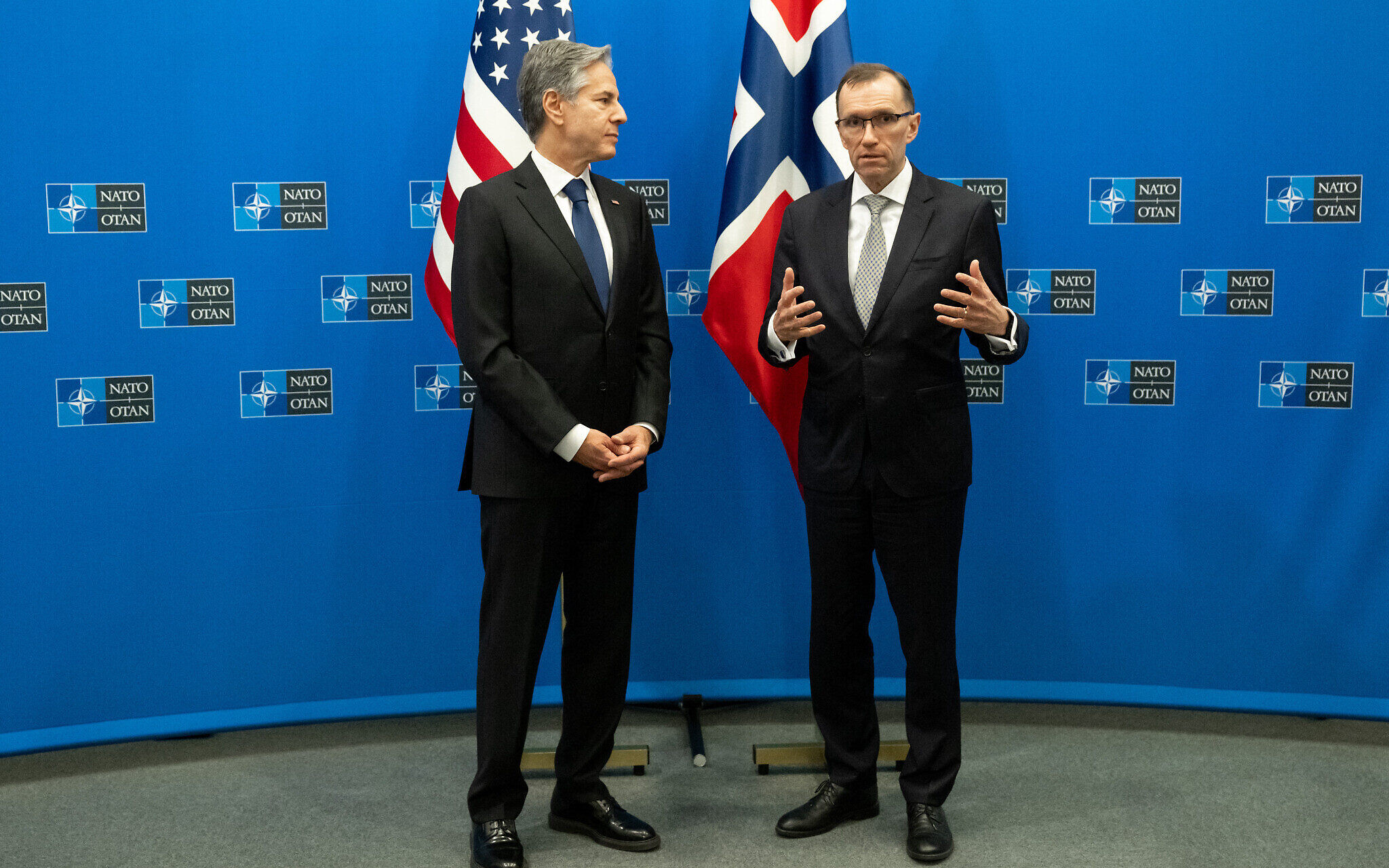
Norwegian Foreign Minister Espen Barth Eide also told Norway’s news agency NTB that the rejection of a two-state solution was “completely contrary to the agreements Israel and the PLO [Palestine Liberation Organization] entered into in Oslo” in 1993.
As part of the deals, Israel recognized the PLO as the sole representative of the Palestinian people, while the PLO recognized Israel.
The Palestinian Authority was established as an interim body taking responsibility for governing parts of the West Bank and Gaza, but the process launched in Oslo eventually collapsed without a final status agreement amid the Palestinians’ launch of the Second Intifada.
“The Israeli Prime Minister’s statements are out of step with an almost unified international community,” Barth Eide said in a statement to NTB.
The Norwegian foreign minister said that “a real political solution is needed” to solve the situation.
“Norway believes that there is no credible alternative to a two-state solution, just like the Palestinians themselves, the USA, the EU, the UN and the neighboring Arab countries,” Barth Eide said.
Times of Israel staff contributed to this report.




The Times of Israel Community.