

Virus rules ignored at Druze funeral, ultra-Orthodox circumcision
Many dozens attend ceremony in northern town of Isfiya despite national orders against public gatherings; 200 at brit milah event in Jerusalem
 Add ToI as a Preferred Source on Google
Dozens of people attended a funeral in the northern Israeli Druze town of Isfiya on Wednesday, violating public health orders aimed at curbing an outbreak of the deadly coronavirus in the country, Channel 12 news reported.
And in Jerusalem, police said they had broken up a circumcision event in an ultra-Orthodox neighborhood attended by over 200 people. Several participants assaulted police officers and hurled eggs at them, officials said. One was arrested for attacking police and four fines handed out for breaking public health orders, the Israel Hayom daily reported.
Under current lockdown orders against public gatherings, Israel allows up to 20 people to attend a funeral, provided they maintain a distance of at least 2 meters (6.5 feet) between each other. Ritual circumcisions may be attended by up to 10 people.
Though the majority of ultra-Orthodox Israelis are now following government restrictions, which have prohibited all public gatherings and ordered many public institutions, including synagogues, shut to prevent the spread of coronavirus, many initially flouted the new regulations, holding mass weddings and funerals while ignoring social distancing rules. And some have responded violently to police attempts to enforce the law.
The incident in Isfiya, a predominantly Druze town, came amid concerns that the highly contagious virus was gaining momentum in some Arab Israeli communities.
In video from the event, many dozens of people can be seen joining the procession for the burial of a local woman. Though participants were wearing face masks, they were not seen maintaining social distancing.
כך התקיימה היום הלוויה בכפר עוספיא שעל רכס הכרמל. העיתונאי יואב איתיאל מדווח כי גם ראש המועצה נכח בה > https://t.co/f1uG6iWgiS pic.twitter.com/NIaBT25SFx
— חדשות חיפה והקריות (@haifakrayot) April 15, 2020
There were no police seen at the funeral or attempting to enforce restrictions, according to the report.
A source described as “familiar with daily life in northern Arab communities” told the channel that the event was a “symptom” of the general lack of police enforcement in Arab communities.
There have also been complaints of insufficient access to testing in some areas with large Arab populations, which the Health Ministry has tried to address by opening mobile test sites.
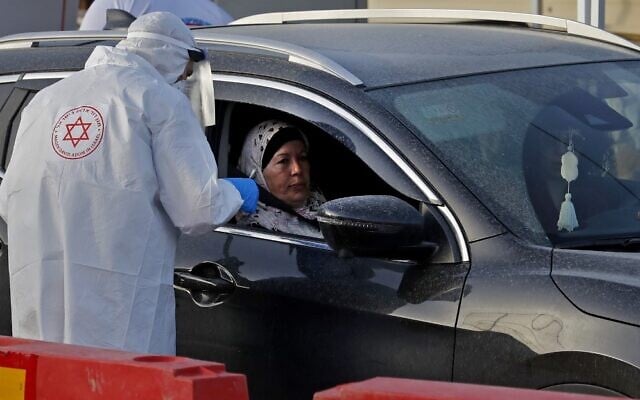
On Wednesday the Health Ministry warned of a coronavirus outbreak centered on the northern Arab town of Deir al-Asad, while its mayor said it could be put on lockdown. The ministry said the number of infections in the town of over 12,000 people was “very high,” jumping from five to 23 within a day. There were another eight cases in total in the nearby towns of Nahf, Bi’ina and Majd al-Krum.
Besides the 31 total infections in the area, the ministry warned there were hundreds more people who were potentially exposed to the virus.
As of Tuesday, the two Arab communities with the highest infection rates were Jisr az-Zarqa and Daburiyya, which last week closed roads connecting to neighboring communities to prevent the virus from spreading further.
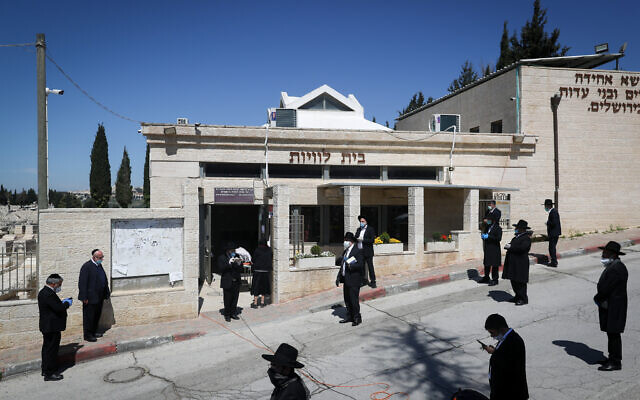
Police have been deployed to enforce lockdown orders in many areas of the country which are largely being adhered to. Rabbi Eliyahu Bakshi-Doron, the former Sephardic chief rabbi of Israel who died earlier in the week due to complications from the coronavirus, was laid to rest Monday with only a handful of people attending, rather than the massive funeral generally reserved for rabbis of his standing.






The Times of Israel Community.