

What is driving Netanyahu’s total alignment with Trump?
Op-ed: Months before Election Day, the PM decided never to antagonize the vindictive real estate mogul-cum-politician. That’s the basis for their friendship, but it carries long-term risks
Raphael Ahren is a former diplomatic correspondent at The Times of Israel.
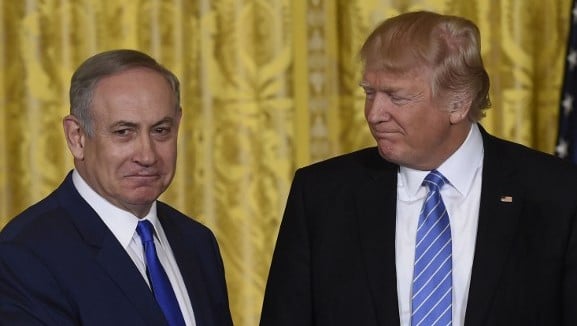
Many Jews in America and Israel failed to understand why Prime Minister Benjamin Netanyahu last week went out of his way to defend Donald Trump against charges that he refused to forcefully speak out against rising anti-Semitism in the US.
At their joint press conference last Wednesday in the White House, the American president dodged a question about the issue, instead referring to “so many friends” and family members who are Jewish, and promising “a lot of love.”
Netanyahu, unsolicitedly, provided the president with a kosher stamp. “There is no greater supporter of the Jewish people and the Jewish state than President Donald Trump,” he declared. “I think we should put that to rest.”
Likewise, many in the organized Jewish community took offense at how the White House defended its International Holocaust Memorial Day statement, which did not mention the Jews. Many were taken aback when Netanyahu, during a briefing with Israeli reporters in Washington, not only stuck up for Trump but called their protest “misplaced.”
Why, many Jews in Israel and the US wondered, would Netanyahu criticize the largest and most important Jewish community in the world outside Israel — a community that, generally, has staunchly supported him — over a statement that a near-consensus held was inaccurate, misleading and damaging?
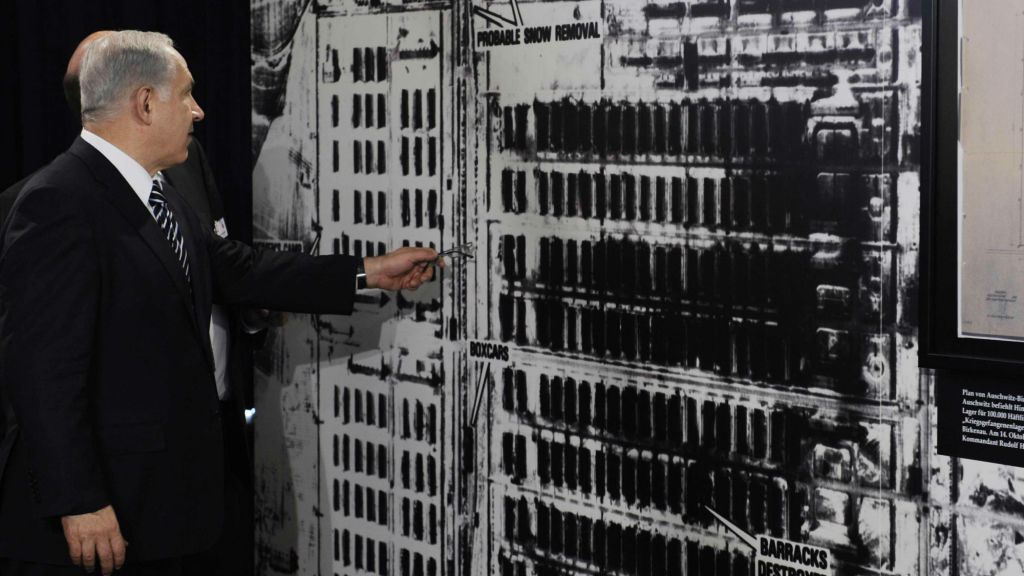
It was odd indeed for the historian’s son — who in 2009 held the plans of the Auschwitz concentration camp as he delivered a speech to the UN and who constantly cites the Holocaust as an eternal warning to Jews to confront their tormentors before it’s too late — to defend a statement that respected scholars said bordered on Holocaust denial.
One possible explanation for Netanyahu’s behavior is caution. Extreme caution. Supporters might call it wise foresight to refrain from challenging a man known to ruthlessly go after his opponents when he has just become president of your country’s most important ally. Cynics will be tempted to call it anticipatory obedience.
After eight tense years during which the prime minister had many bitter, public disagreements with the US administration, Netanyahu is clearly determined to ensure the relationship with Donald Trump starts on the right footing.
After two traumatizing terms with Barack Obama, Netanyahu is evidently going to great lengths — apparently willing to risk alienating part of the organized US-Jewish community and the millions of Americans who are vowing to “resist” the Trump presidency — in order to make sure that, this time, it will be different.
The potential for combustion is plain. Before heading to America, Netanyahu reportedly told his cabinet that, in discussing the settlements, Trump’s personality must be taken “into account.” The reported comment was leaked, Trump apparently got wind of it, and allegedly ordered his staff to prepare a dossier on the various corruption probes against Netanyahu. According to an unsourced Israeli newspaper report, the White House felt Netanyahu’s remarks on the president’s character crossed a red line. Anything seen to question Trump’s suitability for the presidency is regarded as a personal affront, this report stated.
With stakes so high, the US-Israel tie so critical to Israel’s well-being, and the president potentially unpredictable, it’s easy to see why Netanyahu is willing to cause a degree of upset, even among supportive groups, in his bid to stay on Trump’s good side.
After a long delay, Trump on Tuesday finally denounced the ugly anti-Semitism that has reared its head as his “America First” election campaign ascended. And after Trump himself had acknowledged and addressed the issue, Netanyahu was finally prepared to comment on it as well, during a speech Wednesday in the Great Synagogue of Sydney.
Rather than condemning the anti-Jewish acts and rhetoric, and calling on the US authorities to do more to combat the resurgence, Netanyahu praised the president for taking “a strong stand against anti-Semitism.”

Netanyahu, it would seem, has made a strategic decision to avoid contradicting or even second-guessing the president. More, he seems ready to go out on a limb to endear himself to Trump, as when he volunteered to defend the president at the White House press conference, or when he unpromptedly tweeted praise for the plan to build a border wall with Mexico (which angered Mexican Jews and forced President Reuven Rivlin to apologize to his counterpart).
It is unclear if Netanyahu’s thus far unconditional, and often preemptive, approval for everything Trump says or does is part of a quid pro quo deal to ensure Israel’s interests are protected in the new White House. Maybe the two leaders struck a secret agreement along the lines of “You praise the wall, I won’t condemn settlements,” or “I won’t tell you what to do with the Palestinians, you defend me over charges that my ‘America First’ approach is being used to fuel anti-Semitism.”
That would seem far-fetched, but what else, along with his determination not to let anything derail his relations with his first Republican president, could explain Netanyahu’s sycophantic behavior?
It might takes years before we know whether this policy was the epitome of prudence and farsightedness, or whether it caused Israel to become a partisan issue, embraced by Trump supporters but reviled by everyone else.
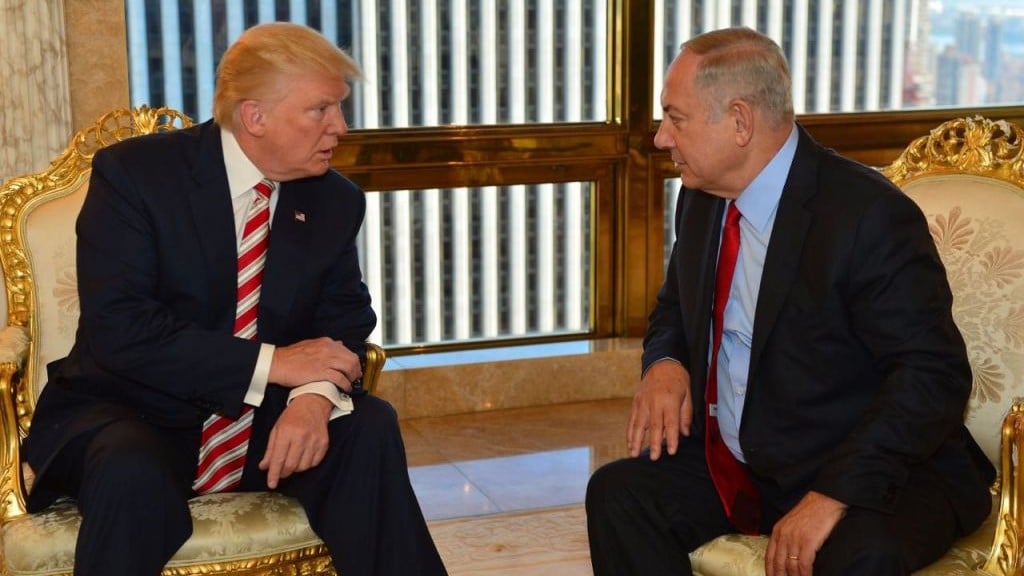
Netanyahu’s extreme vigilance in doing nothing that could possibly offend The Donald did not start on Election Day. Netanyahu wisely refused to antagonize Trump when few believed the Manhattan real estate developer-turned-reality television star would one day become the leader of the free world.
In December 2015, at the height of controversy over Trump’s plan to ban all Muslims from entering the US, the presidential candidate announced that he intended to come to Israel. Much of the world, including the entire US-Jewish community and some Israeli politicians, denounced Trump for his racist proposal, and even Netanyahu issued a statement rejecting it. However, Netanyahu did not disinvite Trump, citing a “uniform policy to agree to meet with all presidential candidates from either party who visit Israel and ask for a meeting.” This was an not an endorsement of the candidate or his views, but rather “an expression of the importance that Prime Minister Netanyahu attributes to the strong alliance between Israel and the United States.
Prime Minister Benjamin Netanyahu rejects Donald Trump's recent remarks about Muslims.
— Prime Minister of Israel (@IsraeliPM) December 9, 2015
Trump said Netanyahu “modestly” condemning his proposed Muslim ban was “sort of inappropriate.” He eventually canceled his planned trip to Israel, but insisted that it was he alone who decided to postpone the visit. “They’re not distancing themselves [from me],” Trump said of the Israeli government. That he was not declared a persona non grata in Israel helped a great deal to keep Netanyahu in the future president’s good graces.
“What if Netanyahu were to snub Trump and then the unthinkable happened and Trump won the presidency?” this reporter wrote at the time. “After eight stormy years in which the relationship between Jerusalem and Washington saw one crisis after another, Israel can ill afford a new president who is angry at the prime minister for embarrassing him with a disinvitation.”
Well, the unthinkable happened. Donald Trump is president and the Israeli prime minister couldn’t be happier. For now, the two men get along fine, hailing a new era in bilateral relations. Netanyahu’s decision, made over a year ago, never to rub Trump the wrong way certainly paid off in the short run. It goes without saying that being on the president’s good side is vital to Israel’s interests.
But given the divisive nature of his administration, coupled with Trump’s impulsiveness and unpredictability, it remains to be seen whether Netanyahu’s total alignment with the president, even as it alienates much of the Jewish world — and the world at large — will serve Israel well in the years ahead.






The Times of Israel Community.