





 Add ToI as a Preferred Source on Google
Welcome to What Matters Now, a weekly podcast exploring key issues currently shaping Israel and the Jewish World, with host deputy editor Amanda Borschel-Dan speaking with Daniel Gordis.
Gordis, an author, scholar, rabbi, activist and sometime Times of Israel blogger, is the creator of the popular Substack blog and podcast, “Israel from the Inside.” He recounts how he began the blog in 2021 to pull the curtain back on the Jewish state for those living abroad.
In this episode, we discuss the evolution of Gordis’s decision to be a pro-Israel, yet critical voice in a tricky global environment of rising antisemitism and uncertainty.
More from What Matters Now
 September 17, 2026
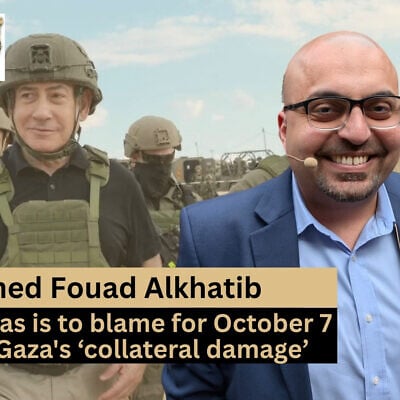
Ahmed Fouad Alkhatib: Hamas is to blame for October 7 and Gaza's ‘collateral damage’
 September 10, 2026
Yohanan Plesner: 3 existential issues facing Israel’s voters
 September 4, 2026
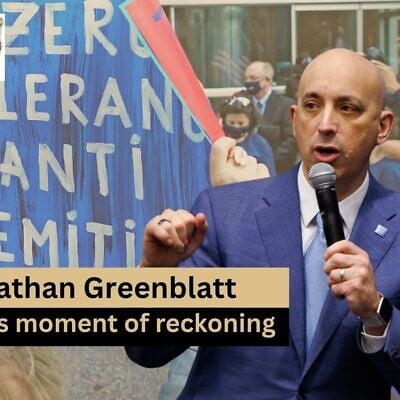
Jonathan Greenblatt: Surging antisemitism brings ADL to a moment of reckoning
 August 21, 2026
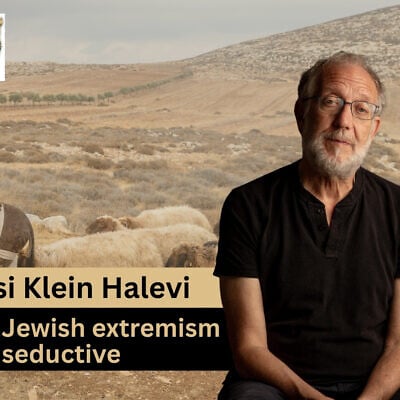
Yossi Klein Halevi: Why Jewish extremism is so seductive - and dangerous
 August 12, 2026
Richard Priem: The ‘age of security’ has ended for US Jews
Wearing his rabbi hat, he speaks about how existential loneliness is a part of the experience of this season of High Holy Days, and he further describes the loneliness of being Israeli at this time in history.
Gordis challenges American Jews to consider that Israelis are fighting for their homeland — both in Gaza and during the ongoing protests in the streets.
And so this week, we ask Daniel Gordis, what matters now?
What Matters Now podcasts are available for download on Apple Podcasts, Spotify, YouTube or wherever you get your podcasts. This episode was produced by the Pod-Waves.
Read the full transcript of this week’s podcast below:
Amanda Borschel-Dan: Welcome to The Times of Israel’s “What Matters Now,” a weekly podcast looking into one issue affecting Israel and the Jewish world right now.
I’m your host, Deputy Editor Amanda Borschel-Dan, here with Daniel Gordis, an author, a scholar, a rabbi, an activist, sometimes a Times of Israel blogger.
And Daniel, just to begin with, thank you so much for coming here. Thank you.
Daniel Gordis: Oh, Amanda, it’s really a joy. I am a regular listener to your podcast. You do a fabulous job. It’s an honor to be on it with you.
Amanda Borschel-Dan: Such a pleasure having you. And I listed all your various hats that you wear, author, scholar, rabbi, activist, blogger, of course. And I wonder how you see yourself today, right now. Which one is at the forefront?
Daniel Gordis: You didn’t mention saba [grandfather], so I think I would have to put grandfather at the top of the list. Probably takes more time than any of those other ones these days, which is a wonderful thing. But more professionally, I would say I’m trying, I don’t know that I would pick any of those words, but in the work that I’m doing on the blog and the podcast, I’m trying to actually open up a prism for people who live outside of Israel, mostly, not exclusively, but mostly, to get a peek into the soul of what’s going on in Israel. So I would call myself sort of like a curtain puller aside, you know, pull the curtains aside and let people peep in through the window. So it’s, I hope, based in some scholarship and there are moments that it has a kind of a quasi-religious mention here or there, though I stay far away from that usually. Not really an activist or an advocate, but really just someone who deeply loves this country, who is very sad about what’s happened and very optimistic at the same time, by the way. But who’s trying to help people get a peek inside. I don’t know what word I would use for that, but that’s how I see myself.
Amanda Borschel-Dan: Okay, so the substack and podcast is called “Israel from the Inside,” which you began in what, 2021, I believe?
Daniel Gordis: Right. When we had a kerfuffle with Hamas in May 2021. And I’d been thinking about doing it for a while, but it always put it off. And I was riding my bike when the missiles started falling on Jerusalem. And I said to myself, be honest with yourself, you’re old enough. If you don’t start it today, you’re never starting it. So I started it in May 2021.
Amanda Borschel-Dan: And I think the last time that you and I spoke was when you were on a panel for The Times of Israel talking about the need to rise up against the judicial overhaul. So this is in the pre-war period. And this was a bold move at that point, because as you said, you’re not really an activist or an advocate, but you were really determined at that point as a pro-Israel, Israeli, somebody who lives here, wants to continue living here to make sure that our Israeli society does not go down that road. Can you talk a little bit about that decision to become such a vocal advocate for what you believe in?
Daniel Gordis: Sure. And as you know, The Times of Israel was an instrumental platform for doing that because I did it with two colleagues, Yossi Klein-Halevi and Matti Friedman. And we’re all friends and we were kind of talking about what was going on and we all felt the need. It’s not enough to just be behind a keyboard or at a screen. We have to actually do something. And what was terribly distressing to us was that for the very best of reasons, wanting to support Israel, not wanting to be perceived as critics of the state of Israel, not wanting to put things out online that the enemies of Israel would then turn around and use either in context or out of context. Many American Jewish leaders, and we were really talking to American Jewish leaders specifically, it was true around the world, but we focused on the US. Many American Jewish leaders and many important American Jewish organizations were tiptoeing around what seemed to us to be the opening volleys of a potential civil war. And we chose the platform of The Times of Israel because we see it as non-sectarian, not religious, it’s just for the Jewish people and beyond the Jewish people, people who are interested in Israel and very fair. We chose that platform to write what ended up being two long missives, letters reaching out to the leaders of American Jewish communities and asking them to get involved and to take a stand and to tell the Netanyahu government to stand down. As you can imagine, we took a lot of heat for that. And I lost, I think, some friendships among people who were among the heads of those organizations. Not officially, we still say hi, but I think it’s cooled. And I feel very, very sad about that. But I think there are times when you have to say there’s going to come a certain point in your life. You have to give an accounting for what you did and what you didn’t do. Whether you mean that theologically, you just mean that way people remember you, it doesn’t really matter. You have to give an accounting and the idea, well, you know, I know Israel was kind of lurching towards civil war, but I didn’t say anything about those organizations which I’d been so long associated with and the people who I considered my friends because I didn’t want to lose those associations and I didn’t want to lose those friendships. It sounded lame and anemic. And I think Yossi and Matti, I shouldn’t speak for them, but I think they felt very similarly. And we decided that we would write what we wrote. We worked on them very hard. I mean, we’re all writers and we could have dashed it off, I think, in a half an hour. But we went over it and over and over and over because we were really trying to get every word right. I think we got most of them right. But again, a lot of people did not like us calling in people outside Israel to step in. But we felt that Israel’s future was very much at stake, as I think it is still now, both domestically and foreign-wise. We can talk about that later, if you like. Yeah. So we got involved. And that was a period of activism, I think a little bit unusual for me mostly. But that was the one period, if you would ask me to point to a period of activism, I would say that that was it.
Amanda Borschel-Dan: You know, you and I actually met in 2012 when The Times of Israel just began. I made an appointment with several Jewish leaders who are here in Israel. And I wanted to learn about the diaspora, for one thing, but also just about diaspora Jewry and how to make this connection and how to speak to these people from here. And I sat in your office, I believe it was in Salem at that point, in a very beautiful Jerusalem office. So that’s our actual meeting point. But I would say that I became aware of your voice more through your activism and the willingness to criticize the country that you love from the inside. And so that’s, of course, part and parcel of your substack and your podcast. It’s not only critical, obviously, you’re sharing experiences of Israel. But this is a very confusing thing for many diaspora Jews, this willingness to criticize the home of the Jews in a public way, in a way that even the goyim, the non-Jews, might hear that there are some problems within the Jewish state. And I’d like to explore this particular aspect of your work.
Daniel Gordis: Sure. Look, I think that love is never devoid of criticism. I mean, we love our kids, but we’re horrible parents if we never criticize them. Now, it matters how we criticize them and it matters when we criticize them. It matters in front of whom we choose to give them that feedback. But the idea, I want my kid to love me and I love my kids, I’m never going to give negative feedback. I mean, that’s just kind of absurd. And it’s also true in marriage. You know, people are more, I think people are more circumspect about acknowledging that. But when the book of Genesis talks about God creating in Eve an ezer kenegdo, I’m going to kind of a helpmate in opposition to him. You know, sometimes I’ll kid around with my wife and I’ll say, can we do a little bit more of the ezer and a little bit less of the kenegdo? And she goes, yeah, tomorrow we can do that. But today this is the balance. But I mean, seriously, obviously, if you’re married to somebody who you respect and you admire and whose values you were, you know, enough taken with to try to make a life with this person, then I think what you want of that person is to look at you at times and say that you can be a better human being than this. You can be a better father. You can be a better friend. You might be a better husband. You could be a better Jew. You could be a better whatever it is. And I think that if people didn’t do that in marriages, I don’t think that we would grow very much. I mean, it doesn’t have to be a fight. I mean, sometimes it is, obviously, and people have harsh words and whatever. That’s just sort of inevitable. But even if it’s not, it’s just like feedback and you have to know when to give it again and how. So I don’t buy the idea, first of all, that love means not criticizing. And I would say, by the way, patriotism doesn’t mean not criticizing. One of the things that really strikes me as fascinating is my American Jewish friends who are appalled by what’s going on in the States and are very upset about what’s going on in Israel, but will speak openly about how appalled they are about what’s going on in the States. But they’re appalled by the people who say that they’re critical of Israel. And I never really understood that. Why does one kind of patriotism require absolute buying in? And I know everybody’s, you know, what are the Goyim going to say? I mean, I don’t mean that literally, but, you know, mah yomru hagoyim. It’s just not it’s not a compelling argument to me. Obviously, there is that danger. Anything you put out can be used in all kinds of vicious ways. The good news is they are not short of material, even without us saying what we’re going to say. And to me, more important than what they’re going to say is how many Jewish minds have been turned off or Jewish souls, more importantly, have been turned off to Israel because they were expected to check their values at the door and buy into Zionism. And if they just heard people saying, I love this country, I want my children to love this country, I want my grandchildren to love this country. But what’s happening here in ways X, Y and Z is really appalling. And it’s not what this country should be. Maybe some of those people who have sort of stopped crossing the threshold, they didn’t want to cross the door into Zionist discourse or whatever. Maybe they’ll say, no, it’s a more open-minded community than I thought it would be. So I really do believe that if you care about anything, you criticize it. And that has to be true of the countries that we love. And it has to be true of the Jewish state as well.
Amanda Borschel-Dan: So many youth that I’ve spoken with about Israel who live in the Diaspora have said to me, I just lost all respect for the Jewish state because I felt like I was being lied to. Meaning even when they’re in their Hebrew school, they would look at the map of Israel and there is no delineation for the West Bank or for the Gaza Strip, for example. There is no acknowledgment of this situation in which, you know, millions of Palestinians are living under military control. And that to me was so eye-opening. The fact that they felt like this gung-ho pro-Israel message was actually what made them become anti-Zionist. And I wonder if we’re seeing that play a bit on college campuses throughout North America. You have much more experience with this age group than I do, aside from my children. So what do you, what do you say?
Daniel Gordis: Look, I think to be sure, the great irony about that map is, you know, if you look at the little Karen Kayemet tzedakah boxes, there used to be metal ones on everybody’s kitchen window sill and we would all put little coins in before Shabbat. But they still actually have them. And Karen Kayemet still puts out a flag. And you’re right, it does not show the green line, the 1960s. Really, the green line is not the 1967 lines, it’s the 1949 lines. That’s another conversation, right? It’s the lines at which the war in which the Arabs are trying to destroy the Jewish state stopped. It only became called the 67 lines because those borders, which they have never accepted, by the way, as borders got expanded. But one of the ironies of that map, which you point out, and I see it, I see it in my grandchildren’s kindergartens and nursery schools. I see it on the Karen Kayemet websites and whatever. It’s exactly the same map that the Palestinians show. We actually we agree about the borders. We just don’t agree about which country is going to be inside the borders. But this kind of whole claim. So, look, I’m less concerned about whether or not we show that particular line, because I think that line, and I imagine you would agree with me, has at this point become meaningless. We’re never going back to that line. That’s just not happening. But the idea that there are millions of people, if you put Gaza and the West Bank together, or Yudea ve Shomron, Judea and Samaria, whatever nomenclature you want to use, there’s millions and millions of Palestinians living under the Israeli thumb. And that’s not good. It’s not good for them, to be sure, but it’s also very bad for us. Yeshayahu Leibowitz, who was one of the great Orthodox thinkers of the previous century, said right after the 67 war, right after, when Israel was in a euphoric moment, he said, give it all back now, because if you don’t, it’s going to callous your soul. And people looked at him and thought he was nuts. I mean, are you kidding me? We just finally now have room to breathe here. Who’s going to possibly give it back? Even Ben-Gurion, by the way, said, keep Jerusalem and keep Hebron, but give most of it back. I mean, he was obviously no longer prime minister at that point. And he actually had turned down a specific West to come back and replace or join Hezbollah’s prime minister. It’s not clear. But even he said this is actually amazing and also very problematic. So, yeah, it’s not good for us. I think there was a period 10 years ago, eight years ago, when leading Jewish people on campuses were saying that. And I think it was really true. We were lied to. And, you know, you hear all sorts of people, I’m not going to mention names, but you hear all sorts of people go off to campus and then write and say the first time they heard the word Nakba. And they grew up in a really Jewish family. They went to day school and their parents were involved in all sorts of Jewish organizations. But the first time they heard the word Nakba was when they were a freshman at a college on the West Coast and they felt betrayed. I actually think they’re right that that was a betrayal. I think that, you know, I’m going to give a silly analogy, but you don’t tell your children, you know, it’s important to be a good person and it’s important to just treat everybody nicely and never again have a more serious conversation about what an adult relationship or romantic relationship might look like on a college campus and how you treat the other person in it while you’re in it. If you want to get out of it, whatever, you don’t just say, well, they’re going to figure it out. That’s terrible parenting. You want your children to have the intellectual and moral and ethical tools to go there and be a meaningful, committed person in a relationship that by definition is going to be complex, because all meaningful relationships are complex. And a meaningful relationship with Israel is going to be complex, too. So I think these students were actually telling the truth.
Then they said that they felt betrayed. I believe them. And I think that they were right to feel betrayed. Obviously, the people that they would point to and the schools that they would point to and say, those are the ones that betrayed me, had no intention of betraying them whatsoever. They were trying to teach a story that people could latch on to.But it’s not the same generation as it was in the 60s and the 70s. The world’s got very different access to information and discourse has changed.And if you look at what’s on television now compared to what was on television when I was growing up, you know, my three sons leave it to beaver. I don’t have those things mean anything to you because you grew up in Canada and you’re much younger than I am. But, you know, everybody was very.
Amanda Borschel-Dan: No, no, we had Nickelodeon. We saw all of these in reruns. Yeah.
Daniel Gordis: Okay, now that was a generation after. But, you know, we had everybody was so proper. And daddy came home from work in a tie and mommy had dinner ready and the children were well-behaved. You know, it was very cute for the 1950s and the 1960s. But by the time, you know, our kids were growing up, that was long since gone. And now they’re not the youngest generation. It’s very much gone. I don’t think anybody was trying to betray them or lie to them or mislead them. They just thought, if we raise that stuff, it’s going to get really complicated. And lo and behold, it just got complicated when there was nowhere there anybody to support them. And I think we made a mistake. That said, my impression, my impression, and I want to make it clear that I’ve lived in Israel for a quarter of a century and I used to go back to the States once a month. But ever since COVID, it’s been much, much, much less. I think my finger is a tiny bit less, maybe even more than a tiny bit less on the pulse of college campuses than it used to be, especially as I can’t get on to my own college campus because Columbia has now closed its gates and my idea has expired. So I can’t even go back to campus if I wanted to, which I don’t. But I think something else has happened here now. And I think that what we’re seeing is that American Jews have bought into a kind of liberal narrative. I don’t mean here, I don’t mean liberal the way I usually use the word liberal, meaning John Locke, and Hobbes, and Hume, and all of those people. And then, eventually, Thomas Jefferson, who talked about individual rights and democracy. That’s real liberalism. But I mean, kind of left wing. Let’s just call it left wing so we don’t confuse terms. They bought into a very left wing narrative in which fundamentally, almost by definition, if not actually looked at by definition, those who have power are wrong and those who don’t have power are right. Coupled to that, those who have white skin are typically wrong and those who have darker skin are typically right. Now, when you look at the world that way and in a large part of the world that actually does cohere with my own views, you know, colonialism in Africa and even racism in the United States and et cetera, et cetera, et cetera. I mean, I buy into a lot of that, but that’s not a hard and fast rule. First of all, Israel’s more brown than white. People forget there’s more Mizrahim than Ashkenazim here. So if you were to actually call Israel a color country, it’s a brown country. It’s just that many of the people that you see front and center are still Ashkenazim because they haven’t quite balanced that out yet, although we’re making progress, thankfully. But not every time is that rule fair. And I think that they have fundamentally bought into it. Israel has power. Palestinians don’t. Israel’s white Palestinians are darker. It’s old fashioned colonialism. And we know that colonialism is always wrong and therefore Israel has to be wrong.That I don’t think is a matter of betrayal. It’s a matter of trying to fit the Israeli-Palestinian conflict about which, by the way, they know very little.
They might chant from the river to the sea, Palestine will be free. But I have done this and many people online have done this, go up there and ask them which river.They’re not actually sure. If you’re going to chant that, you should at least go to Google Maps so that if somebody asks you what river, you know what to say. I mean, they really don’t know very much about it. And that’s a whole contemporary issue of joining into these. And there’s a package, as we all know, there’s a kind of an intersectionality package. So if you go to a college campus and you say, I want to be part of this crowd of people, you can’t say, I buy into the gay and lesbian agenda for sure. And I buy into concern about climate change. And I buy into concern about racism in the United States. And I buy into concern about this. But when it comes to Palestine and Israel, I actually think it’s much more complicated.
And I’m not willing to chant those slogans. You’re out. You just can’t be part of that. And I remember very, very vividly people on college campuses telling me how devastated they were when they went to protests, you know, about anything of, you know, whatever it was. It was about, I think it was about maybe it was [US President Donald] Trump or it was the George Floyd, maybe I think it was George Floyd. And they went on college campuses. There was George Floyd. And they went, as you know, Hillel [Foundation for Jewish Campus Life] at whatever university supports whatever. And people told them, get out with that sign.
You can’t be on the right side of the George Floyd thing if you support Israel. And this is long before the war broke out. And that was heartbreaking for them. So I think it might have been a sense of betrayal earlier on. I think now it’s buying into a narrative which is kind of the foundational narrative of the left, which leaves no space for an Israel, flawed or unflawed, that is legitimate. And that’s what young American Jewish kids are up against. And they don’t have the tools because they weren’t given the tools. And it’s it’s our fault again. And it’s very sad, really heartbreaking.
Amanda Borschel-Dan: Nothing symbolizes what you’re talking about on the college campuses more than the Gays for Gaza movement, which just cracks me up so terribly because, of course, the irony is that any gay in Gaza would be a target for murder. But Daniel, let’s talk a little bit more about the loneliness of your message. You were talking about the college kid who wants to go to the Black Lives Matter protest and couldn’t because he was basically rejected. But any kind of Israeli, be it an Israeli who is happy to criticize what he sees wrong in Israel or an Israeli who is very pro-Israel, which, of course, those who criticize can be especially pro-Israel. But anyone who considers themselves in this kind of pro-Israel camp is now very lonely. And so let’s talk about it with your rabbi’s hat on right now. We are in the Elul Zman and we’re all meant to be doing some kind of introspection, some cheshbon nefesh. So talk to me a little bit about how you see this with your rabbi kippa on.
Daniel Gordis: Well, I think, you know, I think, first of all, there’s something very ironic about this loneliness when it comes to Zionist theory, because Herzl’s fundamental premise was having a Jewish state would make the Jew not lonely anymore because the Jew was always singled out. The French didn’t see the Jew as French and the Germans didn’t see the Jew as German, etc. And Herzl’s point was because we were always visitors, because the Frenchmen, if a French person went to Germany, the Germans knew the French person still had a homeland. They would be in Germany, but they had a homeland. They weren’t a problem. But the Jews didn’t fit anything because they didn’t have their own land. And Herzl had this notion, I’m obviously radically oversimplifying, that if the Jews had a state of their own, we would be, quote unquote, normal. Part of the tragedy of the last two years, I mean, there are so many tragedies of the last two years, obviously chief among them, chief is the hostages. I mean, and then everything else is not secondary, but it’s third, fourth, fifth. And there are many important things. There’s too many widows in their 20s and there’s too many people missing limbs. I mean, you could go on. These are all horrible. I’m not in any way downplaying them, but I want to make the hostage thing first and foremost on that list. But part of what’s been one of the many, many things that’s been so heartbreaking is the loneliness of the Jew again. I mean, when a passenger ship can’t actually dock in Greece because the people protesting on the pier are too, the security’s worried. So they actually, the ship leaves and has to go to a different city. When Israeli kids in Amsterdam get contacted by the foreign ministry and say, go to your hotel room, barricade the door. Don’t just close the door, barricade the door. And once we’ve made arrangements for you to get out, we’re going to tell you where to go and what to do. And they have to kind of sneak out and get home. When Jews have to jump into canals, some of them Israeli, some of them are not, in Amsterdam. When, I mean, all over the world now, Belgium, you know, a young girl gets taken to the doctor and the diagnosis that he puts on part of the thing is Jewish-Israeli or Israel supporter. I mean, so none of this was supposed to happen. And that’s actually, obviously it makes the Israeli feel much more, we used to be, I think, you know, accepted around the world. And I always used to travel on my Israeli passport. And now I kind of do a double take because really, do I want to have that deal with the person when I’m checking into the hotel or, you know, checking into that airline?
Like, who needs it? If it’s a vacation especially, like, I don’t want to have a, you know, a vibe buster. I just want to relax. So it’s very sad. But look, I think when you ask to do it in the rabbi kind of a way, there’s a way in which the high holidays, the Amim Noraim, are a little bit contradictory, even on the surface level, meaning it’s, we see it as a mass event. In other words, most people on that day are going to be with bigger Jewish crowds than they are with at almost any other time during the year. So if you go to a shul that normally has, you know, a couple of hundred people, that’s the day, that’s the days that they’re going to have an overflow or they’re going to have to rent an additional space or an early service and a late service, whatever. And so we have this sense like it’s the en masse thing. And even though we know a lot of people don’t go, obviously, of course, and everybody makes their own legitimate choice, it feels like it’s a mass thing. But at the end of the day, of course, confronting one’s mortality and confronting one’s fragility and confronting one’s imperfections is a deeply, deeply lonely thing.And I think it’s supposed to be. In other words, part of, you know, in the Tanakh (Bible), it really is a fascinating thing. When King David is about to die at the very beginning of the narrative, he’s called HaMelech David, King David, because he’s declining and they’re trying to help him.But he’s declining, but he’s still king. He’s very much going to call him HaMelech David. And then there’s a verse that says, And it came time for David to die. And a lot of commentators have pointed out that when he’s about to die, he’s not King David anymore. When you’re about to die, you’re not the king. You’re not the prince. You’re not the president. You’re not Republican. You’re not Democrat. You’re not Likud. You’re not, you know, whatever, Meretz. You’re not anything. You’re you. And I think when we go to, if we’re part of that tradition of, in some way, whether religious or not, during the year, it makes no difference. But if we’re part of that group of people who are going to go and open up a Machzer, almost invariably, we’re going to say, Who’s going to live and who’s going to die? Who at the end of fullness of days and who not with fullness of days. And we have seen tragically far too many examples of that last couple of years in Israel. But so there’s this kind of contradiction. You’re surrounded by all these hundreds of people saying exactly the same words in the same melody, at the same tempo.And yet what you’re thinking about is the most alone thing you can think about, because your mortality separates you even from the people that you love. You would hope that they would be around you or that you would be around them, God forbid. But at the end of the day, it’s very private. So when we talk, when we talk about that or when we talk about, you know, all kinds of things, but we say, The human being, his or her origins are in dust and their eventual state is in dust. I mean, there’s like we have to toil for our bread and then we’re like a we’re like a fleeting shadow. And, you know, the wind comes in as different versions and different machzerim, etc. So I think we’re supposed to feel lonely during this period of time. I think that to do real introspection and to ask, in what ways am I not the human being that I’m supposed to be? In what ways am I not the Jew I’m supposed to be?In what ways am I not the husband, the brother, the father, the whatever, grandfather? In what ways am I not doing that the way that I should? I think that’s a very painful and it’s between us and whatever we think is out there, you know, either us and how we’re going to be remembered or us and God, if that’s what we believe in. I think it’s meant to be lonely. But I’ll say, Amanda, since you ask about that, that there is a way in which I think, at least for me, just speaking for Daniel Waters at this moment, I think there’s something very lonely about this period that kind of brings me back a little bit to where we were with judicial reform. And you asked about that activist state and the way that Yossi and Matti and I wrote those letters because we were saying, guys, we’re fighting for the essence of this country. And you can’t be so worried about what people are going to say. You can’t be so worried about giving talking points to the other side that we living here in Israel look at what you’re putting out, look at your updates to your membership or whatever. And it looks like you don’t even, we’re not talking about the same country. I mean, I remember one organization, you know, put out a thing and they put out this very famous video of people going up the escalator and down the escalator in the train station.
Some were going to protest anti-judicial reform and some were protesting for judicial reform. And a few people were high fiving each other on the escalators as they were going up. Okay, that’s very nice and sweet. And they put this out like, look, this is Israel, a democracy thriving at its best. And that was, of course, BS. That was ludicrous. Israel was not thriving democratically at its best. And they knew it. Israel was about to come apart at the seams. And if Hamas had not attacked on October 7 after the Knesset came back to session, which it would have done after the holidays, who knows what we would have done to each other at that point? I mean, I think we had slowed it down, but we’ll never know. But to say, look at this Israeli democracy flourishing, it felt very lonely. Why am I out there screaming my lungs out every single Saturday night with every single person that I know? Like, really, you didn’t have to get together for Shabbat meals anymore because you saw all your friends at the protests. And every Saturday night, it’s hot as hell. It’s cold. It’s raining. I mean, the number that we missed, you could count on the fingers of a hand if we were in Israel. We’re crying our hearts out about this. And you’re talking about an Israel that doesn’t really exist. And you’re doing it because you want to show how much you support Israel, which I totally understand. And I know it’s sincere. I’m not suggesting in any way that it’s insincere, not at all, God forbid. But it wasn’t the same country. And I think we’ve gotten to a similar place now. Look, I mean, this is now obviously entirely my view, but this is the first religious coalition that Israel’s ever had. Bibi Netanyahu doesn’t wear a kippah, but it doesn’t make any difference whatsoever. It’s a religious coalition. I mean, it’s controlled by the Haredim. It’s controlled by [Itamar] Ben-Gvir, by [Bezalel] Smotrich, who have openly religious agendas.
It’s not me imputing an agenda to them. I mean, it’s very clear. And it’s very clear that Bibi can’t get the Haredim to have to go to the army. And it’s clear that even as he’s cutting back on support for the Haredim, he’s going to fund their trips to Oman for Rosh Hashanah, even though the law is now that they’re not allowed to leave the country if they’re draft dodgers. I mean, it’s completely in the grips of the religious part of this country. And forgive me, it’s the most appalling coalition that we’ve ever had. It’s a coalition that speaks about Arabs in ways wherever you are in this conflict. We should burn down Huwara, really? We should burn down a whole village because there’s some people in the village who are probably terrorists. That’s true. You’re going to burn down all the kids. There’s people that talk about, I couldn’t care less if there’s any humanitarian aid in Gaza. Really? I mean, we just recently read in the Torah reading a parasha about how you conduct war. There’s rules to war. There’s rules to what you can do with a female captive if you capture her. There’s rules what you have to do in terms of how you keep your camp. War has to be governed. It’s going to happen, but it has to be governed by a certain human basis. And so what’s coming out in this country now is, for me, as a religious Israeli, horribly embarrassing, infuriating, and very lonely. Because I live in South Jerusalem, in Baka. So if you live in Baka, you could delude yourself into thinking that the religious community is enlightened. It’s all sort of — I mean, you know, Rachel and John Goldberg-Polin are in our shul, so I’ll take them as examples of human beings who I think represent the very, very, very best of what Jewish Israeliness can and should look like. I mean, just forgetting the tragedy that has befallen them, which is unspeakably horrible. Just who they are as Jews and human beings. And they’re extraordinary no matter what community you put them. But you could delude yourself, if you live here in South Jerusalem, in Baka or the German colony, into thinking, yeah, that’s what the religious community in Israel is like. You know, it’s all of these people that read the New York Review of Books and the New York Times Book Review, and they, you know, whatever. And they study Torah, and they do dafiyomi, and they’re religious, but they’re so open. That’s, of course, not true. That’s not what most of the yeshiva world is like, and it’s not what most synagogues in Israel are like. And those of us who are watching what happens when the religious community in Israel begins to sort of get the reins of power and control, which people have a right to vote whoever they want, absolutely, and see this kind of ugliness emerge, it’s a very lonely feeling. Now here’s, you know, you look at the polls now, right? I mean, it’s going to be 61, 57, 61, 59, depending on whether this one runs with that one or it’s going to be very close. Imagine a mind experiment in which a million American Jews committed to Israel, some religious, some not, but most of them imbued with a sense of American openness and tolerance moved to Israel. We would actually change that balance very, very quickly. And we would, in my view, protect the Israel that I desperately want to see protected. Now, I know that a million American Jews are not coming to Israel. I wasn’t born yesterday, and it’s not going to happen. I understand that.
But even if not, then what I would want to see from my American Jewish friends is be honest about what people like all of us in Israel are facing, which is we’re afraid of losing our country. And we’re afraid of losing our country not to Palestinians who are not going to overrun us anymore.We’re not going to lose it probably not to Iran, which is probably not over, but we’ve made a very big dent. The Houthis are not going to invade us. We have plenty of security issues, plenty, and we’re going to have them for as long as the eye can see. But we’re going to lose our country to the values of Jewish life here that are going to become synonymous with both power and with religiosity. And we can imagine a world in which living here is going to mean having to sacrifice those values, which we consider to be critical, ironically, because the Jewishness, which is so central to our lives, took over. And it would feel a lot less lonely to me, Amanda, if my American Jewish colleagues and my American Jewish friends who are so supportive of Israel understood that we need them. We need them not to send more money, which of course is critically important. And we need them not only to get Congress to do certain kinds of things, which is critically important. We need them to remind us that we’re not alone, that they want the same kind of Israel that we want, that they want the same kind of open-minded, embracing, pluralistic, religious or secular or whatever Israel that we think is critical to Israel being a Jewish state that the Jews can be proud of. And to acknowledge that in order for that state to survive, they need to be on the side of people who can defend Israel when Israel needs to be defended, and criticize Israel openly and unabashedly when the government or the coalition or this policy or that statement needs to be criticized openly and unabashedly. And because both organizations and individuals are afraid of doing that for all the right reasons, it feels even lonelier. So as I’m sitting in Shul and thinking about these passages that, to me, evoke a certain degree of loneliness, there is that existential loneliness and the loneliness of mortality, which we all face once we’re adults and so forth. But it is going to feel a little bit more lonely because I think many American Jews who are much more nuanced than their discourse are failing to have a discourse that’s as nuanced as they are, which would make those of us here in Israel feel so much more supported.
Amanda Borschel-Dan: Daniel, thank you so much for this conversation. If nothing else, you’ve given a lot of rabbis a lot of fodder for their pulpits over the High Holy Days. But really, everyone, seriously check out Daniel’s substack and podcast Israel from the Inside to get more insights like this. Thank you so much, Daniel.
Daniel Gordis: Thank you very much. It’s a pleasure to talk to you.
Amanda Borschel-Dan: Likewise. Thanks for listening to The Times of Israel’s weekly What Matters Now. Please check out another installment next week. This episode was produced by The Podwaves. If you have any questions or comments about it, please send us an email to podcast@timesofisrael.com. Until next week, Shalom.
Check out the previous What Matters Now episode:

The Times of Israel Community.