






 Add ToI as a Preferred Source on Google
Welcome to What Matters Now, a weekly podcast exploring key issues currently shaping Israel and the Jewish World, with host deputy editor Amanda Borschel-Dan speaking with senior analyst Haviv Rettig Gur.
There are still lots of questions and not a lot of answers after a bold Israeli airstrike targeted a meeting of Hamas’s top leaders in Qatar’s capital, Doha, on Tuesday. According to some reports, the leadership had gathered to discuss a new US-sponsored hostage-ceasefire proposal aimed at ending the war in Gaza. At publication, reports still differ as to whether the attack was successful.
This conversation can be viewed here:
And just before recording on Wednesday, the IDF confirmed it had carried out strikes against the Houthis in Yemen, saying it struck military camps where operatives were gathered, the headquarters of the terror group’s propaganda division, and a fuel depot, in both Sanaa and in the al-Jawf area north of the capital.
More from What Matters Now
 September 17, 2026
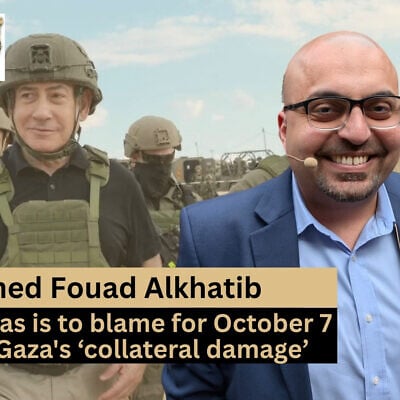
Ahmed Fouad Alkhatib: Hamas is to blame for October 7 and Gaza's ‘collateral damage’
 September 10, 2026
Yohanan Plesner: 3 existential issues facing Israel’s voters
 September 4, 2026
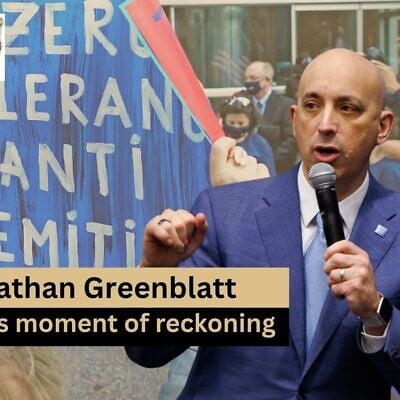
Jonathan Greenblatt: Surging antisemitism brings ADL to a moment of reckoning
 August 21, 2026
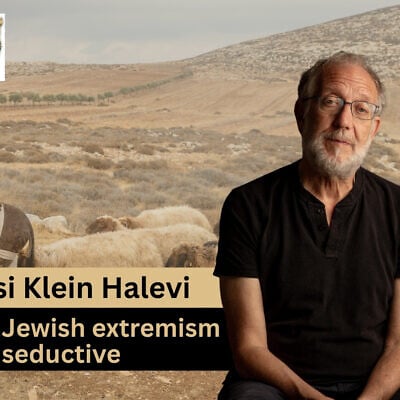
Yossi Klein Halevi: Why Jewish extremism is so seductive - and dangerous
 August 12, 2026
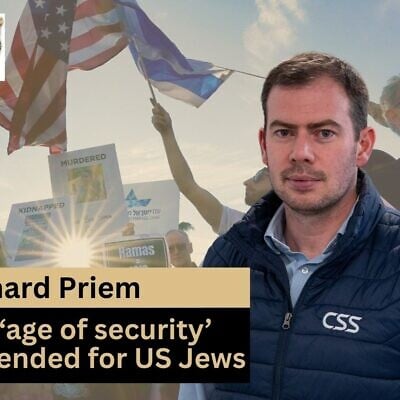
Richard Priem: The ‘age of security’ has ended for US Jews
Borschel-Dan asks Rettig Gur: Is Israel acting like an unpredictable “Middle Easterner” to restore deterrence on all fronts?
In a quick-take conversation, we hear why Rettig Gur doesn’t put much weight into diplomatic theatrics as Israel fights its existential war against the Hamas terror group that launched the war on October 7, 2023.
We ask: What does it mean to fail in a daring op? Has Israel burned all of its allies’ goodwill?
And so this week, we ask Haviv Rettig Gur, what matters now?
What Matters Now podcasts are available for download on Apple Podcasts, Spotify, YouTube or wherever you get your podcasts. This episode was produced by the Pod-Waves.
Below is the full transcript of this week’s episode:
Amanda Borschel-Dan: Welcome to the Times of Israel’s What Matters Now, a weekly dive into one topic affecting Israel and the Jewish world right now.
I’m your host, Deputy Editor Amanda Borshel-Dan, here with our Senior Analyst, Haviv Rettig Gur.
Haviv, it’s been a long time since we’ve been together on the podcast, and I’ve missed you so. How are you doing, my friend?
Haviv Rettig Gur: Good. Yeah. As the kids say, it’s been a minute. I’m good. I’m actually traveling at the moment, so it’s tired and jet lagged and all that, but things are okay. We’re trying to understand what the heck’s happening in Qatar.
Amanda Borschel-Dan: What the heck is happening in Qatar and elsewhere, and really, there are a lot of questions and still not a lot of answers after what happened yesterday, which was a bold airstrike targeting a meeting of Hamas’s top leaders in Doha, and according to some reports, the leadership had gathered to discuss a new US-sponsored ceasefire-slash-hostage-release negotiated deal, and the proposal was aimed at ending the war in Gaza. At recording time, reports still differ as to whether the attack was even successful. We know that some were killed. We don’t know exactly who. And to muddy the waters even further, just before we began recording, the IDF confirmed that it had carried out strikes against the Houthis yet again in Yemen, saying that it struck military camps where operatives were gathered at the headquarters of the troops’ propaganda division. So I think the main thrust of all my questions to you today, Haviv, which we will discuss after the break, is, are Israelis finally acting like Middle Easterners? So we’re going to talk about all of this and more when we’re back.
I’m Amanda Borschel-Dan here with our senior analyst Haviv Rettig-Gur.
And so the question is, that I began with, are Israelis acting right now like Middle Easterners? Meaning, is it okay to go out and try and whack enemies in a US-allied country? So Haviv, what are you thinking?
Haviv Rettig Gur: If I’m trying to read Israeli intentions and Israeli mood, certainly the policy planners and the government that’s making these decisions, my sense is that everything we’ve talked about for 23 months after October 7, everything about this new world, everything about this new Israeli consciousness, that is to say, no more monsters on the border, no more campaigns to destroy us, no more sitting around waiting while ideologues and religious movements build up the case and then build up the missile arsenals and then build up the alliances and then come for us. Because after October 7, we believe them. And so, you know, I don’t know that Israel is acting like Middle Easterners so much that Israel is acting like the Jews who survived the twentieth century in the Eastern Hemisphere and who are just genuinely sick and tired. There really is a kind of exhaustion with the very idea that we’re supposed to wait around. Don’t host Hamas leaders in your country as they speak publicly. Khalil al-Hayya, the main target of the attack in Qatar, spoke three or four weeks ago, I don’t remember the exact date of the interview, but he spoke specifically about this war being, you know, forever and there’ll be more October 7 and it’s a success and Israel will be destroyed and no more, no more.
If you arm against us to destroy us, we’re not waiting around to find out if you’re more competent or less competent and might be successful or not successful. No more. All of this ends. All of it ends. The war in Gaza, the Israeli campaign to demolish every Hamas infrastructure around the world and Hamas’ patrons and supporters, Hezbollah and the Iranian regime, all of it ends when they stop trying to destroy us. The destruction of us is, how shall I put this, non-negotiable. And I think that’s the Israeli mood. In other words, is striking a Hamas meeting house in Qatar, this villa along the beach, is that wise diplomatically in terms of America and in terms of Europe and in terms of, you know, the Saudis are now taking some steps. The Emiratis just kicked the Israelis out of the air show in Dubai. Stop trying to kill us. Stop talking about it. Stop building infrastructures for it.
We’ve spent 77 years in this and we might have to spend 77 more. But if we’re doomed to live in a world in which the Arab world keeps throwing up new crazy ideologies, new self-destructive ideologies whose sole purpose is our destruction for the redemption of Islamic honor or whatever the hell the reasoning is, then this is going to be the new normal. We set the new normal. If it’s normal for Hamas leaders to be hosted in Qatar as if nothing is happening, as if they don’t actually seek a genocide of our people, then it’s normal for Israel to bomb them in Qatar. And I think that’s the Israeli message. So is that Middle Eastern? I don’t know. It’s Israeli.
Amanda Borschel-Dan: It feels a little disingenuous, what you’re talking about, because of course Israel and the United States asked Qatar to host Hamas in order to carry out these negotiations. So how does it make it kosher to have some kind of demi or dummy proposal in order to get these people to gather together and then try and kill them all? It seems a little, it’s not playing by the rules of the game, if you, you know.
Haviv Rettig Gur: First, I don’t think Israel asked Qatar to host Hamas. Qatar hosts Hamas and backs Hamas and supports Hamas and funds Hamas and is a Muslim Brotherhood regime that runs Al Jazeera in support of Muslim Brotherhood ideology, which Hamas is a chapter of, a subscriber to. Qatar was the great patron of Yusuf al-Qaradawi and Al Jazeera, who had his very popular Islamic show whose purpose was to radicalize the Muslim world, the Arab Sunni Muslim world for the Muslim Brothers. Qatar is very, very much ideologically and religiously, their version, the official Islam of Qatar is the Hamas Islam, is that Salafist Muslim Brotherhood Islam. So hosting it has nothing to do with the Israelis. It was, was the Trump offer to get them into the room to have that discussion? Maybe, maybe that, you know, that would take a lot of cleverness. Occam’s Razor says the Israelis were tracking, the Israelis weren’t leading. On the other hand, the Israelis managed to pull off something like that in Iran with the Iranian Revolutionary Guard Air Force command. So I don’t know. I truly don’t know. But if that’s what it took to get them in a room for an attempted assassination, yeah, nothing about Hamas should be off the, what are the rules of the game by which Hamas is allowed to continue to plot and plan in some other capital and Israel’s not allowed to touch them? They’re planning terror attacks. They’re planning the mass murder of civilians. That, that is what they do and, and that is what they want to do and what they claim to do. And the head of the meeting is a man who said there’ll be more October 7, I promise no matter what you do. So why is he not a legitimate target? What rules of the game say that if, for example, Israel sat there, sat around plotting every day the extermination of the Iranian people, that somehow Israel would be out of some diplomatic reach of Iran being able to prevent Israel from doing so? Reversing that argument is so ludicrous that you realize just how insane it is that these ideologies that percolate through the Middle East, that frankly destroy the Middle East routinely, constantly, are just allowed to thrive. I, again, my point isn’t that this was a wise move. I don’t know if it was a wise move. We don’t know how it’ll turn out. I was surprised by it. I think you were surprised by it. Nobody expected it to happen. The argument against it, that claims the right of diplomatic niceties, come on, it’s every, you know, Israelis think that they’re out to exterminate us. Palestinians think that we’re out to exterminate them. Nobody cares about diplomatic niceties or what the world opinion is. Everyone thinks that everything is at stake here. So I don’t take that argument.
Amanda Borschel-Dan: Okay. But this has been what has completely blown my mind the entire time that we’ve been at war in Gaza. Why does Hamas have a seat at the table? Why does Hamas have a say? Why this theater of diplomacy if under it all, most people believe, in Israel at least, as you do, Haviv, and I certainly don’t understand, have never understood why Hamas has a say in all of these negotiations. They should be off the table, out of the realm of any kind of civil discourse. So, but at the same time, in the theater of all this diplomacy and the global stage, they have had a seat, Qatar is still a legitimate player. And so if you’re going to follow the rules in one way, don’t you think you should be following through in the rules entirely? Or should you just say there are no rules and forget it all and we are unpredictable and we have now returned our deterrence and don’t mess with us and that’s it?
Haviv Rettig Gur: They have a seat at the table because they’re holding our people. No other reason. And that’s reason enough. And we got to get our people out and we’ll play an awful lot of games to get them out. But nobody can pretend there are rules. Holding hostages the way they hold hostages, it breaks every rule of every possible imaginable.
It even breaks Islamic law, the way they hold hostages. And it certainly breaks international law. And so nobody believes in these rules. I know the Saudi condemnation of the Israeli strike said, this is a terrible violation of international law. Come on. The Saudis are just desperately worried about international law. That’s the problem. I’m not saying I don’t think there are rules. I’m saying Hamas doesn’t think there are rules and Qatar doesn’t think there are rules. And they all pretend there are rules when it’s about the Israelis, when it’s about abusing the Israelis and libeling the Israelis and demanding that the Israelis, how dare the Israelis, while Hamas breaks every rule. That’s its fundamental strategy. How dare the Israelis not play by the rules? Because the imbalance where the Israelis have to try to play by the rules and Hamas flagrantly, its only victory condition, its only possible path to a victory, to survival, is breaking all the rules on its own civilians, on the Israeli hostages. How dare the Israelis not play by the rules when Hamas doesn’t and Qatar doesn’t and nobody else does. So no, they have a seat at the table because they hold our hostages in flagrant violation of every possible imaginable rule. And we do not owe anybody diplomatic niceties. We shouldn’t do foolish things that ruin for us great alliances. And we shouldn’t be stupid and foolish and self-harming, but we don’t owe the Qataris who finance every ideologue calling for our disruption diplomatic politeness with respect.
Amanda Borschel-Dan: Let’s go to a short break and then I want to talk to you about whether Israel has burned all of its goodwill.
And we’re back. I am Amanda Borschel-Dan here with Haviv Rettig Gur.
So Haviv, before we get to speaking about whether Israel has burned all of its goodwill, I want to ask you, what would it mean if Israel actually failed here, meaning the long arm of Israel was outstretched and tried to get these Hamas leaders, but it didn’t get them in the most public failure possible. What does it mean for Israel?
Haviv Rettig Gur: It would mean that this operation didn’t work. It wouldn’t mean more than that. It would mean that there probably is going to be another operation. It would mean that Hamas’s leadership in Qatar is probably limited in what it can do because it can no longer function above ground very easily and openly because it has to assume the Israelis will try again. And look, Israeli intelligence based long range attacks have just scored a dozen just unbelievable successes from the Houthis to the entire Hezbollah war and the entire 12-day war with Iran is one almost unbroken string of that kind of military intelligence cooperation success at a scale that is possibly unprecedented in the history of warfare. The intimate and the connection between military and intelligence and the capabilities of that intelligence and then they had a screw up and we have grown so used to miracles that we forget that we’re also able to make, to fail, to make these mistakes. And so I don’t attach a great deal of importance. I mean, if we’re going to do this, if we’re going to absorb the diplomatic costs and there are diplomatic costs, I don’t accept the moral argument that somehow we owe Hamas to be allowed to live in Qatar because it would be impolite to the Qataris to do otherwise. But I do accept that there’s a strategic question there. What kind of costs? So yeah, it’d be a shame to absorb the diplomatic costs without achieving the military end, but all war is going to be a series of successes and failures and you do your best. I don’t think it’s beyond that.
Amanda Borschel-Dan: Okay. You are right now in the United States and I wonder what you’re hearing in terms of the rhetoric over there, meaning US President Donald Trump is somebody who really likes successes.He really gets behind them. And so the question is right now, again, at this point, we don’t exactly know who was killed in this strike in Doha, but what are you hearing in terms of the buzz surrounding the Trump administration and its support for Israel right now?
Haviv Rettig Gur: We’ve seen what the Trump administration said, what President Trump himself said. They very much want to distance themselves from the attack. Qatar is considered a very good ally of the United States. It alluded air force bases there, forward power projection into the Middle East is something that is done very much in collaboration with Qatar. And there’s a lot of closeness by individual Trump administration officials to the Qataris. Several of them, including the American attorney general was a registered lobbyist for Qatar before going into the administration. And so Qatar has a lot of goodwill, personal connections, and also influence and also is seen as a strategic ally, a stable and reliable strategic ally. That Qatar funds, supports and advances in every imaginable way in Islamism that is in its core anti-American is seen as a secondary problem, you know, and Qatar itself has been a close ally of the US basically from the rise of the current Emir of Qatar, Sheikh Hamad [bin Khalifa Al Thani], who took over from his father in a bloodless coup back in 1995 and very much turned toward the Americans. Incidentally, as part of a kind of protector against Saudi encroachment and Saudi influence. And so for America, it’s also a kind of divide and conquer of the region that allows America to have a much easier time navigating the region and not have it as significant an opposition in the Gulf area because there’s this separate Qatar that works with America. So the Trump administration does not want to destabilize Qatar. It doesn’t want to anger Qatar. And it reflected that. And at the same time, Trump’s statement said, explicitly said, you know, I hate where the Israelis did it. I’m paraphrasing, obviously, but people should just go to his statement. But the act of going after that Hamas leadership makes perfect sense. And that’s, I think, where the Americans are. They want the war to end. They are not opposed to Israel hunting Hamas everywhere it goes. They do need from Israel a day after and a sign of willingness to be willing to, you know, bring an end to the war. And I think that that’s consistent with what we’ve seen as a response to this particular strike in Qatar.
Amanda Borschel-Dan: Okay, not far from where you’re sitting, there’s going to be a conference in about a week or so about the two state solution. And at the same time, we’re talking about at the United Nations, the next state is the General Assembly. And we’re anticipating that a slew of countries are going to recognize a Palestinian state. It’s very theatrical, of course. But do you think that Israel has basically burned through its diplomatic goodwill almost entirely, even among its allies by this point?
Haviv Rettig Gur: Maybe. I don’t put a lot of store in diplomatic goodwill. I genuinely believe most states pursue their own interests. And if they think you’re lying to them, then that’s a sense in which, you know, they’re going to trust you even if they would agree with you if they thought you were telling the truth. So the world shouldn’t think you’re lying, which this Israeli government has I think lost the thread on that in quite a few governments and capitals for things it itself did, for saying two things and not actually explaining its strategy in Gaza, not actually saying this a day after. If a bunch of European states join the 140 states on this earth, roughly, that already recognize a State of Palestine. And now it becomes 152 that recognize a State of Palestine. Very little will have happened that helps the Palestinians. And one thing will have happened that hurts the Palestinians very, very much, which is that Hamas will claim it as a victory and a sign that the war was a good idea. And October 7 was worth it. And the destruction Gaza faced was worth it. If those states are not quite that stupid, but in fact say something a lot more interesting, which is we have to start building the day after that day after will be a Palestinian state. We recognize that Palestinian state a priority, ahead of time. And the condition for that recognition going into effect is the removal and disarming of Hamas from Gaza. In other words, the Israeli victory conditions, if they do that, then Hamas will still pretend that it’s or claim that it’s that it drove the great victory.
But Hamas won’t be there the day after in Gaza, won’t survive in Gaza in a way that prevents the rebuilding of Gaza in a way that makes the world’s recognition of a Palestinian state irrelevant because there’s still Hamas there promising to kill Israelis for all time. And so the question is, how are they going to do it? Are they going to do it smart or they’re going to do it blitheringly, knuckle draggingly stupid? So far, they’ve done it stupid. And they then tried to backtrack the British and the French and say, no, we only mean if it isn’t Hamas. But nobody cares about the diplomatic, you know, footnotes. People care about what your symbolism is, what your message is. Incidentally, I think the Israelis could help shape a lot of this. They could turn what looks like a bad thing for Israeli policy in Gaza into a good thing.
The Israelis could come out and say Gaza has a wonderful, beautiful, marvelous future. Gaza is a beautiful territory with beautiful beaches and natural gas. Gaza has a high density of population. That’s true. But Hong Kong has a higher one. There are many successful, not many, but a few successful polities with higher population densities than Gaza. And they don’t have oil or gas. In other words, Gaza could have a truly good future and all the world’s sympathy that it garnered from this war, a great deal of it justified, could rebuild, could send money, could send concrete into Gaza in a way that will make Gaza in 10 years a genuinely beautiful place, another Emirate on a different sea. But this is the big Israeli but, and this is the but that European recognition of a Palestinian state could actually bolster rather than torpedo, which but it depends, everything depends on the total removal of Hamas. Hamas, the organization, Hamas, the idea of Israel’s destruction, Hamas, the education system, all things that are Muslim brothers and Hamas cannot be in Gaza. And then Gaza’s good and better day can begin. And if not, we’re just going to be fighting this war again in five years.
And that’s a shame. So Israel could shape this environment. And it isn’t, unfortunately. It could give a day after that rewrites that narrative. And it isn’t, unfortunately. And I think from domestic politics, essentially, not from any other reason that it’s not talking that way. And if the French and the British and Spanish and the others don’t recognize a Palestinian state in a way that gives it as a gift to Hamas, then they are extending the Gaza war and ensuring more dead Gazans and frankly, another war and more dead Israelis and everything bad.
Amanda Borschel-Dan: I haven’t talked to you for so long and I just feel like I need to throw every single question at you.But I know you have a really full day today. And so I really hope that we’ll be able to discuss much more in the coming month, especially ahead of the two year anniversary of the war. So can we try and set a date?
Haviv Rettig Gur: Awesome. Oh, right now? I’m free on Tuesdays.
Amanda Borschel-Dan: Ah, no hold your calendar. Tuesday could be good for me, but we’ll chat in a second. Haviv, thank you so much. And safe travels, my friend.
Haviv Rettig Gur: Thank you.
Amanda Borschel-Dan: Thanks for listening to The Times of Israel’s What Matters Now. Please check out another installment next week. This episode was produced by The Podwaves. If you have any questions or comments about this or any other episode, please drop us an email to podcast@timesofisrael.com until next week. Shalom.
Check out the previous What Matters Now episode:

The Times of Israel Community.