

When military might confronts civil disobedience
Shalom Eisner’s rifle blow exposes a contradiction at the heart of the IDF’s current mission
 Add ToI as a Preferred Source on Google
Mitch Ginsburg is the former Times of Israel military correspondent.
Armies take ground. They fight their way up hills and across water barriers. They seek dominance of the skies and seas. And they do this by applying lethal force. That is the essence of their training: the correct application of lethal force.
The skill required to complete that mission – to kill on command – is not easily acquired. Soldiers are shorn of personal identity, made uniform, taught a new language, a new skill set. They are given a new code of conduct; within its parameters, the worst of human crimes is now the underlying goal.
This new individual, this soldier, is assembled and glued together from unequal parts ideology, camaraderie, duty, perseverance and the ability to withstand hardship. It generally takes the better part of two years.
But then, in a radical departure from that training, and with increasing regularity in Israel, these soldiers are asked to use non-lethal force: to pull settlers from their homes and bar bike-riding Danish activists from the Jordan Valley road.
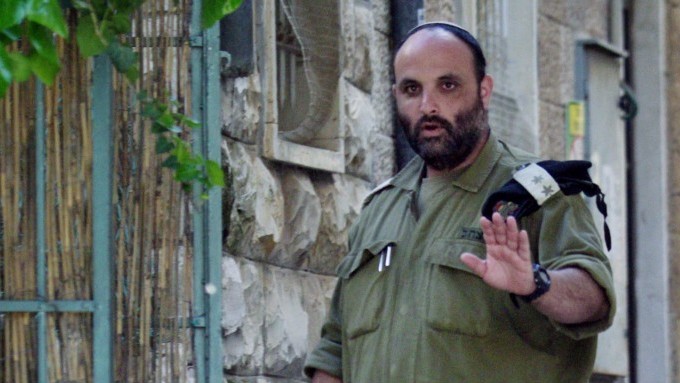
This is not to belittle the gravity of the actions of Lt. Col. Shalom Eisner. Israel’s political and military leaders have branded what he did as inexcusable. Notwithstanding the provocations that may have preceded his assault, his jab to Andreas Ayas’ face with an M-16 rifle is seen as a flagrant violation of the army’s code of conduct and a stark departure from its officers’ credo: from me you shall see and so you shall do.
But it also highlights a central tension that the IDF faces today: dealing with different shades of civil disobedience – from Israeli citizens, foreign nationals and Palestinians.
For the army, confrontation with unarmed civilians is a no-win situation. There are three possible outcomes and all of them are bad.
One, the soldiers use too much force. This was the case in October 2000, when snipers were deployed against rioting civilians within Israel and, to a much lesser degree, on Route 90 on Sunday.
Two, they use too little force. This was the case initially on the morning of May 31, 2010, when unarmed naval commandos were beaten by club-and-crowbar-wielding activists aboard the Mavi Marmara (the soldiers subsequently used lethal force and killed nine activists). It occurred again in mid-December 2011, when the Efrayim Brigade commander was injured by rioting settlers who burst through the front gate of the regional headquarters in the northern West Bank and vandalized vehicles and equipment.
Three, no one is injured. This happens often in Naalin and Bilin and Nebi Salah, the centers of Palestinian civil protest, and it was largely the case during the disengagement from Gaza, but it too comes with a price. Because even when the protesters are curtailed, and the ostensible military mission has been accomplished, the soldiers have been stripped of some of the components that make them warriors.
And this, over time, depletes their capacity to fulfill the function for which they were primarily trained: to wage war.








The Times of Israel Community.