

Attention turns inward
Violent crime and racial tensions dominate the media cycle
In the absence of major political or defense-related news today, the Israeli papers turned to the internal scene, producing headlines on crime, medicine and Big brother legislation.
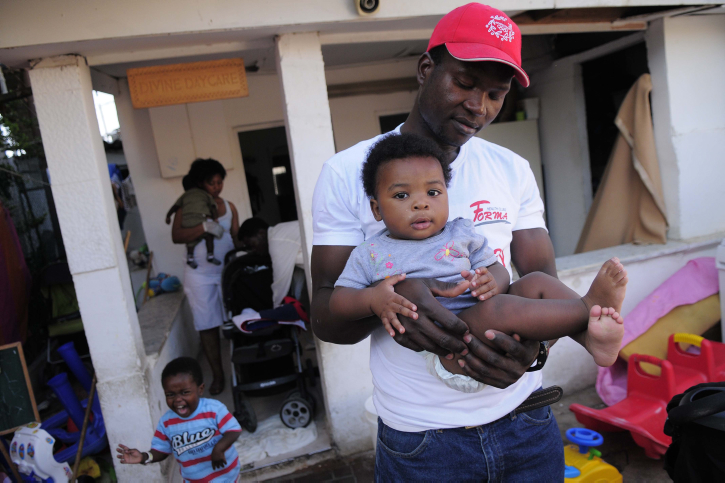
“Time Bomb,” reads the top headline in Israel Hayom, referring to the perceived threat posed by the ongoing influx of African asylum seekers into southern Tel Aviv. Visits to the neighborhoods yesterday by the internal security minister and the chief of police spurred calls by native residents to find a solution to the thousands of migrants who live in the neighborhood and its parks, and threaten their sense of personal safety.
Interior Minister Eli Yishai offered one solution yesterday that managed to raise the ire of aid groups who care for the migrants. In a radio interview, Yishai, chairman of the Shas party, said that all the migrants ought to be arrested and deported, and accused the aid groups of preventing the problem from being addressed by posing it as a human rights cause.
After an anonymous phone call was made to one of the groups’ offices threatening to burn down their center and rape their employees, the group filed a police complaint against Yishai charging him with incitement, claiming the threats were made because of his radio address.
Maariv reports that the aid group blames statements by Yishai and other politicians for animosity to the migrants, many of whom fled to Israel due to civil war and political persecution in places like Sudan and Eritrea.
“We’re being followed,” reads the top headline in Yedioth Ahronoth. The article reports on new legislation that’s in the works to grant extensive surveillance permission to a wide range of government authorities. The bill, drafted by the Justice Ministry, aims to extend the same permission given to the state security apparatuses to tap phone conversations, text messages and computer files to other government bodies like the agriculture Ministry, the Antiquities Authority and the Parks Authority. Civil rights groups are up in arms against the proposed legislation.
Israel Hayom previews a weekend exclusive on a first-of-its-kind face transplant operation to be performed at Tel Aviv’s Ichilov Medical Center. According to the report by Raz Reznik, doctors will attempt to graft the face of a dead person onto the body of a three-year-old girl who was badly burned in an accident. Only 22 such operations have been attempted worldwide.
Haaretz‘s top story reports on a new initiative by the Finance Ministry to enlist members of the ultra-Orthodox community into service in the police and fire departments. The plan aims to help drafters of a new bill on mandatory enlistment that will replace the Tal Law regulating military and national service exemptions, which the Supreme Court ruled was unconstitutional. The treasury hopes more ultra-Orthodox will be willing to serve in the police and fire department than are willing to join the army.
All the papers provide extensive coverage of a shootout that took place between police and criminals yesterday in the Arab city of Taibe. Yedioth’s headline reads “City at War,” while Maariv’s headline quotes a police officer saying: “In this battle the survivor was the one who shot first.”
Another crime-related story that appears in most of the papers is the police finding of a DNA match that strengthens their case against that the man apprehended for a rape that took place in a Tel Aviv parking lot.
In Maariv’s opinion pages, Aryeh Amit writes about “The end of personal safety.” He slams the government for not doing enough to fight violent crime in the streets and says it prefers to bury its head in the sand.
“The state is standing on the sidelines and refuses to acknowledge that it is not the Iranian bomb that is the real threat, but the ticking time bomb that lives among us.”
In Israel Hayom, Rimon Lavi offers a creative solution to the issue of African migrants and their poverty-driven flight to Tel Aviv. Lavi reasons that if the migrants were gainfully employed they would not resort to crime and living in the streets, and proposes that contractors working on public projects be required to employ migrants before applying for permission to import foreign labor.The money saved, writes Lavi, can be put towards urban rejuvenation programs in south Tel Aviv.









The Times of Israel Community.