

Boris Johnson: ‘No need for haste’ on formal process of pulling UK out of EU
‘Leave’ campaigner, favorite to succeed Cameron as PM, says 28-nation bloc was ‘a noble idea for its time’; Merkel warns other countries against kneejerk reaction to Brexit
 Add ToI as a Preferred Source on Google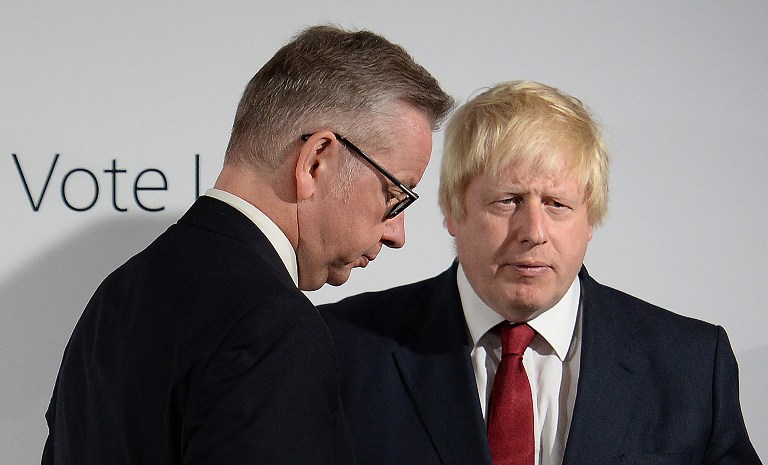
Boris Johnson, who spearheaded the successful campaign for Britain to leave the European Union, said Friday there was no need to rush the process of pulling out of the bloc.
“There is now no need for haste,” Johnson told a London press conference in his first public comments since the results were announced.
He said the EU had been “a noble idea for its time” but was “no longer right for this country.”
The former London mayor stressed that Britain would not “turn our backs on Europe” and that “our children and grandchildren will continue to have a wonderful future as Europeans.”
There were chaotic scenes earlier when Johnson left his home in north London to booing and jeering from a large crowd of bystanders.

Protesters hurled abuse as police held them back to allow Johnson, a favorite to succeed Prime Minister David Cameron, to walk to a waiting car.
“You’ll pay for it!” shouted one man in the crowd in the affluent, strongly pro-EU area.
Video posted on social media indicated that a group of cyclists surrounded the car carrying Johnson at a nearby traffic light, briefly blocking its progress.
Britain to remain in EU until end of negotiations
European Union leaders on Friday said that Britain will remain a member of the bloc until its exit negotiations are concluded, which probably means at least two years longer.
The leaders of the EU’s institutions said Friday that “until this process of negotiations is over, the United Kingdom remains a member of the European Union, with all the rights and obligations that derive from this.”
They said in a statement that under the bloc’s treaties “EU law continues to apply to the full to and in the United Kingdom until it is no longer a member.”
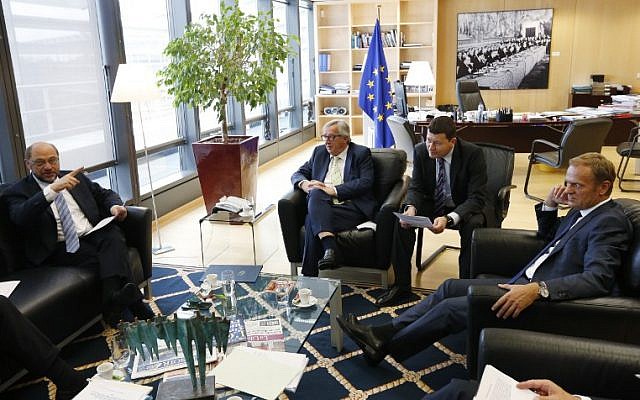
The statement was signed by European Council President Donald Tusk, European Commission President Jean-Claude Juncker, European Parliament President Martin Schulz and Dutch Prime Minister Mark Rutte, whose country currently holds the EU’s rotating presidency.
‘A grave test for Europe’
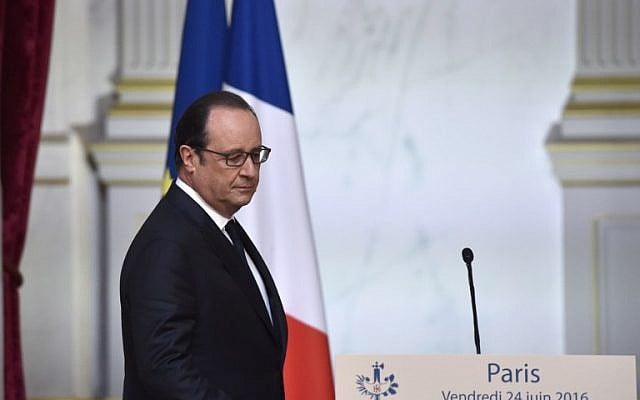
French President Francois Hollande said Friday that Britain’s vote to leave the EU was a “grave test for Europe” in view of the economic and financial consequences.
“The British vote poses a grave test for Europe, which must show solidity and strength in its response to the economic and financial risks,” Hollande said after meeting with his cabinet.
Expressing his chagrin over the vote, he said: “It always takes less time to undo than to do, to destroy than to build.”
But “the choice is theirs, and we must respect it,” the Socialist president said.
Echoing Foreign Minister Jean-Marc Ayrault’s tweet earlier Friday that Europe must win back the trust of its people, Hollande said “the decision also requires a lucid awareness of the inadequacies of Europe’s functioning and people’s loss of trust in the project.”
Brexit could also further support for far-right elements in the EU, he warned, saying: “There is a huge danger in the face of extremism and populism.”
The French leader had on Wednesday warned that Brexit would have “extremely serious consequences.”
“It’s more than the future of the United Kingdom that is at stake, it’s the future of the European Union,” he said.
Prime Minister Manuel Valls said the vote revealed “a malaise that has been ignored for too long” within the EU.
German Chancellor Angela Merkel also voiced regret Friday at Britain’s decision to leave the European Union, calling it a “blow” to Europe.
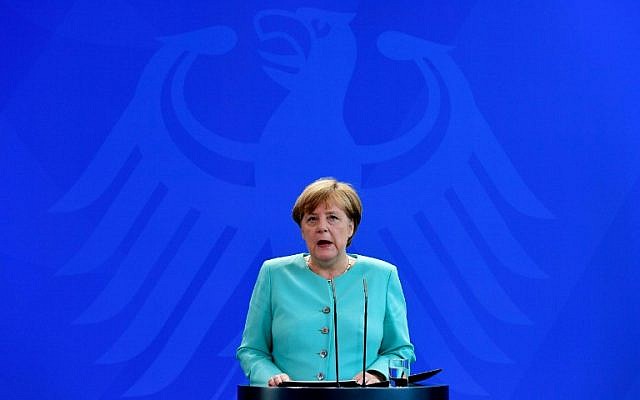
“We take note of the British people’s decision with regret. There is no doubt that this is a blow to Europe and to the European unification process,” she said, adding that she will on Monday host post-Brexit talks with the leaders of France and Italy as well as with European Union president Tusk in Berlin.
Merkel also warned EU member states against drawing hasty conclusions about Britain’s decision to quit the bloc, as that risked further splitting Europe.
“What the consequences of this would be… would depend on whether we — the other 27 member states of the EU — prove to be willing and able to not draw quick and simple conclusions from the referendum in Great Britain, which would only further divide Europe,” she said.







The Times of Israel Community.