

After attack, pundits exorcise ‘Azaria effect,’ demonize each other
Papers agree there’s no reason to think the manslaughter conviction for the Hebron shooter had anything to do with soldiers failing to shoot at Sunday’s terrorist, while Mozes and Netanyahu lead Haaretz to the promised land
- See more Times of Israel on Google - add us as a Preferred Source
Joshua Davidovich is The Times of Israel's Deputy Editor

In 1994, an internet commenter noticed that he had heard the name of the Baader-Meinhof terror group twice within 24 hours of being introduced to it, coining the term “Baader-Meinhof phenomenon,” which refers to a cognitive bias in which people think they see a word or number everywhere after seeing it for the first time.
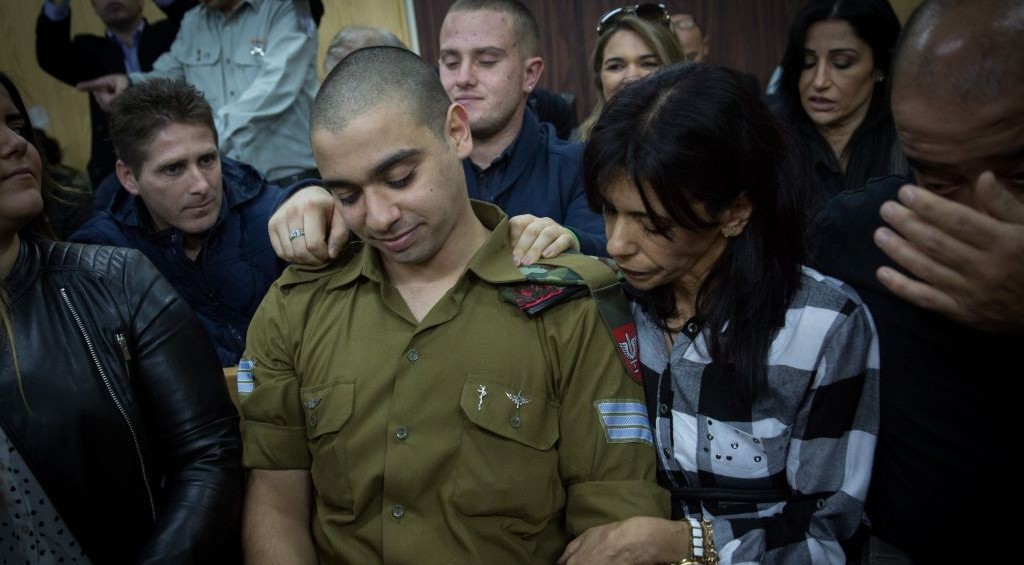
It’s somewhat fitting that a phenomenon inspired by German terrorists should be at play Monday as Israeli papers deal with the aftermath of a terror attack in Jerusalem that left four soldiers dead, bore the hallmarks of being inspired by terror attacks in Europe, and led to a conversation in which it seems Elor Azaria, the soldier convicted of manslaughter for killing a wounded Palestinian attacker, is suddenly seen everywhere, especially as everyone agrees he shouldn’t be.
Alongside the terror attack, and perhaps more interesting from the perspective of looking at the intersection of politics and journalism, is coverage of an emerging scandal in which Prime Minister Benjamin Netanyahu reportedly promised to partially sink Israel Hayom in exchange for better coverage from Yedioth Ahronoth, a story that is buried to some degree in those two tabloids and played up even above the terror attack in Haaretz.
But before the bickering comes the unity as all three papers fill their pages with heartfelt eulogies and memories of the four killed before addressing the strange debate that took hold Sunday over whether the other troops at the scene acted correctly and whether a so-called “Azaria effect” was at play – as charged by a tour guide who was at the scene and shot at the driver.
Yedioth’s front page, while containing a small strip about the Netanyahu scandal, is mostly taken up with a screenshot of a phone belonging to ramming victim Shir Hajaj’s mother as she sends her daughter WhatsApp messages to check in on her.
“Shiri, call me urgently,” reads the first message, sent at 1:47 p.m., as the attack began to be reported. “My life, speak to me,” reads the second at 4:46 p.m.

The messages, made heartbreaking by the knowledge of what they foretell, are accompanied with quotes by Hajaj’s mother recounted those moments as she sat in the liminal stage between knowing and not knowing the worst.
“I called the hospital, I called the city’s military officer, who didn’t I call,” she recalls to the paper. “We just stood by the door and prayed the city’s military officer wouldn’t come knocking.”
The paper also shares personal stories of the other three soldiers, including a screenshot of Yael Yakutiel’s last Whatsapp conversation, a mundane exchange in which she makes plans for the weekend.
“She was one of the girls with the biggest heart,” a friend tells the paper.
Likewise, the other two papers spill tear-stained ink eulogizing the victims before all three launch into discussing whether the soldiers were justified in hesitating before shooting at the driver and dismissing the idea they did so because they feared prosecution like Azaria, who was convicted of manslaughter last week.
In Haaretz, Amos Harel writes that video of the attack, showing some cadets fleeing the scene, is “awkward” and could increase Palestinian enthusiasm for such attacks, calling for the army to indeed investigate. But he cautions against seeing anything more in it.
“The immediate response from the right, as if it’s clear that the soldiers hesitated because of Elor Azaria’s manslaughter conviction last week, seems unreasonable. Different people – and different soldiers – have always responded differently to emergency situations,” he writes. “The army expects its soldiers to make contact and neutralize the threat, and is meant to train them accordingly. But it’s hard to believe that in the seconds after the truck hit, anyone who was running away stopped to think about Azaria or about the legal consequences of shooting the attacker.”
In a rare turn, Israel Hayom’s Haim Shine actually agrees with Harel, though he does express discomfort with what he sees in the video of the attack.
“It was very difficult for me to see the video in which cadets in officers school run away, instead of charging forward and killing the terrorist quickly and with determination,” he writes. “[But] none of the soldiers in the attack yesterday wondered what to do in light of the Azaria case. It’s very unfortunate that there are those who link the two things irresponsibly.”
Even rarer, in Yedioth columnist Yossi Yehoshua completes the agreement trifecta, saying there’s no connection to Azaria, but noting that “they won’t teach the video of the attack in combat classes.”
“The second you know there is an attack, you open fire – even if the decision endangers your life,” he writes. “It took them time to figure out if this was an accident or an attack. But the second the driver turned his truck around and it was clear it was terror – they should have acted differently.”
The agreement between the papers ends there, and abruptly too, as they tackle the embarrassing reports that Netanyahu tried to buy off Yedioth’s publisher by selling rival Israel Hayom down the river.
If anything, Netanyahu’s willingness to sell out Israel Hayom shows just how much control he has over the paper, which many see as a mouthpiece for the prime minister. The paper’s report on the revelations do nothing to refute that view with a headline, “Nuni Mozes questioned under caution,” seeming to make the Yedioth publisher into the bad guy.
In a seemingly misguided attempt to paint Netanyahu and itself in a more positive light, Israel Hayom’s account quotes heavily from a little noticed account from news site News1 by which Netanyahu was actually trying to trap Mozes.
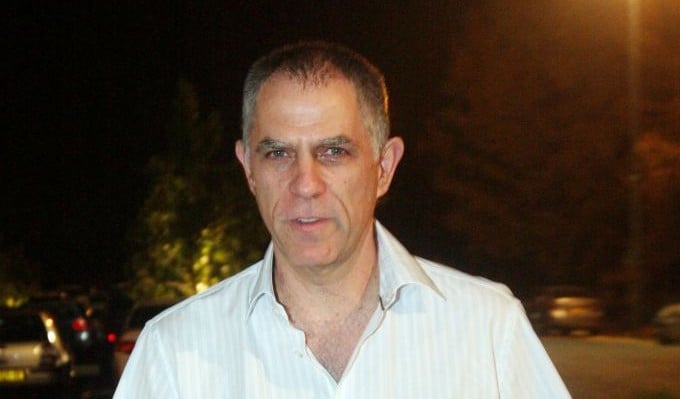
“According to the site, Netanyahu initiated the recording to prove an attempt by Mozes to extort him, in order to use it in the future to prove that Yedioth persecuted him for business, commercial and ideological reasons, because Israel Hayom continues to publish.”
Yedioth’s version of events doesn’t include the News1 report, unsurprisingly, and seems to focus on the fact that Netanyahu’s office recorded Mozes without him knowing.
In a note alongside their coverage, Yedioth editor Ron Yaron defends his paper’s professionalism and says he was as surprised by the reports Sunday as everyone else.
“Everything published in Yedioth Ahronoth is held to journalistic standards – and comes from professional considerations. That’s how it always was and how it always will be,” he writes.
Haaretz, which is having a field day watching two of its rivals duke it out while Netanyahu gets caught in the middle, leads with the scandal and includes four front page commentaries on the affair.
Carolina Landsmann, in one commentary/opinion piece, lets everyone involved in the sordid bizarre affair have it, especially Netanyahu.
“Now it all becomes clear to the public that the big drama was staged by none other than the one crying of persecution,” she writes. “That is to say, Netanyahu benefited twice, from persecuting himself and being persecuted by himself. Netanyahu, it turns out, is the media that persecuted him.”









The Times of Israel Community.