

After bleating a path to Israel, Jacob’s sheep frolic in new home
With flock’s 5,000-year exile and difficult quarantine beset by rains behind them, biblical sheep are baaaack in the Holy Land
 Add ToI as a Preferred Source on Google
NES HARIM — Every new immigrant to Israel faces many challenges making a new life in the Holy Land. The 118 Jacob’s sheep, the first livestock to immigrate to Israel for religious reasons, are no different.
Gil and Jenna Lewinsky have spent the past three years fighting to make aliyah to Israel with their herd of Jacob’s sheep, a breed whose genetics trace it back to the Middle East some 5,000 years ago. The sheep are characterized by “spots and speckles,” the kind of sheep that Jacob took from Laban in Genesis, Chapter 30.
After a three-year-long journey that required top-level political negotiations between the Israeli Embassy and the Canadian Embassy, a road trip across Canada, $80,000 worth of flights to airlift the herd from Toronto to Tel Aviv, and a harrowing quarantine, the sheep are finally frolicking in their pasture in the Beit Shemesh suburb of Nes Harim.
As with all new immigrants, the first issue to address was the housing quandary. For the sheep, this was a quarantine imposed by the Ministry of Rural Development and Agriculture. The wettest December in decades pelted the sheep with cold rain relentlessly, as their makeshift stables collapsed from heavy rain. Over 40 sheep got sick and five sheep died due to the difficult conditions. The Agricultural Ministry eventually allowed the Lewinskys to leave quarantine two days early to move to their new home in Nes Harim, ahead of another winter storm. They found the rental farm in Nes Harim through a farmers WhatsApp group.

Now, as the sun shines over the Jerusalem mountains, the sheep playfully butt heads with each other and sniff at visitors’ pockets for treats, the difficult journey seemingly forgotten.
“When we first got out of the desert [quarantine], everything was so overwhelming it didn’t sink in that we were really in Israel,” said Jenna Lewinsky. “The next day we walked in the Judean Hills, from here you can see all the way to Tel Aviv and Jerusalem and even Gaza. We felt that we saw the footprint of God’s miracle. Every day when I wake up it feels like we’re living the dream,” she said.
That’s partly because their bedroom window looks into the barn, so sheep impatient for their breakfast act as an alarm clock by bumping the glass with their nose and baa-ing pitifully until someone gets up to feed them.
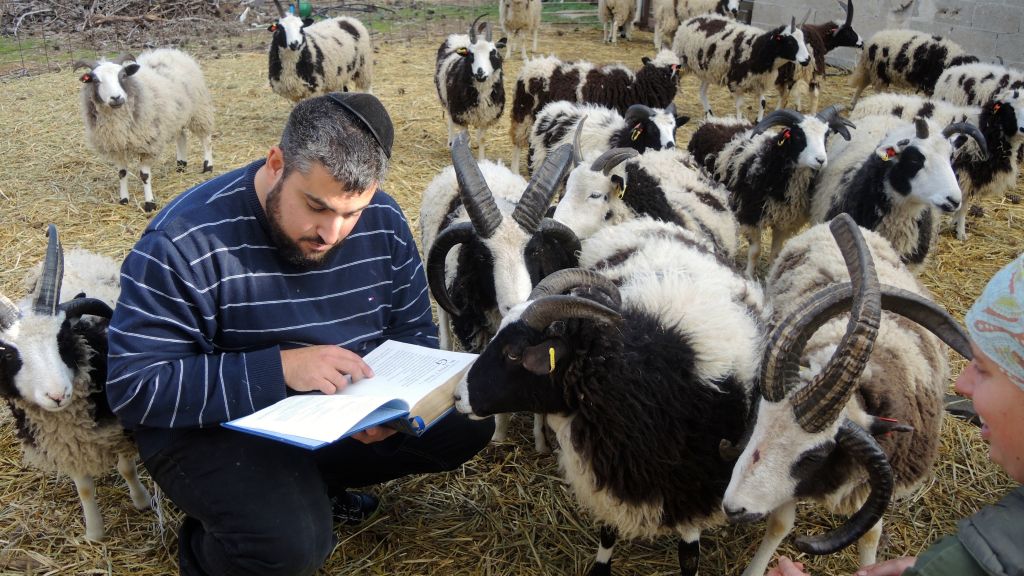
“There is a mystical bond between the Jewish people and these sheep, they bring so much joy to everyone who visits,” said Gil Lewinsky. Gil Lewinsky sometimes reads parts of the Torah to his flock, kneeling down among the ovines and making sure no curious onlookers try to nibble pages of the holy books.
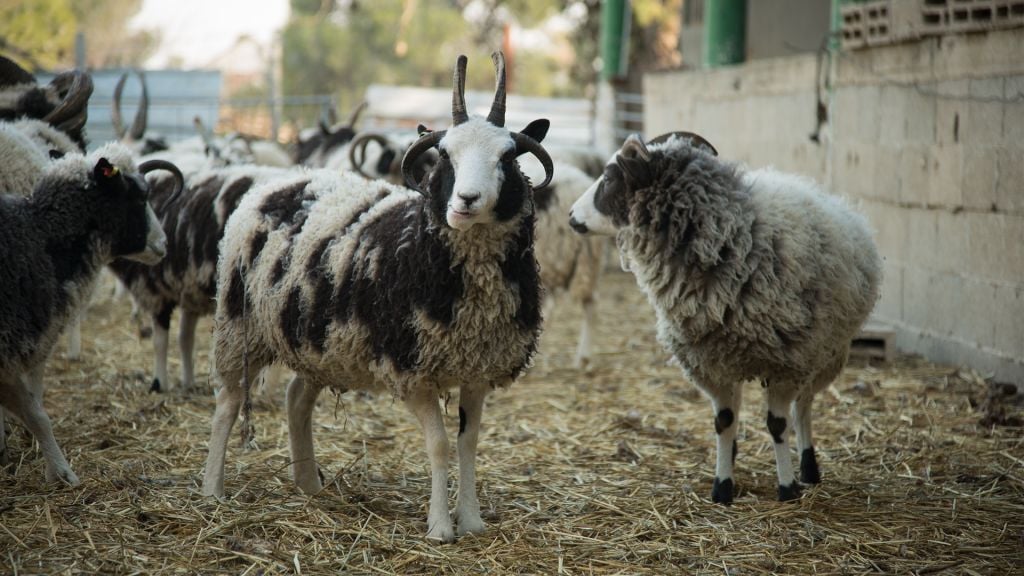
“This is the national flock of Israel, and the work has just started,” said Gil Lewinsky. “Our connection to these sheep goes back to the beginning of our faith.”
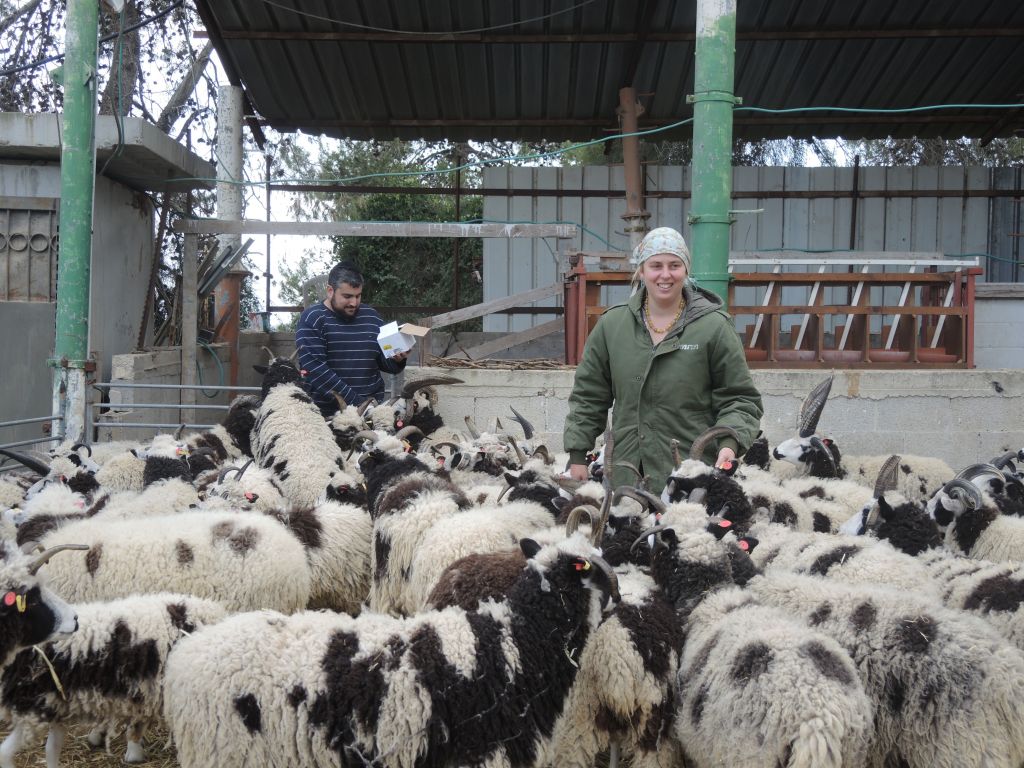
The next step in the immigration process was the identity card, or for the sheep, a red tag in their ears. The Lewinskys decided not to remove the Canadian yellow tags, allowing the sheep to keep their Canadian “passports.”
Eventually, all new immigrants need to join the workforce, and the sheep are no exception. The Lewinskys plan to turn the farm into an ecological heritage park and educational farm, which could open as early as March. They will offer “sheep trekking” with special sheep harnesses ordered from America, so visitors can choose their favorite sheep and go for a stroll in the stony Jerusalem hills that surround the farm, with stunning vistas and deep wadis. In the spring, Jenna Lewinsky, who completed a sheep-shearing course in Canada, will give the sheep haircuts. Future plans include possibly weaving tallits from the sheep’s wool. Until they open to visitors, the Lewinskys are subsisting on donations.
New immigrants to Israel often struggle with adapting to the culture of their new home. But here is where the sheep, who don’t seem to be having any difficulty becoming culturally Israeli, diverge from their human counterparts. “Israelis that come to visit say they know they’re Israeli sheep because they don’t stand in line,” said Jenna Lewinsky. “Every sheep has its own idea of what it wants to do; each one is its own boss.”

The sheep also seem to be adapting to the food. During the quarantine, Jenna left a bowl of hummus on the table and stepped away for a moment. When she came back, the hummus was gone. Abraham, one of the original patriarchs of the flock, had a bit of suspicious hummus stuck to his wool.
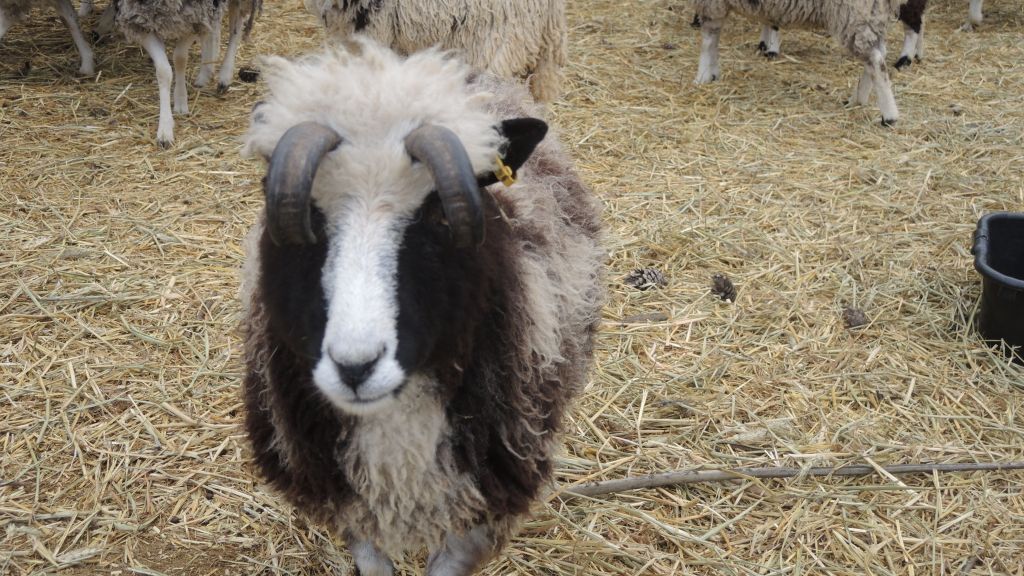
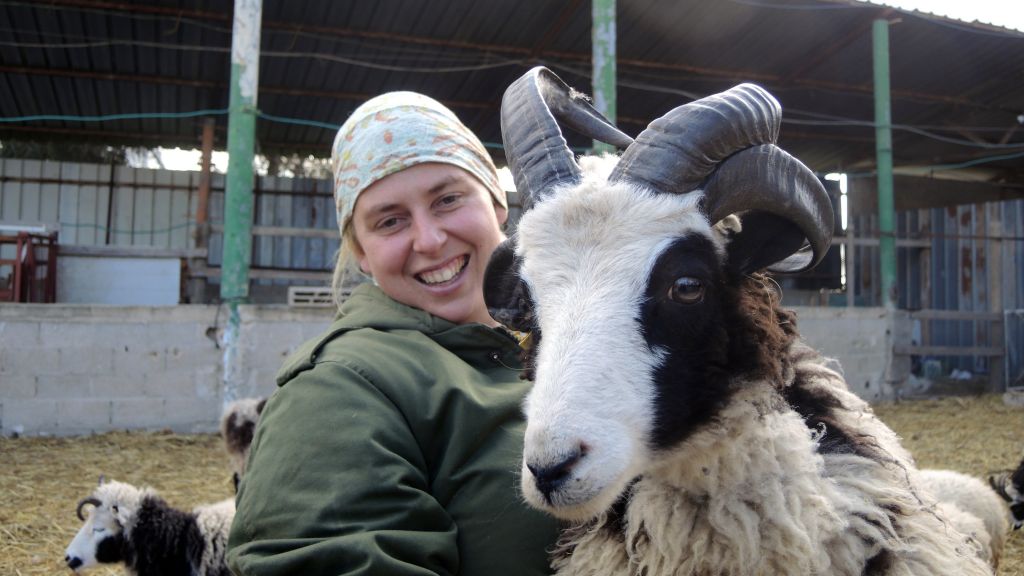
The Lewinskys were never concerned that Abraham, whose magnificent horns and friendly demeanor make him an instant visitor favorite, would adapt to Israel. When the Lewinskys were still in Abbotsford, Western Canada, a volunteer who was considering donating came to visit the flock. She immediately connected with Abraham and knelt down to pet him under his chin, the “sweet spot” for sheep. Abraham, sensing the opportunity, tilted his head to the side, stuck his horn into her purse and deftly removed, among other things, her checkbook. She ended up making a donation. And after an exile that lasted more than 5,000 years, the Jacob’s sheep ended up back in Israel.
-
- Gil and Jenna Lewinsky on their new rental farm in Nes Harim, outside of Beit Shemesh, on January 15, 2017. (Melanie Lidman/Times of Israel)
-
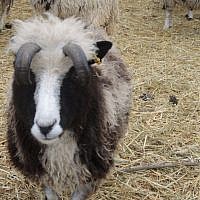
- The Lewinskys hope to eventually use the sheep’s wool to make clothing or tallit. Shearing is in the spring for this sheep, pictured in Nes Harim on January 15, 2017. (Melanie Lidman/Times of Israel)
-
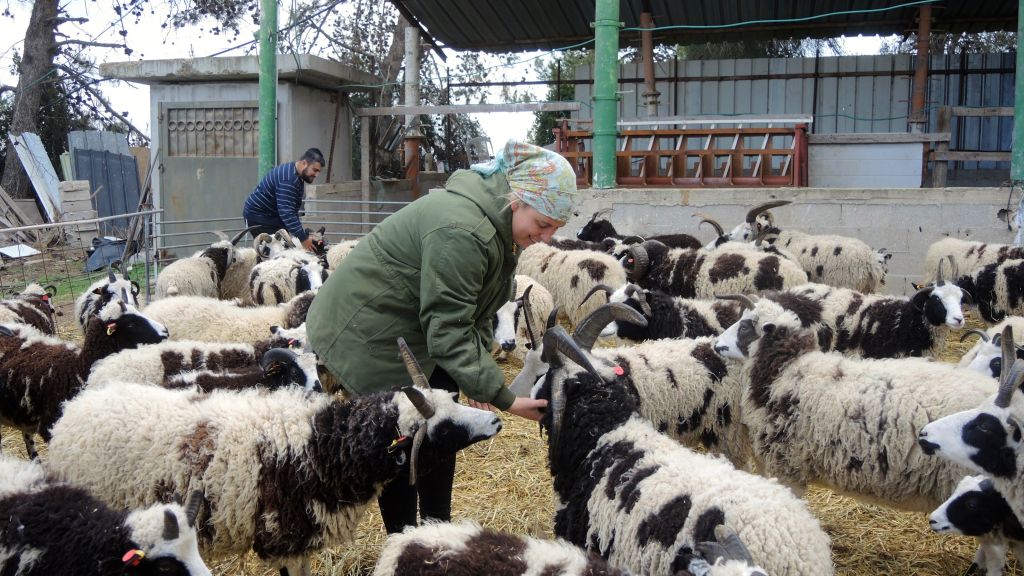
- Jenna Lewinsky feeds grains to the Jacobs sheep on January 15, 2017. (Melanie Lidman/Times of Israel)
-
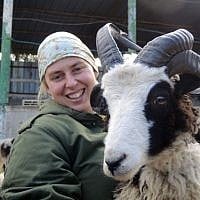
- All of the sheep have individual personalities and quirks, says Jenna Lewinsky, pictured here on January 15, 2017. (Melanie Lidman/Times of Israel)










The Times of Israel Community.