

After the survivors, only the stones will tell stories
How a small, all-volunteer US government agency is fighting to preserve Jewish cemeteries and sites in Central and Eastern Europe
 Add ToI as a Preferred Source on Google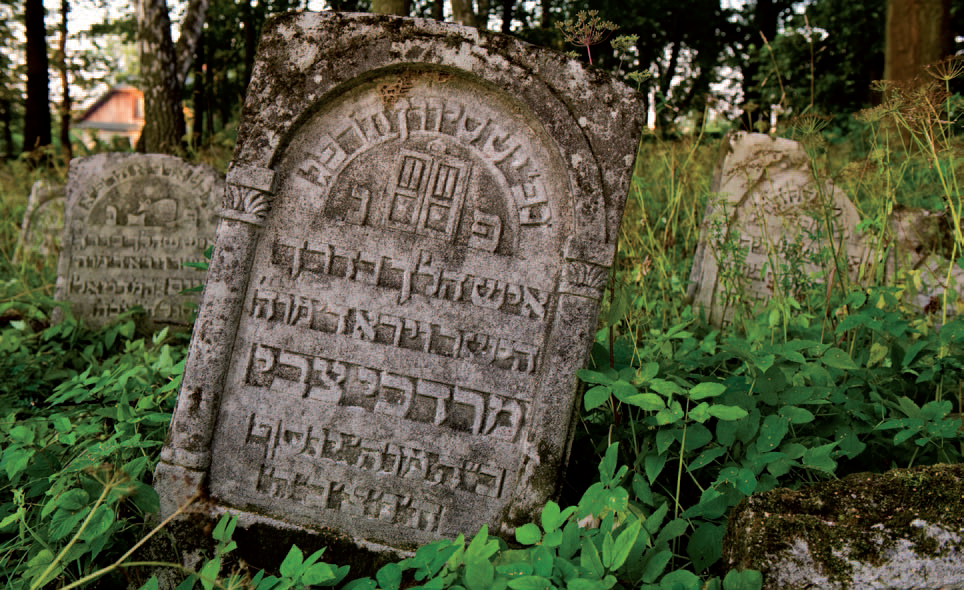
The two Hebrew words for cemetery — beit-kvarot (house of graves) and beit-olam (eternal home) – exist in a deliberate but uneasy tension. The former evokes the past, conjuring images of headstones made of concrete, while the latter suggests there is more to the place than its infrastructure. A cemetery is a reminder of the lasting, ongoing influence of those who came before us.
Lesley Weiss understands this. In January, President Obama appointed Weiss as Chairperson of the US Commission for the Preservation of America’s Heritage Abroad, a body established by law “to identify and report on cemeteries, monuments, and historic buildings in Eastern and Central Europe associated with Americans and to obtain assurances from foreign governments that these properties will be preserved.”
Many, but not all, of the commission’s projects are focused on Jewish sites in former Communist Bloc countries that have fallen into disrepair in the decades since World War II due to inadequate care, commercial interests and the effects of time.
Despite the Jewish philanthropic world’s near obsession with young adults and “Jewish identity,” Weiss says there are still plenty of American Jews interested in connecting with their past.
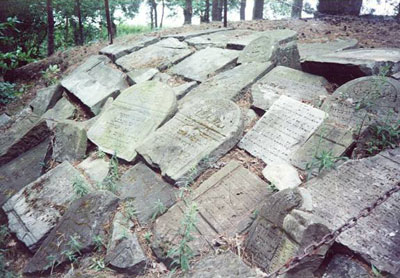
“My mom is a Holocaust survivor, a survivor of Auschwitz who comes from the Carpathian Ukraine and there’s nothing left in her town,” she says. “There’s no synagogue and there are no Jews.”
“When this generation dies, nothing will stand in their place that can speak to us about that lost heritage except the physical sites of their former lives. If your family comes from a place and all that’s left are the remnants of a synagogue and it’s falling apart, you want it to be preserved. This is the significance of the work we do [on the commission] to preserve this precious part of the historical record.”
A dire situation
In Central and Eastern Europe, the state of Jewish cemeteries and abandoned community buildings is grim.
Thousands of sites are decaying as small Jewish communities lack the resources necessary for their care. In places like Poland and the Czech Republic, surviving communities of a few thousand are responsible for the upkeep of massive cemeteries that were administered by far larger Jewish centers before the war. In Poland, a Jewish community that once numbered 3.5 million today stands at 40,000. In Slovakia, close to 100,000 Jews resided there before the Holocaust; today, there are around 3,000.
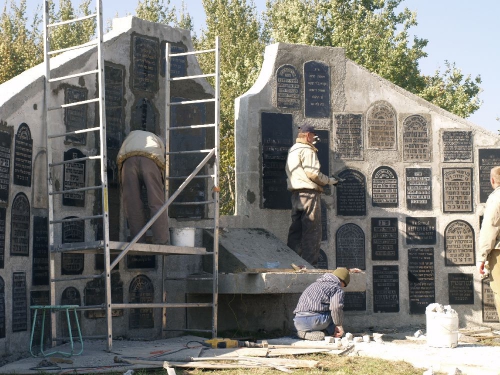
“Out of 750 Jewish burial grounds in Slovakia, we can afford to take care of only 150 — and even that is a major burden,” Slovakian Jewish community leader Martin Kornfeld said in an interview with the JTA. “The cemeteries can drain tens of thousands of dollars from a budget stretched to cover the senior home, kindergarten, summer camps — the trappings of a living, breathing community.”
‘When this generation dies, nothing will stand in their place that can speak to us about that lost heritage except the physical sites of their former lives’
Last year, a special Council of Europe rapporteur for Jewish cemeteries found a number of instances of burial grounds in Eastern Europe that have been turned into “residential areas, public gardens, leisure parks, army grounds and storage sites — some have been turned into lakes.” Eventually, the Council adopted a nonbinding resolution placing responsibility for the care of Jewish cemeteries on national governments.
Weiss acknowledges that it’s a race against time to preserve as much of these sites as possible. Jeffrey Farrow, the Executive Director of the commission she chairs, highlights many of the commission’s accomplishments over the past two years. Some include:
- Restoration of the largest Jewish cemetery in Bucharest, Romania, after substantial destruction in a 2008 anti-Semitic attack;
- Identification, funding and construction of a Holocaust mass grave memorial at Muszyki/Biala Podlaska, Poland;
- Placement of Holocaust memorials in Baryshivka, Dymer, and Fastiv, Ukraine;
- Restoration of the interior of the synagogue in Ckyne, Czech Republic;
- Restoration of the Jewish cemetery in Banska Stiavnica, Slovakia and the Jewish cemetery in Kaunas, Lithuania; and
- Restoration of a Byzantine Greek wooden church in Potoky, Slovakia.
A church?
Indeed. The mandate of the US Commission for the Preservation of America’s Heritage abroad is not limited to Jewish-related burial sites or places.
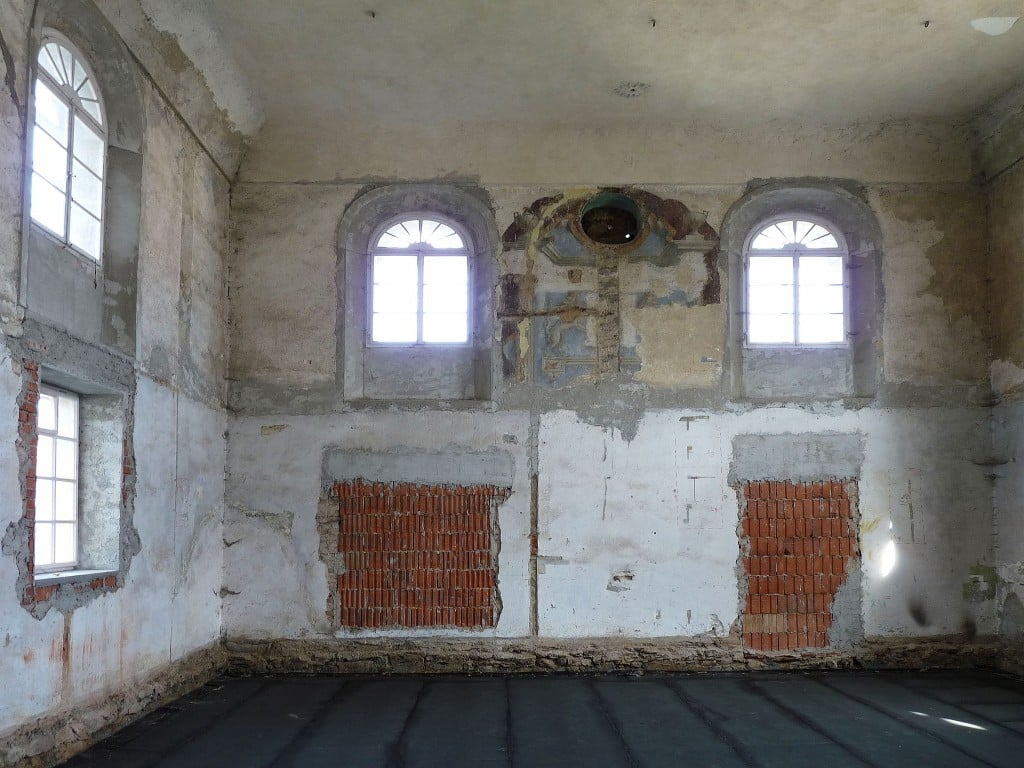
Although the 1986 law establishing the commission was fueled largely by the concerns of American Orthodox Jews that cemeteries in Eastern and Central Europe region were being neglected by Communist governments, the (all volunteer) 21-member independent US government agency works to preserve foreign sites of significance to all Americans.
“The United States is a country mostly comprised of immigrants and their descendants,” says Weiss, who is also the Director of Community Services and Cultural Affairs of an NGO that advocates on behalf of Jews in the former Soviet Union. “As such, the government has an interest in preserving sites in other countries that are an important part of the cultural heritage of many Americans.”
For instance, the agency has identified 22 places of importance related to foreign-born heroes of the American Revolution who fought with colonists against the English. In Poggio-a-Caiano, Italy, the commission funded a plaque to commemorate the birthplace of Philip Mazzei, an Italian doctor and close friend of Thomas Jefferson who helped purchase arms for Virginia during the American Revolutionary War.
But Weiss says the “destruction, desecration, and deterioration of [Jewish] properties under the Nazis and subsequent Communist regimes” was unique and guides the commission’s priorities.


The Times of Israel Community.