

Australia PM says no decision made on Jerusalem embassy move
Morrison denies potential shift in policy is delaying signing of free trade deal with Indonesia, says will restate “100% commitment” to two-state solution to President Widodo
 Add ToI as a Preferred Source on Google
Tamar Pileggi is a breaking news editor at The Times of Israel.
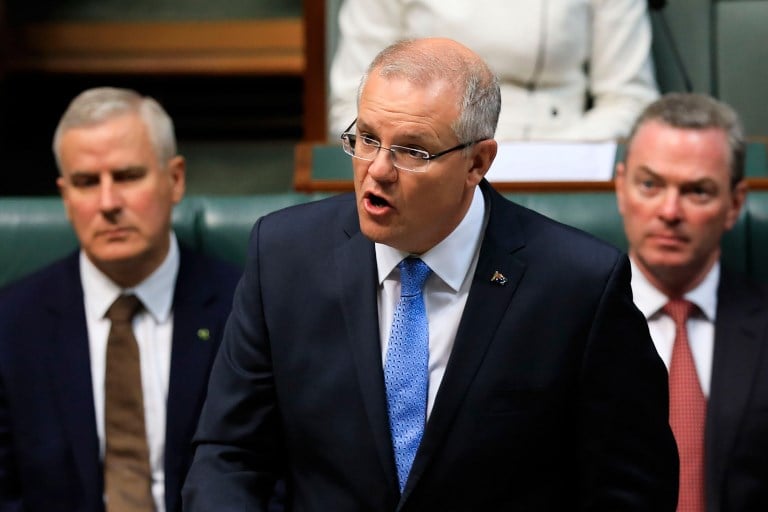
Australian Prime Minister Scott Morrison on Monday said no decision had been made regarding relocating the country’s embassy from Tel Aviv to Jerusalem, and downplayed the diplomatic tiff with Indonesia that was sparked by his announcement.
Relations between Australia and the Muslim-majority Indonesia have been strained since Morrison announced last month that his government was considering following the US in recognizing Jerusalem as the Israeli capital, in what would be a sharp break in longstanding Australian foreign policy.
When asked by Sky News in a interview that aired Monday what he would tell Indonesian President Joko “Jokowi” Widodo about the potential embassy move at a regional summit later this week, Morrison said:
“I’ll update him that we are still working through the issue as a government, and the appropriate place to do that is internally, and we will continue to work through that respectfully.”
Morrison said he intended to restate Australia’s “100% commitment” to the two-state solution for the Israeli-Palestinian conflict to Widodo.
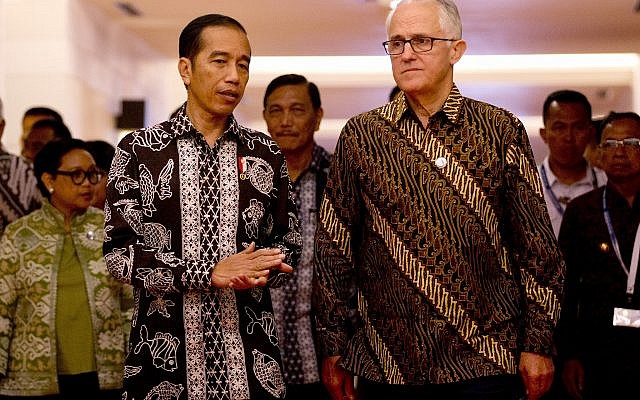
He urged Jakarta not to conflate issues of politics and trade, and said there was widespread support for the landmark trade deal in Canberra.
“Australia is always going to look at these issues on their merits. We [do] not conflate other areas of non-related policy when it comes to these agreements,” he said.
Morrison added that Canberra was “prepared to move forward with signing the trade deal, but said he was in “no rush.” He said the timing would ultimately be “up to them.”
Widodo expressed “very serious concern” about the shift in Australian policy during talks with Australian officials, according to former Australian prime minister Malcolm Turnbull last month.
“There’s no question that were that move to occur, it would be met with a very negative reaction in Indonesia,” Turnbull warned following the October meeting.
At the time, Australian state-backed broadcaster ABC quoted a senior official in Jakarta saying the landmark trade deal may be called off over the change in foreign policy.
However, Turnbull told reporters that Indonesian and Australian officials had concluded negotiations, and said he was confident the deal with its near-neighbor would be signed with weeks.
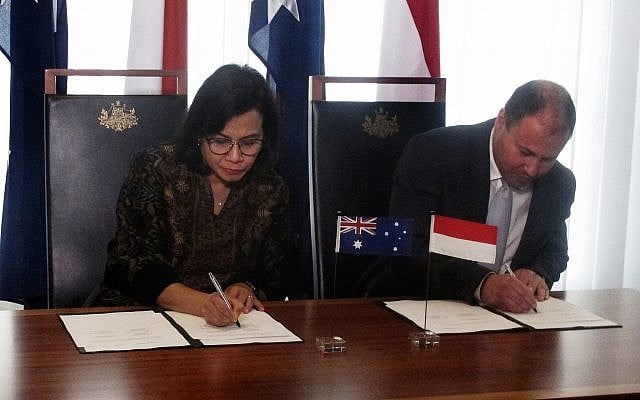
Last week, Australian and Indonesian ministers from both countries signed an agreement to strengthen government economic exchanges. Australia’s Treasurer Josh Frydenberg said he and Indonesian counterpart Sri Mulyani signed a memorandum of understanding updating a cooperation framework and two were “moving towards signing that important agreement.”
Morrison had floated the idea of moving the Australian embassy in Israel days before a by-election in a Sydney electorate with a large Jewish population.
The campaign in Wentworth drew international attention after Morrison raised the prospect of the embassy move, a remark that was slammed by critics as a cynical bid to garner Jewish votes.
The government lost the by-election, forced by Turnbull’s resignation from Parliament, and its single-seat majority in the House of Representatives, forcing Morrison to rely on deals with independent lawmakers to guarantee confidence in his government, enact legislation and ensure money supply.






The Times of Israel Community.