

Back where we were: 9 things to know for June 3
Gaza is a potential war zone again, a denial of a report on wiretapping brass doesn’t change many minds, Melania goes quiet and some may wish Sara would do the same
 Add ToI as a Preferred Source on Google
Joshua Davidovich is The Times of Israel's Deputy Editor
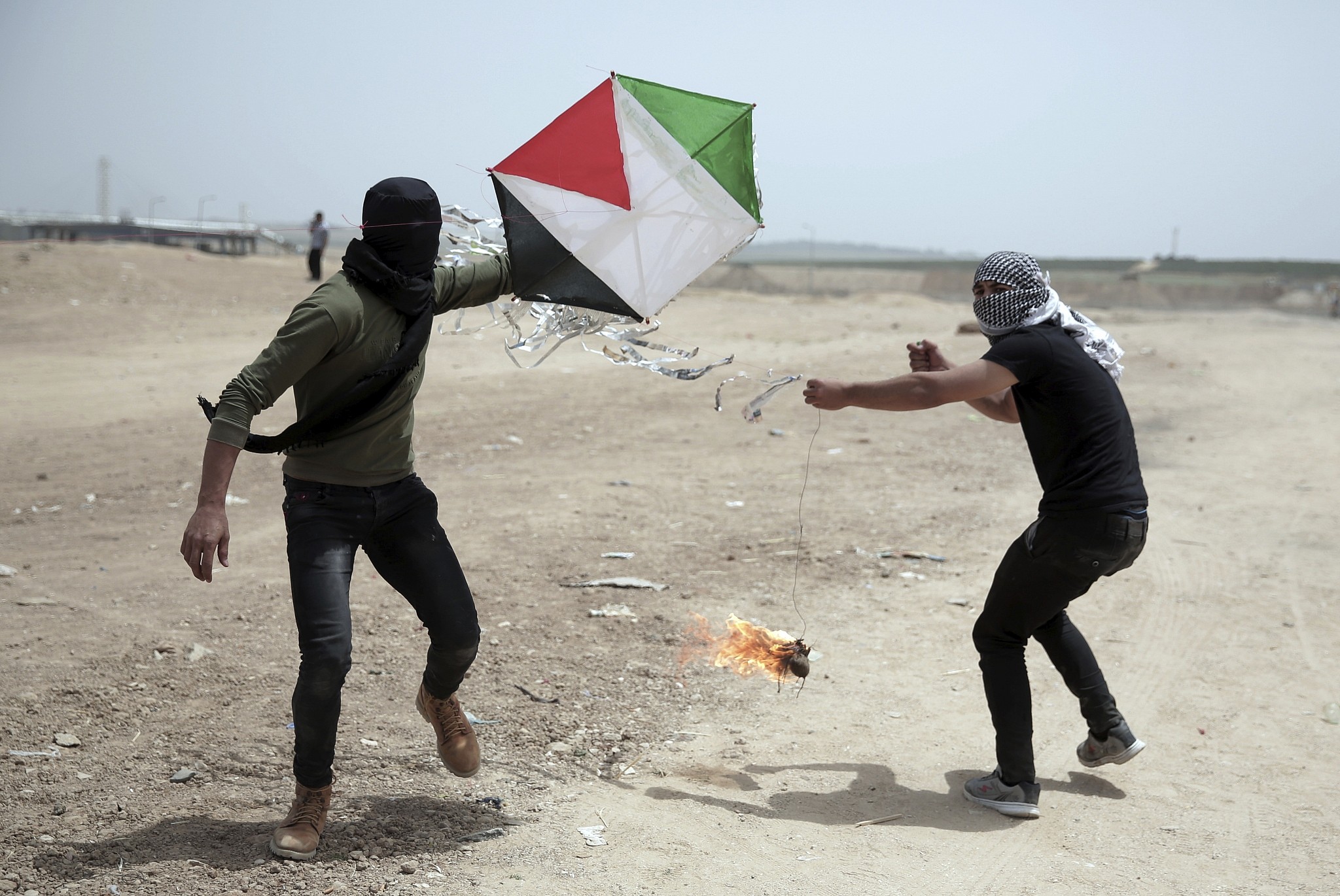
1. Days after a daylong flareup on the Gaza border seemed quelled, things on the border look ready to explode yet again, with every cross-border action taking on added significance — including long-planned army drills — after it became clear just how close Israel is to war.
- As of this writing, Israel has gotten in what is currently the last word, bombing sites across Gaza in response to a rocket volley that possibly came in response to the shooting death of a Palestinian medic near the Gaza border on Friday and so on ad infinitum.
- While many report that Saturday’s rocket volley was a violation of the fragile (and unconfirmed) ceasefire in place since Wednesday, Haaretz notes that Israelis believe the group behind the rockets was not Hamas or Islamic Jihad, but rather a rogue organization, of which Gaza has plenty.
- “This is what ‘calm’ in the south looks like,” writes an exasperated Yedioth Ahronoth. “Mortars from the Strip, fire kites burning Israeli land and troops shooting at a group of terrorists who crossed the border.” The paper, which also includes some reports on Israeli strikes on Gaza and “reports” of the shooting of the paramedic, calls it hyperbolically “nonstop fire.”
2. In the wake of Tuesday’s flareup Israel mobilized its public diplomacy army and managed to get the Jewish state some rare international sympathy in the long-simmering conflict. That seems to have dried up following the shooting death of Gaza medic Razan al-Najjar, 21, near the border fence during fresh protests on Friday.
- Most international media outlets on Saturday led their coverage of the Gaza violence with Najjar’s death, counterbalanced only by Israel’s meek promise to investigate.
- “A Palestinian medic was shot dead in Gaza. Now Israel says it will investigate,” reads a typical headline in The Washington Post.
- Describing the scene of the funeral, Sky News reports on “ a moment of symbolic defiance as the dead woman was revealed to the Israeli positions a hundred metres away.”
- “It is the first time the Israeli side have killed a paramedic, she is a female,” Dr. Iyad Yaghi is quoted telling the outlet, as he and other medical personnel mourn their fallen friend. “They are targeting more than 245 paramedics. We are asking here, protesting here, asking the international community to put more pressure on Israel. … It is time not to keep silent.”
- Haaretz quotes Gaza health officials saying that Najjar and other medics approached the border with arms raised and wearing white, noting a video released allegedly from minutes before the shooting showing them doing just that.
- According to the paper’s account, citing Gazan officials, troops shot tear gas at medics as they came near the border, a canister hit one medic’s legs, and as they went back to help the medic and other wounded, Najjar was shot in the chest.
- The Walla News site notes that Najjar is already being regarded as a symbol, with pictures of her everywhere on social media, a drawings of her as an angel making the rounds, her face appearing on a kite sent over from Gaza, and a baby born in Hebron over the weekend already named for her.
3. An editor at an Israeli newspaper once told me something to the effect of “our tragedy always trumps theirs,” meaning, if 3 Israelis and 10 Palestinians are killed, lead with the Israelis. So that’s probably why, despite the death of the medic, it’s downed Gaza projectiles and kite fire scorching a nature preserve in the south (“terror arson” according to Israel Hayom) that warrant wider coverage in the Israeli press.
- Leading Yedioth Ahronoth’s front page is the Iron Dome anti-missile system’s success in dealing with mortar fire, which it has not been able to do in the past (because of the short reaction time needed to intercept the relatively low-range shells).
- “This is a real revolution for residents near Gaza. Until recently, the system had trouble dealing with mortar shells, but after technological improvements to the system, it managed to down dozens of mortar rounds in last week’s day of battle, and yesterday took down another one,” the paper reports.
- As The Times of Israel’s Judah Ari Gross reported recently, Tuesday was not the first time it showed it could down mortar shells (that was in 2016 in the Golan), but it “represent a significant test for the system, which the military believes it passed.”
4. Reading between the lines, the Israeli press is regarding former Shin Bet chief Yoram Cohen’s denial of a story that Prime Minister Benjamin Netanyahu ordered the phones of the heads of the Mossad and army tapped as something closer to a confirmation.
- Cohen said: “The reports in the media about instructions the prime minister supposedly gave to me when I was serving as Shin Bet head — to specifically listen to the phones of Chief of Staff [Benny] Gantz and Mossad head [Tamir] Pardo — are not correct.”
- “You need to pay attention to the exact word choice of ‘specifically,’” writes Yedioth. “The former Shin Bet chief, who drafted the statement himself, is really confirming that he was asked to watch — actually, listen — to everyone in on the secret about the operation that’s being talked about. At the head of the list were the heads of the defense establishment, among them the army chief and head of the Mossad.”
- In Netanyahu-friendly Israel Hayom, Cohen’s statement is covered as a straightforward denial that exonerates the prime minister and exposes the “Uvda” program that aired the claim as “Fake news.”
- “For a few hours it seems as if the claim had merit, but soon enough it emerged that the storm was based on a sack of falsehoods with the sole intention of harming the prime minister, “ Haim Shine writes in the tabloid.
- Haaretz’s Amos Harel, who compares Cohen’s statements to a Watergate-style “Non-denial denial,” guesses that the effect of that incident, and the PM being rebuffed by security chiefs when ordering preparations for a strike on Iran, is continuing to reverberate today: “It seems this is where the roots of Netanyahu’s suspicions lay toward the security chiefs to this day. Netanyahu hasn’t derived much pleasure from these guys, who have repeatedly stood their ground, sometimes in defiance. All this will likely affect his considerations this year when it’s time to appoint a new IDF chief of staff, not to mention, against the backdrop of the corruption investigations into Netanyahu, a new police chief.”
5. Israel Hayom reports that despite legislative efforts for the US to recognize Israel as the sovereign over the Golan apparently stalling, a group of senators are planning on pushing ahead with a free trade agreement between the US and Israeli companies in the Golan, which will include recognition that Syria is not returning to the territory.
- The paper compares such a move to a letter one sent by US president George W. Bush to Ariel Sharon in 2004 in which he wrote, “In light of new realities on the ground, including already existing major Israeli population centers, it is unrealistic to expect that the outcome of final status negotiations will be a full and complete return to the armistice lines of 1949.”
- “The wording from Congress isn’t yet final, but according to one proposal it will say that ‘given changes on the ground, including Iranian entrenchment in Syria and Lebanon, it will be unrealistic to expect Israel to pull out from the Golan.”
6. Foreign Policy’s Borzou Deragahe writes that it might also be unrealistic to expect Iran to actually leave Syria, even with supposed agreements between Israel and Russia to push it out.
- “Iranian officials and other experts say the country has invested too much blood and treasure — upwards of $30 billion to date — to fold to international demands, regardless of Israeli airstrikes, or even Moscow’s pressure. Having already made such a massive investment, Iran is determined to reap the potential long-term strategic rewards Syria has to offer — even if it comes at the expense of more lives and money in the short term,” he writes.
7. The Times of Israel’s Haviv Rettig Gur looks at why Palestinians seemed to care more than Israelis about US President Donald Trump’s decision to recognize Jerusalem as the capital, answering that it could be because it offered them another facet by which to internationalize their struggle and appeal to the world’s conscience.
- “There is a risk, however, to this reliance on the world’s moral emotions. An indelicate framing of the question might be: What if the international community does not in any meaningful sense exist? What if there are very few nations (even among Arab states) that would risk hard interests in the name of an idealistic call for justice, especially when that call is so hard to apply to the messy conditions of this conflict? he asks. “Even the Palestinians’ most vocal allies — Turkey, for example — see in the Palestinian cause not a fight for the well-being of Palestinians, but a politically convenient battlefield on which to pursue their own broader ideological battle over the future of Islam and their place in global affairs.”
8. It was four days before that recognition became official with the embassy move that Melania Trump was last seen in public and some parts of the Israeli press are joining in the hunt for clues about where she could be, after 23 days out of the spotlight, in which her absence was especially glaring when the Trumps left for a family trip to Camp David over the weekend.
- “The American media has always tried not to involve the first lady in political mudslinging, and in this case it’s tiptoeing carefully, but it’s impossible to totally ignore,” Yedioth reports.
- That phrase might come as news to some Israeli news consumers, who are used to sordid tales of Sara Netanyahu, including recent reports of her sparring with top Netanyahu aide Eli Groner. After it was reported Thursday that Sara Netanyahu tried to physically attack Groner, Hadashot news reported over that she was forcibly removed from a meeting after yelling “We hate you,” while waving a pen at Groner “in a threatening manner.”
- The report was denied by the Netanyahus.
10. Many in Cleveland (this writer included) had similar words for basketball player JR Smith after a boneheaded play likely cost the team Game 1 of the NBA finals, and Israelis, who are big fans of American basketball, had much to say as well.
- One Israeli tweeter asked how Golden State expected to win without Omri Casspi, the Israeli basketballer cut by the team just before the playoffs, and whether LeBron James is human, a question repeated again and again in the Israeli sports pages, wowed by his 51-point performance.
- “The problem is James is surrounded by four other players who are flesh and blood humans,” writes Israel Hayom’s Sharon Kenan from Oakland, where Game 2 will kick off at 3 a.m. Israel time tomorrow.
- Lest one think Israel’s leaders were hard at work or getting much needed sleep, at least three parliamentarians were up watching the game in the wee hours of Friday morning, including Yesh Atid MK Ofer Shelach, who has gone back to his old job of calling the games for Israel’s Sports TV network.
- “No words,” tweeted Labor MK Eitan Cabel, who has had plenty to say throughout the playoffs.
- The list also includes Israeli Intelligence Minister Yisrael Katz, who tweeted his astonishment at Smith’s lack of intelligence.
- “On the cusp of a dramatic victory … Smith threw the ball nowhere [he actually dribbled it out, thinking the Cavs were winning] — overtime and that’s it … see you next game.”





The Times of Israel Community.