

Go native this Tu Bishvat with carob cake
To celebrate the trees, blend some ‘bokser’ with brandy for a sweet treat topped with strawberries
 Add ToI as a Preferred Source on Google
Phyllis Glazer is an American-born food journalist based in Tel Aviv, Israel. She is the author of several cookbooks that have been published in Hebrew, German, and Italian, and appears frequently on television and radio in Israel.
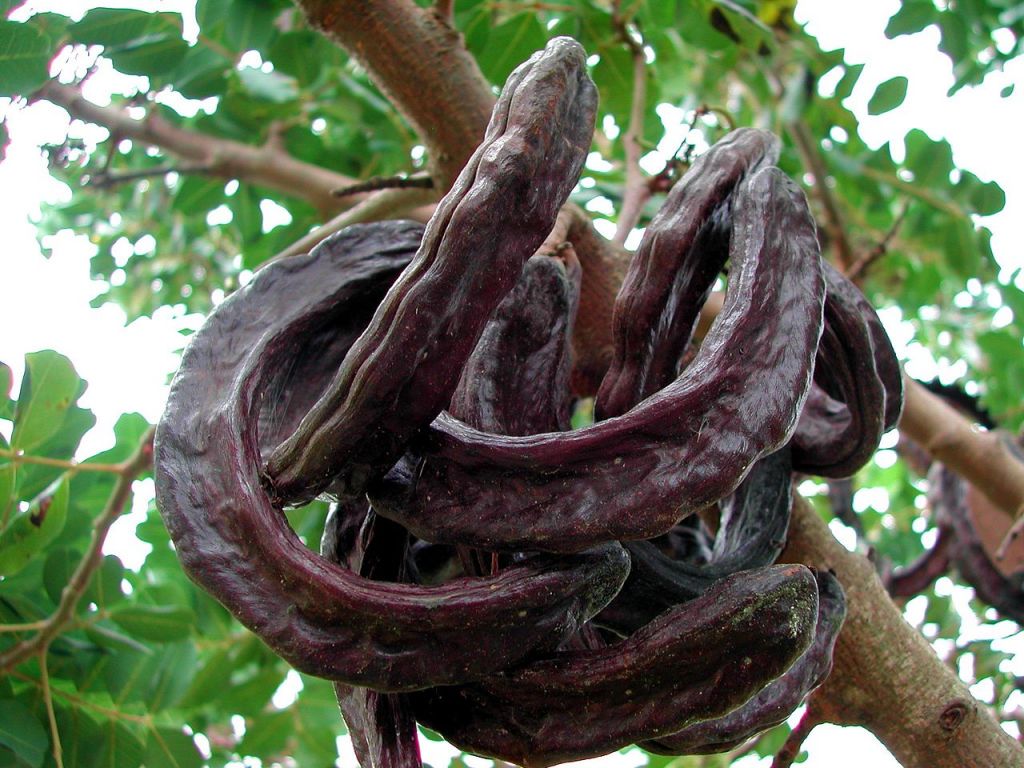
When I was a little girl, Tu Bishvat – the festival of the trees, celebrated this year on January 16 –– was when my Jewish day school would distribute brown paper bags filled with dried figs, dates, almonds and a mysteriously twisted and slightly sweet pod that the teachers called bokser, otherwise known as carob.
We were told that Tu Bishvat marked the New Year of the trees, but truth to tell, the provenance of the holiday was more than a little murky. What we did know was that Tu B’Shvat was the day celebrated by eating dried fruit.
What I know now is that in biblical times, Tu Bishvat was the day from which the community calculated the age of the fruit trees, since the Bible forbade eating fruit from trees less than three years old, and the produce of trees in their fourth year needed to be brought to Jerusalem, and subsequent to that needed to be tithed.
But because the Bible never mentioned a specific date, the rabbis living in the land of Israel noted that the 15th of Shvat was approximately the time when the almond trees burst into elegant white blossoms and when the trees’ fruiting process began. They concluded that this date must be the New Year for trees, for until that date, “the trees live off the water of the past year; from this day on, they live off the water of this year” (Jerusalem Talmud, Rosh Hashanah 1b).
Centuries later, the famed sixteenth century mystic known as the Ari, Isaac Luria, originated the custom of a special seder for Tu Bishvat, revolving around the eating of 30 different native fruits, which he believed contained the “divine sparks” that had been scattered all over the universe when it was first created. The seder also included a unique ritual blending of red and white wines, reflecting nature’s colors as winter becomes spring and the white almond blossoms slowly yield to lush carpets of red poppies.
With the passing centuries, the Tu Bishvat seder spread rapidly through many communities, especially among Jews living in Arab countries, then fell into obscurity. Fortunately, the Tu Bishvat seder is enjoying a renewal on both sides of the Atlantic in recent years. I hope that in Israel at least, that will also mean that we’ll celebrate the holiday with the produce of our native fruit trees, rather than those grown on foreign shores. And it’s a great excuse for making carob, or bokser, cake.
Luscious Tu Bishvat Carob Cake (serves 8)
- 200 grams carob chocolate (sold in health food stores)
- ½ cup (1 stick) butter, peanut or canola oil
- ⅔ cup raw sugar
- 3 eggs
- ½ cup 70% whole wheat flour or whole wheat pastry flour
- 1 teaspoon baking powder
- pinch salt
- 2 tablespoons brandy
- confectioner’s sugar
- fresh strawberries to decorate (optional)
- Preheat the oven to 180° (350°F). Place the carob in a glass bowl, and microwave for one minute until softened or melted. Remove from heat and cool slightly. Melt the butter and mix into the chocolate until smooth.
- In the bowl of an electric mixer, beat the sugar and eggs until foamy. Transfer the carob mixture to the mixing bowl with a rubber spatula, and mix on low speed until blended.
- Stir in the flour, baking powder and salt and beat lightly. Stir in the brandy. Pour the batter into a greased and floured 20-cm ( 8-inch) round or square pan (or grease sides and line bottom with parchment paper).
- Bake for 20-25 minutes, or until a toothpick inserted in the center comes out clean. Cool in the pan, and then turn out on a serving dish. Pass confectioner’s sugar through a strainer to sprinkle on top. Decorate with strawberries, if desired.










The Times of Israel Community.