

Coalition advances bill mandating mezuzahs, allowing Orthodox rituals in public spaces
Bill sparks outrage at idea of foisting Jewish Orthodox practices on public; proposed clause requiring religious tests for judges, giving new powers to rabbinic courts dropped
 Add ToI as a Preferred Source on Google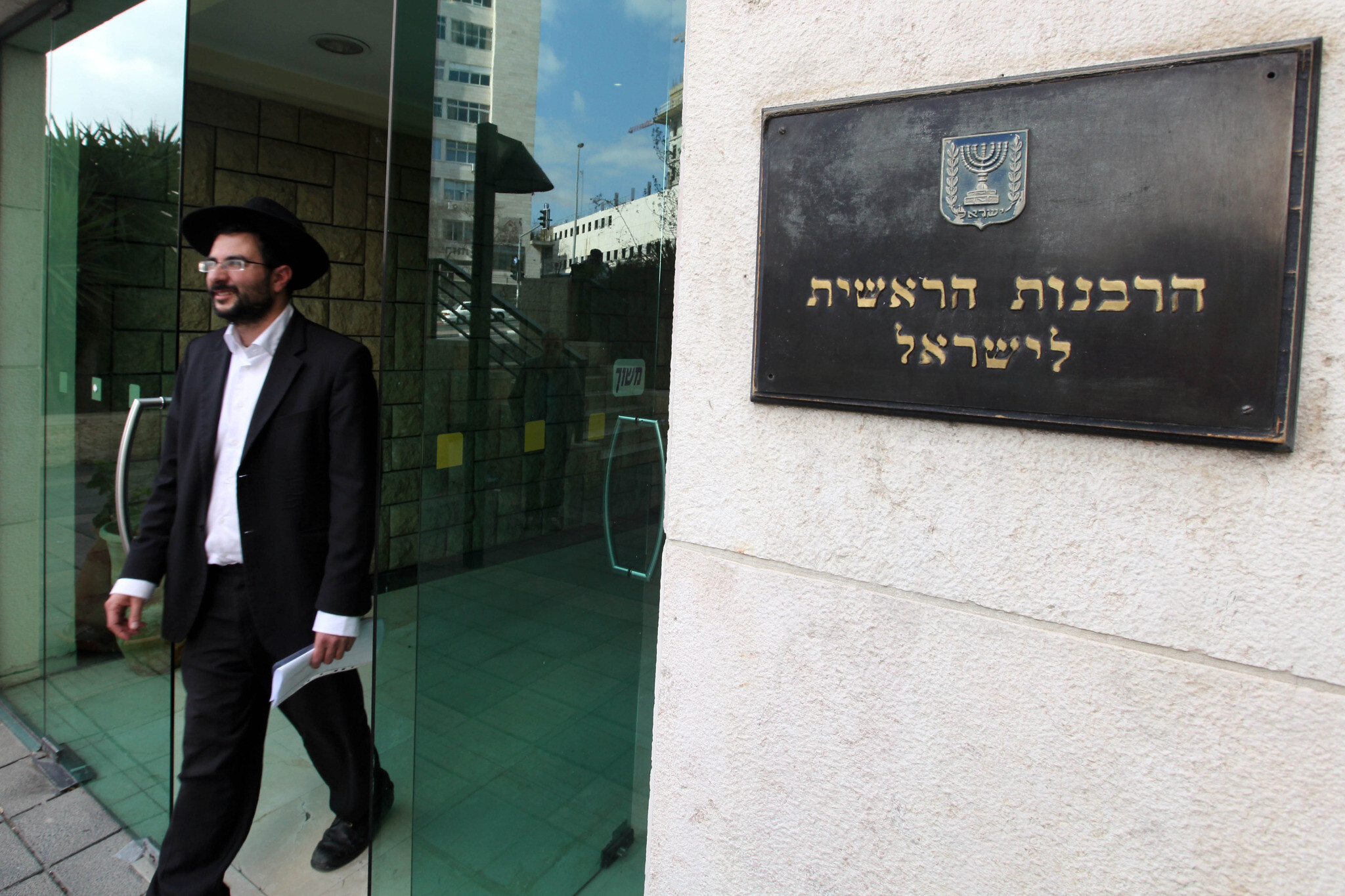
A bill advanced by coalition lawmakers on Sunday requires public institutions to install mezuzahs and grants special protections to Jewish Orthodox religious practices in public spaces, including criminalizing any interference with them, an idea that sparked outrage among liberal critics.
Several other controversial elements, including a call to give rabbinical authorities control over the selection of civic judges, were removed from the bill.
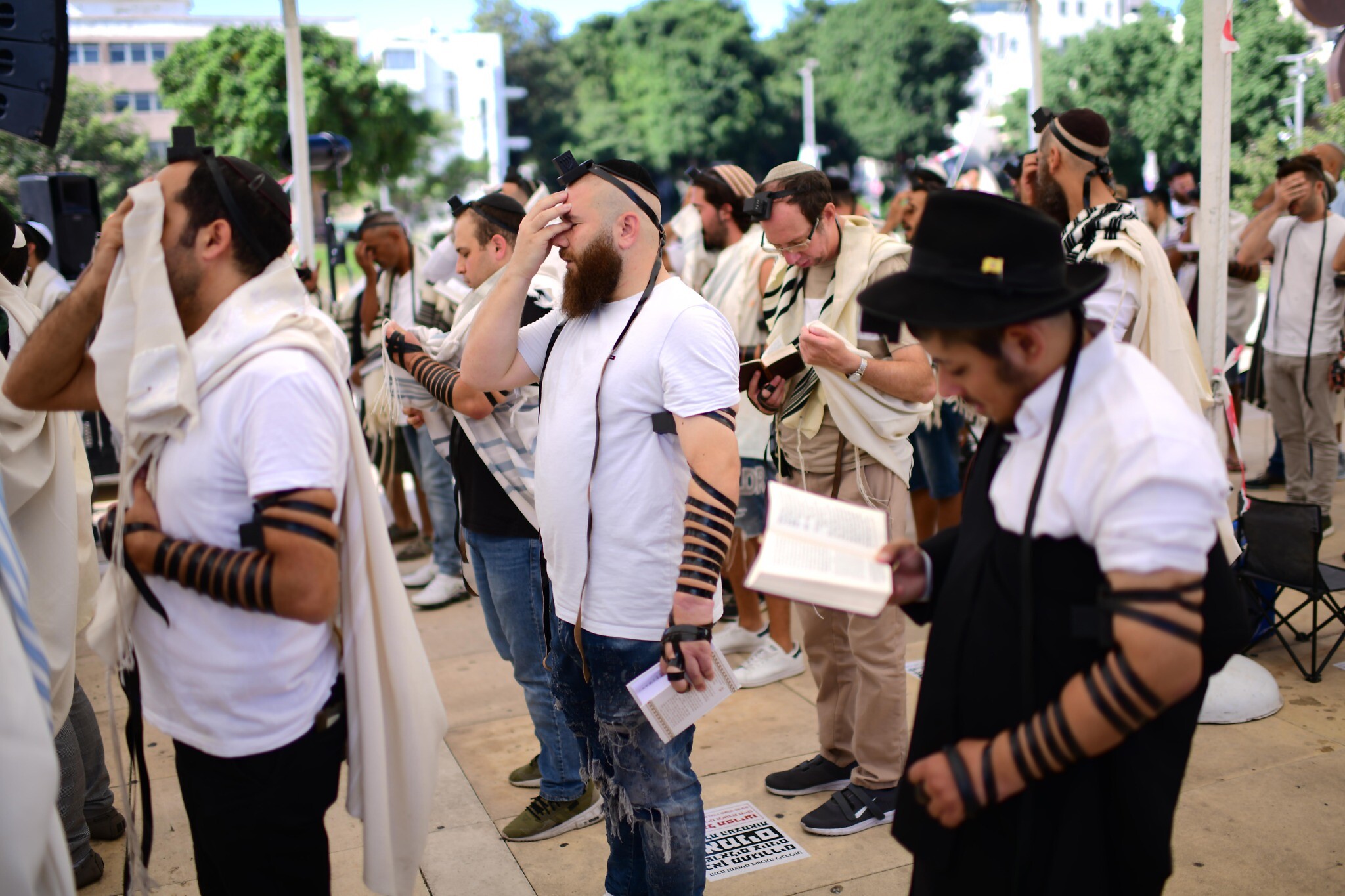
Public rituals such as laying tefillin (phylacteries) and prayer in public spaces would be legally protected according to the new legislation, and any interference, even minor bureaucratic obstacles, might be considered a criminal offense.
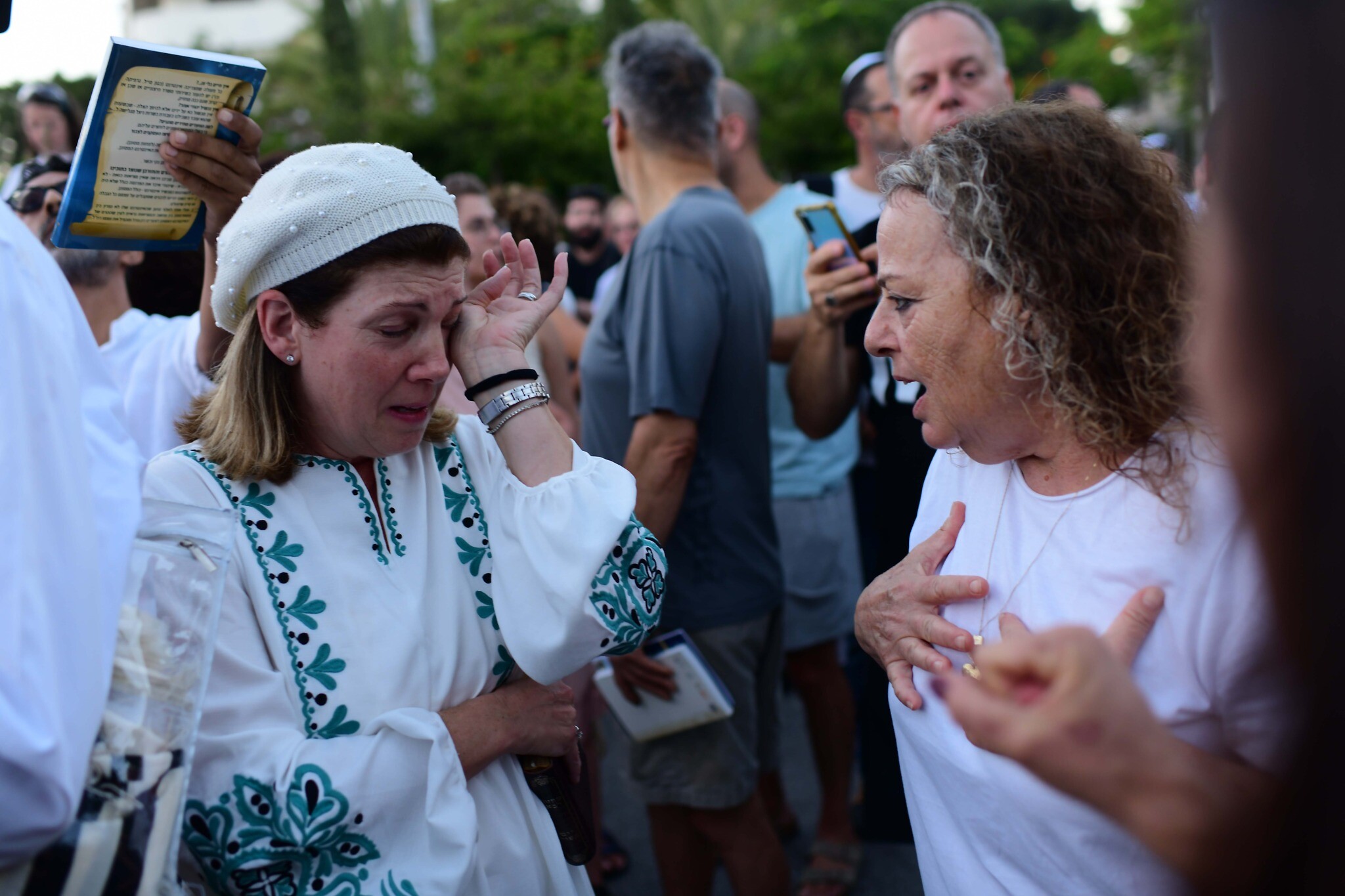
Some of these practices have become battleground issues, most notably in September 2023, less than a month before the Hamas-led October 7 onslaught, when Orthodox worshipers defied a municipal ruling and set up gender dividers at mass prayer services in Tel Aviv’s Dizengoff Square, sparking an angry response from liberal activists and highlighting the deep societal tensions over public expressions of religious practice and gender segregation.
The bill does not explicitly mention gender segregation, but its language, including the protection of “Jewish prayer conducted according to the worshipers’ tradition,” implies that gender-segregated prayer would be legally protected if it aligned with the worshipers’ custom. Under the proposed legislation, any disputes over these practices would be resolved by the Chief Rabbinate, effectively giving it the authority to enforce gender separation at religious events in the public square, and codifying that authority into law.
Previously, the Supreme Court ruled to bar gender segregation in public places.
Entitled “Realization of Jewish Identity in the Public Sphere,” the bill was approved by the Ministerial Committee for Legislation on Sunday, and will advance to the Knesset for a preliminary reading. It would eventually need three more plenum readings to become law.
The most controversial clause of the bill did not pass the ministerial committee. It had called for civil judges to pass exams on halacha (Jewish law) in order to serve on the bench in secular courts, and designated the Grand Rabbinical Court the sole authority for disputes on the subject, leaving no avenue for appeal, and apparently granting members of the Chief Rabbinate — who are not experts in Israeli law — veto power over judicial appointments.
While rabbinical courts are part of Israel’s judiciary, handling many personal legal matters such as divorce, wills and inheritances, and conversions, they have no jurisdiction over civil courts.
Non-Jewish religious courts deal with family issues for other religions.
While Orthodox Judaism has long held a privileged status in Israel’s legal and religious framework, the legislation would formally codify and expand this authority, with apparently no parallel protections for non-Orthodox branches of Judaism or for other religions. The implication of legislation that would protect Jewish Orthodox practices is the effective imposition of them on the public sphere. The bill makes no reference to secular, non-Jewish, or non-Orthodox religious practices at all.
Attorney General Gali Baharav-Miara expressed firm opposition to the proposal, according to Hebrew media reports.
Speaking before the bill passed the committee, Orly Erez-Likhovski, the director of the Israel Religious Action Center, told The Times of Israel that the bill seeks to “turn the public sphere in Israel into an ultra-Orthodox one.”
“It stands in contradiction to Israel as a democratic country and the state of all Jews,” she continued.
“This legislation constitutes yet another step toward Orthodox regulation of the public sphere in Israel and a turning away from the global Jewish majority,” Shlomit Ravitsky Tur-Paz, an attorney who serves as director of the Israel Democracy Institute’s Center for Shared Society, told The Times of Israel. Tur-Paz has frequently appeared before the rabbinic courts on issues of conversion, marriage, and divorce.

In a post on X, Opposition Leader Yair Lapid responded, saying: “Of course I have a mezuzah in my home — and in my office. I never thought there could be any other way. Until today. Until I saw that this deranged coalition wants to force people by law to hang mezuzahs.”
He added that using the law to force religion upon the public will have the opposite effect.
“If religion needs the power of the state to impose itself on citizens, people will rightly conclude that its spiritual message is so weak and hollow that it must rely on force. The scroll inside the mezuzah says, ‘You shall love the Lord your God with all your heart, with all your soul, and with all your might’ — no one asked the government to add, ‘or you’ll get fined,’” he quipped.
Supporters of the bill say it is intended to protect Israel’s Jewish character.
The stated purpose of the legislation is “to ensure the ability of the people of Israel to fulfill their obligation to express their national and religious identity in their sovereign state, as commanded by the Creator of the World, in accordance with the traditions of their ancestors, and to exercise this right without fear of interference or persecution by authorities, foreigners, or external entities that impose laws or regulations not accountable to or serving the needs and will of the citizens of the State of Israel.”
Promoting the legislation was Likud MK Galit Distel-Atbaryan, who chairs the Subcommittee on Jewish Thought in the Education System and has frequently disparaged non-Orthodox Judaism, most notably ejecting Labor MK Gilad Kariv from a Knesset committee meeting in June after snapping at the Reform rabbi, “The Jews here want to continue.”
The bill was co-sponsored by Likud MK Ariel Kallner and Otzma Yehudit MK Yitzhak Kroizer, with the support of ultra-Orthodox parties, United Torah Judaism and Shas. The bill was initiated by the Yachin Center, a right-wing research institute that has long advocated for expanding the authority of Israel’s rabbinical courts, according to a Channel 13 report.
Opponents of the legislation warn that it threatens the democratic character of the state, undermines liberal values, privileges one stream of Judaism over others, and deepens divisions within Israeli society.
“As a rabbi and community leader, it saddens me to see such an absurd legislative proposal. In the State of Israel, there is no doubt that the public sphere is Jewish,” Rabbi Seth Farber, head of the ITIM religious rights organization, told The Times of Israel. He added that attempts to force religious ceremonies on the public will only harm the status of Judaism.
“I fully support furthering Judaism in Israel, but not with a whip,” he continued.
The religious rights organization, Hiddush, said in a statement that the current government has “effectively declared a divorce” between Israel’s Jewish and democratic identities, though Israel’s Declaration of Independence guarantees freedom of religion and conscience for all.









The Times of Israel Community.