

Contest launches for crazy Rube Goldberg machine to clean hands from COVID-19
Special competition for wildest automated system invites families to focus on soap and bubbles, providing a welcome diversion and positive social message during isolation
 Add ToI as a Preferred Source on Google
Reporter at The Times of Israel
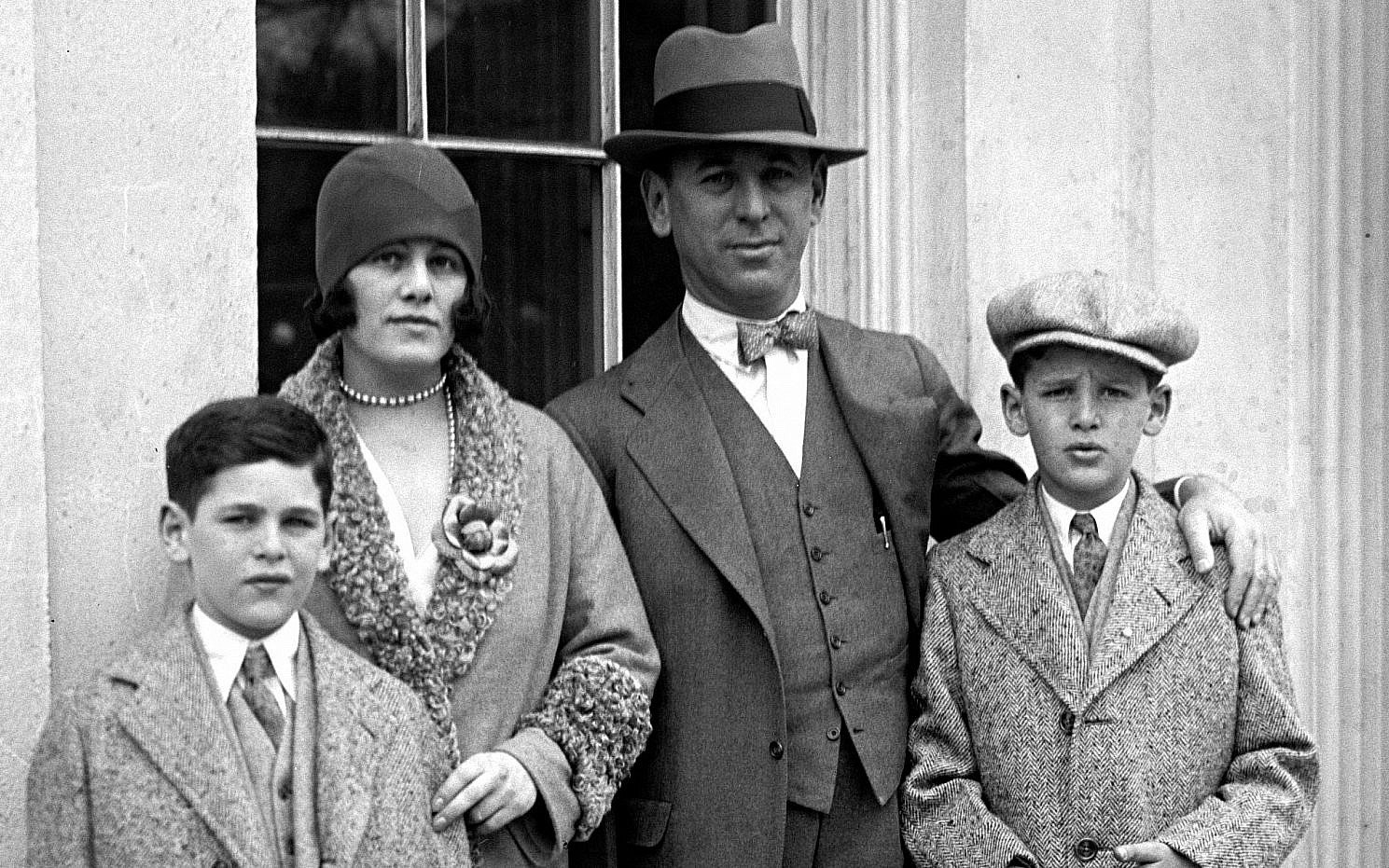
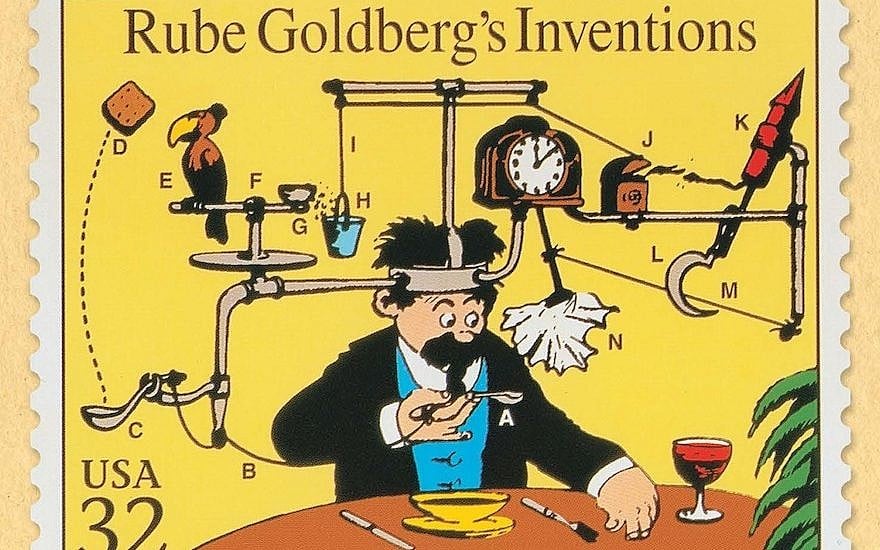
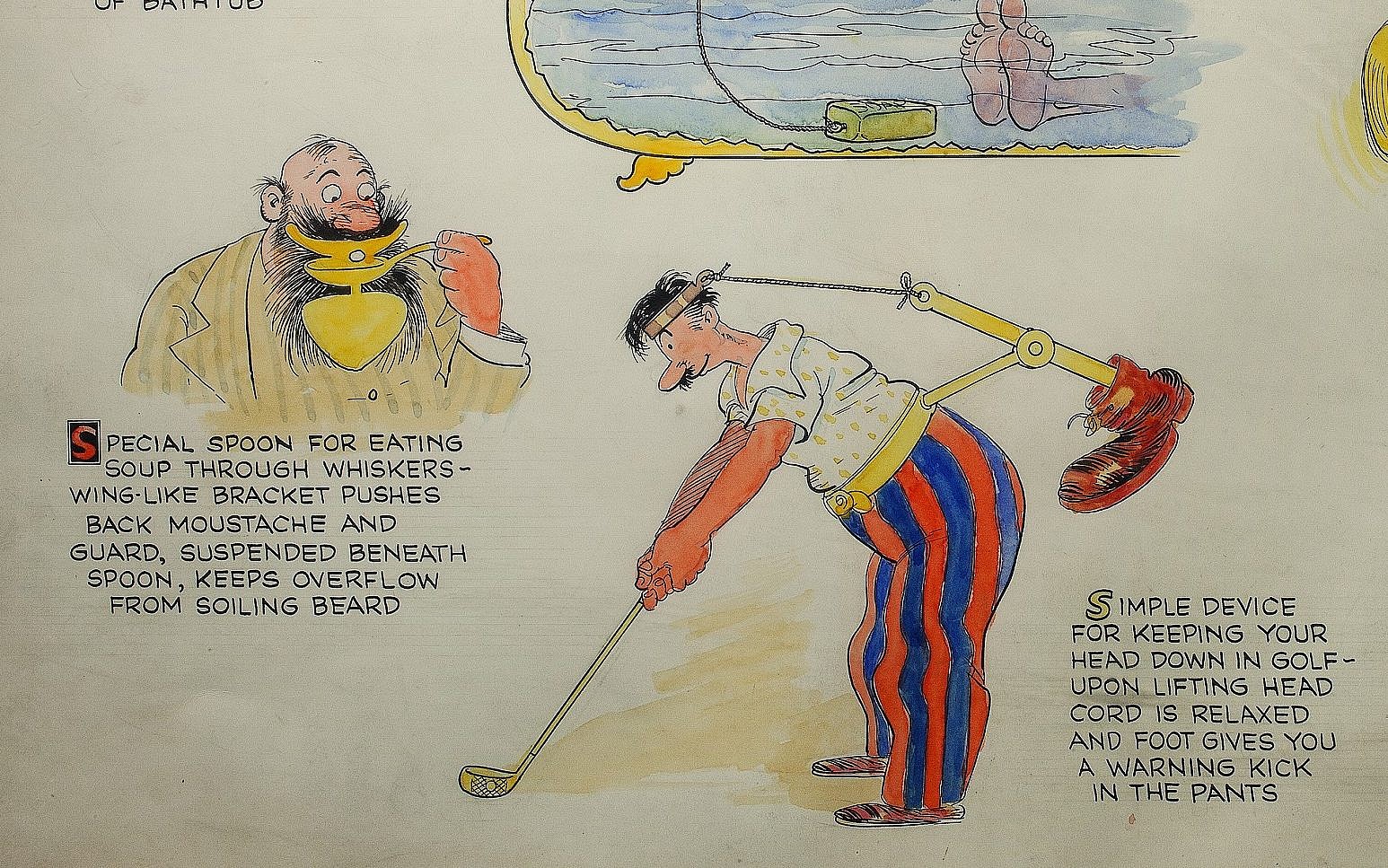
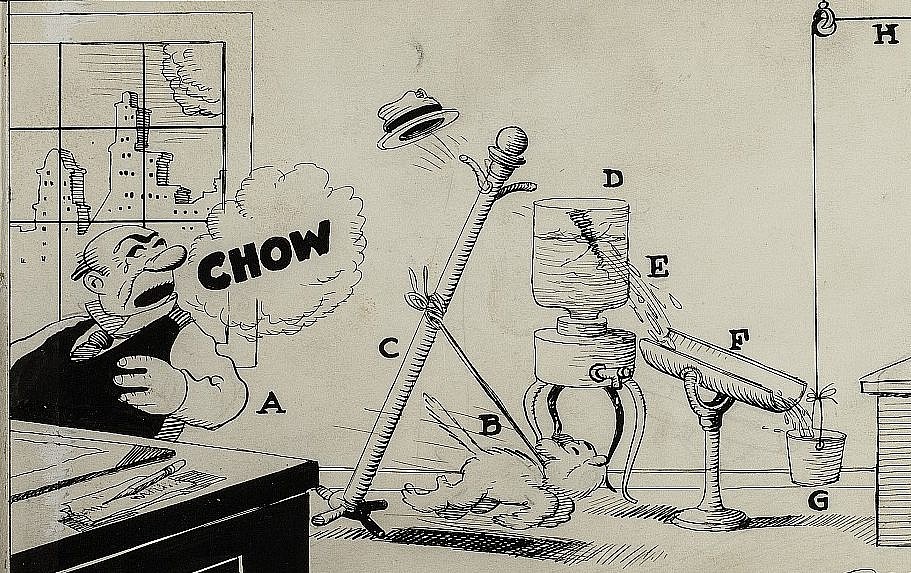
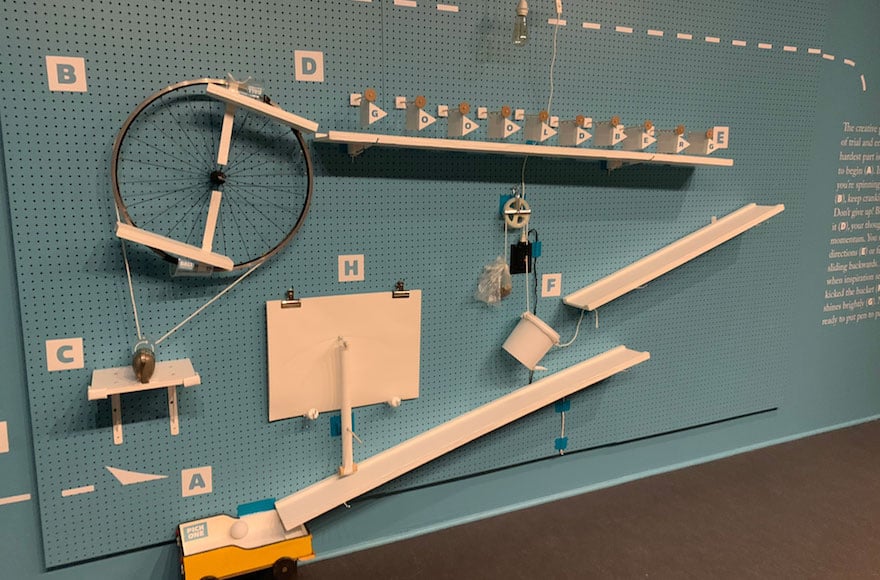
For the past 30 years, participants across the world annually compete to make their own Rube Goldberg Machine — a uniquely laborious solution for achieving basic goals named after the celebrated Jewish-American cartoonist. This year, the coronavirus crisis compelled the postponement of regional and final rounds, so Goldberg’s granddaughter Jennifer George has come up with a new challenge: She is inviting the public to create a complex mechanism to drop a bar of soap into a hand.
“We’re so excited with it,” George told The Times of Israel. “The response has been fantastic. If we can bring families together around a fun project that will take some ingenuity, hopefully they can laugh a bit, get through it, make something work.”
Goldberg’s eponymous machines worked under the principle of making what is easy, convoluted. Who else would have come up with a way of sharpening ice skates that involves a basketball, tin cans and a hungry goat? His contraptions have delighted the public ever since their debut in American newspapers and magazines in the early 20th century. Although he died in 1970, his legacy has continued for over three decades with the Rube Goldberg Machine Contest, now run by his granddaughter. This years’s deadline is May 31.
Asked whether any of her grandfather’s machines worked, George said, “He actually had a handful of patents from the Patent Office. I think he called himself an inventor. He went to engineering school. He trained as an engineer. In all honesty, he never built the machines he drew. He did not care if they worked… If it made you laugh, that was his big goal.”
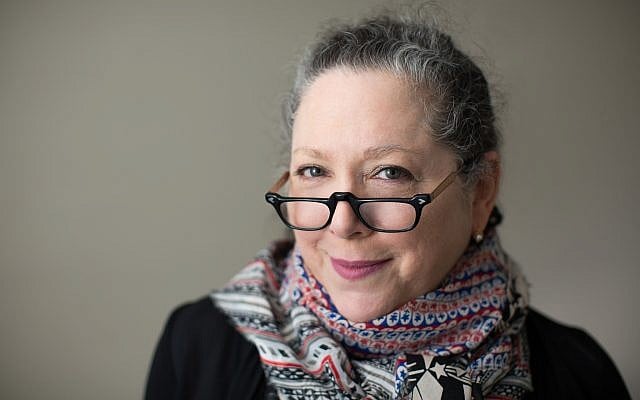
Based in New York City, George got the idea for the challenge after the coronavirus response compelled herself and the staff at her design firm to work remotely. She realized that they were all mothers, half with grown children and half with younger children at home.
“It dawned on me that we have to offer something, a task for families at home, who are suddenly [there] all the time with their kids,” George said.
The new coronavirus challenge is separate from the annual Rube Goldberg competition, but maintains the same general approach: Solve a simple task with a larger social message. Two years ago, the goal was to drop money into a piggy bank to highlight fiscal responsibility. This year’s theme was energy conservation; competitors had to come up with ways of turning off a light bulb. George plans to announce the theme for 2021 in a few weeks.
During the coronavirus response, George said, “Suddenly, families, children and everyone have to keep their hands clean.” It sparked her idea for the challenge: “drop a bar of soap into someone’s hand in 10 to 20 steps.”
There are caveats. “We don’t really want to encourage people to use water in a machine, it’s very messy,” she said, and “you don’t have to buy anything.”
Pretty much everyone has an old-school bar of soap
She encouraged using everyday objects, saying, “Pretty much everyone has an old-school bar of soap.”
People can enter the contest by recording their Rube Goldberg Machine on video, uploading the content to YouTube and sending a link to George. Two weeks of judging will determine the winners, who will receive swag bags. George is looking to recognize three winners, with the potential for more “because we’re seeing trends,” she said.
As she explained, “some [entries] use animals very well,” and another category “we definitely see” is “liquid soap versus a bar of soap.” Some entries are created by entire families, others by individuals. “We really developed this as a family competition, but anyone can enter,” she said.
And, she said, “we’ve seen quite a few from outside the US. We may have a separate category.”
George doesn’t recall any recent entries from Israel, though she said that in past competitions, Israelis have made “amazing machines” including a Passover creation from the Technion that was posted on the competition website.
George said that a Rube Goldberg Machine has a universal appeal.
“You can watch a Rube Goldberg Machine if you’re a monk in Tibet who does not speak English,” she said. “Someone in Afghanistan could watch. You can go all around the world — Japan, Korea. Anyone is going to understand, anyone is going to laugh.”
“I like to think Rube Goldberg is its own language,” she added.
Despite early-career suggestions that Goldberg change his last name to escape anti-Semitic prejudice, he never did. Later in life, his Pulitzer Prize-winning editorial cartooning work received vitriol from readers, which the family thinks may have been due to anti-Semitism. With that in mind, Goldberg asked his sons Thomas and George to change their last name.
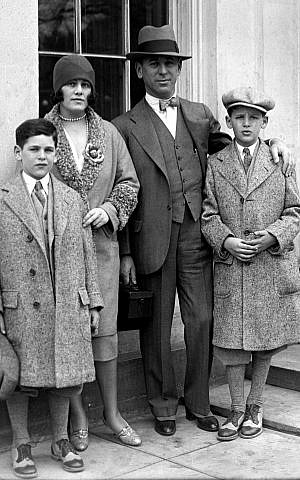
For a new last name, Thomas adopted his brother’s first name. George whimsically did the same thing. As George George, he would lead a life as memorable as his name, with writing projects from “My Dinner with Andre” to “Gunsmoke.”
Jennifer George, who is George George’s daughter, recalls weekends at her grandparents’ beach house on Long Island.
“I did not like the sand, beach or sun,” she said. “They always had to figure out other things.”
Her grandfather taught her how to draw, which she said proved useful in her professional life as a fashion designer. He also taught her the importance of handshaking etiquette, she said, encouraging her to have “a firm, hard handshake, look them in the eye, say, ‘Nice to meet you.’”
Although George has carried on the tradition of giving a sturdy salutation, she said that “I think we’re going to be doing elbow bumps from now on.”
George cites another example of Goldberg’s resourcefulness during an epidemic — the Spanish flu, which is often compared with the coronavirus. Goldberg was in Europe and needed to get home, but was having difficulty. Needing to present an official document, he came up with a doctor’s prescription.
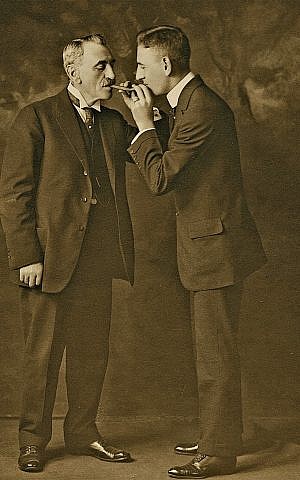
“It was completely ridiculous,” George said. But she noted that the officials could “not speak or read English. They let him go. He got on a boat. It’s chutzpah. He was always resourceful.”
A century later, people’s resourcefulness is being challenged in unprecedented ways, including in George’s hometown of New York. She remembers experiencing the blackout of 1968 as a child, and living through 9/11 and Hurricane Sandy as an adult.
“I’ve seen this city in all kinds of upheaval,” she said. “This one feels different. It feels like it’s going to take a lot longer to get through it.”
However, she added, “I have to believe out of this terrible situation, some good things will ultimately come of it.” She cited New York Gov. Andrew Cuomo’s statement in a press conference that in the past, people were too busy to spend time with their families. “Now we’re all off that treadmill, discovering we can come together,” George said, including “time to have a substantive conversation.”
And, perhaps, time to come up with an ingenious way of dropping a bar of soap into someone’s hand.
“We’re hoping it’s a great diversion for people at this moment,” George said.









The Times of Israel Community.