

Deputy foreign minister slams Fayyad for staying away from meeting with PM
Danny Ayalon also rejects any compromise with Iran on enrichment
 Add ToI as a Preferred Source on Google
Raphael Ahren is a former diplomatic correspondent at The Times of Israel.
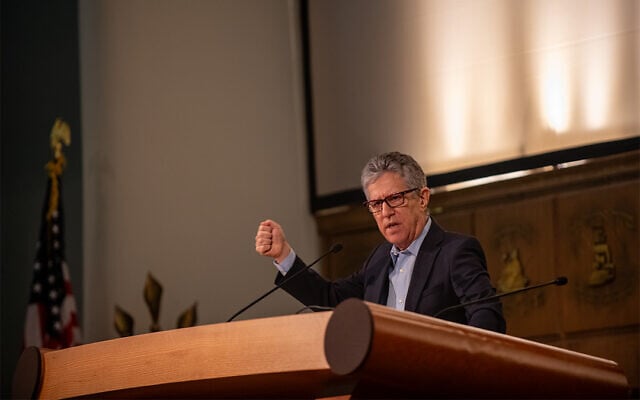
Deputy Foreign Minister Danny Ayalon said the last-minute downgrading of a Palestinian delegation that visited the prime minister in Jerusalem on Tuesday can be seen as a “political snub” that made a “mockery” of the international community.
“Diplomatically, you could look at it as a snub,” Ayalon told foreign reporters on Wednesday. “I am not going to make a big issue out of it, except that it does not show seriousness.”
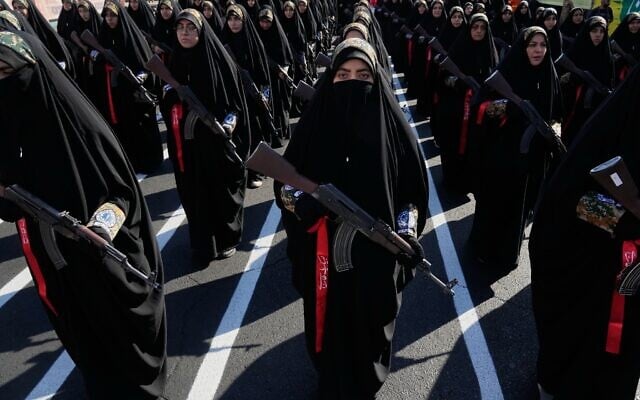
Ayalon also accused the Iranians of “conning the world” over their nuclear program, and rejected any compromise proposals that would allow Iran some capacity to continue uranium enrichment.
On Tuesday, Palestinian Prime Minister Salam Fayyad was scheduled to meet with Benjamin Netanyahu to prepare for a possible renewal of peace talks, yet Fayyad was a no-show. Until hours before the Palestinians delegation arrived in Jerusalem, the Prime Minister’s Office was unclear about who would be arriving.
According to Palestinian sources Fayyad stayed away, in part, because he was uncomfortable with the idea of meeting Netanyahu on a day the Palestinians were marking as Prisoners Day, and which has seen the start of a mass hunger strike by Palestinian security prisoners.
Fayyad, who sent a lower-level representative in his stead, was making a “mockery of the international community,” Ayalon said, referring specifically to the request of the Middle East Quartet — consisting of the US, the UN, the European Union and Russia — to resume peace negotiations.
During Tuesday’s meeting in the Prime Minister’s Office — which saw Netanyahu and his chief envoy Yitzhak Molcho sit down with Palestinian chief negotiator Saeb Erekat and Majid Faraj, the PA’s head of General Intelligence — the Palestinians handed the Israelis a letter from Palestinian President Mahmoud Abbas that outlined certain preconditions for the resumption of talks.
Ayalon called upon the Palestinians to come to the negotiation table without any preconditions. “Enough is enough,” he said.
“Notwithstanding this political snub of the downgrading yesterday, Israel is willing to look very seriously at this letter,” he said. “But I am afraid this is not the real way to break the impasse. It’s important for the Palestinian leadership to divert from their long historic pattern of rejectionism, of taking an attitude of all or nothing and preconditions.”
During Tuesday’s press briefing, which was hosted by The Israel Project, an educational nonprofit, Ayalon also referred to the Iranian nuclear program, demanding Tehran immediately desist from any uranium enrichment and calling on the international community to advance sanctions against the regime.
‘We want to caution from falling into this trap of “good atmosphere.” The danger is that the Iranians will continue to con the world’
“We have not seen any change in the paradigm or the situation as long as Iran continues relentlessly with its programs,” he said.
Last Saturday, the five permanent members of the UN Security Council and Germany — the so-called P5+1– met in Istanbul for talks about the Iranian nuclear program. Little substantive progress was made, beside an agreement to reconvene next month in Baghdad. EU foreign policy chief Catherine Ashton called the talks “constructive and useful” yet Netanyahu expressed dissatisfaction with the talks, saying Iran had been given a “freebie.”
US President Barack Obama rejected Netanyahu’s comment, referring to “some of the toughest sanctions that they’re going to be facing coming up in just a few months if they don’t take advantage of these talks.”
The EU has threatened to intensify its sanctions on Iranian oil imports by July 1 if the talks are unsuccessful.
“We want to caution from falling into this trap of ‘good atmosphere,’” Ayalon said on Wednesday. “The danger is that the Iranians will continue to con the world, as they have been [doing]. The danger here has not changed, the threat is still there. Of course it is very important to continue with the sanctions, and even to advance the sanctions.”
The deputy foreign minister also rejected a compromise some have proposed to allow Iran the enrichment of uranium to a certain degree. “There’s no half pregnancy here. Either they stop, or they don’t stop,” he said.







The Times of Israel Community.