

Designs on the Tel Aviv Museum
Check out the architecture, art, and coffee at the old and new wings of this Tel Aviv institution
 Add ToI as a Preferred Source on Google
Jessica Steinberg, The Times of Israel's culture and lifestyles editor, covers the Sabra scene from south to north and back to the center
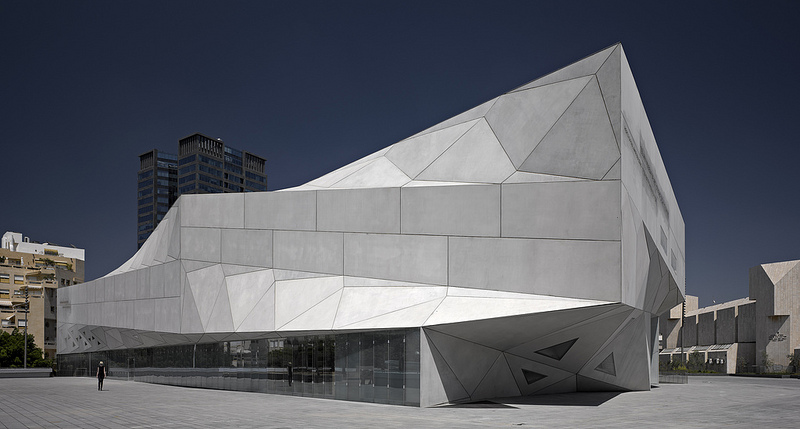
Much has been written about the new wing of the Tel Aviv Museum of Art, including the fact that it’s the first significant structure to be constructed in the so-called White City since the completion of the Bauhaus bonanza back in the 1950s.
The still-new wing of the museum, known as the Herta and Paul Amir Building, was designed by Preston Scott Cohen, chairman of Harvard University’s architecture department, and looks something like a lopsided, graying igloo. That said, it still offers a good bit of sheen and gleam to the tired block of the main building. But it’s taken some time for the Amir wing, as it’s called, to show the “right” kind of exhibits, which befit the soaring levels and modernist flare.
That moment has finally arrived with two design exhibits that recently opened at the museum. Here are five reasons to visit the Tel Aviv Museum of Art right now:
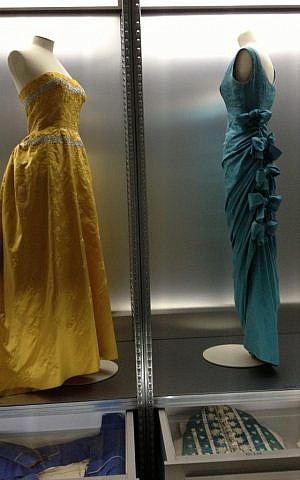
1) “Cristobal Balenciaga, Collector of Fashions” opened on December 20, and celebrates the designs and archival items from the collection of the renowned Spanish fashion designer. The exhibit came from the Museum Galleria in Paris, and includes many of his drawings, which offer a better understanding of Balenciaga’s muse and style. Olivier Saillard, director of the Museum Galleria, was in Tel Aviv to open the exhibit, and commented that few designers have ever had Balenciaga’s kind of talent. “He knew how to compliment the less-than-perfect body and create clothing that was also comfortable, with cutting-edge architectural cuts,” said Meira Yagid-Haimovici, the curator, pointing out his cropped sleeves that allowed for jewelry and extraordinary headpieces for nearly every outfit. Open until April 27, 2013.
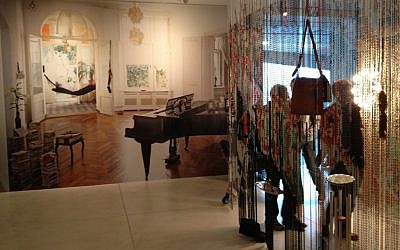
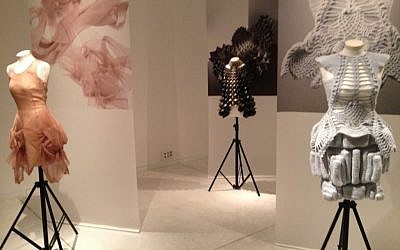
2) Just across the lopsided hallway — intentional, of course — is “Fashioning the Object / Bless / Boudicca / Sandra Backlund,” a show that combines the creative streams of Bless, Boudicca and Sandra Backlund, three labels that look beyond the traditional fashion boundaries. There are the fantastic knits of the Swedish Backlund; the textured-chain sweaters made by the Bless pair (Desiree Heiss and Ines Kaag, who live in Paris and Berlin, respectively, told us that the background images used in the exhibit, the Bless “wallscapes,” are photographs of a collection of Berlin-based apartments, with an outside view of a terrace in the south of France, which the whole set up reaching “another level of perfection”); and Boudicca’s use of film and performance to enhance fashion. You’ll want to wear some pieces, take others home and be happily disturbed by more than a few. Open until April 27, 2013.
3) Move away from the exhibits for a moment, and take some time to appreciate the building. It’s clearly a feat of geometry, and while the five levels appear to be uneven (it can be somewhat difficult on first visit to figure out how to reach some of the galleries), one of the most fascinating parts of the building is its 87-foot core, a spiral atrium known as the “Lightfall” that reaches to the depths and heights of the structure. It’s fun to just wander the hallways, ramps and elevator in the building, which feels square inside, but is actually more of a triangle, surfaced with glass squared and triangular cement blocks.
4) Descend to the bottom of the spiral core to the museum cafe, not necessarily one of the best museum cafes in the world, but certainly acceptable and serviced by a sprightly pair of young women who efficiently handle the steady stream of customers. Their coffees are hot, strong and fresh, and it’s worth eating one of the rolled apple Danishes alongside. While you sip and munch, give yourself over to the hologram that steadily streams across the oversized wall, displaying miniature figures walking to and fro outside the museum walls. Or so it seems.
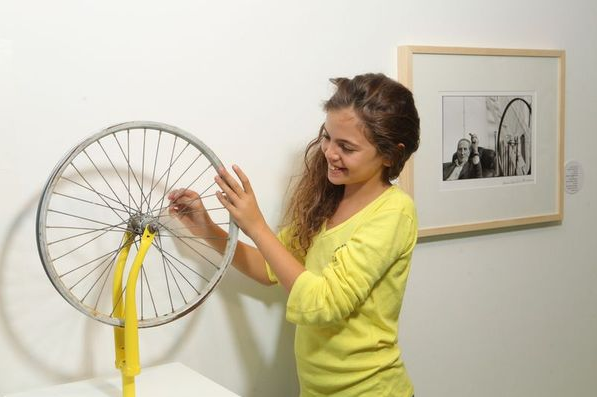
5) Don’t forget the original wing of the museum, which is still a bustling, active area of the institution, although not quite as exciting from an architectural perspective. As always, there’s a steady series of fine and modern art being exhibited. However, if you are spending a day out with the kids, head on over for a look at “Art Any Way: Exploring the Wheel.” It’s an interactive, group exhibit with drawing, a zoetrope and cycling to learn about the wheel’s shape and function, and there’s really something for kids of every age.








The Times of Israel Community.