

Dubai, and by and by: What the press is saying on August 16
Israelis are getting excited about an open relationship with Abu Dhabi, but already have their eyes on other countries they can bring into the ‘new Middle East’
 Add ToI as a Preferred Source on Google
Joshua Davidovich is The Times of Israel's Deputy Editor
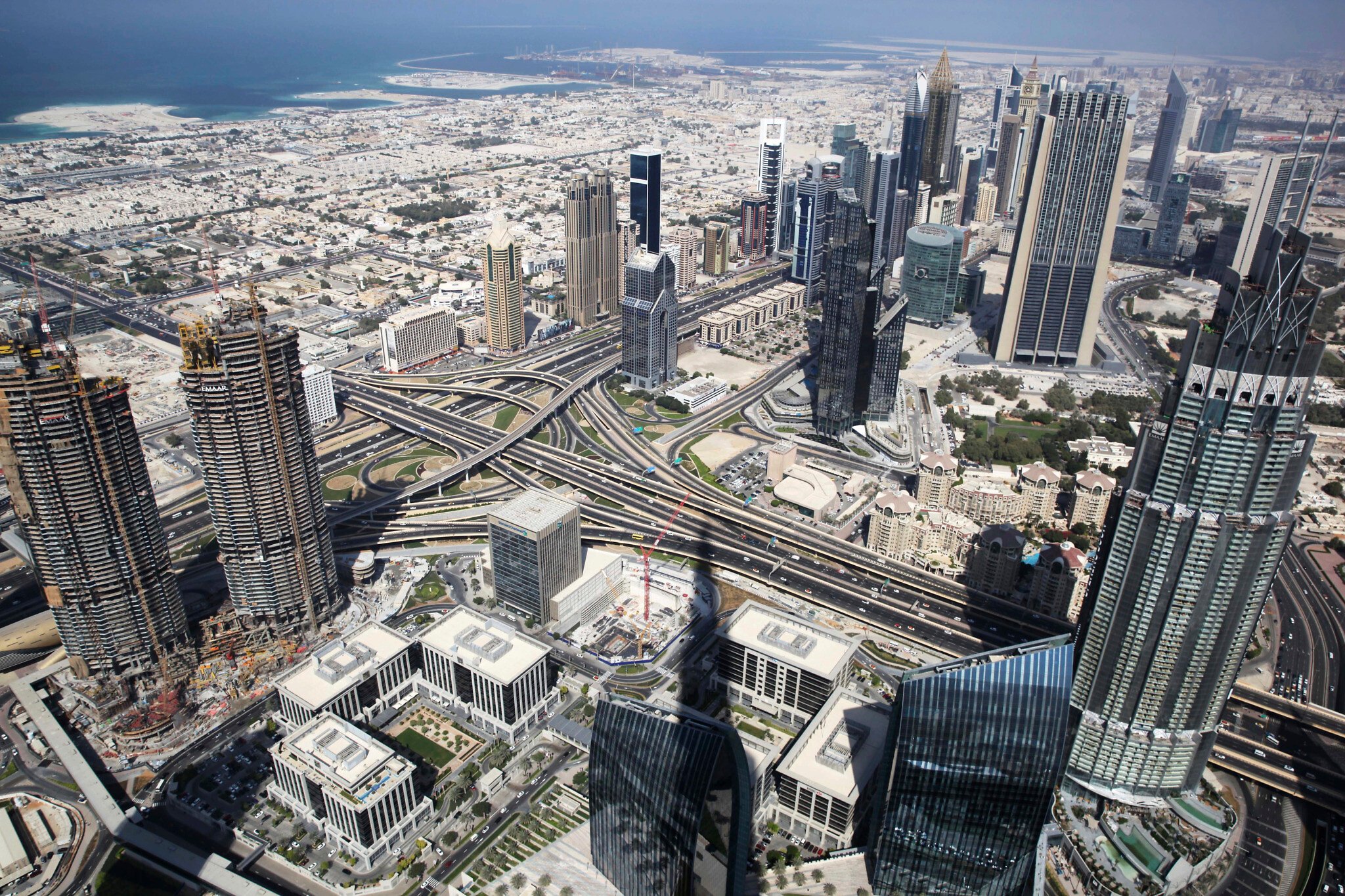
1. Dubai, here we come: Israelis may not yet be able to make a beeline for Dubai’s chintzy malls and Abu Dhabi’s golden sands (and ATMs), but that has not stopped a gaggle of newspapers from rounding up dispatches from the United Arab Emirates, full of hope for flourishing ties with Israel’s newest regional buddy.
- Both major tabloids, Israel Hayom and Yedioth Ahronoth, feature front pages with breathlessly buoyant reports from the Gulf state.
- “You’re from Israel? Ahlan, welcome,” reads the large front page headline in Yedioth in a strange pidgin of Hebrew, Arabic and English (Nu, nisht Yiddish?).
- “It seems to me that the news of the peace deal forming raised the level of Israeli joy to new heights,” writes Yaniv Halil, the paper’s correspondent who swiftly made for Dubai. “And it seems the level of excitement in Dubai yesterday was similar, if not even greater than that of the Israelis. Every person I spoke to yesterday in Dubai expressed open happiness over the agreement and then showered me with questions about Israel and Israelis. With the heat a blistering 42 degrees in the shade, the news of the historic peace came like a cool and refreshing slushie.”
- Israel Hayom’s Eldad Beck gets the same vibe, though naturally the paper runs a picture not of Beck enjoying the Gulf heat, but rather of editor Boaz Bismuth in the Emirates holding up a copy of the paper in 2010, a reminder that Israelis haven’t exactly been strangers to the UAE before now. Beck notes that he too had been to the UAE several times before.
- “But still, there was always a need to downplay my Israeliness. The openings toward Israel were expressed behind closed doors, in hiding. So I was surprised by the warmth expressed toward me over the weekend by an Emirati diplomat, when I presented myself as a reporter for Israel Hayom. ‘Ahlan wasahlan Beck,” she greeted me excitedly when I began to speak to her in Arabic. ‘We’ve waited for this day and it’s finally here.”
- Kan’s Roi Kais sends out a series of videos of Emiratis happy to welcome Israelis.
"ברוך הבא לדובאי": @kaisos1987 מראיין אזרח מקומי על ההסכם, ומאחל לו: "אינשאללה נראה אותך בתל אביב"
הכתבה המלאה הערב ב-20:00 ב-#חדשות_השבת pic.twitter.com/JbRjrngjKU— כאן חדשות (@kann_news) August 15, 2020
- Haaretz’s Noa Landau, stuck in Israel, also brings words from the Emirates, in the shape of an interview with Hend al-Otaiba, the UAE’s foreign ministry spokesperson, who is a bit less rah-rah than the others, albeit still hopeful.
- “Informal relationships with Israel have grown and the issue of formalizing these interactions was always just a matter of time. And, I think it’s fair to say that we realize that an approach of no communication with Israel has brought issues to a dead end and began to separate what is political from other areas of cooperation,” she’s quoted saying.
- Channel 12 news speaks to former Dubai police chief Lt. Gen. Dhahi Khalfan Tamim, most well known for uncovering the Israeli ring that assassinated Hamas man Mahmoud Mabhouh, and who later became an open advocate for ties with Israel. He says that “the choice of peace is the strategy that dominates the Middle East today, which is full of tensions and wars and hatred between countries.”
- Wanna call up some buddies in Dubai yourself? Walla news reports that the Emirati Communications Ministry has removed a restriction on direct calls between the countries, as well as an internet filter that blocked all “co.il” addresses, citing Israeli sources.
2. Emiratis are for practice: Israelis may be excited about Dubai, but many are already looking at what may be next, apparently unsatisfied with just the UAE.
- “Is Bahrain next?” Israel Hayom asks on its front page.
- Kan quotes American rabbi Marc Schnier, who is close to Bahrain’s royal family, predicting that there will be a deal for ties between the countries by the end of the year. “I know by the end of 2020, we will see one or two Arab states establish relations with Israel,” he says.
- “There will be more deals with more countries in the Gulf, like Bahrain and Oman,” Intelligence Minister Eli Cohen tells Army Radio. “I estimate that already in the coming year we’ll also have deals with more countries in Africa, firstly Sudan, and Morocco is also on the table.”
- Yedioth quotes an Israeli official saying (in not so many words) that the deal with the Emirates is just a bit of foreplay before trying to get into bed with the actual prize. Saudi Arabia: “We hope that this breakthrough leads to a breakthrough with Saudi Arabia,” the official is quoted saying. “This was always our big plan and our main motivation, and now its totally possible.”
- Meanwhile, Kan reporter Gili Cohen links to a Kuwaiti paper with an official saying that it will be the last to establish ties with Israel.
- And UAE Foreign Minister Anwar Gragash tells Walla’s Barak Ravid that the Emirates does not view itself “as a train that brings others along.”
6 @AnwarGargash said the UAE is happy about the positive responses in the Arab world for the normalization deal but doesn't see itself "as a train that brings others along" pic.twitter.com/lNffxqixUH
— Barak Ravid (@BarakRavid) August 15, 2020
3. Let’s do Lebanon: Israeli news sites and others read far into Lebanese President Michael Aoun not immediately dismissing the idea of ties with Israel.
The Asia Times calls the comment a “shocking statement by a president whose rise has benefited from a more than decade-old alliance with Hezbollah, arguably the most powerful military force in the country.”
- UAE-based business Khalah al-Habtoor tells Haaretz that “…there is one Arab state that could win big time if only it was able to make peace with Israel and that is Lebanon. There would be no more border skirmishes, wars and bloodshed and Lebanon would no longer require heavily armed militias to defend it from its neighbors. Sadly, it goes without saying why this remains a pipedream, at least for now. Given their current reality, I am almost certain that if the Lebanese people were polled on this topic, the majority would opt for peace. The economic rewards alone would be enormous.”
- But in ToI, Avi Issacharoff notes that though Hezbollah may have been weakened by a number of factors, including especially the Beirut blast, it is not going anywhere.
- “Hezbollah now finds itself in a sensitive position. On the one hand, there is no doubt that it has reached its lowest point in Lebanese public opinion since Hassan Nasrallah was appointed head of the organization in 1992,” he writes. “On the other hand, no entity within Lebanon can pose a threat to it, and, with all due respect to Lebanese public opinion, at the end of the day, the organization’s AK-47s and rockets can ensure there will be little protest on the streets. Hezbollah is both weak and very strong.”
4. A love story decades in the making: A number of journalists are continuing to look at what went into the deal and what it will mean for Israel’s leadership.
- In Haaretz, former US ambassador Dan Shapiro gives some behind the scenes views of what went down, writing that talks ramped up when the US and UAE began to discuss the possibility of a non-belligerency agreement with Israel to get annexation off the table.
- “As the Israelis were brought into the discussions, they sought a higher diplomatic payoff. Over the course of the next six weeks, they decided, in effect, to take al-Otaiba’s deal: normalization instead of annexation. The UAE, which saw its own benefits in cementing ties with a regional partner it is aligned with against Iran, was able to achieve an outcome they believe serves their interests anyway, while preventing Israel from making a damaging mistake,” he writes.
- He adds that now that annexation is off the table “other parts of the Trump plan that represent a distortion of a realistic two-state outcome should be shelved. The United States, instead, should build on the Israel-UAE announcement to restore US leadership toward a credible two-state outcome that ensures Israel’s security and its Jewish and democratic future, and fulfills Palestinians rights to dignity and self-determination in a viable state of their own.”
- AJC official Jason Isaacson writes for ToI that it was actually the other way around, that it was the Emiratis who thought a non-belligerency agreement, proposed by him and his colleagues, aimed too low. But, he explains, aiming low was exactly what he had been taught to do by years of disappointment.
- “The ‘why’ of our request was simple: After years of laying out the case — in Abu Dhabi and 10 other Arab capitals — for normalized relations with Israel, yielding not only a range of benefits for their own populations, but also the prospect of leverage to help the Palestinians in negotiations for an independent state, I and my colleagues had tired of asking the impossible. We had set our sights lower, and even the modest proposals we had put forward were rarely seized.”
- On Sunday, Shapiro tells Army Radio that Israel gave the UAE some unspecified technologies in order to mend ties after the 2010 Dubai assassination of Mabhouh: “[UAE leader Mohammed] Bin Zayed felt personally hurt by what had happened with the understandings in the wake of the assassination,” Shaprio says. “He demanded a promise that it would not happen again on his territory. He also asked for a number of technologies that, up until that point, Israel had not agreed [to share].”
- In Foreign Policy, Jonathan Ferziger goes even further back, to find the origins of the UAE and Israel love story, locating it in business ties that have flourished for decades: “Among the most prominent Emiratis who have engaged significantly with Israeli or Jewish investors are Sultan Ahmed bin Sulayem, chairman of international ports operator DP World, and Mohamed Alabbar, founder of Emaar Properties, which built the 163-story Burj Khalifa in Dubai, the world’s biggest skyscraper. Mubadala Investment Co., Abu Dhabi’s sovereign wealth fund, was one of the principal backers of WeWork, pouring billions into the office-sharing business started by Israeli-American entrepreneur Adam Neumann, before it ran aground. Israelis who have led the way in building business connections and increasingly cordial personal ties with the Emiratis include Idan Ofer, controlling shareholder of Zim Integrated Shipping Services, and diamond merchant Lev Leviev.”
5. Peace in the Middle East? Not so fast: Just days after the deal. the country has been whipsawed back into the realities of life in the region with yet another round of violence with Gaza, and real peace does not seem to be in the cards just yet, at least not with the Palestinians.
- “The Israel-UAE deal is not the ‘deal of the century’. It’s not even entirely clear that it’s a deal at all at this stage,” notes ToI editor David Horovitz (since the formal signing ceremony still lies ahead). “Even a dizzying rush to ally with Israel by all these [Mideast] countries, however, would still not constitute the ‘peace in the Middle East’ that Trump on Thursday said was now on its way. The vision that the president unveiled at the White House in January was focused on the Israeli-Palestinian conflict. And the Palestinians — Mahmoud Abbas’s West Bank-based Palestinian Authority, and the Gaza-ruling Hamas terror group, alike — have swiftly denounced the UAE’s acceptance of Israel as despicable and a betrayal.”
- “The agreement was not meant to resolve the Israeli-Palestinian conflict. The basic stipulation it contains – either annexation or peace with the UAE – does not present a road map or timetable to advance the diplomatic process. But Netanyahu, who sees in the agreement only business opportunities, must not regard it as an exemption from dealing with the Palestinian-Israeli crisis,” reads the lead editorial in Haaretz.
- But some see the deal with the UAE as sparking hopes for even peace with the most intransigent of enemies.
- “On one hand, we need to say that we don’t agree to this, and our hand is on top,” the head of the Eshkol regional council being pummeled by Gaza in recent days tells Army Radio. On the other hand, we need to learn to live alongside each other. Also with the deal with the UAE, don’t stand to the side, we need to move forward.”





The Times of Israel Community.