

Enigmatic bronze lion heads found in 1,900-year-old tomb in central Israel
Discovered near Kfar Saba, the ornate coffin fittings may hint at ties to pagan cults — or a Roman soldier’s final journey
 Add ToI as a Preferred Source on Google
Rossella Tercatin is The Times of Israel's archaeology and religions reporter.
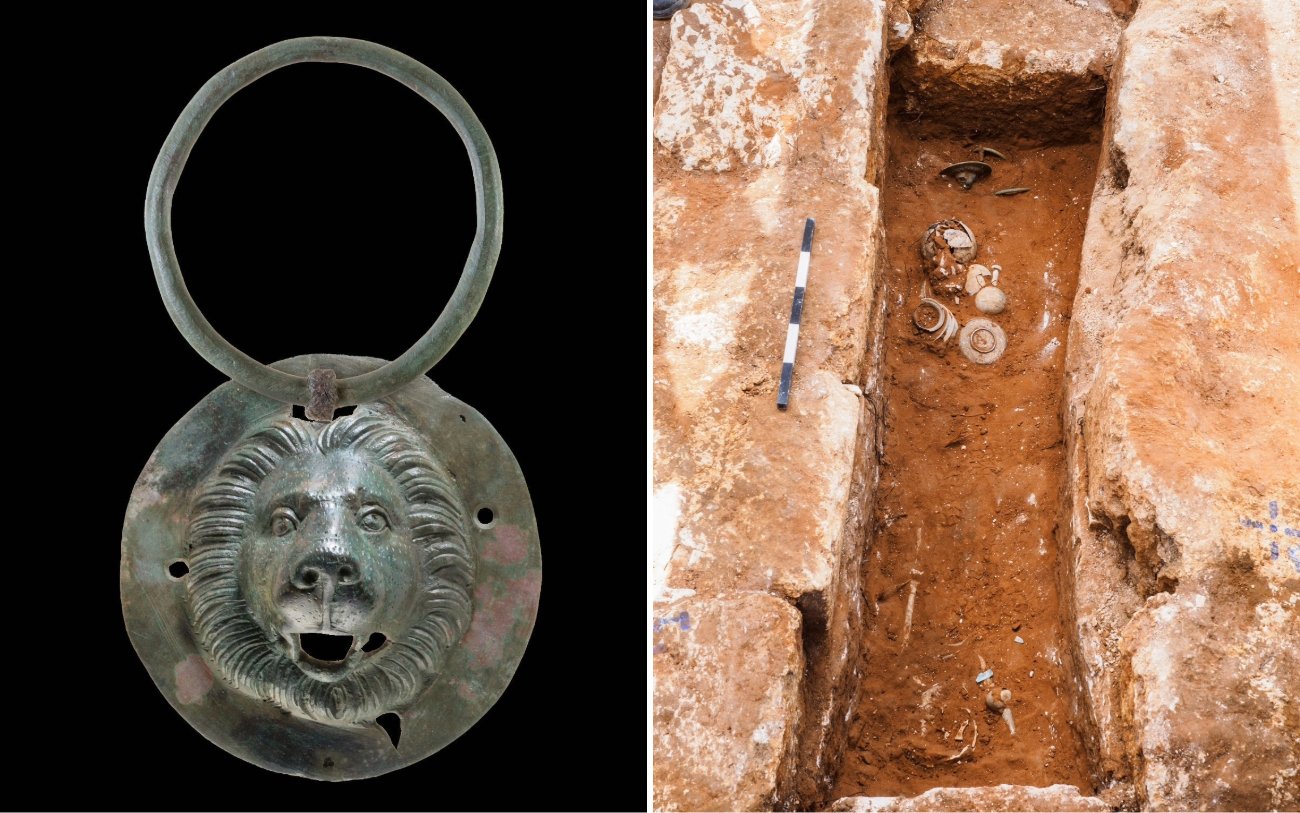
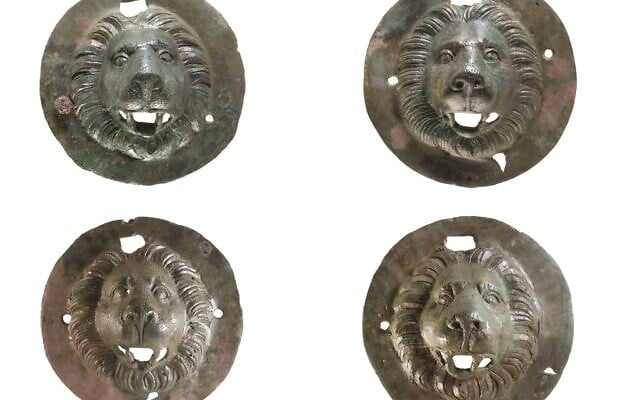
Four rare bronze discs shaped like lion heads have been uncovered in a 1,900-year-old grave in central Israel, the Israel Antiquities Authority (IAA) said on Thursday, following the publication of an academic paper on the artifacts in the 2025 issue of the IAA journal Atiqot.
The artifacts were likely used to attach carrying rings to a wooden coffin, allowing it to be lifted or lowered into the grave, explained archaeologist Dr. Elie Haddad. The burial style is typically linked to pagan customs, he added, yet the cultural identity of the deceased and the symbolism behind the lion-head design remain uncertain.
“We found the discs as we conducted a salvage excavation ahead of construction works for a road around five kilometers from Kfar Saba in 2018,” Haddad told The Times of Israel over the phone.
“The site is known as Khirbat Ibreika, named after the nearby tomb of a sheik from the Ottoman period [1517-1917 CE],” he noted.
During the dig, archaeologists uncovered remains from both the Roman period (63 BCE-323 CE) and the Byzantine period (324-638 CE). The former included eight tombs from the 1st or 2nd centuries CE, while the latter consisted of agricultural installations, such as a wine press and an oil press.
“The discs were found in one of the tombs,” Haddad said. “The tomb was still sealed.”
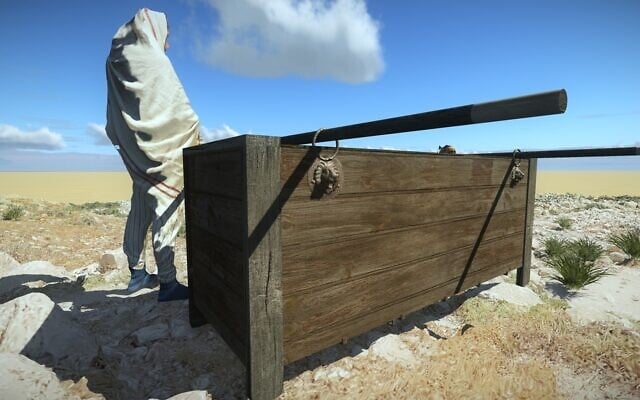
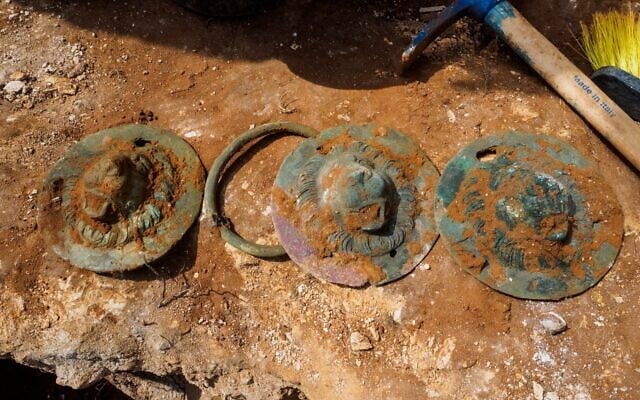
The four bronze discs, each adorned with a lion’s head in high relief, feature perforations at the top—above the mane—designed to attach a ring-shaped handle. The discs and their detached rings were discovered stacked in a pile at the narrow southern end of the tomb.
Additional grave goods from the same tomb included 12 glass vessels and a large iron nail, which preserved traces of wood, likely from a now-decayed wooden coffin.
The archaeologists also found some human bones.
“However, we were not able to determine whether the deceased was a man or a woman, but only an adult over the age of 15,” Haddad said.
The other graves did not present any artifacts, although two of them were also still sealed.
Roaring lions in ancient times
The earliest example of a lion-head disc was found in Olymthus (Greece) and dated to the 5th century BCE.
According to Haddad, some 40 examples of similar artifacts have been uncovered in the territory of modern-day Israel.
“However, many of them served a different purpose than those we found since the lion held the ring in its mouth,” he said. “They were door-knockers, a type of artifact very common in antiquities.”
Another four lion-shaped bronze disks with perforations above the mane were unearthed in a salvage excavation that uncovered a Roman-era cemetery in Tel Dor.

In the Tel Dor tomb, however, the four rings were found at the corners of the tomb, as if they had remained there after the coffin was placed in it. In contrast, in Khirbat Ibreika, they seemed to have been intentionally placed in the grave, piled together.
Haddad and the co-director of excavations, Elisheva Zwiebel, tried to shed light on the ethnicity of the deceased in Khirbat Ibreika.
“This burial method was pagan,” Haddad said. “But we do not know anything else besides that.”
To better understand the grave’s cultural context, the researchers examined the lion’s symbolism across ancient civilizations. The motif was widespread in the region and featured prominently in Greek, Roman, Jewish and Samaritan art.
In the case of the Khirbat Ibreika discs, Haddad and Zwiebel raise the possibility of a connection to the Persian cult of Mithra, which revered the lion as a guardian of eternal fire, warfare, and sacrifice.
The cult was popular among Roman soldiers during the 1st and 2nd centuries CE. According to Haddad, the individual buried with the lion-headed fittings may have been a Roman soldier.
“It is one of the possible explanations we have,” he said. “Likely, the deceased was an important person since he was buried with such valuable artifacts.”
One of the challenges in understanding more about the grave was the absence of domestic structures from the period in the area.
“We did not uncover any remains of structures where people lived, both for the Roman period and for the Byzantine period, only the graves and cultural installations,” Haddad said. “It is possible that the remains of the actual settlement are under the tomb of the sheik.”
Yet, Haddad expressed hope that additional research will provide new insights into the open questions.
“It is hoped that future excavations yielding similar artifacts will allow a better understanding of these enigmatic lion-headed handles and their cultural affinity,” he and Zwiebel wrote in the paper’s conclusions.










The Times of Israel Community.