

Hamas hands over body of hostage Tal Haimi, slain defending his kibbutz on Oct. 7
Father of four was member of Kibbutz Nir Yitzhak’s rapid response team; his youngest son was born 7 months after his death; 15 hostages’ bodies still held in Gaza
 Add ToI as a Preferred Source on Google
Emanuel (Mannie) Fabian is The Times of Israel's military correspondent
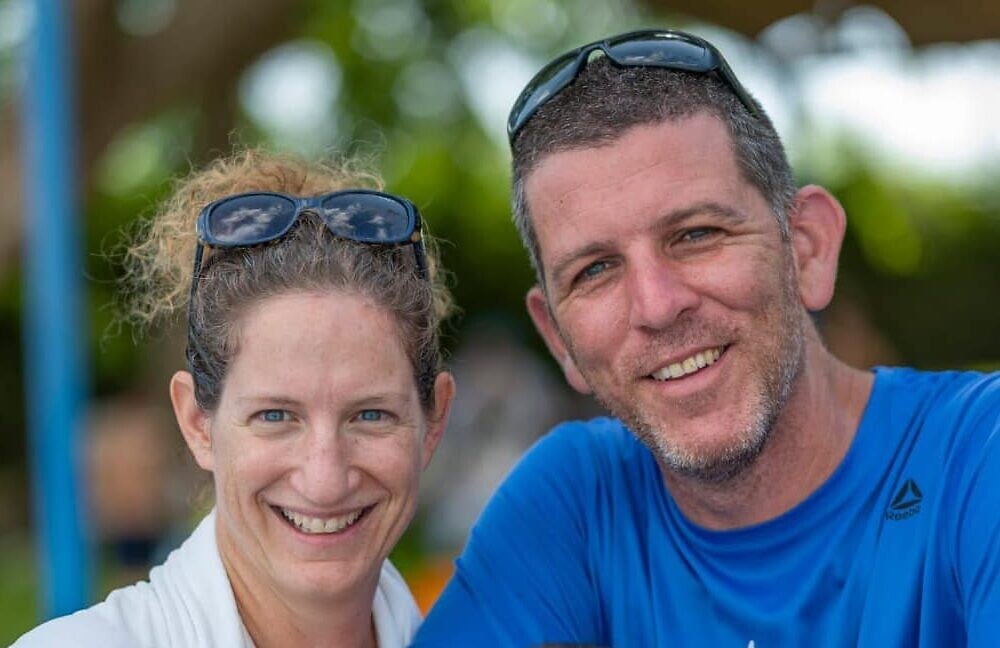
Hamas on Monday night handed over to Israel the body of hostage Tal Haimi. Haimi, 41, who was the chief of Kibbutz Nir Yitzhak’s civil defense squad, was killed while defending his community on October 7, 2023, and his body was abducted to the Gaza Strip.
He and other members of the rapid response team battled the invading terrorists at the entrance to the kibbutz until he was shot dead. In December 2023, Tal’s family was informed based on intelligence that he had been killed on October 7 and his body taken hostage. His family held a funeral, but awaited his body.
Several hours after a casket with Haimi’s remains arrived at the Abu Kabir forensic institute in Tel Aviv for identification on Monday, military representatives notified his family that his body had been returned to Israel by Hamas.
Like many other civil defense squad members who were killed while fighting Hamas on October 7, Haimi was posthumously promoted to the rank of sergeant major in the reserves, the Israel Defense Forces announced Tuesday morning.
The Prime Minister’s Office in a statement said that Israel “shares in the profound grief of the Haimi family and of all the families of the fallen hostages.”
The PMO warned that that Hamas “is required to fulfill its commitments to the mediators and to return [the remaining bodies] as part of the agreement’s implementation.” Fifteen bodies of hostages remain in Gaza.
“We will not compromise on this and will spare no effort until we bring back all of the fallen hostages,” vowed the PMO, “every single one of them.”
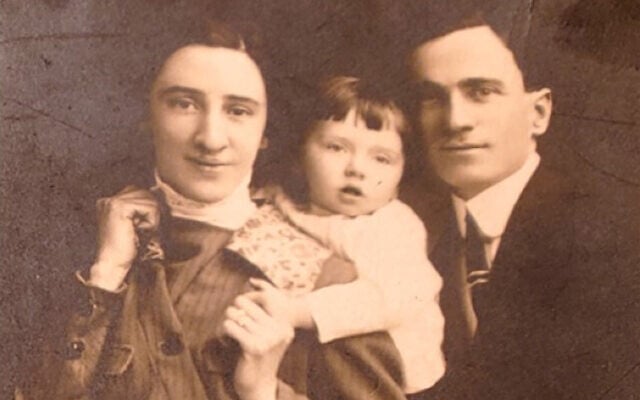
Tal was survived by his wife, Ela, and their four children, Nir, Einav, Udi, and Lotan. Lotan was born in May 2024, seven months after Tal was killed.
“It’s a very big relief, though as we approach the funeral it’s very painful as well,” Ela told Channel 12 on Tuesday.
“I’m glad I was able to tell my children this morning that their dad returned,” she added, expressing hope that the families of the 15 hostages whose bodies remain in Gaza will get to do the same.
Zamir Haimi, Tal’s uncle, told the Kan public broadcaster that his slain nephew “fought like a lion with the civil defense squad, while no one came.” He added that Tal’s burial came with “a great mixture of emotions,” because the bodies of 15 hostages remain in Gaza, and “we have to continue fighting for them.”
“Tal was brought home after 745 days,” the Hostages and Missing Families Forum said in its own statement. “Tal loved taking his family on nature trips and camping in the outdoors, was an enthusiastic tools hobbyist, and always knew how to find a solution to any problem that arose.
“On the morning of October 7, he went out to fight against dozens of terrorists in a battle at the gate of Kibbutz Nir Yitzhak. Tal and the rest of the quick-response team fought with extraordinary bravery for several hours, and during the battle, Tal fell and was abducted into Gaza.”

Hamas handed over the casket in the evening, saying it had located the body the day before. The Abu Ali Mustafa Brigades, the military wing of the Popular Front for the Liberation of Palestine, later indicated that it had been holding the body.
The casket was handed off to the Red Cross, which in turn transferred it to the IDF.
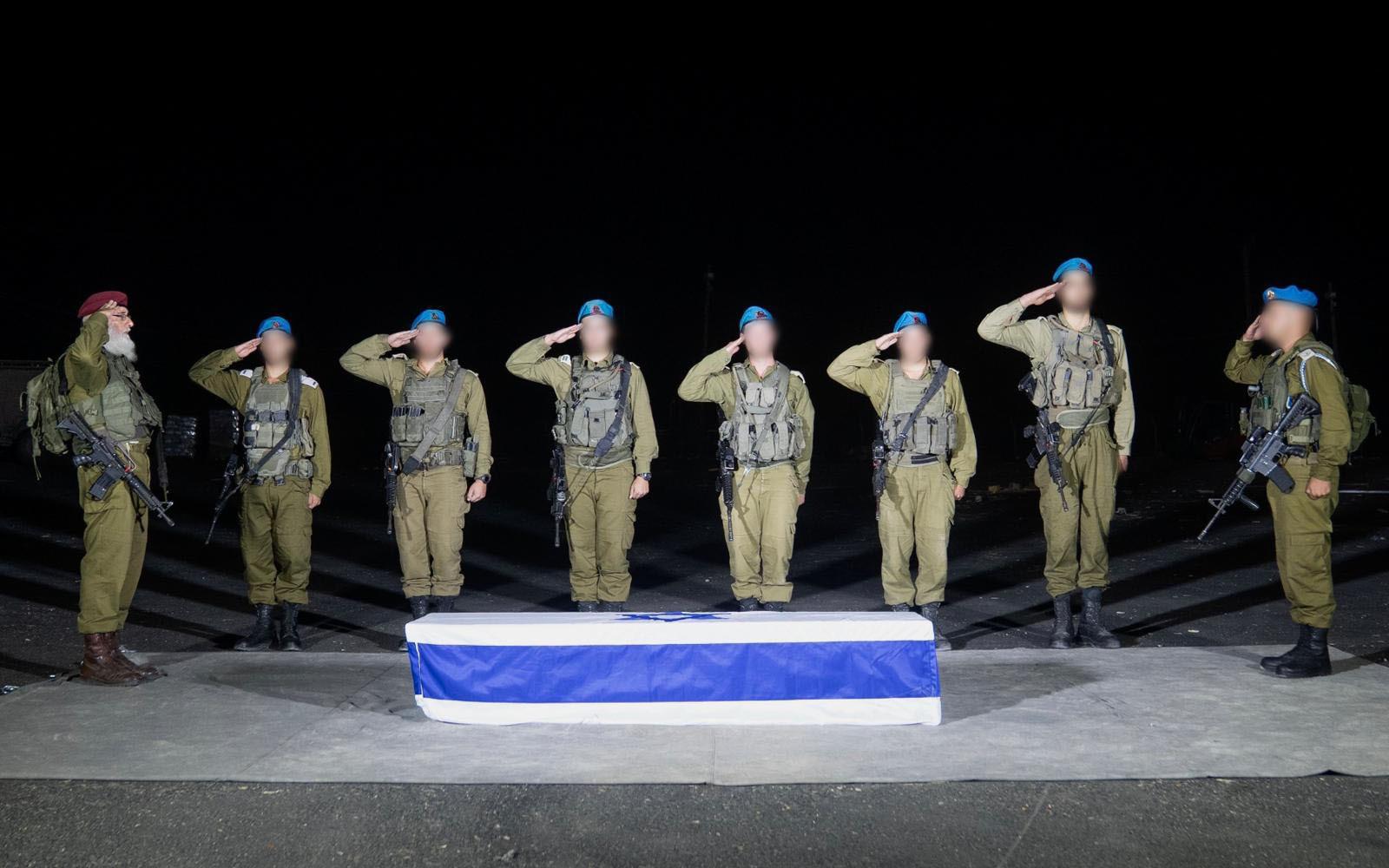
Inside Gaza, the IDF inspected the casket, draped it in an Israeli flag, and held a short ceremony led by IDF Chief Rabbi Brig. Gen. Eyal Krim. After being moved from the Strip, the casket was escorted by police to Abu Kabir.
On Sunday, Hamas had said it had located the body of a hostage and would return it to Israel “if the field conditions are suitable.” That announcement came as a flare-up of violence threatened the ceasefire, after a deadly attack on troops in southern Gaza in the morning led Israel to retaliate with a wave of strikes. In the end, no remains were returned on Sunday.
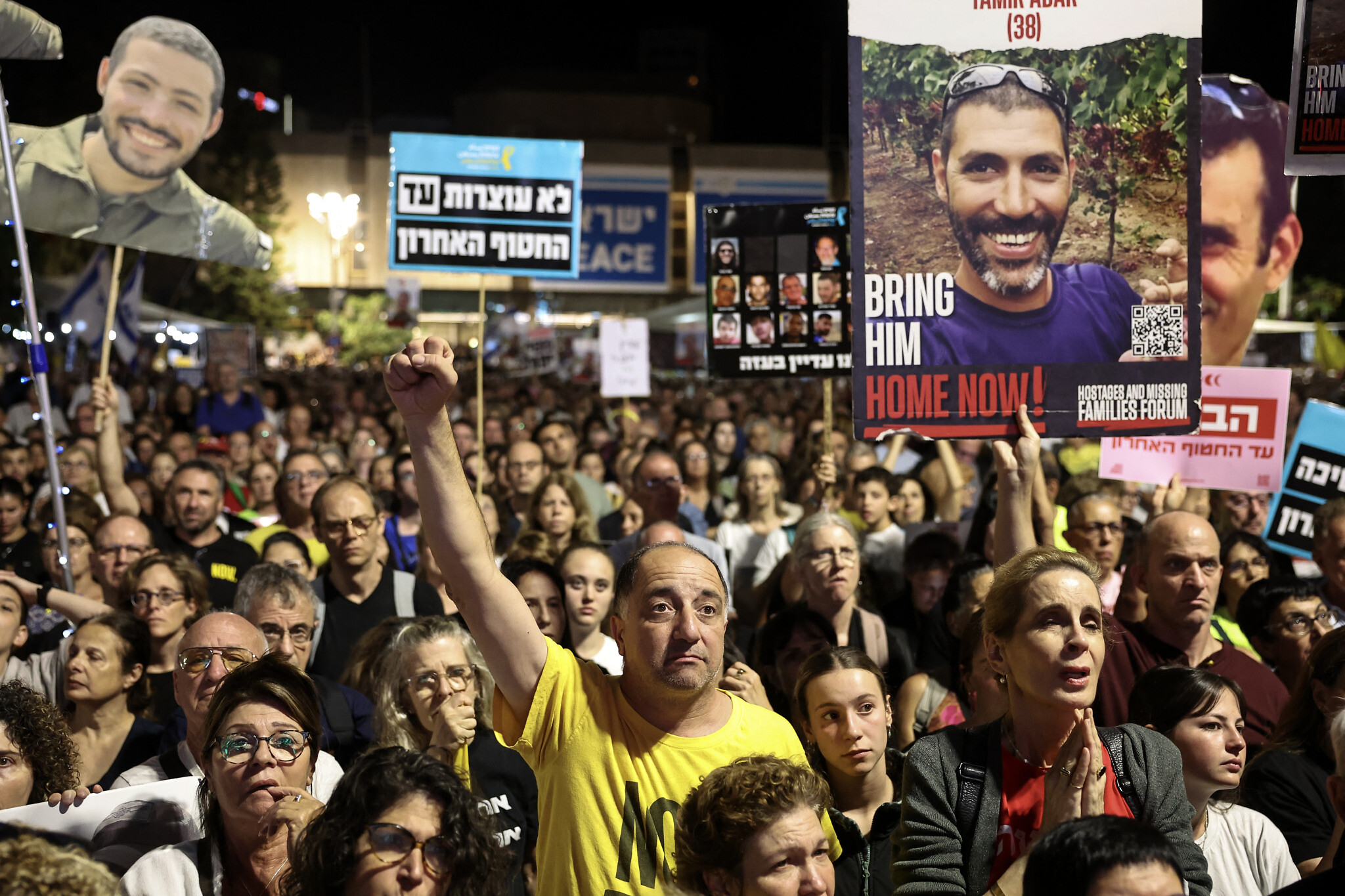
With Haimi’s return, the bodies of 15 hostages remain held in Gaza. Thirteen bodies have been handed over.
Israel has accused Hamas of withholding at least some of the bodies deliberately, while the terror group insists that it has been unable to locate them due to the level of destruction in Gaza.
In accordance with the current ceasefire deal, Hamas released the last 20 living hostages on October 13, within 72 hours of Israel’s withdrawal to the so-called Yellow Line, to which the military withdrew under the terms of the ceasefire.
IDF forces clash with terror operatives, despite ceasefire
Monday saw several Palestinian terror operatives who crossed the Yellow Line and opened fire on troops killed in a drone strike, the military said.
The incident took place on Monday afternoon in Gaza City’s eastern Shejaiya neighborhood.
According to the IDF, the operatives were spotted crossing the Yellow Line “in a way that posed an imminent threat” to troops. The gunmen then opened fire on the troops, without causing injuries, the army said.
The IDF said troops directed an Israeli Air Force drone that struck and killed the gunmen.
Palestinian media reported that two people were killed in the area.
It was the fourth such incident that day, according to the IDF, after two successive instances of terror operatives crossing the Yellow Line and approaching troops in Gaza City, and a similar incident in southern Gaza’s Khan Younis.
Otherwise, the ceasefire appeared to be holding on Monday.
Army details Yellow Line barriers
The IDF provided additional details Monday on the physical markers demarcating the Yellow Line. The IDF began marking the line on Sunday, and the military said the effort will continue “in the coming period.”
The yellow-painted blocks, topped with a yellow metal sign, are 3.5 meters tall (nearly 11.5 feet), and are being placed at distances of some 200 meters from each other (650 feet) along the Yellow Line, the military said.
The Yellow Line, as drawn by mediators, keeps the military in control of over half of the Strip’s territory, or 53 percent — most of which is outside of urban areas.
IDF troops set up a physical marker on the Yellow Line in the Gaza Strip, October 20, 2025. (Israel Defense Forces)
The ceasefire, meant to be the first phase of a larger plan for a permanent end to the war, on which talks have yet to be held, was brokered by the US earlier this month. It calls for an international monitoring mechanism to oversee its implementation.
PM said to appoint US-Israeli businessman to truce board
Channel 12 reported Monday that Prime Minister Benjamin Netanyahu has appointed Israeli-American businessman Michael Eisenberg as his representative to the US-led monitor. The network cited two senior Israeli officials and one senior American official familiar with the matter.
Eisenberg was previously involved with a group of businesspeople who helped establish the controversial Gaza Humanitarian Foundation, the US- and Israel-backed mechanism that distributed food in the Strip between May and October of this year, and whose operations are being suspended under the ceasefire.
According to the TV report, Eisenberg will serve as Netanyahu’s representative in the American command center alongside Maj. Gen. Yaki Dolf, who represents the IDF and Israel’s defense establishment in the same forum.
It remains unclear how responsibilities will be divided between the two representatives, the network noted.

The Prime Minister’s Office declined to comment on the report, though it did not deny it.
Eisenberg also did not comment directly, saying only: “I prefer not to respond to discreet conversations, but it will always be an honor for me to answer any call-up the country asks of me.”
The report added that US Vice President JD Vance is expected to visit the command center after arriving in Israel Tuesday, and may even enter the Gaza Strip, though no final decision has yet been made.
Nava Freiberg contributed to this report.







The Times of Israel Community.