

Unrest is growing, but most Jordanians still prefer change from above and not below
A Jordanian journalist, and Israel ‘normalizer,’ says he prefers perestroika to revolution
 Add ToI as a Preferred Source on Google
Elhanan Miller is the former Arab affairs reporter for The Times of Israel
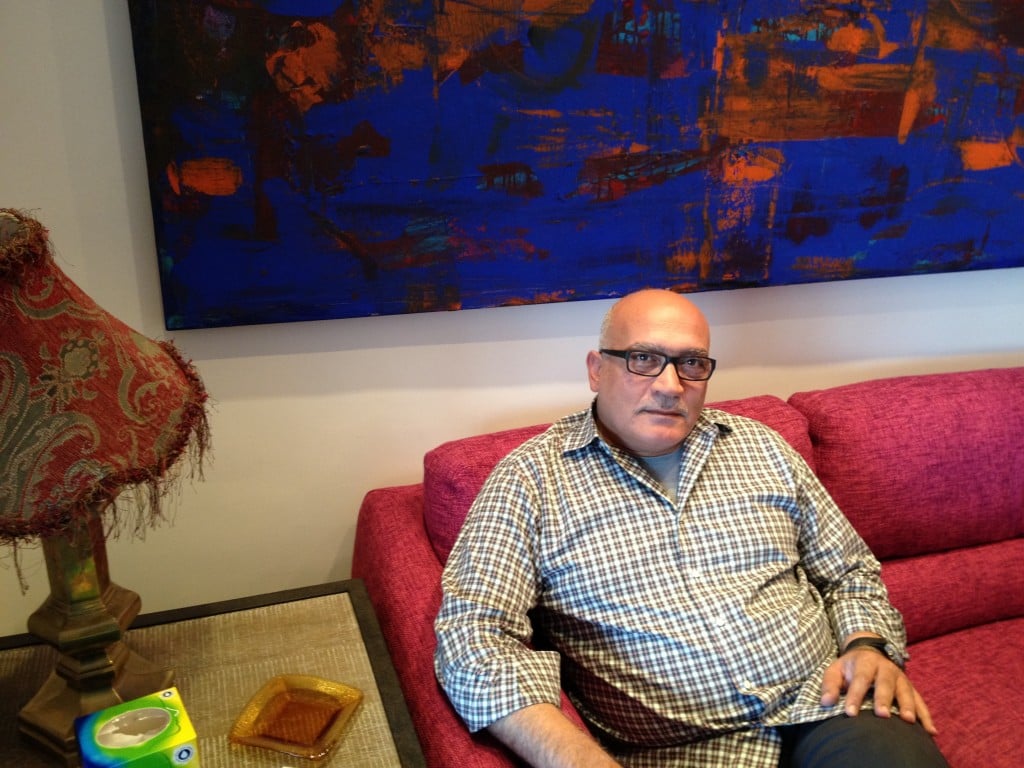
AMMAN, Jordan — Salameh Nematt jokingly refers to himself as a “normalizer” with Israel. A self-proclaimed secular Christian of east Jordanian (as opposed to Palestinian) descent, Nematt says he has visited Israel at least a dozen times since it signed a peace treaty with Jordan in 1994; most recently earlier this month for the World Summit on Counter-Terrorism in Herzliya.
Jordan is preparing for parliamentary elections to be held before the end of the year, but the jovial expression on King Abdullah’s face peeking out from street signs across Amman can barely mask the political turmoil stirring on the street below.
The Muslim Brotherhood, the country’s best organized opposition group, has announced its intention to boycott the elections in protest against the “one man, one vote” election law, which the king refuses to annul. According to the current law, citizens are permitted to vote for only one candidate in their multi-candidate district, and another within a national list of 27 candidates.
Nematt, an independent journalist and businessman, fears that the regime’s refusal to implement immediate reforms may result in its increased isolation, from which there may be no way back
“With the Islamists boycotting and the [liberal] opposition boycotting, you’re having a copy, a clone, of the current parliament which is creating a crisis because it has no legitimacy,” says Nematt.
Jordanians tend to vote on a tribal and regional basis, and the “one man, one vote” system is believed to significantly weaken the opposition — be it Islamist or liberal.
“Even without falsifying the elections, what’s the point of elections that bring pro-regime people into parliament without opposition, at a time when you [the king] need opposition to give legitimacy for the whole political system?”
Nematt, an independent journalist and businessman, fears that the regime’s refusal to implement immediate reforms may result in its increased isolation, from which there may be no way back.
Like most Jordanians, he says, he would prefer to see change come from above rather than from below.
“I would prefer a ‘perestroika’ to a revolution,” Nematt tells The Times of Israel from his plush Amman office, situated in the quiet neighborhood of Jabal Al-Weibdeh and decorated with his own abstract oil paintings. He notes the king’s advisers fear a rapid loss of control like the one experienced by Soviet president Mikhail Gorbachev in the twilight years of the USSR.
A number of factors have kept the Arab Spring largely away from Jordan, Nematt argues. Jordanians observe the chaos experienced by neighboring countries Iraq and Syria, “which will take a generation to overcome,” and fear a similar fate.
Jordanian society is also composed of two distinct social groups. The Palestinians, who many believe make up a majority of Jordan’s population of 6.5 million, are concerned that a revolution would result in a nationalistic east Jordanian regime with significant militaristic overtones, hostile to Palestinians. Among the east Jordanian population — which bred the most recent protest movement — many fear losing the liberal advances achieved in past years. The outcome is a tenuous political stalemate.
Nematt fears that as prospects for its political inclusion diminish, supporters of the relatively moderate Jordanian Muslim Brotherhood will go underground and start supporting radical Islamist groups such as al-Qaeda and the Salafist fundamentalists.
“I keep telling people: we exported Abu-Musaab Zarqawi to Iraq. He was the leader of al-Qaeda in Iraq but he’s a Jordanian from Zarqaa!”
Looking into the future, to what Nematt dubs “the biggest picture” of the Middle East, he predicts that the Iranian axis will lose to the US and its allies, which are simply richer and command more resources. A fall of the ayatollah regime in Iran will spark a domino effect that will see Sunni Muslims advance at the expense of Shiite forces in the Middle East.
“The future of Syria, Jordan, Iraq, Lebanon and the rest of the region by extension will be determined by the outcome of the big confrontation [between the US and Iran]. If the Syrian regime goes down, the Sunnis will want to surge in Lebanon. They will want to teach Hezbollah a lesson. This means Lebanon is in serious trouble next.”






The Times of Israel Community.