

Interpol handcuffs PM’s hope of ending automatic anti-Israel majority
More than anything else, global police organization’s vote to accept Palestine as a member state signals to Israel that the two-state solution is still on the table

 Add ToI as a Preferred Source on Google
Raphael Ahren is a former diplomatic correspondent at The Times of Israel.
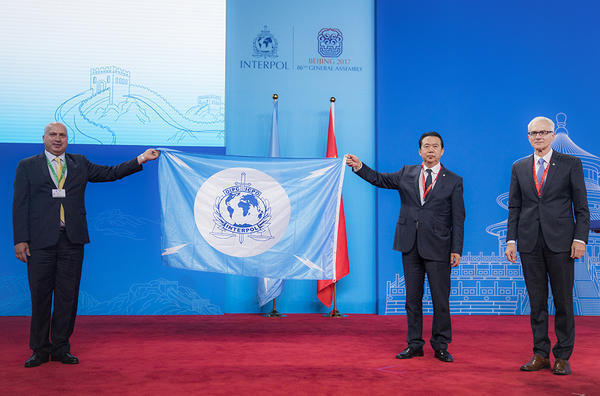
Last November, Israel thwarted a Palestinian attempt to become full members of Interpol, the world’s largest international police organization.
“It was a difficult effort, but it produced results,” Prime Minister Benjamin Netanyahu declared happily at the time. “It reflects what I have been telling you is happening, which is a change in Israel’s international standing and an expansion of our ties with different countries.”
The Palestinians will continue trying to attain statehood through international institutions, he warned, but added that he had “no doubt about the general, long-term trend — Israel is bursting onto the global scene, and this will ultimately be reflected in all UN and international bodies.”
Netanyahu has since repeated this message countless times.
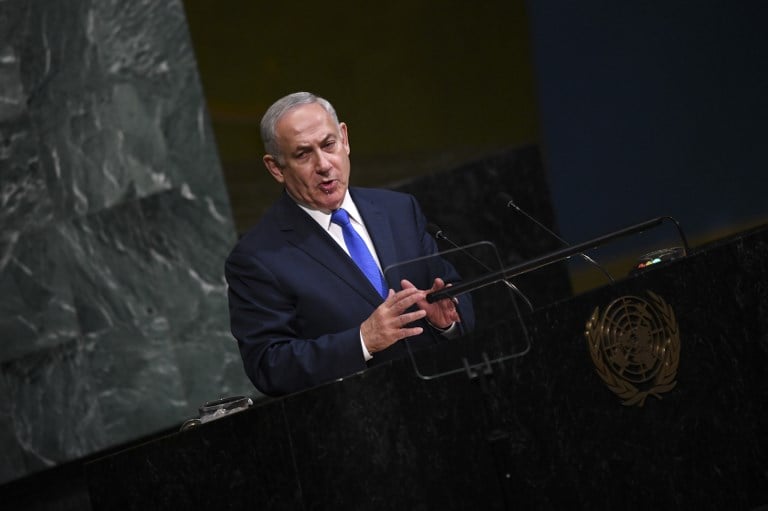
“We’re in the midst of a great revolution, a revolution in Israel’s standing among the nations,” he announced at the UN General Assembly earlier this month.
“We have many friends,” he said Monday at a Jewish New Year’s toast for employees in his Jerusalem office.
And yet just three days later, Interpol overwhelmingly supported a resolution immediately making the “State of Palestine” a full member of the organization. (75 countries voted “yes” and 24 countries voted “no,” with 34 abstentions.)
To join the world’s second-largest organization after the UN, the Palestinians needed two-thirds of all votes cast; they received three-quarters.
Jerusalem had vehemently lobbied against admitting Palestine to the organization, arguing that this could result in sensitive information being leaked to Palestinian terror groups. Israel also fears Palestinian efforts via Interpol to mount legal challenges, including travel bans and extradition requests, against Israeli army officers and others for alleged war crimes.
And yet, ignoring Israel’s widely recognized expertise in combatting terrorism, 75.7% of voting countries supported the resolution, which grants the Palestinians access to Interpol’s secure global police communications network, and all the other perks of full-fledged members.
For Israel, this was another bitter diplomatic defeat, reminiscent of 2011, when UNESCO admitted the State of Palestine; or 2012, when Palestine became a non-member state at the UN General Assembly; or 2015, when the Palestinians joined the International Criminal Court.
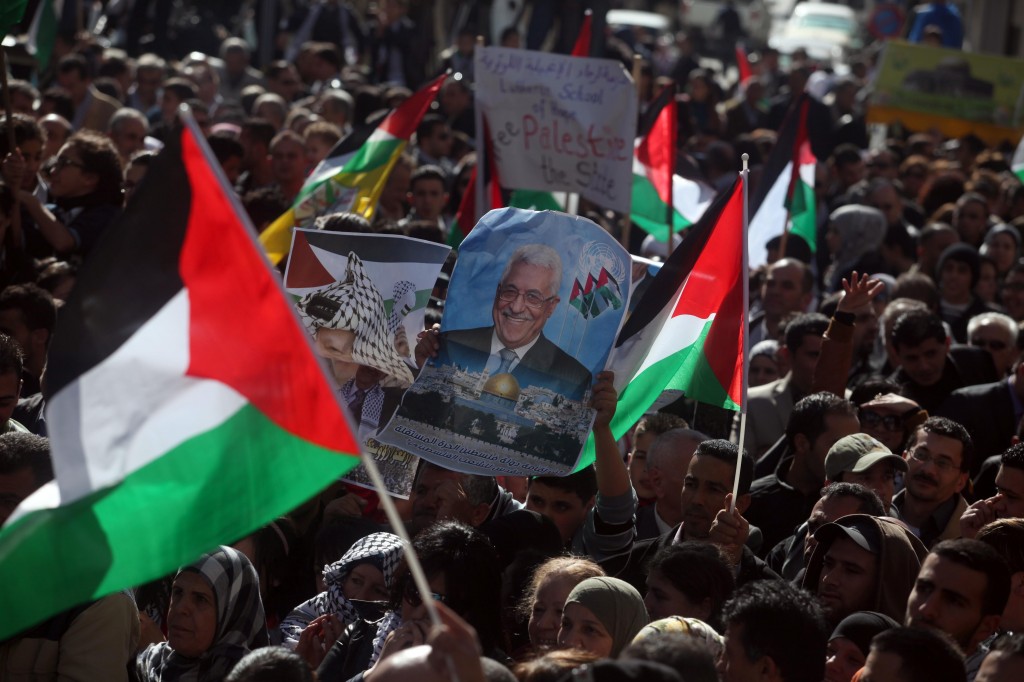
These are not isolated incidents: each step toward statehood sets another precedent and prepares the ground for the next one.
In order to join Interpol, for instance, a country requesting membership is asked to declare “if it is a member of other intergovernmental organizations and, in particular, if the country is a Member of the United Nations or an Observer State recognized by the United Nations.”
Palestine’s election to Interpol is a particularly painful setback for Netanyahu’s vision of Israel’s ever-improving standing in the world, since it was determined through a secret ballot. Israel is thus unable to claim in this case, as it has after previously lost diplomatic battles, that many countries secretly support Israel but are still unwilling to do so openly.
While nothing will change on the ground as a result of Wednesday’s vote, it provides the Palestinian national aspiration with further international legitimacy. In the eyes of many governments across the globe, Palestinian statehood is inevitable, and they feel they need to vote accordingly in international forums.
The fact that a large majority of Interpol member states ignored Jerusalem’s requests does not contradict Netanyahu’s assertion that Israel is a “rising global power” that has much to offer the world. Indeed, the prime minister knows how to translate Israel’s security and hi-tech prowess into diplomatic capital — relations with Africa, Asia, Latin America and even some European countries have dramatically improved in recent years.
The nations of the world want to do business with Israel, now more than ever. This has the potential to sway countries’ voting patterns in international bodies, and here and there one can see harbingers of change.
But so far, Netanyahu’s strategy of “economic diplomacy” has failed to make a significant dent on the Palestinians’ automatic majority in international bodies. Whether it’s UNESCO, the UN Security Council, the UN Human Rights Council or, now, Interpol, when it comes to the Palestinians’ aspiration for statehood, Israel stands no chance.
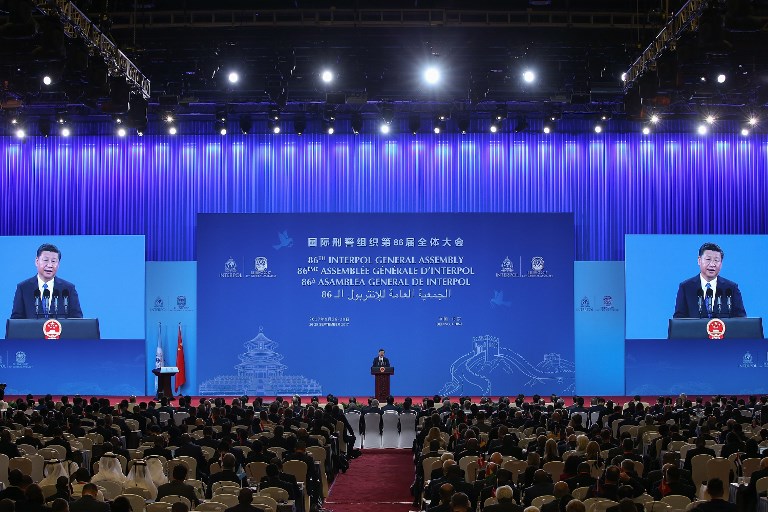
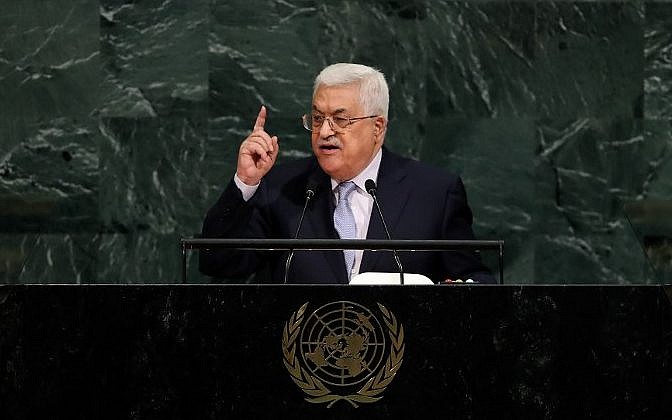
The 75 delegates at Interpol’s annual General Assembly in Beijing who voted in favor of Palestine’s membership were probably motivated less by a deep appreciation of Mahmoud Abbas’s Palestinian police, and rather more by their desire to make a statement: the Palestinians deserve a state of their own, they likely reasoned, and therefore we cannot in good conscience vote against them.
More than anything else, Palestine’s admission to Interpol can be understood as the international community telling Netanyahu that the two-state solution remains the only viable blueprint for the future of the Israeli-Palestinian conflict.








The Times of Israel Community.