

Israel inks deal to link electricity grid with Cyprus, Greece via undersea cable
Energy minister hails initial agreement on 1,200-kilometer EuroAsia Interconnector; says it’ll allow ‘electricity backing’ from Europe in emergencies, will boost solar power use
 Add ToI as a Preferred Source on Google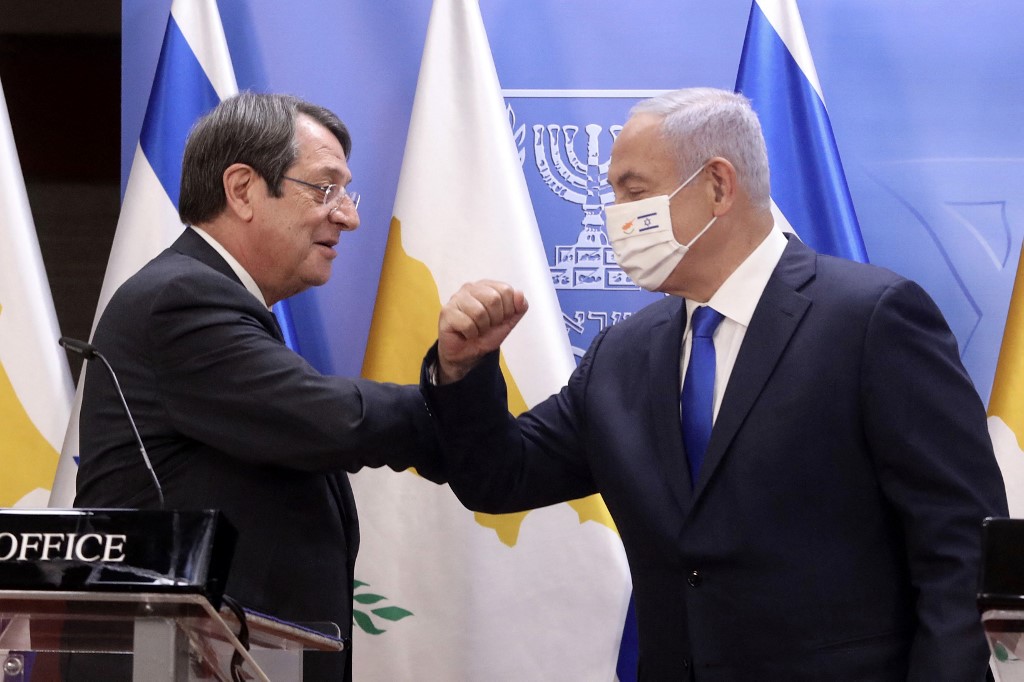
NICOSIA, Cyprus — Israel, Cyprus and Greece on Monday signed an initial agreement on laying the world’s longest undersea power cable linking their electricity grids.
The memorandum of understanding on the 1,200-kilometer (745-mile) EuroAsia Interconnector was signed in Nicosia by Energy Minister Yuval Steinitz and his Cypriot counterpart Natasa Pilides, while Greece’s Kostas Skrekas joined them by videoconference.
The three ministers, in a joint statement, said they agreed “to promote cooperation to examine the possibility of planning, as well as the potential development and implementation of the project.”
It was a “major step forward” in integrating renewable energy sources, they said, without giving cost estimates.
Steinitz said it would allow Israel “to receive electricity backing from the power grids of the European continent in times of emergency and… significantly increase reliance on solar power generation.”
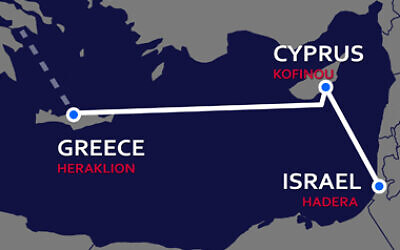
The project aims to connect the electricity grids of Israel, Cyprus, and Crete in Greece through a 2,000-megawatt undersea cable.
The first phase is expected to be operational by 2025, linking the three countries to energy grids in Asia and Europe, said Pilides.
The European Commission had acknowledged it as a key “Project of Common Interest,” making it eligible for EU financing.
The power cable would boost “energy security” for Europe and end the isolation of Cyprus as the only non-interconnected EU member state.
Israel, Greece and Cyprus have forged a regional alliance based on energy as the three countries also aim to explore and exploit natural gas resources.








The Times of Israel Community.