

Israeli companies prepare to rush into South Sudan
Hundreds of infrastructure, agricultural and telecommunication firms are ready to do business in the world’s newest country, as soon as it gets its house in order
 Add ToI as a Preferred Source on Google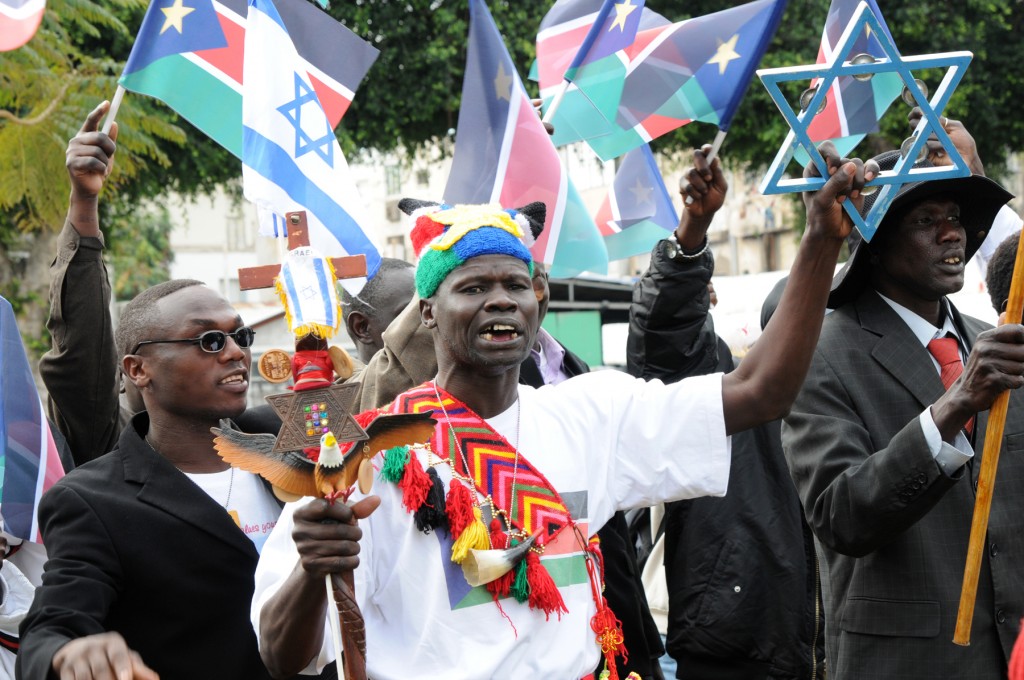
Hundreds of Israeli companies are readying to seek a stake in Africa’s youngest country — South Sudan — just as soon as things stabilize there, according to Samuel Shay, who heads an organization dedicated to increasing business ties between Israel and South Sudan. “I get five or six calls from companies a day looking to do business in South Sudan, but unfortunately I have to tell them that things are not quite calm enough there yet,” Shay said in an interview.
But he expects the situation to quiet down later this year; and when it does, some 500 to 600 Israeli companies will rush in, offering to better the lives of South Sudanese with water, agriculture, communications, and infrastructure projects. And while there has been some activity already, most of it is on hold, at least for now.
While Israel has been active diplomatically and economically in Africa for decades, South Sudan is different, said Shay. “Many people raised their eyebrows as the Israeli flag waved during the independence celebrations in South Sudan last July, but the truth is that Israel and the people of South Sudan have had a strong relationship for years. Israel helped the southern Christian rebels in their struggle against the northern Muslims between 1955 and 1972,” said Shay, “and continued aiding them in their war of independence, which ended recently.
“As a result, I believe that Israeli companies will have a huge advantage over companies from the US, China, France, and other countries that have sent agents looking to build projects there,” Shay added. “The South Sudanese people are very grateful to Israel, both for its help over the years and for the fact that Israel was one of the first countries to recognize the new state.”
Last year, in cooperation with the new South Sudanese government, Shay established the Republic of South Sudan Development organization, which helps promote projects and investments in the country. Shay, who has been involved in business development in African countries for several years, was one of the first Israeli entrepreneurs to approach the South Sudanese with an agricultural project — the establishment of a major fish farm and processing plant, which will ship fish products around the world. Based on his involvement with that project, Shay became an Israeli “point man” on South Sudan affairs, and today gets calls from companies in a wide variety of industries seeking advice on how to make a go of it in the young country.
Unfortunately for Shay and the enterprising entrepreneurs seeking a new hot market, those plans are on hold due to ongoing fighting between many of the country’s ten tribes. “Unfortunately the local leaders are still working out power-sharing issues with the federal government, so right now the situation isn’t so safe for businesses,” Shay said. He expects that to change soon, though; elections are tentatively scheduled for the summer, and it’s likely that several rebel leaders who have been fighting government corruption will be elected, thus calming the turmoil, he believes.
One Israeli company that is not waiting for new elections is Amos Spacecom, which launches and manages satellites for phone, television, and Internet communications. The company held talks several weeks ago with South Sudan’s minister of Telecommunications and Postal Services, Maj. Gen. Madut Biar Yel. Yel came to Israel to meet with Communications Minister Moshe Kahlon, whose office said in a statement that “the State of Israel is looking forward to working alongside the new State of South Sudan to assist in the growth of its infrastructure for the future. I believe that international cooperation on the ministerial level represents an excellent start.”
While that start has been apparently delayed, Shay said, he has no doubt that South Sudan will be a major growth area for Israeli agriculture and infrastructure companies in the coming years.









The Times of Israel Community.