

Israeli plasma filter promises cutting-edge solution to life-threatening bleeds
ClearPlasma device gets rid of anti-clotting proteins in blood that can endanger trauma victims or surgery patients, researcher says, marking rare advance in oft-overlooked field
 Add ToI as a Preferred Source on Google
Reporter at The Times of Israel
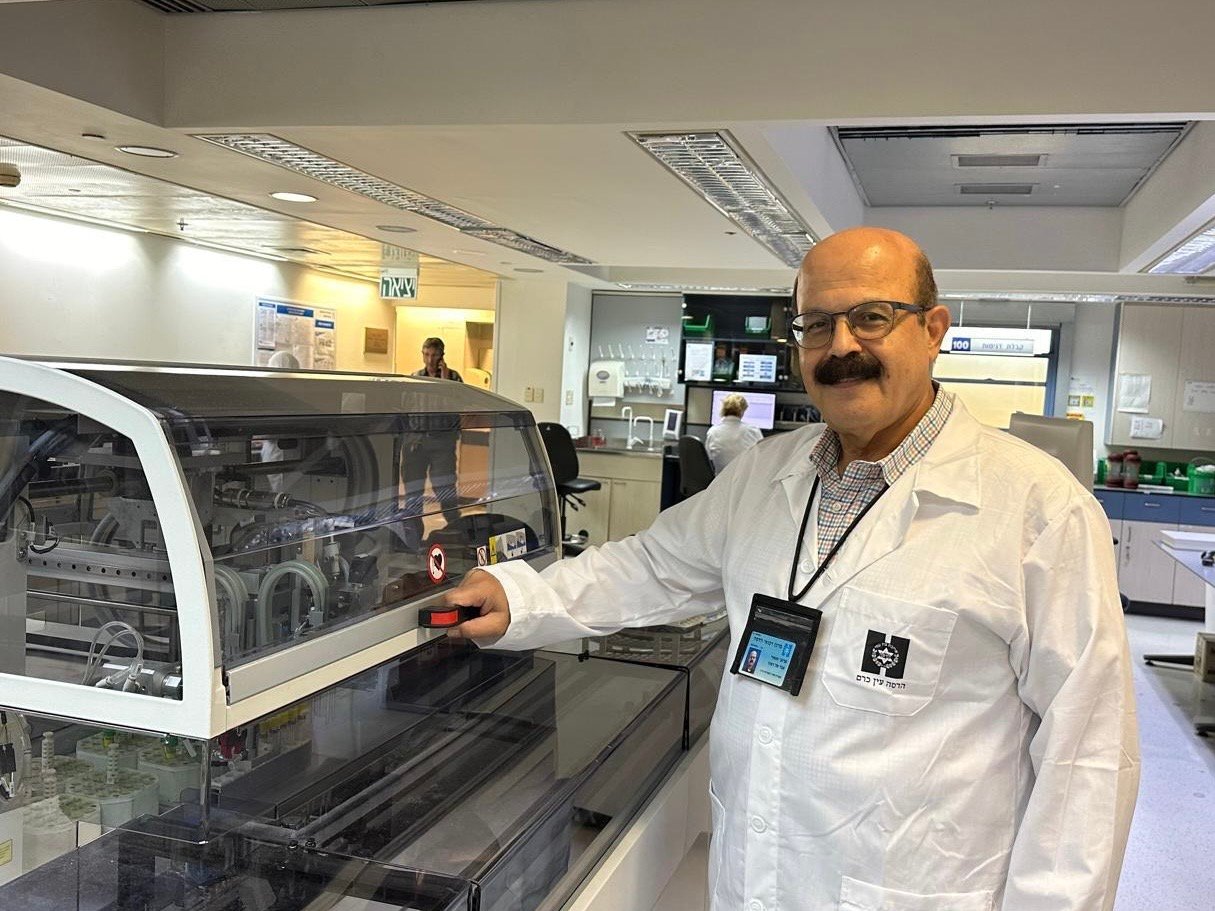
An Israeli researcher says he has developed a novel medical solution for treating acute cases of life-threatening bleeding as a result of injury or other medical emergencies.
ClearPlasma, a small device that can be attached to a bag of donated plasma, filters it to remove clot-dissolving proteins that are naturally present in the liquid, helping patients form stable clots and stop bleeding quickly, according to Prof. Abd Al-Roof Higazi, who developed the device with his Nazareth-based biotech company PlasFree.
“When a person suffers from massive bleeding — following an accident, surgery, or trauma — the goal is first and foremost to stop the bleeding,” said Higazi, director of the Department of Clinical Biochemistry and Laboratory Division at Hadassah Medical Center, speaking to The Times of Israel by phone.
To keep them from bleeding out, patients are often given donated plasma. However, this plasma also contains plasminogen and tPA, proteins that act against blood clotting.
“The treatment itself is very simple,” Higazi said. “You give a patient plasma, but before it reaches them, it passes through a small filter. That’s it. But the effect is life-saving.”
Dr. Shmuel Banai, director of the Division of Cardiology at Tel Aviv University Medical Center, who is not connected to the project, told The Times of Israel that when it comes to blood transfusion, medical practitioners are faced with something of a paradox. “You want the blood to remain fluid so you can give a transfusion to the patient, but once the blood with these two proteins are in the body, they stop clotting and make the bleeding continue,” he said.
Banai was bullish on the new device, saying it appeared to be an “elegant solution” to the problem.
The ClearPlasma device uses chromatography, a laboratory technique that separates the components of the blood. The two proteins that dissolve clots are then removed seconds before the plasma enters the patient’s body.
The device has already been tested in clinical trials involving 200 patients in hospitals in Israel, Italy, Poland and the Czech Republic. Higazi said patients using the device required fewer plasma units, needed fewer red blood cell transfusions, showed lower risks of massive bleeding, and exhibited no side effects.
PlasFree recently received approval from the Health Ministry to market the device in Israel.
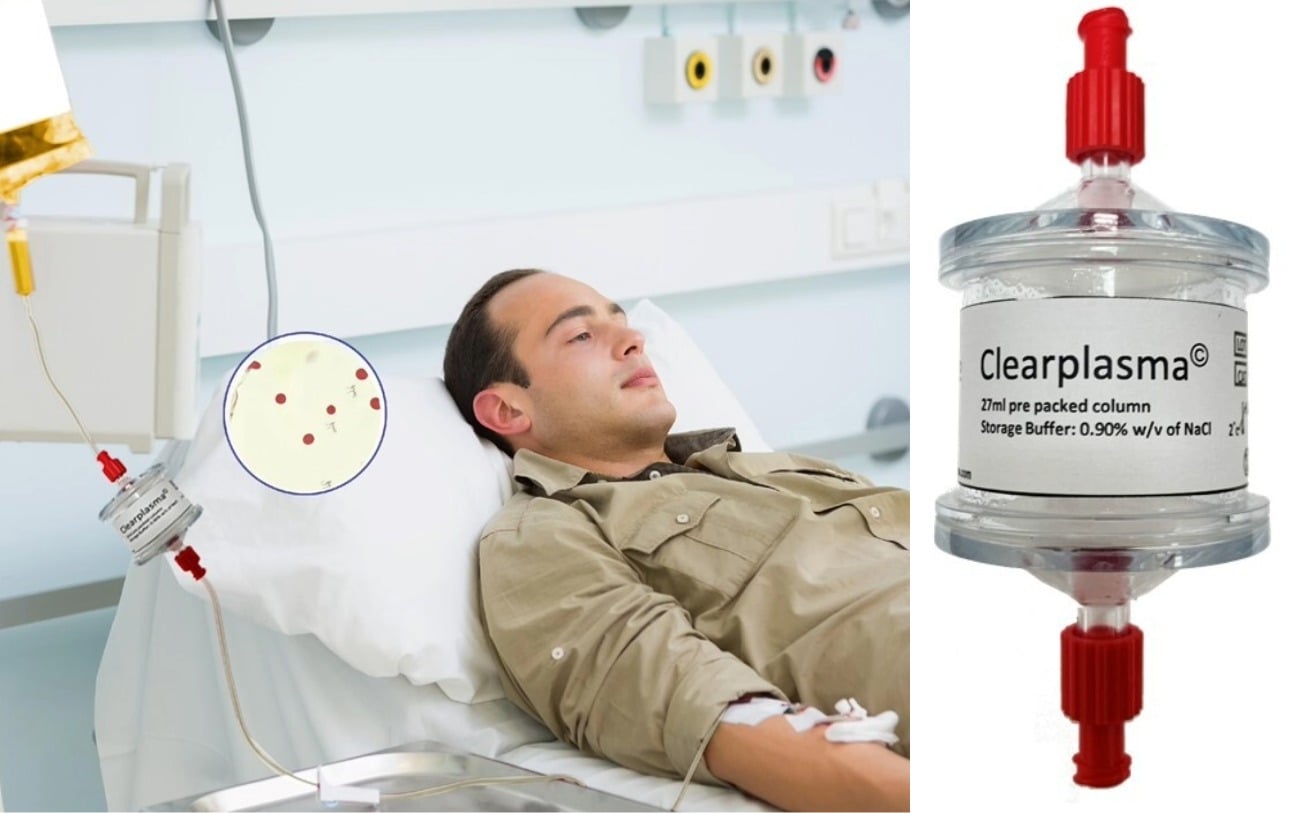
An illustration of the Clearplasma device. (Courtesy/Hadassah Medical Center
The company, which receives funding from the European Union, is also readying to seek approval for the product on the continent and is in talks with the US Food and Drug Administration for a large-scale trial in America.
Bleeding edge
Bleeding is one of the most urgent and deadly challenges in medicine. Blood loss is the leading cause of death among people under 45 worldwide, whether the cause of the trauma was an assault, an accident, an emergency surgery or battlefield injury.
According to Higazi, the issue is often overlooked by a medical community that focuses much of its attention on cancer, heart attacks and strokes. Successful innovations have been few and far between, with some treatments that were developed over the years discontinued due to harmful side effects.
“We don’t have very successful medications to stop bleeding,” he said. “This kind of approach is the first in the world.”
Until recently, the last major breakthrough had come in 1965, when Japanese husband and wife researchers Drs. Utako and Shosuke Okamoto developed tranexamic acid. The drug, which remains the primary treatment to control bleeding by first responders or battlefield medics, helps blood to clot, and has helped to reduce heavy bleeding after surgery, childbirth or trauma. But it too can come with significant side effects, including the risk of thrombosis, which is the formation of a blood clot inside a blood vessel or the heart.
“And since then, we’ve had no new approaches,” Higazi said. “Some drugs were tried but withdrawn due to kidney toxicity. What we are doing now is truly different.”

There have also been some recent advances in field transfusions of blood and plasma, and researchers have invented various clotting agents and glues, but these are largely still in the early stages of development.
“I have been working in coagulation and fibrinolysis for more than 25 years, and on this project about nine years,” Higazi said. “People often die in car accidents, wars, and shootings because of loss of blood. These are healthy people. If we can save them, we give them a whole lifetime ahead of them.”










The Times of Israel Community.