

Israeli startup aims to revolutionize security screening with AI-powered weapons scanner
Scanary says its radar-based tech, developed by a former radar engineer of Iron Dome, can screen 25,000 people per hour to detect threats in stadiums, transit hubs and airports
 Add ToI as a Preferred Source on Google
Sharon Wrobel is a tech reporter for The Times of Israel
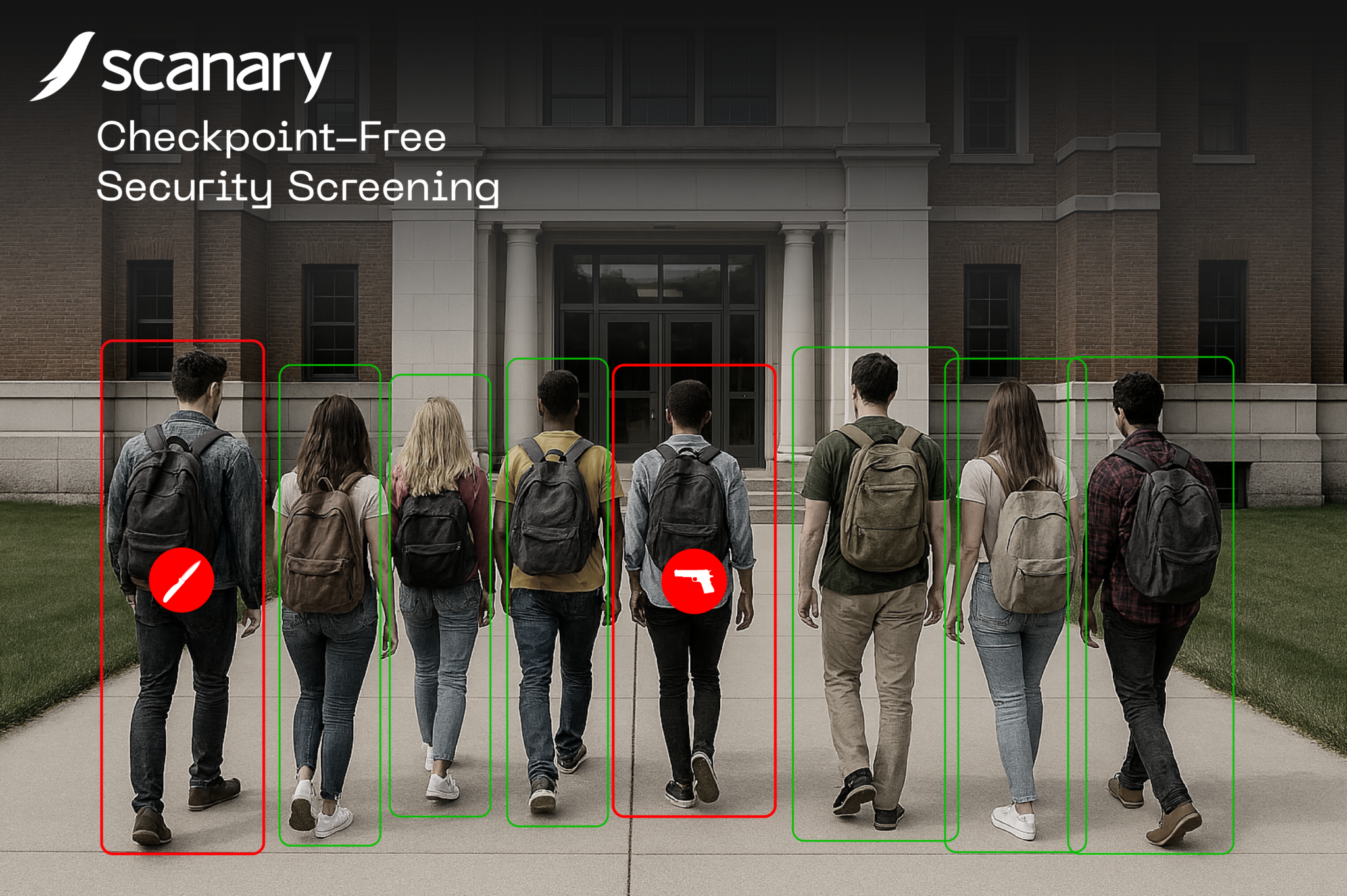
Security at publicly crowded places, from busy airport terminals to open-air venues and stadiums, is one of the main bottlenecks for long lines, delays and disruptions.
Asking individuals to stop, remove some of their clothing and belongings, and pass walk-through security scanning stations impedes traffic flow in airports and other highly populated venues, such as stadiums, shopping malls, bus and train stations, and schools.
What if you could significantly reduce the time and hassle it takes people to arrive at their seats at a mass venue, such as a concert or a sports stadium, from the moment they park their car, while ensuring public safety? This is the goal of Israeli startup Scanary.
The Tel Aviv-based startup came out of stealth this week with a mass security human screening system led by Dr. Gideon Levita, a former chief radar engineer at Rafael Advanced Defense Systems, where he helped develop Israel’s Iron Dome air defense system as well as the Trophy system designed to protect tanks and other armored vehicles from missiles and rockets.
The idea for the startup originated in developing technology to help prevent terror attacks in open spaces, venues and transportation hubs, which were more frequent in the 1990s in Israel.
The patented radar-based screening technology vows to secure crowded places such as airports, stadiums and shopping malls without the need to stop visitors at tedious checkpoints, having them remove shoes and belts, and take out phones or keys, as is the case today.
“Current security screening methods are simply not working well enough,” Scanary CEO and co-founder Ronen Yashvitz told The Times of Israel. “There are growing challenges in public spaces like airports, terminals, retail centers and transportation hubs, on how to detect threats effectively without disturbing people’s movements and without infringing privacy or the experience.”

“Checkpoints at airports or other transportation hubs often cause delays and frustration, and worst of all, they still at times miss the threats,” the serial entrepreneur added.
Scanary’s AI-powered system is designed to detect concealed weapons and other non-metallic threats in crowded public spaces, with the ability to screen 25,000 individuals per hour as they are moving around, the startup said.
“By combining AI, advanced imaging, augmented reality and computer vision, we enable threat detection from a distance — without stopping people, without creating lines, and without compromising privacy,” said Yashvitz, a former 8200 military intelligence officer. “The idea is that people won’t need to go through any gated checkpoints in the future when entering crowded public venues.”
Founded in 2024, Scanary uses spatially deployed radar sensors to generate dozens of high-resolution 3D electromagnetic scanning images of an individual from different angles. The AI platform, powered by algorithms, can determine an object’s shape and identify its material, such as metal, plastic or liquids. The system can be seamlessly integrated into existing security infrastructure, such as CCTV cameras.
“The system deploys two sensors that face each other from a distance of up to 10 meters (33 feet) to detect concealed weapons even if they are beneath clothes or in pockets on the human body,” Yashvitz explained. “That creates a scanning area of 200 square meters.”
“Once a person enters the scanning zone, it triggers the radar, and as the person walks, 10 images per second, per person are generated,” he said.
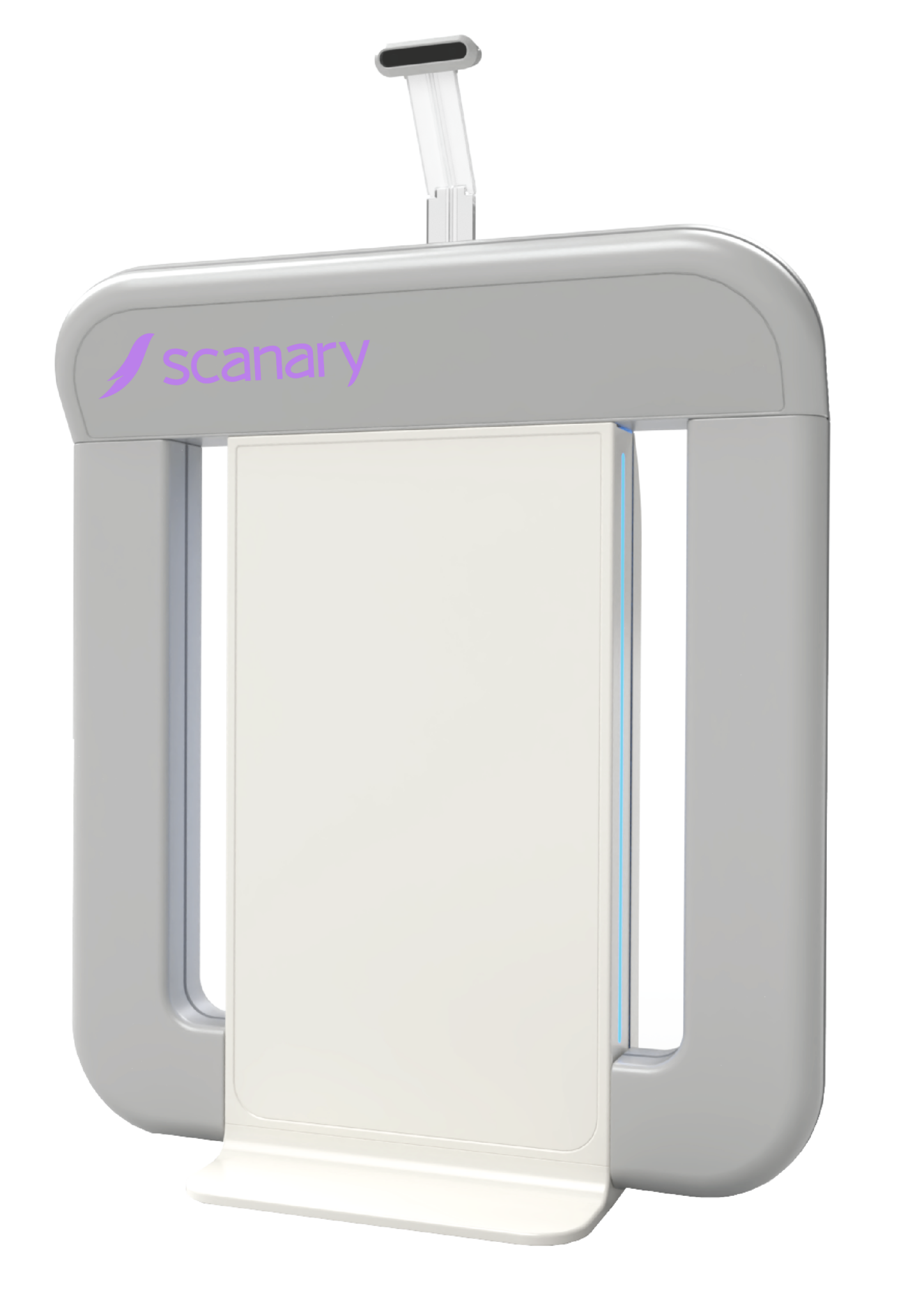
Yashvitz noted that scans are completed in less than two seconds. The AI-powered object classification system is trained to distinguish between common personal items such as phones or keys, and dangerous weapons and items, in order to reduce false alarms.
Once a dangerous item is identified, an immediate alert is sent to security personnel. The system is tailored to identify firearms — handguns and rifles — improvised explosive devices (IEDs), and pyrotechnics such as flares and firecrackers, as well as knives and other sharp items.
“I believe that we will be a game changer in identifying pyrotechnics with the rise in the use of pyrotechnics at soccer matches, which present a real risk to fans in stadiums,” said Yashvitz. “The technology allows us to shape the system for other public safety use cases, including schools in the US, in the future.”
To operate the system, security guards use a tablet or smartphone, which generates immediate visual alerts when it detects a threat. The alert includes a video clip of the suspect, marking the type of threat — such as gun or knife — and pinpointing the physical location on the body (e.g., pockets, inside a shoe).
Unlike facial recognition or traditional body scanners, it does not collect visual images or reveal body shape, and it operates without biometric tracking, to comply with personal privacy regulations, Yashvitz emphasized.
Scanary, which currently employs 10 people, including AI and algorithm experts from the medical device industry, has raised $3.5 million from several angels and investors.
The startup has been granted CE and GDPR certifications in Europe and is currently pursuing regulatory approval in the United States.
Scanary is tapping into a global security screening market, which is expected to grow from $9.92 billion in 2025 to $13.8 billion by 2030, according to a report by Markets and Markets. Demand has been driven by the increase in gun violence and the rise in terror threats and attacks at crowded public spaces, including schools and campuses, airports, and transportation hubs such as subway train stations.

One of the companies that has made headlines in the area of non-invasive AI-based screening technology is Nasdaq-listed Evolv Technologies Holdings. The company was investigated last year by the US Federal Trade Commission over allegations that it made false claims about the capabilities of its security screening system to detect weapons while ignoring harmless personal items.
Scanary still needs to showcase its technology. The startup is set to start pilot deployments of its mass scanning system in Israel in the coming weeks, with US-based pilots to follow.
“One venue for our pilot is an airport, and another is public transport, probably a train station in Israel,” said Yashvitz. “The main segment that we are looking at initially is public transport because there is currently no suitable technology that can scan that many people at the same time.”









The Times of Israel Community.