

Kibbutz Be’eri posts anguished video expressing hopes, fears for remaining hostages
Clip set to Yehudit Ravitz song ‘The Day After’ relays the long wait for those held captive; 102 were killed at kibbutz on Oct. 7, and 30 taken hostage; Hamas still holds 4 bodies
 Add ToI as a Preferred Source on Google
Jessica Steinberg, The Times of Israel's culture and lifestyles editor, covers the Sabra scene from south to north and back to the center

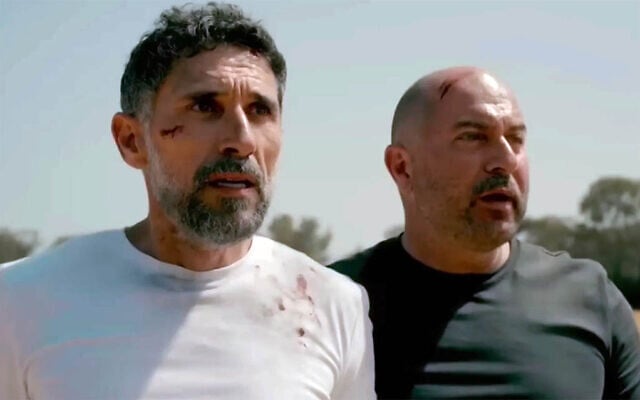
Kibbutz Be’eri, where Hamas terrorists murdered 102 people during their October 7, 2023, rampage — around one in ten residents — and kidnapped 30 to the Gaza Strip, has produced and posted an anguished video featuring freed hostages and family members of those killed and still held in captivity.
The video was filmed along the road to Be’eri, lined with pictures of the hostages, at the kibbutz itself, in Kibbutz Hazerim, where many Be’eri residents are currently living, and in other locations.
It was staged and produced by the kibbutz cultural director, Yael Ben Tzvi Gitai, and was first screened at a community ceremony on October 7, 2025.
The video, which is set to the Yehudit Ravitz song “The Day After,” features some of the freed hostages from Be’eri, including Ohad Ben Ami, Raz Ben Ami, Raaya and Hila Rotem, Alma Or and Emily Hand, and some of their family members, as well as families of those killed in captivity, Yossi Sharabi, Meni Godard, Dror Or and Sahar Baruch.
The bodies of Sharabi, Godard, Or and Baruch are still held in Gaza and are expected to be released home to Israel in the coming days.
The video and the song relate how hard it has been for these survivors to wait for their loved ones to be released home to a proper burial, as they seek a sense of closure and repair.
The piece includes familiar faces and imagery from rallies and protests over the last two years.
These include the Ben Ami daughters as they yelled for their parents’ release in November 2023 and again in January 2025; the Sharabi daughters and their mother, Nira Sharabi, who have waited to bury their father and husband, Yossi Sharabi, and Emily Hand, who was eight years old when she was taken captive, and is now two years older.

There is the face of released hostage Shoshan Haran, the Be’eri agronomist whose husband, Avshalom Haran, was killed as she, her daughter, grandchildren, son-in-law, sister-in-law and niece were taken captive, and her son, Yuval Haran, who fought for his family’s release.
There is former hostage Ohad Ben Ami, released in skeletal condition during the January-February 2025 ceasefire, and his wife, ex-hostage Raz Ben Ami, who fought for her husband upon her return home.

Some of those who are featured in the video chant several words of the Yehudit Ravitz song, which was composed in 1993, and was set to a 1957 poem by prolific twentieth-century poet Leah Goldberg:
“The green today is very green.
And the gray today is very gray.
And a bit of black, and no white in the city.
And the stormy today is very stormy.
And the past today is very past,
And a bit of future — no present in the air.
And still, it’s not easy to breathe, not yet easy
To think, against this twisted wind.
And it’s not at all simple — to wait.
The storm touches the eyelashes,
And every moment shatters into splinters.
But the green today is very green.”
“Many of us feel the tension between the heart’s deep longing for relief and the caution that comes with hope,” said Ofer Gitai, director of the Be’eri community at the October 7 ceremony. “The return of our fallen hostages — our friends whom we have been waiting so anxiously to bring home — stirs both the anticipation of closure and the pain of their loss.
The various teams in the kibbutz are preparing to continue surrounding the families and the entire community with care and support during these complex days,” Gitai added.







The Times of Israel Community.