

Lebanon enters a kidnapping frenzy
Shiite tribe captures 30 Syrians; Mecca conference ends with lip service on Syria; and the man who hid Saddam shares his experience
 Add ToI as a Preferred Source on Google
Elhanan Miller is the former Arab affairs reporter for The Times of Israel
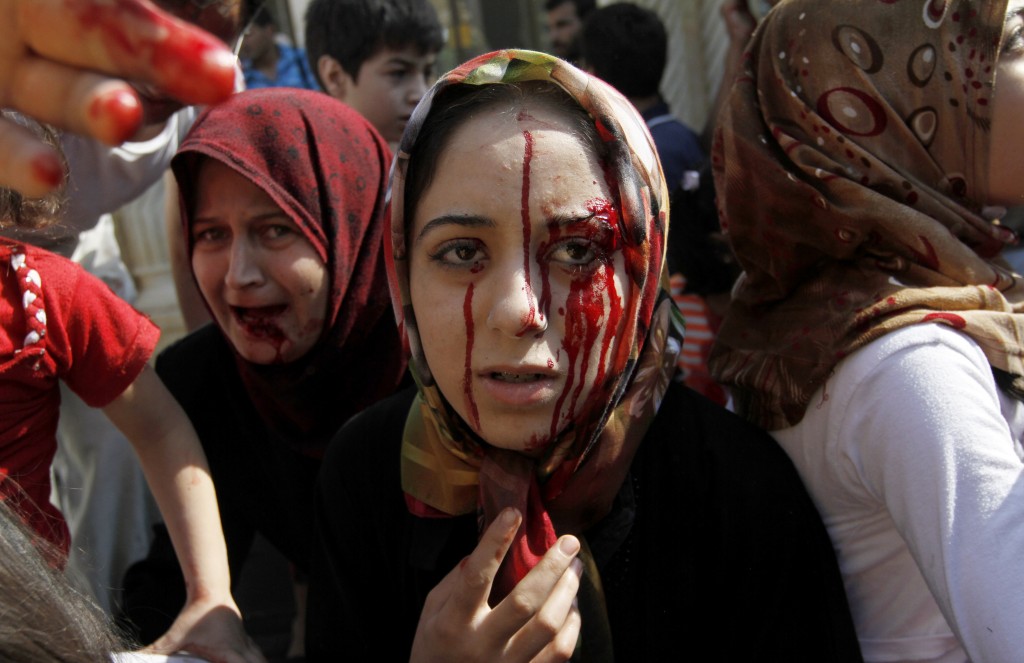
A Lebanese family has kidnapped a number of foreign nationals in an attempt to retrieve a relative held in Syria. The developments in Lebanon are leading headlines in Arab news Thursday.
“A battle of hostages is waged by ‘the military wing’ of a Lebanese family,” reads the headline of Saudi-owned daily A-Sharq Al-Awsat. The daily reports that the Shiite Miqdad family, residing in southern Beirut, has kidnapped 30 Syrian nationals and a Turk in an attempt to trade them for their family member, Hassan Miqdad, who was captured by the Free Syrian Army (FSA) Tuesday and has confessed to being a Hezbollah sniper sent to Syria with 1,500 other operatives to fight alongside Assad’s forces.
“The Lebanese state has lost control yesterday of the situation in Lebanon,” reads the opening sentence of the article.
“Lebanon enters a spiral of anarchy and chaos: Masked, armed men and the kidnapping of Syrians and a Turk,” reads the headline of London-based daily Al-Hayat, which deals extensively with Lebanese issues.
The article, which features a photo of masked men wearing military vests and holding AK-47s, states that “Lebanon has sunk yesterday into a situation of security, media and political anarchy as a result of the reactions to the kidnapping of Hassan Salim Miqdad in Damascus.
Meanwhile, the Syrian army bombarded the town of Azaz, near Aleppo, reportedly killing 4 Shiite Lebanese hostages kidnapped previously by the FSA and seriously injuring 7 others. The attack on Aazaz further inflamed emotions in Lebanon, particularly among the Shiite community.
‘Assad dead is better than Assad wounded,’ reads the title of an op-ed
“A Syrian family kidnaps Syrians, a Turk and a Saudi in Lebanon” reads the headline of London-based daily Al-Quds Al-Arabi, featuring a photo of a Syrian man clearing the debris of a bombarded home near Aleppo to rescue the people trapped underneath.
“Assad dead is better than Assad wounded,” reads the title of an op-ed by A-Sharq Al-Awsat columnist Abdul Rahman Rashed. Rashed writes that Western apprehension of toppling Assad for fear of what will come next is “a silly excuse,” since there are “technical and practical solutions” to ensure that the rebels receive superior weapons with minor risks of those weapons falling into the hand of Islamist extremists.
With Turkey refusing to set up a buffer zone in its territory, the only solution left is to arm the rebels in order to expedite Assad’s downfall, writes Rashed. That way, Turkey will avoid a direct diplomatic clash with Russia, Assad will fall, Syria will remain territorially intact and Iran will be faced with a fait accompli.
Buthaina Shhaaban, an adviser to President Assad, said during a visit to China that Syria is pleased with the Chinese and Russian positions “because they don’t behave like colonizers,” Dubai-based news channel Al-Arabiya reports.
Islamic summit comes to a close
The Islamic summit in Mecca came to a close Wednesday with a statement that condemned both Syria and Israel.
The conference voted on removing Syria’s membership from the Organization of Islamic Cooperation (OIC). It also called on Israel to implement international resolutions “including the return of refugees” and remove the siege from the Gaza Strip. The closing statement also supported full Palestinian membership in the UN.
‘Did the Mecca conference give Syria its fair share?’ The answer is not really
A-Sharq Al-Awsat editor-in-chief Tareq Homayed praises the call by Saudi King Abdullah to establish a center for interdenominational dialogue.
“Will this center end the clash between denominations? Of course not,” writes Homayed. It will, however, prove that Saudi Arabia’s support for the anti-Assad rebellion does not stem from sectarian motivations, he adds.
“Did the Mecca conference give Syria its fair share?” asks an article in Qatar-based news channel Al-Jazeera. The answer is not really. Although the conference blamed the Assad regime for the bloodshed, it did not adopt any of the requests by the Syrian National Council, namely a no-fly zone, or arming the Free Syrian Army fighting on the ground.
An interview with the man who hid Saddam
Saudi news website Elaph runs an interview Thursday with Alaa Nameq, the man who hid Iraqi President Saddam Hussein in specially-dug hole in the ground until he was captured by American forces on December 13, 2003.
Nameq, still enamored of the charismatic Iraqi dictator, is not talkative, writes Elaph. During his nine months in hiding, Saddam did not use the telephone, but read and wrote a lot. The Americans confiscated his poetry, says Namiq, who spent six months in Abu Ghraib prison following Saddam’s capture. Namiq says that the only visitors Saddam received during his period in hiding were his sons Uday and Qusay.
Nameq also recorded Saddam’s fiery speeches, in which he encouraged his supporters to continue fighting the Americans. Nameq tells the site that he was tortured by the Americans in prison, who used attack dogs and “deafening” rock music to try and find out where Saddam’s senior officials were hiding.




The Times of Israel Community.