

 From the Liveblog of
Monday, December 1, 2025
From the Liveblog of
Monday, December 1, 2025
Multiple coalition lawmakers bash Bismuth’s proposed ultra-Orthodox conscription bill
 Add ToI as a Preferred Source on Google
Sam Sokol is a former political correspondent at The Times of Israel. He was previously a reporter for the Jerusalem Post, Jewish Telegraphic Agency and Haaretz. He is the author of "Putin’s Hybrid War and the Jews"
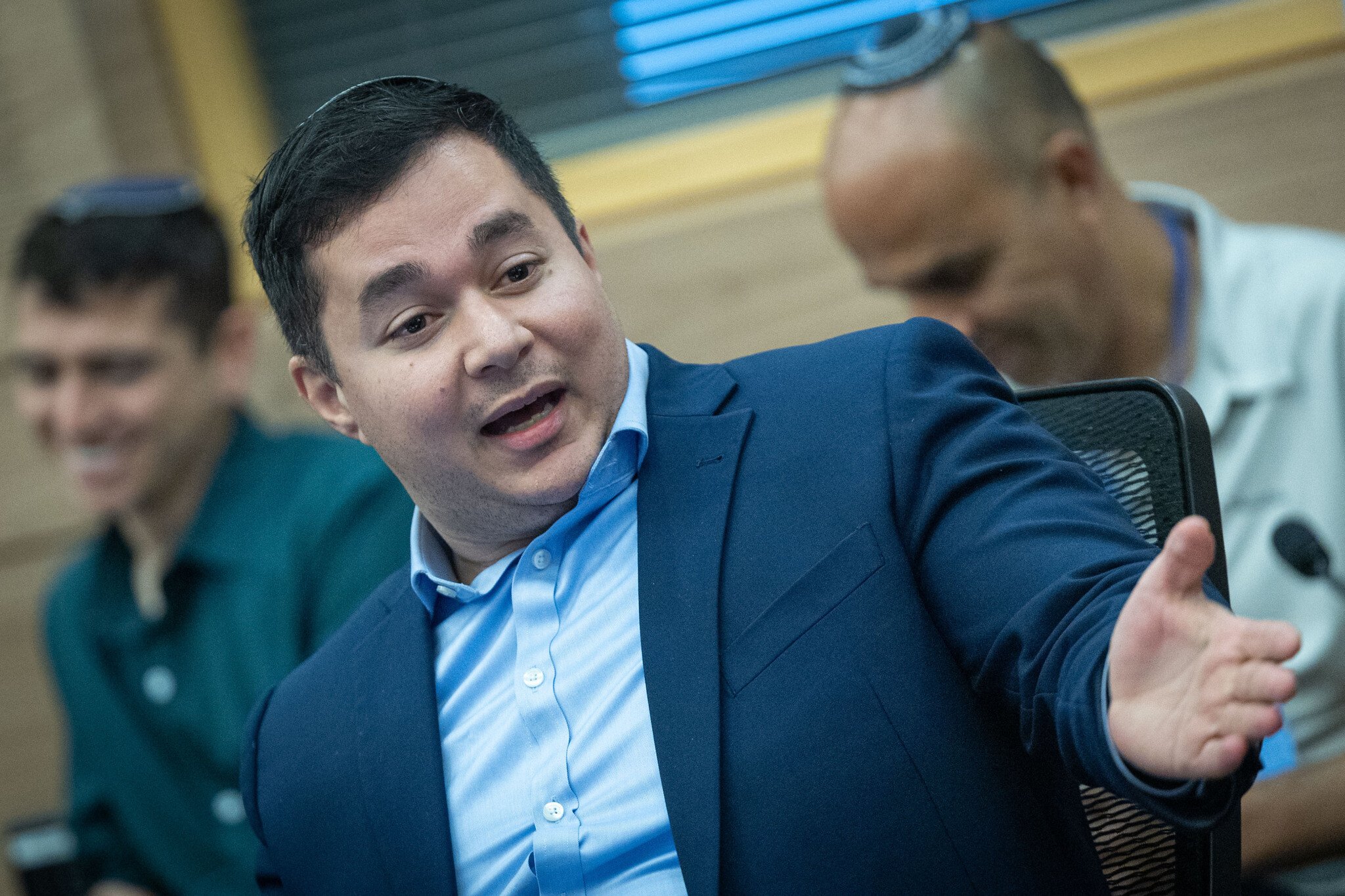
Multiple coalition lawmakers criticize Knesset Foreign Affairs and Defense Committee chairman Boaz Bismuth’s proposed bill regulating ultra-Orthodox conscription during a debate on the controversial legislation, warning that it will not pass review by the High Court of Justice and that they cannot support it as written.
Addressing the committee, Likud MK Dan Illouz reiterates his previously stated objections to the bill, arguing that without significant revisions “the law won’t be good enough, and it won’t bring the change we need in Israel, both from a security and from a social perspective.
“And in my opinion, you can’t call this a conscription law if we remove the existing sanctions that encourage enlistment,” he says. “You can’t call this a conscription law, and you can’t call it a conscription law and expand the definition of Haredim to include people who are no longer Haredi, people who are no longer part of the Haredi public.”
Fellow Likud MK Eliyahu Revivo declares that in its current form “there will not be a majority” in favor of the bill, and “not in the coalition either.”
The bill will not lead to a significant increase in the scope of recruitment and “many members of the Likud” will not vote “in favor of a bill supported by Arab faction votes,” he adds — referencing reports, denied by Likud, that it has sought out the support of the Islamist Ra’am party.
In addition, Likud MK Moshe Saada, who has previously called the legislation “toothless,” pushes back against Cabinet Secretary Yossi Fuchs’s claim that the bill will “recruit 23,000 Haredi soldiers within three and a half years,” arguing that this is impossible to guarantee because the bill does not set a quota for how many recruits will serve in combat roles.
While not opposing the idea of full-time yeshiva students receiving exemptions, Saada demands the bill incorporate language that state benefits be conditioned on military service, arguing that failing to do so will ensure that the bill does not pass judicial review.
Likud MK Yuli Edelstein argues that “the purpose of this law could be anything — apparently maintaining the coalition or something else — but it is certainly not recruitment.”
Religious Zionism MK Moshe Solomon tells Bismuth that “in its current form, it will be difficult for me to support this law, even though I greatly appreciate the work that has been done” and calls for him to go through the bill clause by clause and “be open to substantive feedback as well as wording suggestions.”
Bismuth, for his part, tells lawmakers during the hearing that those who vote in favor of his bill “vote for the future of the State of Israel.”
At least eight coalition lawmakers have expressed opposition to the bill, with several others considered likely to do so. In a tweet, Deputy Foreign Minister Sharren Haskel counts 10 definite opponents.
Outside the coalition, the United Torah Judaism party’s Hasidic Agudat Yisrael faction has also expressed opposition.









The Times of Israel Community.