

Live updates (closed)
 Add ToI as a Preferred Source on Google
The Times of Israel liveblogged Monday’s events as they unfolded.
Haredi rioters clash with police at march feting draft dodger released from prison

Ultra-Orthodox Jews take part in a parade for marking the release of a draft dodger who was released from military prison, November 30, 2025. (Chaim Goldberg/Flash90)
Ultra-Orthodox rioters threw rocks at police and lit trash cans during an unauthorized procession in Jerusalem to celebrate the release of a man who avoided military conscription from prison.
A crowd of ultra-Orthodox set out from Jerusalem’s Kikar Hashabbat to mark the release of Elazar Tzadok Kaufman, and blocked Shmuel Hanavi Road, clashing with officers, police say.
Officers made repeated requests to the crowd to leave, and after they refused, they used crowd dispersal methods to clear the road, police state.
Footage shows mounted cops and a water cannon being implemented against the rioters.
הפרת סדר בירושלים: אבנים יודו על שוטרים, פחים הובערו וכבישים נחסמו במסגרת תהלוכה לחגיגת שחרור עריק חרדי. מתפרעים חסמו את רחוב שמואל הנביא ולאחר קריאות לפיזור שלא נענו – כוחות משטרה פעלו לפזרם. צילום: דוברות המשטרה
(אלי הירשמן, חדשות 12) pic.twitter.com/HvEeNRmYyp
— חדר מלחמה (@waroomisrael) November 30, 2025
Trump says freeze on asylum decisions to last ‘a long time’

US President Donald Trump waves while boarding Air Force One at Palm Beach International Airport on November 30, 2025. (Jim WATSON / AFP)
US President Donald Trump says his administration intends to maintain a pause on asylum decisions for “a long time” after an Afghan national allegedly killed two National Guard members near the White House, killing one of them.
When asked to specify how long it would last, Trump says he had “no time limit” in mind for the measure, which the Department of Homeland Security says is linked to a list of 19 countries already facing US travel restrictions.
Trump confirms speaking to Venezuela’s Maduro amid tensions
ABOARD AIR FORCE ONE — US President Donald Trump confirms that he had spoken to Venezuelan leader Nicolas Maduro in recent days, amid a massive US military buildup in the Caribbean and tensions with Caracas.
When asked to elaborate, after reports that the call included discussions about a possible meeting or amnesty conditions if Maduro were to step down, Trump only says: “I wouldn’t say it went well or badly. It was a phone call.”
Likud minister: Trump may sanction senior judicial officials if Herzog doesn’t pardon Netanyahu
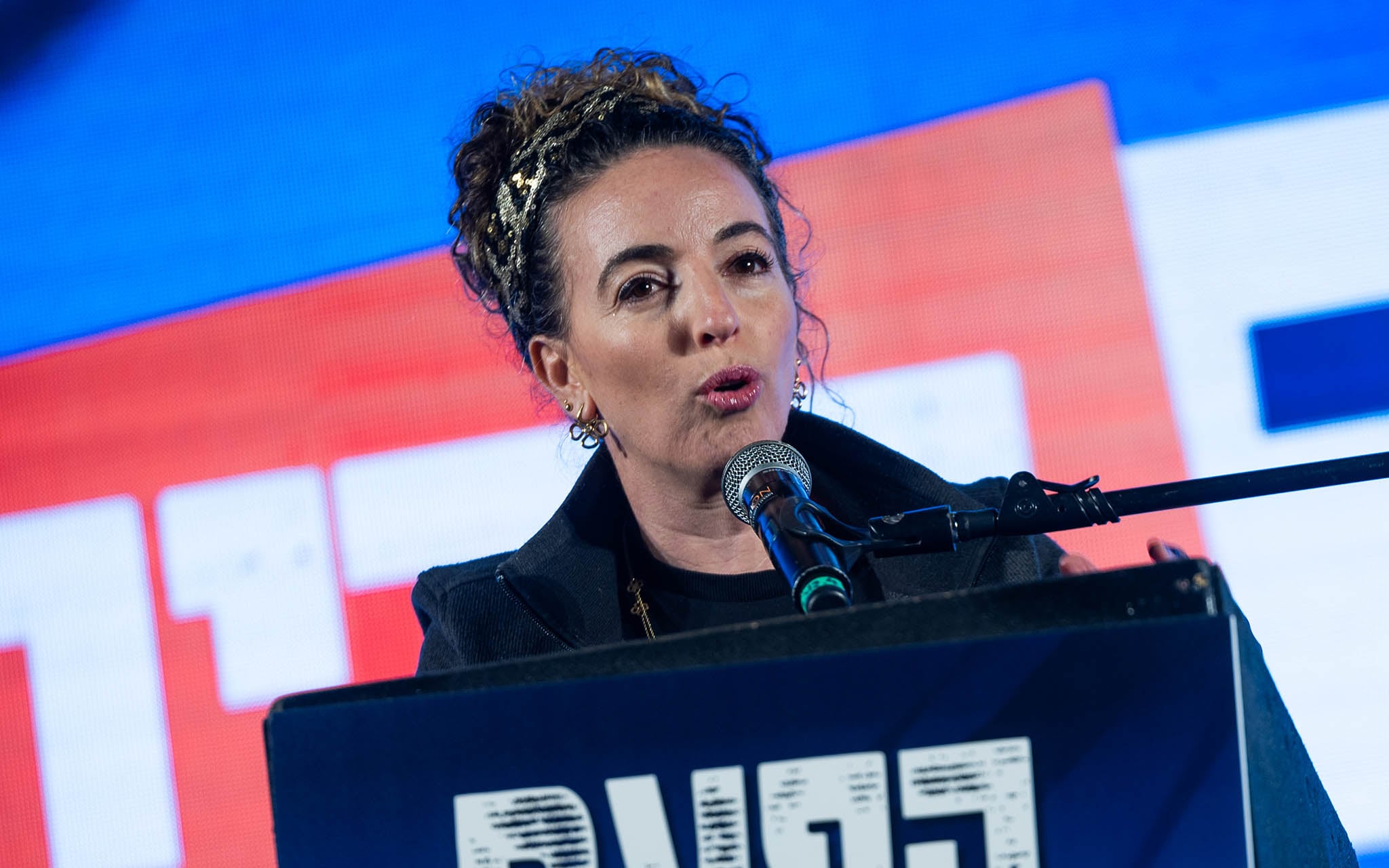
Environmental Protection Minister Idit Silman attends a rally in Jerusalem for the re-establishment of Israeli settlements in the Gaza Strip, on February 27, 2025. (Yonatan Sindel/Flash90)
Environmental Protection Minister Idit Silman suggests US President Donald Trump may intervene and possibly sanction senior Israeli judicial officials if President Isaac Herzog does not pardon Prime Minister Benjamin Netanyahu.
“President Trump said it in a very clear way, I think, and he expressed his opinion and sent a letter,” Silman, a member of the ruling Likud party, tells i24 news, referring to the commander-in-chief’s insistence that Herzog should pardon the prime minister.
“And I think now, President Herzog needs to rise to the occasion and make a decision for the good of the security of Israel. And if President Herzog doesn’t know how to act for the benefit of Israel and for the nation, for brotherhood and unity, I think that, yes, President Trump may take additional steps and will be forced to intervene,” she says, adding that “may include sanctions and other things on senior officials in the judicial system.”
Netanyahu submitted a formal pardon request to Herzog on Sunday, seeking an end to his long-running and unprecedented corruption trial.
Report: Herzog to visit New York this week; no meeting planned with Trump

President Isaac Herzog and his wife Michal at the gravesite of the Chabad Rebbe, in Queens, New York City, January 26, 2025. (Kobi Gideon/GPO)
President Isaac Herzog will visit New York this week to take part in two Jewish community forums, the Ynet news site reports.
Herzog will attend a convention at Yeshiva University, and for the American Zionist Movement, the report says.
Associates of the president tell Ynet that there is no meeting planned with US President Donald Trump.
Argentina had detailed info on Mengele during stay in country, declassified documents show
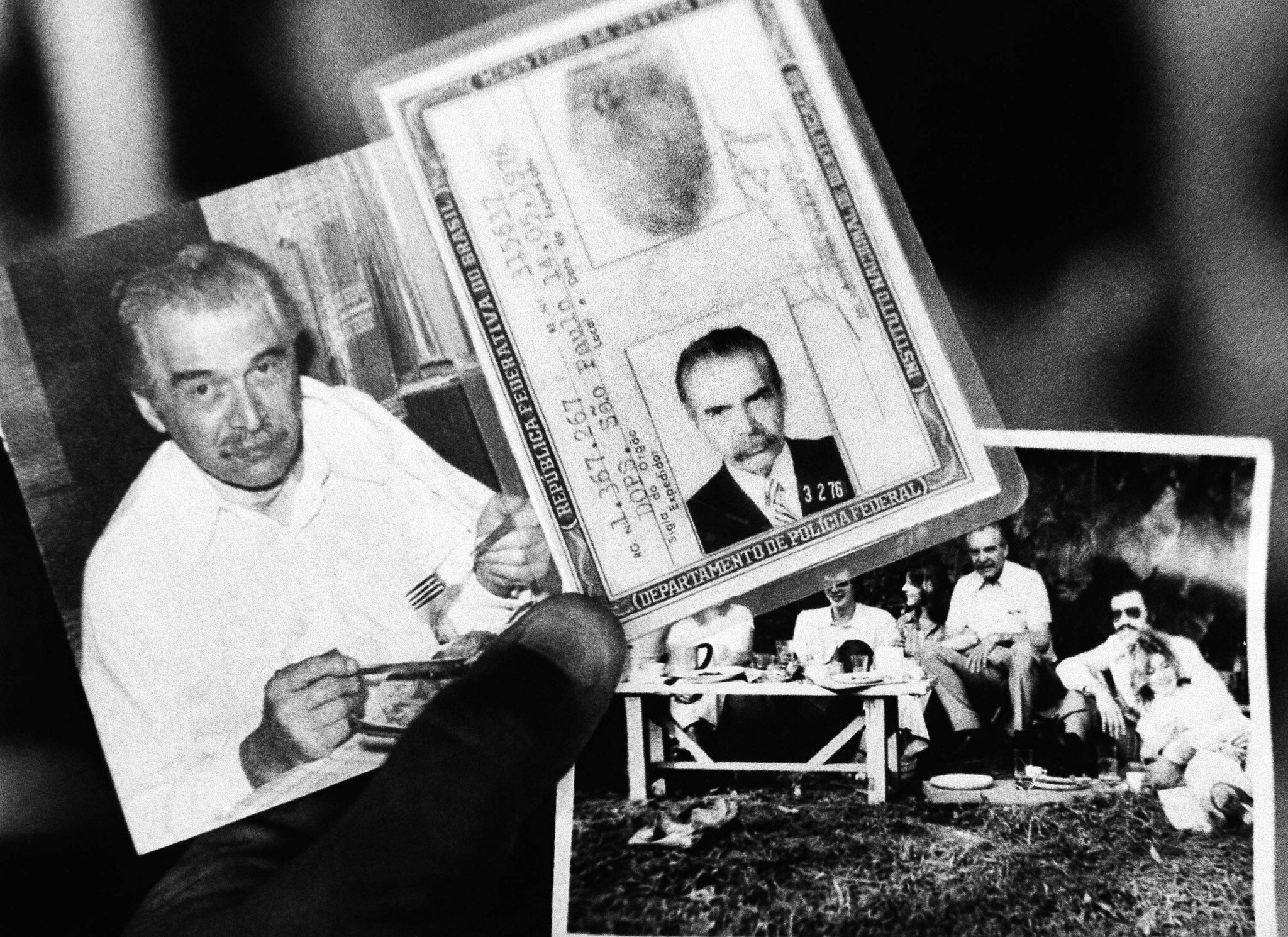
A federal police agent holds two photos and the identity card found in the house in which the man believed to be Nazi war criminal Josef Mengele lived, June 7, 1985. Photo on left shows Mengele eating. Photo on right shows Mengele during a picnic with friends and in the middle is the identity card. (AP Photo)
The Argentine government maintained a detailed dossier on Nazi war criminal Josef Mengele, who led a relatively carefree life in the country until he fled to Paraguay in 1959, declassified documents reported on by Fox News show.
Mengele, notoriously known as the “Angel of Death” for the brutal medical experiments he conducted on prisoners at Auschwitz, initially entered the country on a fake Italian passport in 1949 under the name Helmut Gregor, according to the documents.
The Argentine government at the time was known to harbor Nazis who fled Europe following the war, and by the 1950s, it was aware Mengele was in the country, an analysis of the documents by Fox shows.
Mengele felt so comfortable in Argentina that in 1956, he began to use his real name. He asked for his original birth certificate from the West German Embassy in Buenos Aires, and requested his ID cards be remade as such.
A memo from Argentina’s Federal Coordinate Directorate in 1960 demonstrates the country’s knowledge of Mengele’s identity, citing his explanation of why he used a fake name to enter the country when he came forward to change his official identity.
“Thus, it appears that, while maintaining his real name, the subject belonged to the SS Society… during which time he demonstrated being nervous, having stated that during the war he acted as a physician in the German SS, in Czechoslovakia, where the Red Cross labeled him a ‘war criminal.’ He had studied Anthropology and was known to the Justice in the courts of Nuremberg, especially regarding the study of skulls and bones, but that union was considered a crime in National Socialist Germany,” a translation of the document says.
By the time the memo was written, Mengele had fled to Paraguay after international pressure increased on Argentina to extradite him, following a request by West Germany.
Around 1960, he arrived in Brazil, where he lived until his death in 1979. According to the documents, Argentine intelligence tracked the Nazi throughout his life in South America.
Police raid dozens of locations, arrest suspected senior crime family members
Police raid the locations of dozens of suspected senior members of organized crime families in northern Israel and the West Bank.
Dozens of suspects believed to be members of the Abu Latif and Hariri crime families were arrested in the operation this morning, which came after a year-long undercover investigation, Israel Police says.
Suspects allegedly ran protection rackets, involving extortion, shootings, and murders, police say.
Indonesia flood death toll jumps to over 500 — disaster agency
The death toll from floods and landslides in Indonesia has risen to 502 with 508 missing, a tally published by the national disaster agency shows.
The latest figure brings the death toll from flooding across Indonesia, Thailand, Malaysia and Sri Lanka to more than 1,000.
IDF to test rocket sirens in Gaza border communities
The military’s Home Front Command says it will carry out a test of rocket sirens in several Gaza border communities today.
Sirens will sound at 9:05 a.m. in Ein Hashlosha; at 10:05 a.m. in Tzohar and Ohad; at 11:05 a.m. in Mivtahim, Amioz, and Yesha; and at 1:05 p.m. in Avshalom.
In the case of an actual attack, the sirens will sound twice, according to the IDF.
Pope to visit religious sites in Lebanon as he encourages Christians not to abandon region

A rainbow rises behind a billboard featuring Pope Leo XIV in Beirut, Lebanon, Monday, December 1, 2025. (AP Photo/Hassan Ammar)
Pope Leo XIV plans to visit holy sites in Lebanon today that draw Christians and Muslims as he seeks to recognize the importance of the country’s religious pluralism and also send a message to Christians not to abandon the region.
Over the past few decades, hundreds of thousands of Christians have left parts of the Middle East for good, driven by wars and the rise of Muslim extremists.
Leo arrived in Beirut yesterday after a visit to Turkey that began on November 27. He challenged Lebanon’s political leaders to be true peacemakers and put their differences aside as he sought to give Lebanon’s long-suffering people a message of hope and bolster a crucial Christian community in the Middle East.
A Muslim-majority country where about a third of the population is Christian, Lebanon has always been a priority for the Vatican as a bulwark for Christians throughout the region.
Despite the many crises that have battered the small nation, Christians in Lebanon continue to enjoy religious freedom and significant political influence. Since the country gained independence from France in 1943, a power sharing agreement has been in place in which Lebanon’s president is a Maronite Christian, the parliament speaker is a Shiite Muslim and the prime minister is a Sunni Muslim.
This makes Lebanon the only Arab country with a Christian head of state.
Leo is scheduled to visit the Tomb of St. Charbel Makhlouf and the Shrine of Our Lady of Lebanon today, both north of the capital. The sites draw large numbers of Christian and Muslim visitors and pilgrims.
Bennett: Government ‘betraying the serving public’ on Haredi conscription

Former prime minister Naftali Bennett speaks during the Israel Information Technology Conference in Ness Ziona, May 5, 2025. (Avshalom Sassoni/ Flash90)
Former prime minister Naftali Bennett accuses the government of “betraying the serving public” after the cabinet voted unanimously on Sunday to authorize Defense Minister Israel Katz to mobilize up to 280,000 reservists, only hours ahead of a scheduled Knesset debate on its proposed bill to regulate ultra-Orthodox conscription.
“Last night, members of the government approved in a WhatsApp [vote] hundreds of thousands of call-up orders for reservists who show up again and again to defend the country and are collapsing under the burden — and not a single minister objected. Today, the government is beginning to advance the most anti-Zionist law in the history of the state. This law will not pass. The people of Israel will fight for the reservists who have fought for them for two years,” Bennett declares in a statement.
The legislation, as currently laid out, would continue to grant military service exemptions to full-time yeshiva students while ostensibly increasing conscription among graduates of ultra-Orthodox educational institutions, but with actual enforcement in question. It is set to be debated in the Knesset Foreign Affairs and Defense Committee in preparation for the second and third readings necessary for it to pass into law.
“Time and again, the government is betraying the serving public. In the next government, there will be a new equation: whoever serves the state, the state will serve them,” Bennett says.
“There shall not be two countries here! We will embrace our Haredi brothers all the way to the IDF induction center, replace the [Haredi] party education system with an Israeli-Haredi education system, and work to allow Haredim dignified employment and livelihood. Only in this way will we create a full partnership for the sake of the State of Israel,” the former premier declares.
Knesset committee discussing Haredi draft exemption legislation after bill’s reveal
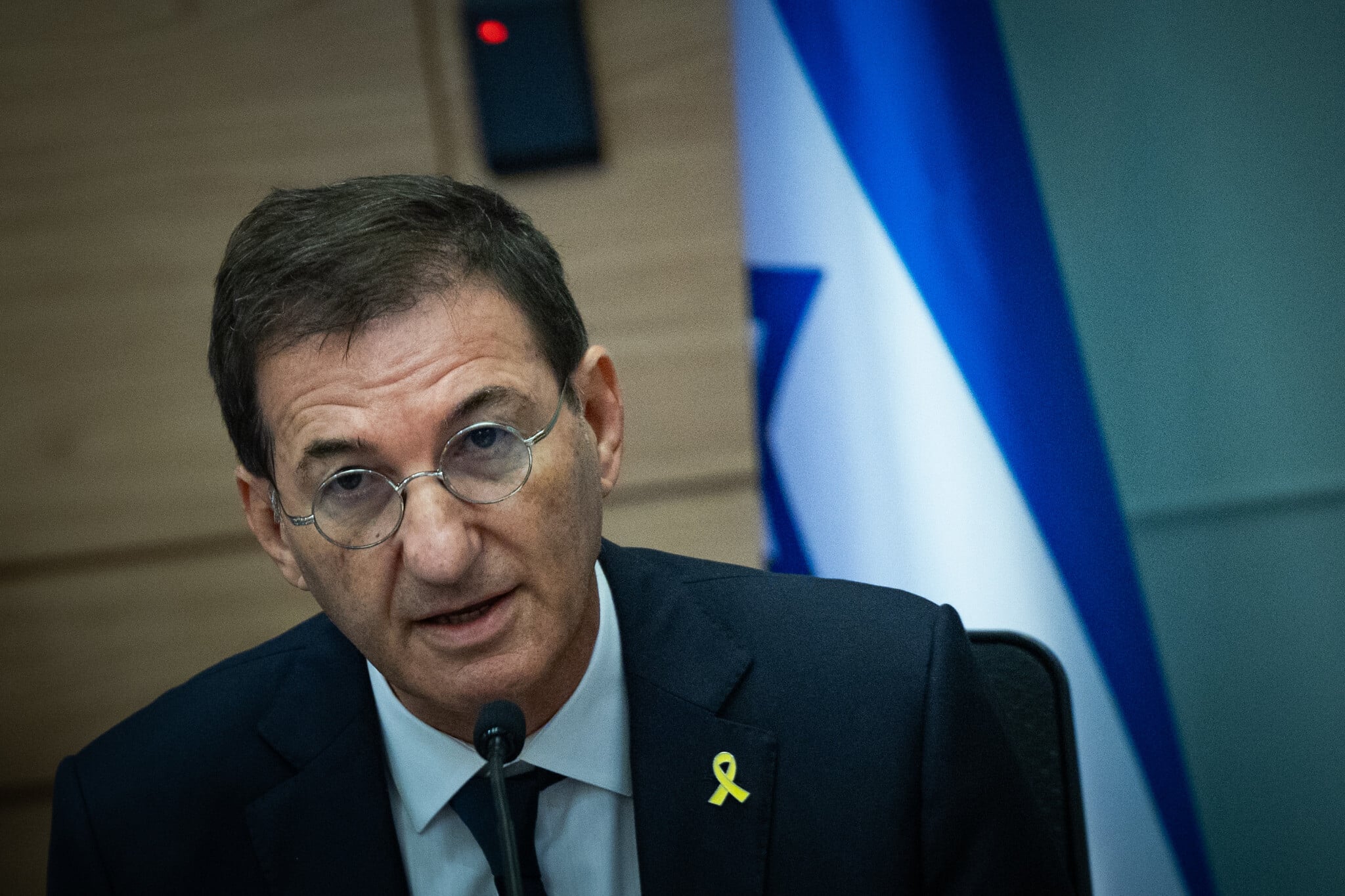
MK Boaz Bismuth, chair of the Foreign Affairs and Defense Committee, leads a committee meeting at the Knesset, September 17, 2025. (Yonatan Sindel/Flash90)
The Knesset Foreign Affairs and Defense Committee resumes discussions on the government’s controversial bill to regulate ultra-Orthodox conscription, paving the way for its continued advancement toward the final two readings necessary for it to become law.
The session comes days after panel chairman Boaz Bismuth (Likud) released the text of the long-awaited bill on Thursday, prompting criticism from within coalition ranks, opposition figures and legal advisers, including the committee’s legal adviser, Miri Frenkel Shor.
The legislation, as currently laid out, would continue to grant military service exemptions to full-time yeshiva students while ostensibly increasing conscription among graduates of Haredi educational institutions.
However, the current bill removes various provisions from a previous version that were intended to ensure that those registered for yeshiva study are actually studying, and cancels all sanctions on draft evaders when they turn 26.
Many ultra-Orthodox young men are widely believed to register for yeshiva but not actually study, yet the yeshivas continue to be funded for their ostensible presence, and the young men evade military service.
For the past year, Haredi leadership has pushed to pass a law largely keeping its constituency out of the Israel Defense Forces, after the High Court ruled that decades-long blanket exemptions from army duty traditionally afforded to full-time Haredi yeshiva students were illegal.
Some 80,000 ultra-Orthodox men aged between 18 and 24 are currently believed to be eligible for military service, but have not enlisted. The Israel Defense Forces has said it urgently needs 12,000 recruits due to the strain on standing and reserve forces caused by the war against Hamas in Gaza and other military challenges.
In a statement, the opposition’s Yesh Atid party declares that its members in the committee “will continue to lead the fight this morning against the disgraceful Haredi draft-dodging law.”
“Yesh Atid will stop the law. It will not happen,” the party pledges.
Palestinians say man killed by IDF fire near ceasefire line in Gaza City
A Palestinian has been killed by IDF fire near the Gaza ceasefire line in Gaza City’s Zeitoun neighborhood, Al Jazeera reports, citing field medics.
The so-called Yellow Line bisects the neighborhood. It’s unclear which side of the ceasefire line the report is referring to.
IDF to receive ‘Iron Beam’ laser interceptors at the end of the month
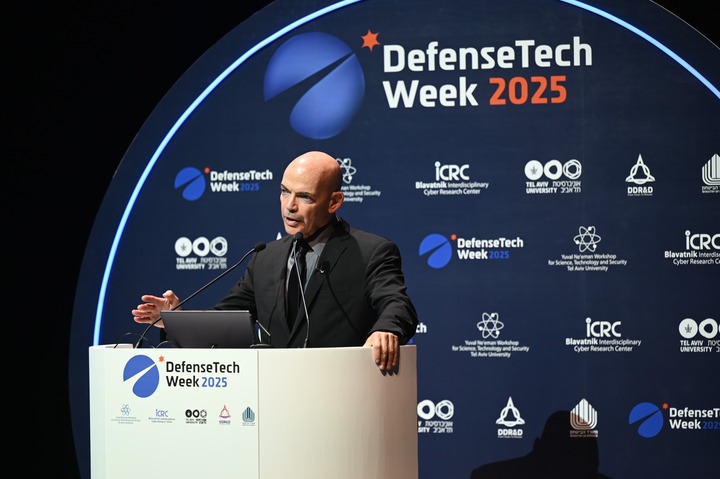
Defense Ministry DDR&D head Danny Gold speaks at the DefenseTech Summit at Tel Aviv University, December 1, 2025. (Defense Ministry)
Israel’s high-powered laser interception system, dubbed “Iron Beam,” will be handed over to the military at the end of the month, the head of the Defense Ministry’s Directorate of Defense Research and Development says.
Speaking at the DefenseTech Summit, DDR&D head Danny Gold says that “with development complete and a comprehensive testing program that has validated the system’s capabilities, we are prepared to deliver initial operational capability to the IDF on December 30, 2025.”
“The Iron Beam laser system is expected to fundamentally change the rules of engagement on the battlefield. Simultaneously, we are already advancing the next-generation systems,” he says.
The Iron Beam has been in development for over a decade. During the current war, a lower-powered version of the system was used by the IDF to shoot down Hezbollah drones launched from Lebanon.
In September, the ministry declared the system operational after completing development and final tests.
The Iron Beam is not meant to replace the Iron Dome or Israel’s other air defense systems, but to supplement and complement them, shooting down smaller projectiles and leaving larger ones for the more robust missile-based batteries such as the David’s Sling and Arrow systems.
As long as there is a constant source of energy for the laser, there is no risk of it ever running out of ammunition.
Lapid: Disgraceful Haredi draft law is ‘a betrayal of our fighters’
Opposition Leader Yair Lapid accuses Knesset Foreign Affairs and Defense Committee chairman Boaz Bismuth (Likud) of betraying Israel’s fighters during a heated debate on the government’s controversial bill regulating ultra-Orthodox conscription.
“Boaz, what you have put on the table here is a disgraceful draft law. It is a betrayal of our fighters. It is a betrayal of everyone who fought and sacrificed in the last two years. More than 920 dead, more than 20,000 wounded, and you are betraying them today,” Lapid declares.
“Look around you. The prime minister is not here, the defense minister is not here, Deri is not here. Nobody wants to touch this law. They are leaving you alone to bear the disgrace,” he says.
Lapid argues that “anyone who says there is a contradiction between studying Torah and military service is disparaging the Torah study” of religious soldiers such as Hadar Goldin and others who have fallen in the service of the state, “and everyone who believed and still believes that defending the people of Israel is a holy mitzvah.”
“The army has said here time and again that it needs [the Haredim], but the corrupt [politicians] are selling the security of the country to the draft dodgers,” he declares.
“I tell you as the leader of the opposition and as the leader of Yesh Atid, I promise that this will not pass. We will stop this disgrace. Either here, or in the plenum, or in court, or in the streets, but we will stop this law. I give my word here in front of the cameras: This will not pass,” Lapid says.
Parents of fallen soldiers slam government’s proposed enlistment bill

A Foreign Affairs and Defense Committee meeting at the Knesset in Jerusalem, December 1, 2025 (Yonatan Sindel/Flash90)
Parents of fallen soldiers slam the government’s proposed bill on ultra-Orthodox conscription at the Knesset Foreign Affairs and Defense Committee.
Haggai Luber, whose son, Sgt. Yehonatan Luber, was killed in battle in the south of Gaza in December 2023, calls on “members of the coalition that I voted for” to “completely” oppose the law, warning that “whoever votes in favor, we will hold them politically accountable.”
Declaring that he is “fighting my son’s fight,” Luber argues that the proposed law is “dangerous from a security standpoint, from a social standpoint, and from a leadership standpoint” because it “doesn’t even begin to meet the army’s needs.”
“In this committee, you know exactly what challenges the State of Israel faces, and you are not providing what the army requires. For reasons we don’t understand, you are harming the security of the state,” he continues, arguing that the bill discriminates between Israelis.
“If you’re born into the right sector [of society] your life is much safer in Israel,” he says. “If you’re born into the wrong sector, you will be obligated to go [to reserve duty] again and again and again,” he says, insisting that coalition lawmakers are not showing leadership in an election year.
Itzik Bunzel, whose son Amit also fell in Gaza, directs his ire toward the Haredim, challenging United Torah Judaism MK Meir Porush on why they should be exempt from military service.
“Do you think my children should risk their lives and give everything? You can’t even look me in the eyes,” he says.
“I buried my son Amit, while in this country there are Haredim walking around the streets doing nothing. Not those who are truly studying Torah. It’s time for you to demand equality. Those who study should study, and those who don’t should put on a uniform and enlist in the army. And at the same time, why aren’t you talking about Arabs in the State of Israel? About the sector that lives at our expense while our children are crawling in the sand?” he asks.
The vast majority of Arab Israelis are not drafted and do not enlist or carry out national service.
Red Cross and Hamas search for hostage remains in Jabalia — reports
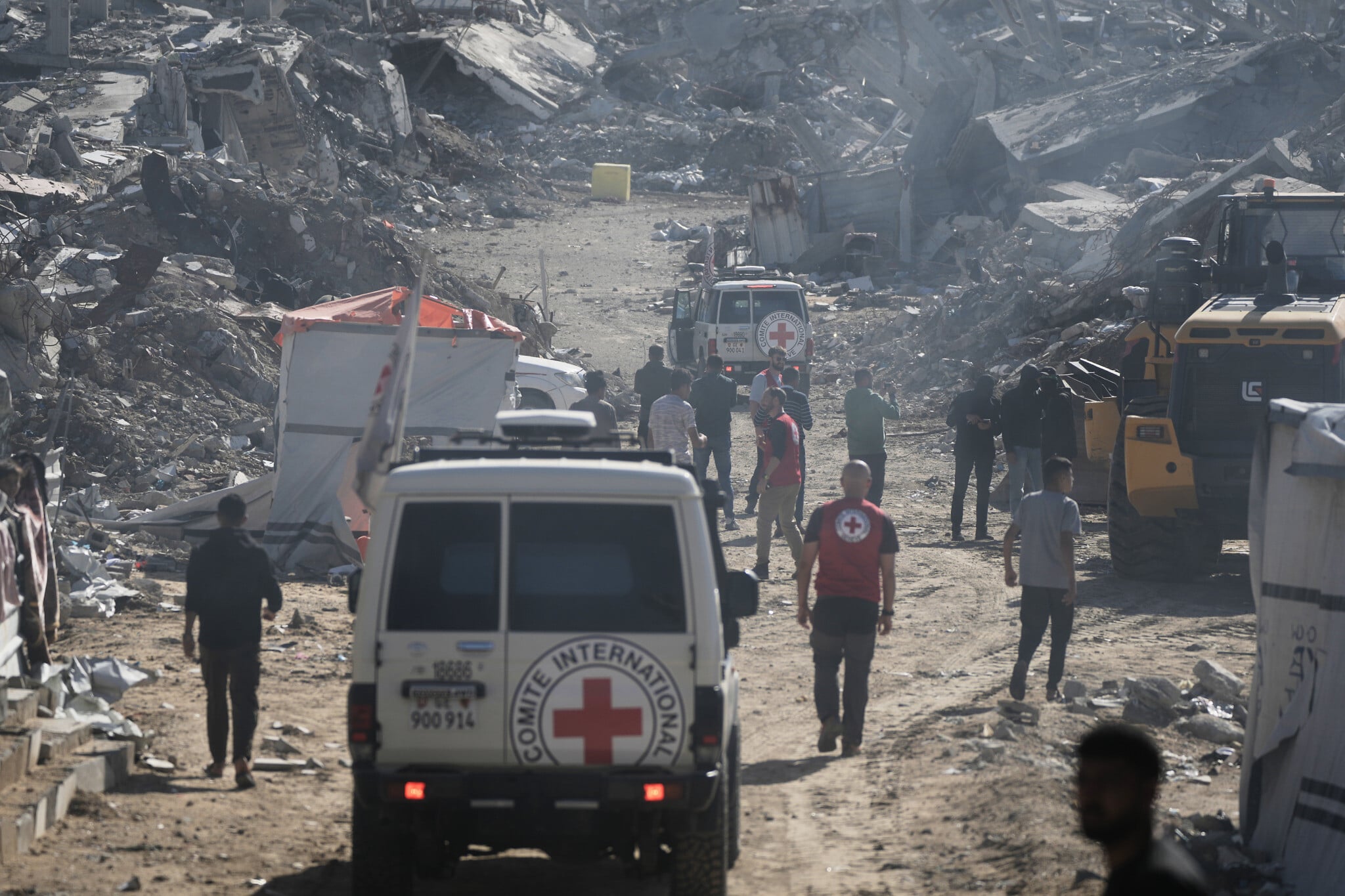
Teams from the Red Cross and Hamas’s military wing have commenced a search for the remains of an Israeli hostage in northern Gaza’s Jabalia refugee camp, Arabic media, including the Hamas-affiliated Quds News Network, report.
The camp is mostly on the Hamas-controlled side of the Gaza ceasefire line.
The remains of two hostages killed on October 7, 2023, are still in Gaza: Israeli policeman Master Sgt. Ran Gvili, killed fending off the Hamas-led invasion in Kibbutz Alumim; and Sudthisak Rinthalak, a Thai national killed in Kibbutz Be’eri, where he worked in agriculture.
عاجل| عناصر القسام يلتقيون الآن بطواقم الصليب الأحمر في مخيم جباليا شمالي قطاع غزة للبدء بالبحث عن جثة أسير إسرائيلي. pic.twitter.com/6SNKmSrjm4
— شبكة قدس الإخبارية (@qudsn) December 1, 2025
Family of missing 11-year-old Haymanut Kasau meets police minister

National Security Minister Itamar Ben Gvir (R) speaks to the parents of missing 11-year-old girl Haymanut Kasau, alongside police officers and a representative of the Ethiopian Israeli community on November 30, 2025. (Office of Itamar Ben Gvir)
The family of Haymanut Kasau, a missing 11-year-old girl who disappeared over a year ago, met with National Security Minister Itamar Ben Gvir yesterday, his office says.
The minister, who oversees police, says he plans to speak to Shin Bet chief David Zini in hopes of enlisting the internal security agency to assist in police searches for the missing Ethiopian-Israeli girl, after she disappeared from an absorption center for new immigrants in Safed.
For more than a year now, Kasau’s family has been urging authorities to ramp up efforts to find their daughter and classify her as kidnapped, rather than missing.
In March, her parents were joined by a group of protesters outside the Knesset demanding police intensify their investigation, alleging that the muted outcry over her disappearance is due to her Ethiopian origin.
Edelstein: Purpose of new Haredi conscription bill is ‘certainly not recruitment’
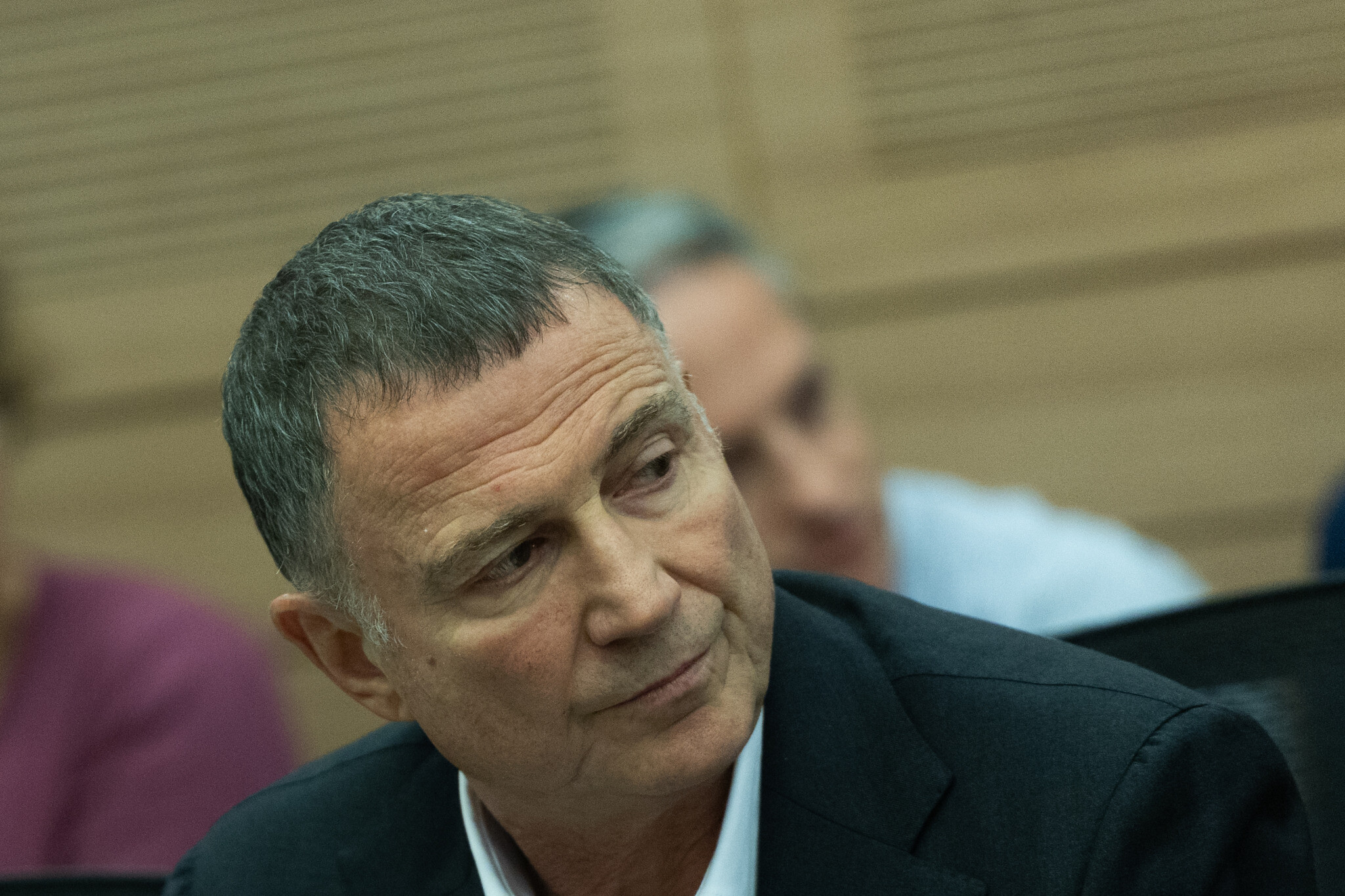
MK Yuli Edelstein at a Foreign Affairs and Defense Committee meeting at the Knesset in Jerusalem, December 1, 2025. (Yonatan Sindel/Flash90)
Lawmaker Yuli Edelstein slams Knesset Foreign Affairs and Defense Committee chairman MK Boaz Bismuth’s proposed bill regulating ultra-Orthodox enlistment, arguing that his proposal bears no resemblance to Edelstein’s own version of the legislation, advanced during his tenure as head of the powerful parliamentary panel.
Edelstein was removed as committee chair by Likud after drafting a stricter Haredi conscription bill that angered Prime Minister Benjamin Netanyahu’s ultra-Orthodox coalition partners. He was later kicked off the panel altogether, but appears to speak before it anyway.
“In the last few days I’ve seen quite a few attempts to compare the bill draft I circulated with the draft now before us… In my opinion, it’s foolish to make these comparisons because the objective function is completely different: I tried to reach a conscription law in order to actually draft people, based on an understanding that social change doesn’t happen in two hours, but that we must recruit numbers that match the IDF’s needs.
“The purpose of this law could be anything — apparently maintaining the coalition or something else — but it is certainly not recruitment. It is definitely not recruitment.”
As for the results of this legislation, “if and when it passes — it will harm national security,” he says.
According to Edelstein, the bill aims to enlist far fewer than the 12,000 soldiers the IDF has said it needs, while also lacking sanctions and “real measures aimed at drafting from the Haredi public,” ensuring that “nothing will happen.”
Responding to Edelstein, Bismuth dismisses his predecessor’s claim that the bill does not contain sanctions as a “myth.”
Bismuth’s bill has been criticized by some members of his own party as “toothless.” While it contains sanctions, they are of a much more limited scope than those in Edelstein’s version and last for a limited time.
Likud MK: Proposed Haredi draft bill ‘isn’t perfect’ but is a ‘good start’
Knesset Foreign Affairs and Defense Committee chairman Boaz Bismuth’s proposed bill regulating ultra-Orthodox conscription “isn’t perfect” but is a “good start,” Likud MK Tsega Melaku tells The Times of Israel during a heated debate on the controversial legislation.
According to Melaku, who is not a member of the committee but whose support will be needed for the bill to pass into law, lawmakers “need to fix it before the final readings” and if a bill isn’t passed “we won’t have anything.”
Haredi MK accuses lawmakers of racism against community during debate on conscription bill
United Torah Judaism MK Meir Porush accuses lawmakers of racism against Haredim during a debate on a controversial bill to regulate ultra-Orthodox conscription.
“Many here don’t respect Torah learners. But I am proud to represent them,” he says, recalling then-Israeli ambassador Chaim Herzog tearing up a resolution equating Zionism and racism at the UN General Assembly in 1975.
“So what are we hearing here? That the Haredim don’t enlist? Yesterday I approached the Knesset Research and Information Center and found out that there are many Bedouins who don’t enlist. There are Druze who don’t enlist and there are others who don’t enlist. But under the pressure of the attorney general, the law applies only to the Haredim even though there are others who don’t enlist? And this is happening in a country under Jewish rule,” declares Porush.
“Like when Herzog of blessed memory tore up that miserable UN resolution, it would be appropriate to tear up this law,” he says.
While the bill significantly weakens sanctions and enforcement against draft evaders compared to earlier proposals, officials in Porush’s Agudat Yisrael faction have expressed opposition to legislation imposing sanctions of any kind.
Responding to Porush, Deputy Foreign Minister Sharren Haskel (New Hope) declares that “many members of the Druze, Circassian, Christian, Bedouin, and even Muslim communities do enlist because they understand what’s out there. They understand our enemies better than we understand them and understand that this land needs to be protected.”
Turning to Knesset Foreign Affairs and Defense Committee chairman Boaz Bismuth (Likud), Haskel says that under his proposed bill, “over the next two years, not a single Haredi will be drafted,” and that even after the law starts to take effect, the implementation of sanctions will be delayed.
“We understand that manpower is one of the cornerstones of the security preparation for the next conflict. And what are we doing to the morale of our soldiers? The motivation?”
Israeli forces return to West Bank’s Tubas, impose lockdown — reports
Israeli security forces have re-deployed in the West Bank’s northeastern town of Tubas and nearby village of Aqaba, less than 24 hours after withdrawing from the area, Palestinian media reports.
Footage published by Palestinian outlets appears to show a military helicopter flying over Tubas’s agricultural fields and military vehicles driving through the city.
Tubas regional governor Ahmed al-Asaad says in a statement that the military has seized homes in the city and imposed a lockdown and curfew.
The IDF and Shin Bet said last week that they had commenced a wide-scale counter-terror operation in the northern West Bank.
Palestinian media reported last night that forces had withdrawn from Palestinian localities in the Tubas governorate following a four-day operation that wounded 204 people and saw over 200 detained, 10 of whom were said to remain in Israeli custody.
???? فيديو| طائرة مروحية للاحتلال تهبط في أحراش التركي بمدينة طوباس pic.twitter.com/IA0oxKHNW5
— شبكة يافا الإخبارية (@yaffa_ps) December 1, 2025
Cabinet secretary claims Haredi enlistment bill will lead to draft of tens of thousands
Cabinet secretary Yossi Fuchs criticizes the opposition for their rejection of the proposed bill on Haredi enlistment, saying “we need to acknowledge reality instead of burying our heads in the sand.”
The government’s proposed bill is “supposed to recruit 23,000 Haredi soldiers within three and a half years,” he argues, insisting that “one new battalion of regular soldiers [is worth] 10 reserve battalions. In other words, this law will result in a saving of 60 reserve battalions.”
Military R&D head says drone threat on borders ‘moving toward a solution’
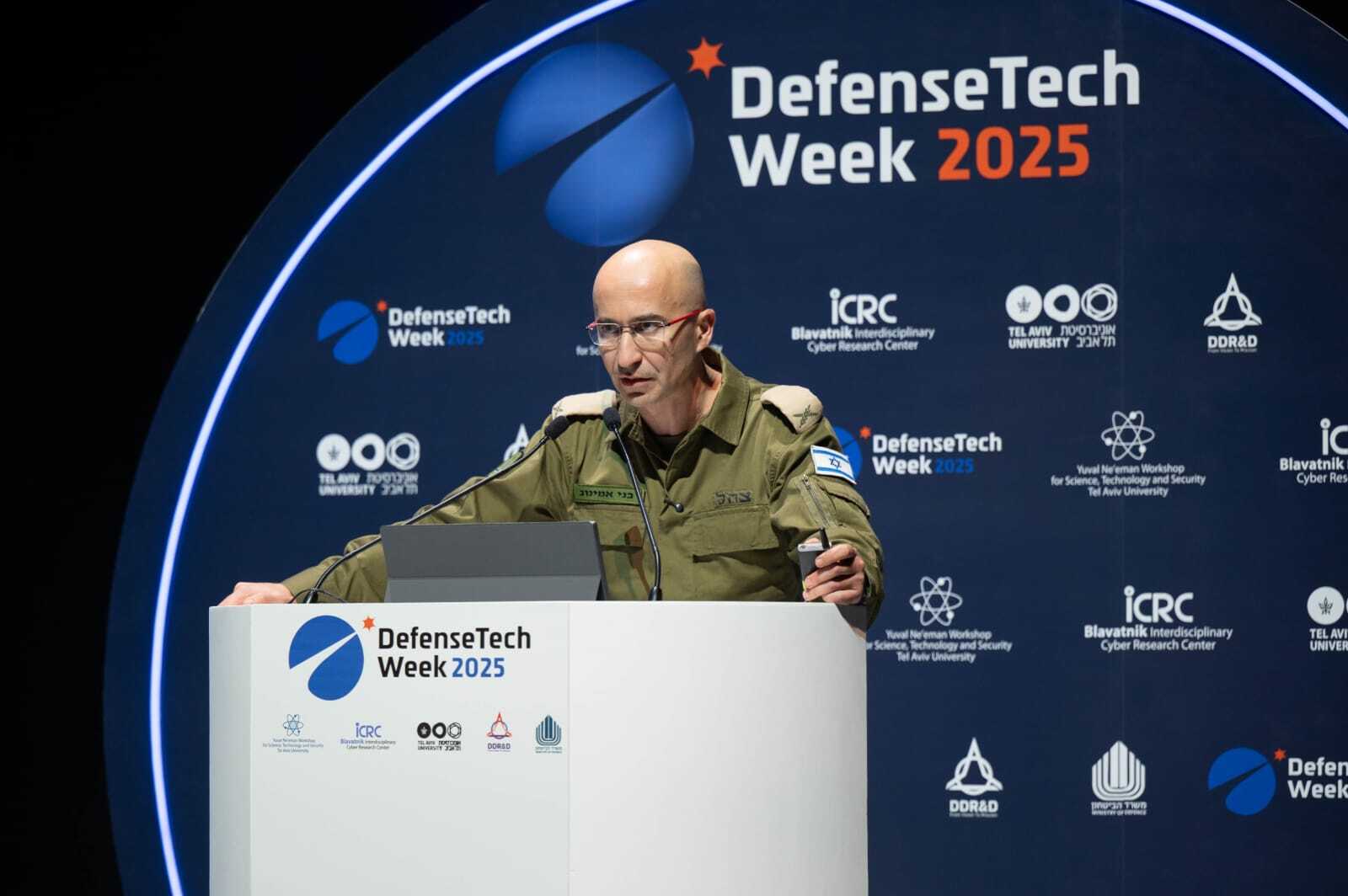
Brig. Gen. Benny Aminov, head of the Defense Ministry Directorate of Defense Research & Development's Military R&D Unit, speaks at the DefenseTech Summit at Tel Aviv University, December 1, 2025. (Defense Ministry)
The head of the Defense Ministry’s military research and development unit says the threat of drones crossing Israel’s borders is “moving toward a solution.”
“In recent weeks, we have achieved a technological breakthrough in enemy drone detection, and we are now working on interception solutions using drone-based systems that enable response to swarm scenarios while accelerating the development of new directed-energy weapons,” says Brig. Gen. Benny Aminov at the International DefenseTech Summit at Tel Aviv University.
“The issue of low-altitude threats is an example of a challenge that requires our defense establishment to fundamentally change its operational approach, responding within compressed timeframes, spiral development, accelerating testing during the development process, and bridging small defense-tech companies with major defense contractors,” he says.
“Enemies continue to evolve in this learning competition. This drives us to develop robust solutions, and it is here that directed-energy weapons demonstrate their unique strength. Their distinctive characteristics enable us to address even the unknown unknowns — threats we don’t yet know we face,” Aminov adds.
Beyond the threat of attack drones from Iran, Yemen, Iraq and Lebanon, in the past year, there have been frequent attempts to bring weapons and drugs over the Egyptian border using drones, with the military struggling to detect and shoot down the relatively small devices.
Sources confirm Herzog heading to NYC amid PM pardon saga, after Mamdani win
President Isaac Herzog is heading to New York City next week, sources close to the president tell The Times of Israel.
His meetings will be primarily with the Jewish community there, according to the sources.
They would not say whether he will meet US President Donald Trump. Ynet reported earlier that no such meeting was planned.
The visit comes after Prime Minister Benjamin Netanyahu formally asked for a pardon from Herzog, something that Trump is pushing Herzog to grant.
It also comes after the election of democratic socialist Zohran Mamdani as mayor of New York, who has pledged to arrest Netanyahu if he travels to the city. Mamdani has not yet taken office.
The 34-year-old Mamdani declined at first to condemn slogans such as “Globalize the Intifada” or to call for the disarmament of the Hamas terror group, though he reversed himself on both points following significant backlash. Some 64% of “connected” American Jews said in a recent poll that they view Mamdani as both anti-Israeli and antisemitic.
Foreign Ministry director says bringing spokesperson under his personal control
Foreign Ministry Director-General Eden Bar Tal tells diplomats he is bringing the ministry’s spokesperson’s office under his direct control.
“The Foreign Ministry is currently leading the campaign for public opinion in the international arena, at a time when Israel is facing increasing media and public opinion challenges,” he writes to ministry employees in an email viewed by The Times of Israel. “In order to shorten work processes, and to enable rapid and effective action, I have decided to transfer the Spokespersons Division to my direct subordination.”
The spokesperson’s office is currently under Deputy Director-General for Public Diplomacy Yaakov Livne.
“I don’t understand what the purpose of this move is,” a diplomat tells The Times of Israel. “Any important message goes through the director-general and foreign minister anyway.”
Senior ministry officials tell Ynet that “spokespeople were always in close contact with the minister and the director-general, but the official subordination changes the essence of the job. Instead of a spokesperson for the foreign ministry, there will be a spokesperson for the director-general.”
Pope prays for peace in Lebanon and the region
Pope Leo XIV prays for peace in Lebanon and the region as he kicks off day two of his trip to the multi-confessional country with a visit to a famous pilgrimage site.
Thousands of people cheer, ululate and throw rice in celebration as Leo travels in the popemobile up a winding road to a monastery in Annaya in the mountains north of Beirut which hosts the tomb of Saint Charbel.
Leo arrived from Turkey yesterday on his inaugural visit abroad as pontiff and brought a message of hope, particularly to youth in Lebanon whose faith in their crisis-hit country has dwindled.
Pope Leo visits the tomb of St Charbel in Annaya, Lebanon pic.twitter.com/Tk12OP1cdI
— Vatican News (@VaticanNews) December 1, 2025
“For the world, we ask for peace. We especially implore it for Lebanon and for the entire Levant,” he says from deep inside the candle-lit stone monastery.
Saint Charbel is a Maronite hermit who was canonized in 1977 and who enjoys broad popularity beyond the Christian community.
Depictions of the white-bearded saint can be found in homes, vehicles and workplaces across the country.
Immigration minister vows to vote against Haredi enlistment bill ‘even if it means PM fires me’
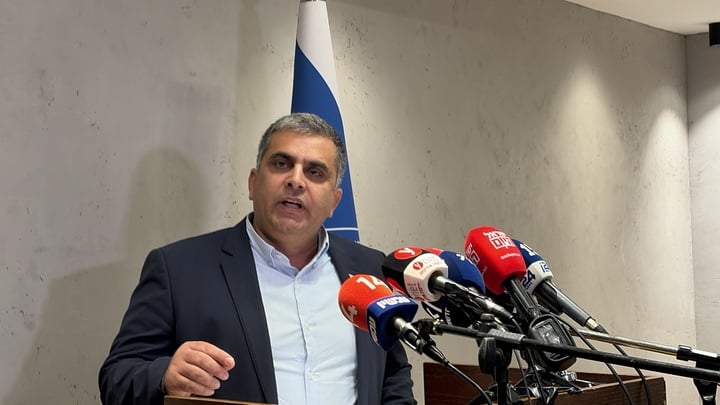
Immigration Minister Ofir Sofer holds a press conference in the Knesset, December 1, 2025 (Sam Sokol/Times of Israel)
Immigration Minister Ofir Sofer (Religious Zionism) promises to vote against the government’s controversial bill on ultra-Orthodox enlistment, declaring that he will do so even if it costs him his position in Prime Minister Benjamin Netanyahu’s cabinet.
“Last Thursday, the draft outline of the conscription law was presented, and this morning the marathon of discussions began. The train has started moving, and I want to establish an emergency brake here,” Sofer tells reporters in the Knesset.
“This is a shameful law, devoid of any public courage, a law that struggles to look our ultra-Orthodox partners in the eye and to tell them it is time to take action,” he continues, pledging that he will “vote against this law, even if it means the prime minister will fire me.”
Pledging to “do everything I can to persuade my colleagues in Religious Zionism to oppose the proposed disgrace,” Sofer says he has three principles guiding his position on conscription: “First, the support and endorsement of the ultra-Orthodox leadership; second, real and immediate change; third, a temporary measure [on exemptions], not an exemption extending decades into the future.”
Slamming the government’s “bluff,” Sofer says that the easiest thing to do is “to legislate in a way that gives us time, which won’t be overturned by the Supreme Court” and allow the government to get past the next elections.
Criticizing how the bill postpones sanctions for a year and a half, Sofer demands the immediate conscription of four battalions’ worth of soldiers for the IDF’s ultra-Orthodox Hasmonean Brigade.
Queried if he would oppose the measure even if its failure would mean the fall of the government, Sofer responds that he has long stated that he would not topple the government but that there are values that “we go to the grave with.”
Asked by The Times of Israel if he believed there is sufficient opposition to the bill within the coalition to ensure its failure, Sofer replies that “coalition members must face reality” and that “there are enough votes” to reject it.
While Religious Zionism chairman Bezalel Smotrich, who Sofer says was informed of his position ahead of today’s press conference, has not explicitly stated that he will oppose the bill, the party last week stated that it would “only vote for a law that will lead to real and rapid recruitment of Haredim into the IDF to meet security needs and ease the burden on fighters, reservists, and their families.”
Prior to Sofer’s announcement, party MKs Moshe Solomon and Michal Woldiger indicated they would not back the current bill. Speaking with the national-religious news site Kipa on Sunday, Woldiger stated that “the law as it stands will not bring the solution” to the IDF’s manpower shortage.
Speaking with The Times of Israel following Sofer’s press conference, Deputy Foreign Minister Sharren Haskel (New Hope) says that the bill does not provide the necessary manpower for Israel’s “next confrontation” with its enemies and that “there is not a majority in the coalition” in favor of passing it into law.
At court, Netanyahu clashes with prosecutor: ‘You’ve lied throughout this entire case’
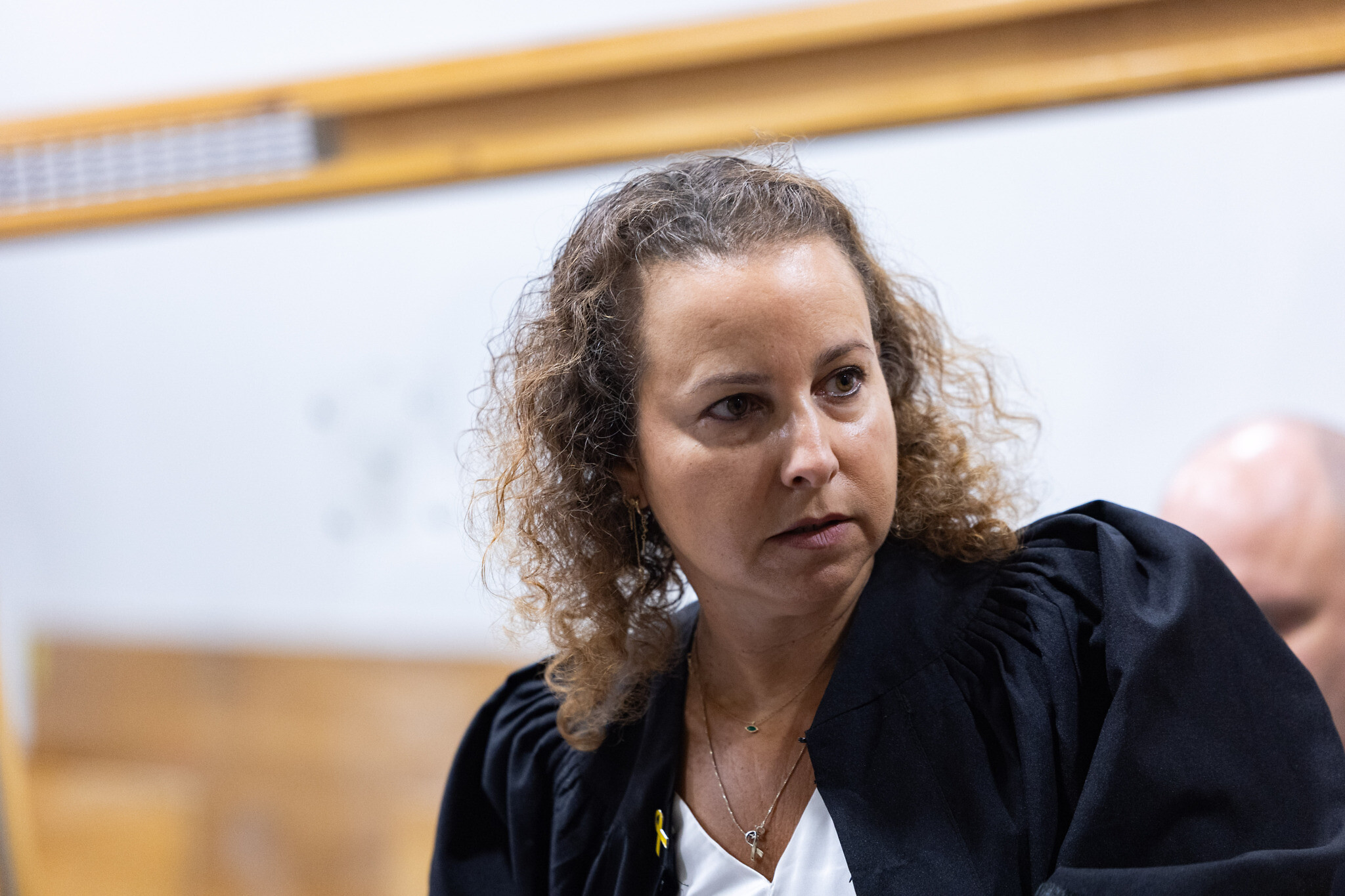
Prosecutor Yehudit Tirosh arrives at the courtroom in the Tel Aviv Distrcit Court before the start of testimony in the trial against Prime Minister Benjamin Netanyahu, December 1, 2025 (Chaim Goldberg/Flash90)
The prosecutor in Prime Minister Benjamin Netanyahu’s criminal trial accuses him of not telling the truth when he repeatedly told the Jerusalem District Court during his primary testimony that he believed the Walla News website was unimportant, as he sought to undermine accusations he had heavily pressured the site in the past to change unflattering news stories.
Annoyed, Netanyahu shoots back: “You accused me of making a false statement. You’ve lied throughout this entire case.”
Yehudit Tirosh of the State Attorney’s Office points out that despite Netanyahu having stated on numerous occasions that Walla was a news outlet to hostile him and that he only gave interviews to the website during elections, he actually did conduct at least one interview with the outlet outside of an election period, and shared a link to the interview on social media.
“We see that you said incorrect things in primary testimony, that you didn’t interview [with Walla outside of an election period]. This interview was very interesting for you. You were interviewed and shared specifically this interview with Walla and not interviews done in parallel with television stations,” Tirosh tells the court, according to the Maariv news outlet.
The prime minister lashes out at Tirosh, accusing the prosecution of having deviated from accepted practice in filing its indictment and of acting dishonestly.
“They [Walla] made many requests for interviews and I refused to interview with them for years… So [maybe] I accepted more than once, big deal. It is a hostile site,” Netanyahu adds.
One of the key charges against Netanyahu is that he accepted a bribe, in the form of positive media coverage by Walla, in return for granting regulatory benefits to Walla owner Shaul Elovitch regarding his business interests, including his stake in the Bezeq telecom giant.
Netanyahu and his defense team argued in the prime minister’s primary testimony that Walla’s coverage of Netanyahu had very often been very negative and antagonistic to him.
The judges in the case recommended in 2023 that the prosecution drop the bribery charge, although the prosecution declined. Netanyahu is also charged with fraud and breach of trust in the same case.
Norway government budget in peril over oil, wealth fund’s Israel investments
Norway’s minority Labor government failed to win backing for its 2026 draft budget by an end-November deadline, but talks will resume in parliament to find a compromise over oil drilling and the wealth fund’s Israeli investments, a negotiator says.
The Norwegian parliament is due to vote on the budget on Friday, and Prime Minister Jonas Gahr Stoere could be forced to call a vote of confidence if no agreement is reached by then, putting his cabinet on the line.
The Labor Party government narrowly won a second term in a September election, but the result left it reliant on four small left-wing parties to pass the budget, with only two of those, the agrarian Center Party and the far-left Red Party, agreeing so far.
The climate-focused Green Party, which wants a gradual phaseout of the oil industry by 2040, walked out, as did the Socialist Left over its objections to investments by Norway’s sovereign wealth fund in Israel.
Stoere has said that Norway, Europe’s biggest supplier of gas and a major oil producer, should continue to explore for hydrocarbons to sustain the country’s biggest industry. The government also objects to demands that Norway’s $2 trillion sovereign wealth fund should divest from all Israeli firms, arguing that only companies involved in the “occupation of Palestinian territories” should be excluded.
Netanyahu’s testimony Tuesday canceled over ‘diplomatic and security matters’
Following a request made by Prime Minister Benjamin Netanyahu’s lawyers today in court to cancel his testimony at trial tomorrow due to “diplomatic and security matters,” the judges agree to cancel the hearing.
Wednesday’s hearing will be extended by one hour.
ICC president vows to resist US and Russian pressure despite sanctions and threats
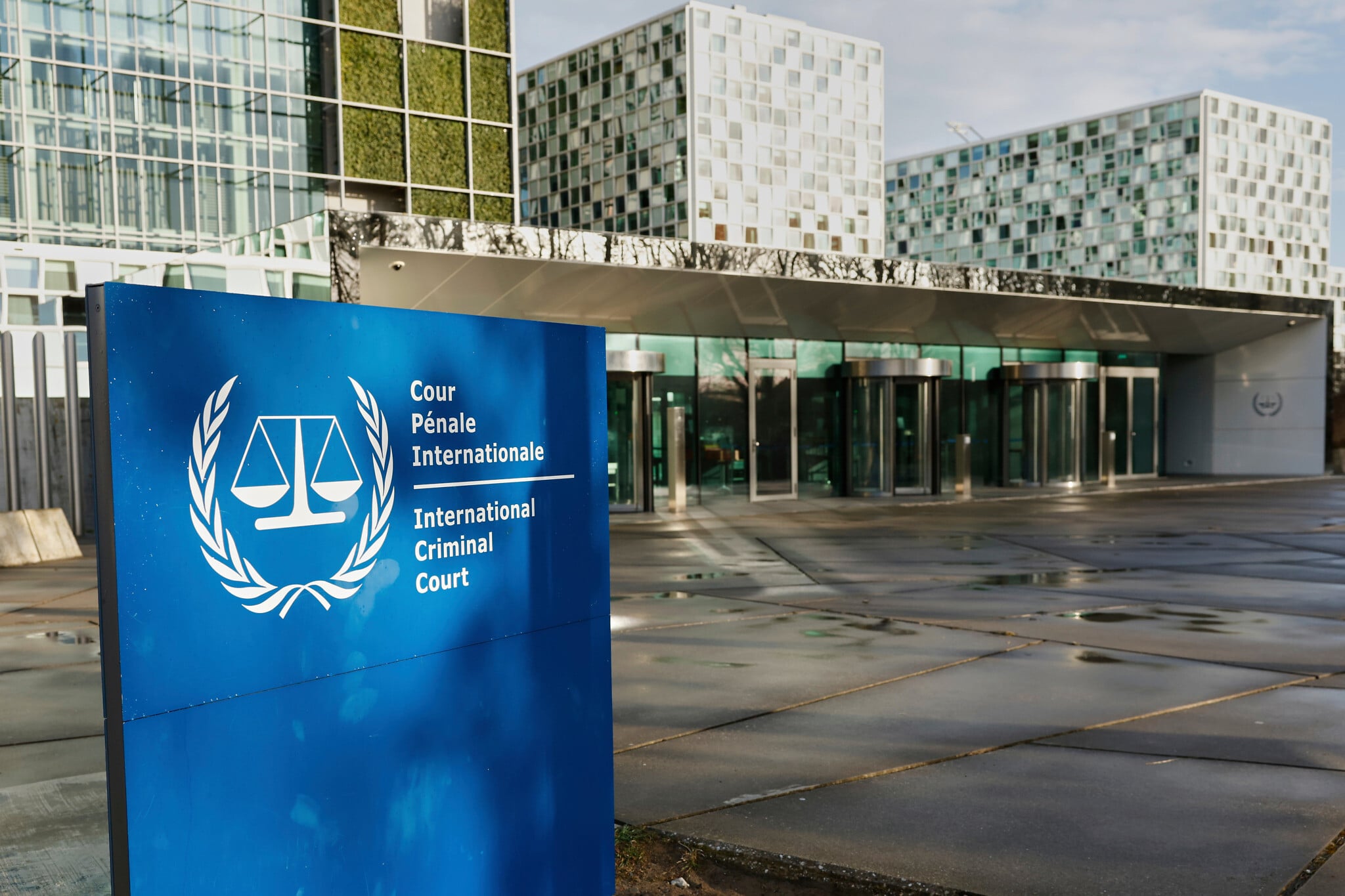
A general view of the exterior of the International Criminal Court is seen in The Hague, Netherlands, March 12, 2025. (AP Photo/Omar Havana, File)
The president of the International Criminal Court says during the institution’s annual meeting that it will not bow to pressure from the United States and Russia.
Nine staff members, including six judges and the court’s chief prosecutor, have been sanctioned by US President Donald Trump for pursuing investigations into US and Israeli officials, while Moscow has issued warrants for the arrest of staff in response to an arrest warrant for President Vladimir Putin over the war in Ukraine.
“We never accept any kind of pressure,” Judge Tomoko Akane tells delegations from the court’s 125 member states.
The sanctions have taken their toll on the court’s work across a broad array of investigations at a time when the institution is juggling ever more demands on its resources.
In her address last year, Akane warned that the court was being threatened by the incoming Trump administration. Three weeks after he took office for the second time, Trump signed an executive order imposing sanctions on Prosecutor Karim Khan over investigations of Israel, a close US ally. The court has issued an arrest warrant for Israeli Prime Minister Benjamin Netanyahu and his former defense minister, Yoav Gallant, for alleged war crimes over Israel’s military offensive in Gaza after the deadly October 7, 2023, Hamas attacks.
Multiple coalition lawmakers bash Bismuth’s proposed ultra-Orthodox conscription bill

MK Dan Illouz speaks during an Economic Committee meeting at the Knesset in Jerusalem, on March 26, 2025. (Yonatan Sindel/Flash90)
Multiple coalition lawmakers criticize Knesset Foreign Affairs and Defense Committee chairman Boaz Bismuth’s proposed bill regulating ultra-Orthodox conscription during a debate on the controversial legislation, warning that it will not pass review by the High Court of Justice and that they cannot support it as written.
Addressing the committee, Likud MK Dan Illouz reiterates his previously stated objections to the bill, arguing that without significant revisions “the law won’t be good enough, and it won’t bring the change we need in Israel, both from a security and from a social perspective.
“And in my opinion, you can’t call this a conscription law if we remove the existing sanctions that encourage enlistment,” he says. “You can’t call this a conscription law, and you can’t call it a conscription law and expand the definition of Haredim to include people who are no longer Haredi, people who are no longer part of the Haredi public.”
Fellow Likud MK Eliyahu Revivo declares that in its current form “there will not be a majority” in favor of the bill, and “not in the coalition either.”
The bill will not lead to a significant increase in the scope of recruitment and “many members of the Likud” will not vote “in favor of a bill supported by Arab faction votes,” he adds — referencing reports, denied by Likud, that it has sought out the support of the Islamist Ra’am party.
In addition, Likud MK Moshe Saada, who has previously called the legislation “toothless,” pushes back against Cabinet Secretary Yossi Fuchs’s claim that the bill will “recruit 23,000 Haredi soldiers within three and a half years,” arguing that this is impossible to guarantee because the bill does not set a quota for how many recruits will serve in combat roles.
While not opposing the idea of full-time yeshiva students receiving exemptions, Saada demands the bill incorporate language that state benefits be conditioned on military service, arguing that failing to do so will ensure that the bill does not pass judicial review.
Likud MK Yuli Edelstein argues that “the purpose of this law could be anything — apparently maintaining the coalition or something else — but it is certainly not recruitment.”
Religious Zionism MK Moshe Solomon tells Bismuth that “in its current form, it will be difficult for me to support this law, even though I greatly appreciate the work that has been done” and calls for him to go through the bill clause by clause and “be open to substantive feedback as well as wording suggestions.”
Bismuth, for his part, tells lawmakers during the hearing that those who vote in favor of his bill “vote for the future of the State of Israel.”
At least eight coalition lawmakers have expressed opposition to the bill, with several others considered likely to do so. In a tweet, Deputy Foreign Minister Sharren Haskel counts 10 definite opponents.
Outside the coalition, the United Torah Judaism party’s Hasidic Agudat Yisrael faction has also expressed opposition.
Herzog: I will consider ‘only the good of the state’ when weighing Netanyahu’s pardon request; ‘violent discourse does not influence me’
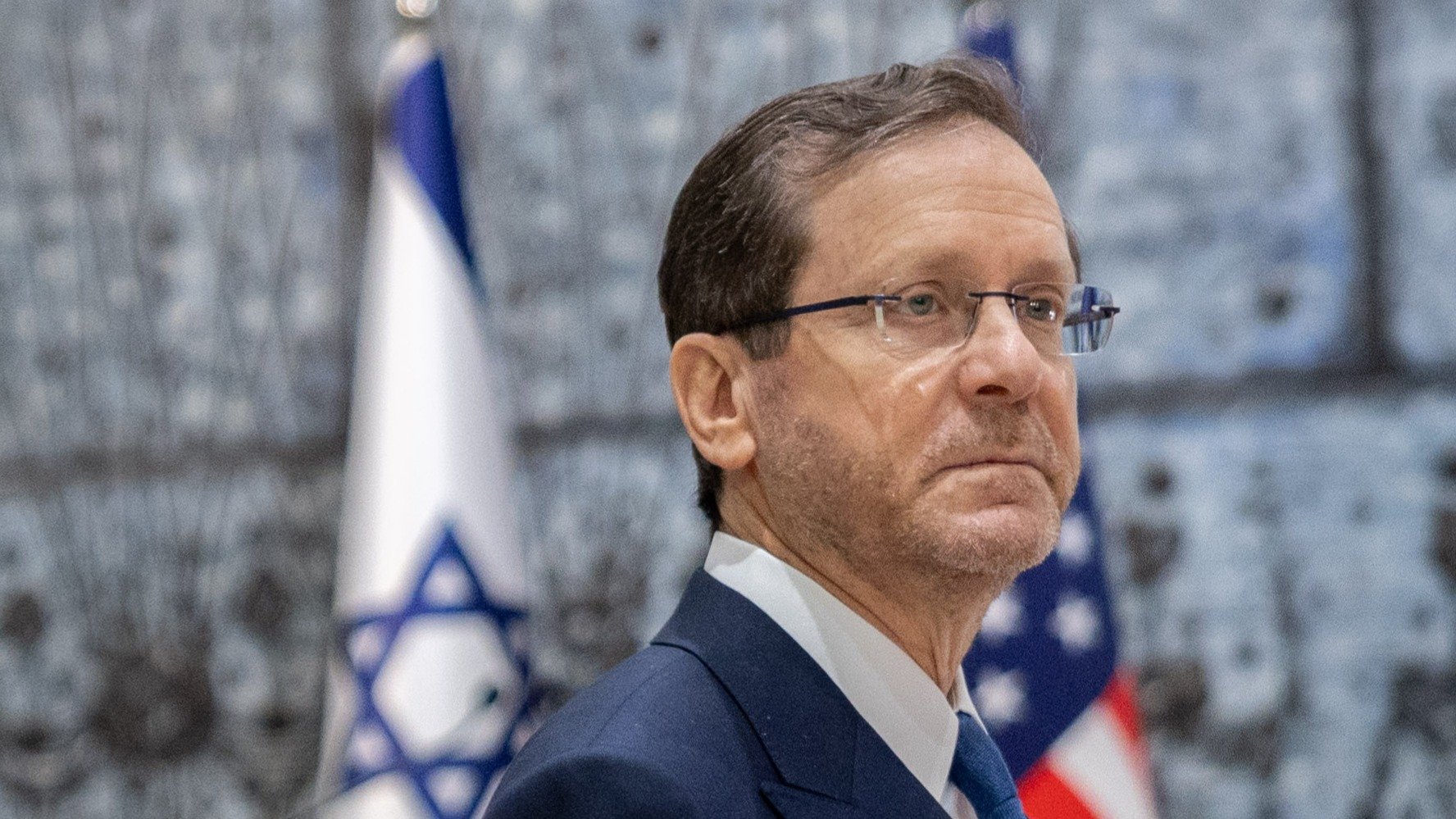
President Isaac Herzog meets with Mike Huckabee (unseen) at the President's Residence in Jerusalem, on April 21, 2025. (Chaim Goldberg/Flash90)
President Isaac Herzog addresses Prime Minister Benjamin Netanyahu’s request for a pardon in the premier’s corruption trial, saying he will consider “only the good of the state and Israeli society” in his response to the request, and asserting that “violent discourse” will not sway him.
In a statement released by his office, Herzog says that the pardon request “will be handled in the most proper and precise way. I will consider only the good of the state and Israeli society.”
He says Netanyahu’s move “unsettles many people in this country, across different communities, and [it] sparks debate,” but stresses that “One thing is clear to me — violent discourse does not influence me.
“On the contrary, respectful discourse certainly stimulates discussion and dialogue. I invite the Israeli public to the website of the President’s Residence, the house of the people, to express their opinion and respond accordingly,” he adds.
Israel preparing for possible Hamas handover of hostage’s body
Israel is preparing for the possibility that Hamas may return the body of a hostage to Israel this afternoon, a defense official says.
It is not yet fully clear if the handover will take place, and Hamas has yet to announce today that it intends to return any hostages.
Currently, the bodies of two hostages remain held in Gaza: police Master Sgt. Ran Gvili and Thai national Sudthisak Rinthalak.
Special Knesset panel formed to fast-track contentious media oversight bill
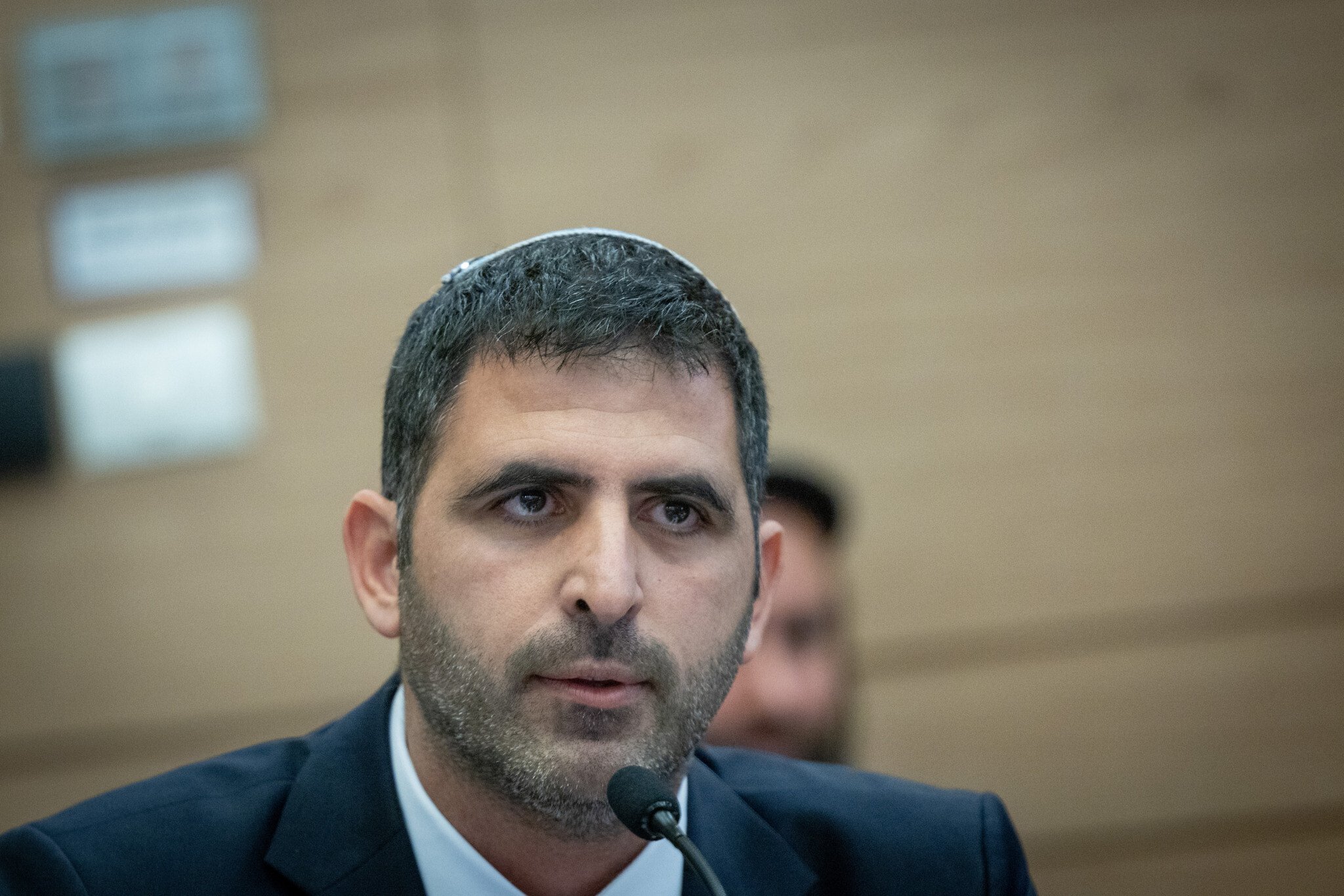
Communications Minister Shlomo Karhi at an Economic Affairs committee meeting at the Knesset, in Jerusalem, on December 18, 2024. (Chaim Goldberg/Flash90)
The Knesset House Committee votes to establish a special panel to advance Communications Minister Shlomo Karhi’s controversial media regulation bill, with eight MKs voting for the motion and five against.
This is despite the stated opposition of Knesset Legal Adviser Sagit Afik, who reiterates that the only committee that has the authority to prepare the bill for its second and third Knesset readings is the Economic Affairs Committee, which usually deals with media-related legislation.
The legislation would give the government significant control over broadcast media, news sites and other media, by establishing a new regulatory council, with a majority of members chosen by the communications minister, that would have an array of authorities over broadcast media, including the ability to issue hefty fines.
The special committee is meant to bypass Likud MK David Bitan, who chairs the Economic Affairs Committee and has expressed opposition to the bill in its current form.
Afik says that she is also concerned that the procedure will “harm the Knesset itself, the powers of the committees, and oversight powers.”
She adds that “political considerations are not a legitimate reason for establishing this committee.”
The special committee will be chaired by Likud MK Galit Distel Atbaryan and will include 13 members: Seven from the coalition and 6 from the opposition.
Speaking during the session today, Bitan said, “I find myself at a crossroads where I have to defend the Knesset from the government when it harms the powers and status of the Knesset. The government claims that the Supreme Court takes powers from the government, and what is it doing? The same thing to the Knesset.”
No body will be handed over by Hamas today, defense officials say
Defense officials now contradict earlier reports and indicate that Hamas will not transfer the body of a slain hostage today.
Saudi residents say booze ban eased for more foreigners
Foreign residents living in Saudi Arabia tell AFP that restrictions on the sale of alcohol have been further relaxed, just days after non-diplomats were first able to buy booze in the conservative kingdom.
Non-Muslim foreign residents earning at least 50,000 riyals a month ($13,300) are now able to purchase alcoholic beverages at the country’s sole liquor store in Riyadh, according to six people who spoke to AFP.
Late last month, premium visa-holders were able to buy booze in Riyadh, marking the first time residents who were not foreign diplomats were able to legally purchase alcohol at the store in the capital’s diplomatic quarter. And then the rules were quietly eased again.
In recent days, individuals said they provided their residency documents to staff at the shop, who then checked their salary information using a Saudi platform, before selling them alcohol.
“We were surprised and didn’t believe it at the beginning,” one expatriate says after receiving messages from friends via Whatsapp about the eased restrictions.
“We entered after checking and succeeded in buying alcohol,” he adds.
Azerbaijan jails opposition politician until February on charges of plot to overthrow president

Ilham Aliyev, Azerbaijan president, speaks during a plenary session at the COP29 UN Climate Summit, November 12, 2024, in Baku, Azerbaijan. (AP Photo/Rafiq Maqbool)
A court in Azerbaijan orders a key opposition figure to be held in pre-trial detention until mid-February following his arrest on charges of plotting to overthrow President Ilham Aliyev.
Ali Karimli, who has led the Azerbaijani Popular Front Party since 2000, rejects the charges against him as politically motivated, his lawyer tells Reuters.
Azerbaijan’s State Security Service raided Karimli’s house on Saturday and later arrested him and two other APFP members. One of them, Mammad Ibrahim, was also placed in pre-trial detention until February 13.
A government source told Reuters over the weekend that the probe into Karimli was connected to an ongoing criminal case against Ramiz Mehdiyev, head of the presidential administration from 1994 to 2019.
The source said Karimli was accused by the authorities of being financed by Mehdiyev.
Iran announces discovery of major gold deposit, local media reports
Iran has announced the discovery of a major gold deposit at one of the country’s biggest mines for the precious metal, local media reports.
The new vein structure was found at the privately owned Shadan gold mine in the eastern province of South Khorasan, which the government-affiliated Fars news agency describes as “among the country’s most important.”
The agency says the new reserves have been officially validated by the Ministry of Industry, Mines and Trade. It added that the vein holds some “7.95 million tons of oxide gold ore and 53.1 million tons of sulphide gold ore.”
The former is usually significantly easier and cheaper to mine.
Iran has not officially disclosed the amount of its national gold reserves but claims to have significantly increased its purchases in recent years.
In September, Iran’s Central Bank governor Mohammadreza Farzin said the bank was one of the world’s top five gold-buying central banks in 2023-2024, according to ISNA news agency.
تبریک به مردم منطقه به جز ایران
کشف جدید یک رگۀ عظیم طلا در ایران
ذخایر قطعی معدن طلای شادان در خراسانجنوبی با تصویب نهایی وزارت صمت جهش قابل توجهی را تجربه کرد. ذخیرۀ قطعی این معدن طلا ۶۱ میلیون تن برآورد میشود pic.twitter.com/sYBUtMQdUB
— jailani behieh (@JBehieh) November 30, 2025
Local media also quotes central bank official Yekta Ashrafi as saying that boosting the gold reserves would help bolster the country’s economy under the weight of international sanctions.
Iran has 15 gold mines, with the largest being the Zarshouran mine located in the country’s northwest.
Iran’s economy has been crippled by sanctions imposed after the United States and Western capitals accused Tehran of seeking to weaponize its nuclear program — an allegation Tehran consistently denies.
The country’s economy has come under further strain since the 12-day war between Israel and Iran, during which the United States struck Iranian nuclear facilities.
Gold is also a safe haven for many Iranians whose purchasing power continues to erode due to soaring inflation and the chronic depreciation of the rial against the dollar.
Court again extends detention of anti-government activist accused of inciting against PM

Activist Yolanda Yavor is seen during a September 2025 court appearance (Video screenshot; used in accordance with Clause 27a of the Copyright Law)
The Haifa Magistrate’s Court extends the detention of anti-government activist Yolanda Yavor by another two days, after she was arrested for social media posts allegedly inciting against Prime Minister Benjamin Netanyahu and other figures.
Yesterday, police detectives in the Coastal District searched the Tel Aviv University professor’s apartment in Or Akiva, where they were said to have found evidence indicating she is liable to obstruct the investigation if released.
Yavor was arrested following a complaint from the right-wing Im Tirzu organization over a post she published on Facebook last week in which she derided the premier as a “traitor.”
“The only choice is to be — that is, to fight the traitor, the mouthpieces, the damned collaborators and his bargain-bin Freikorps militias with all the strength and all means — or not to be,” she wrote. “Make the right choice, my brothers and sisters… There won’t be another round.”
She added in a hashtag, “You don’t depose a dictatorship at the ballot box.”
Yavor’s lawyer, Oshrat Kirma, argues that her client committed no offense and was exercising her right to free speech. Judge Boris Sherman rejects the argument, saying that “freedom of expression is not the freedom to commit offenses.”
He adds that “Israel has learned from experience where calls for violent behavior can lead,” Walla reports. Yavor is due for another remand hearing on Wednesday.
Smotrich says party ‘will not compromise’ on draft bill, demands ‘real enlistment’ of Haredim

Finance Ministry Bezalel Smotrich holds a press conference at the Finance Ministry in Jerusalem on November 4, 2025. (Yonatan Sindel/Flash90)
Finance Minister Bezalel Smotrich says that his Religious Zionism party “will not compromise on a conscription law that does not bring real change on the ground,” after lawmakers from his party said they could not support the legislation on the issue proposed today by Knesset Foreign Affairs and Defense Committee chairman Boaz Bismuth.
But Smotrich also says his party will request changes to the law and may support it down the line.
Speaking to the press after a faction meeting, Smotrich says that the party has confirmed that it “will vote only for a law that will bring about the real and rapid enlistment of the ultra-Orthodox into the army, to meet the needs of the IDF and ease the burden on soldiers, reservists, and their families.”
The far-right leader says that the party is preparing comments for the bill and will “insist on their inclusion during the legislative process.” But he also appears to argue that it is better to support this “imperfect” bill than none at all.
“It’s possible to continue opposing any law because it isn’t perfect and remain without ultra-Orthodox enlistment for many more years,” Smotrich says. “Or one can demonstrate leadership and backbone, withstand some pressure, insist on the truly important issues, and bring about an agreed-upon framework that will enact a real revolution and, after 77 years of serious distortion, begin to correct it.”
Three of the seven MKs from Smotrich’s Religious Zionism party have publicly expressed opposition to the current law, including Moshe Solomon, Michal Woldiger, and Immigration Minister Ofir Sofer, who said earlier today that he would vote against the bill even if it cost him his cabinet post.
Head of police major crimes unit, under corruption probe, to return to post; claims he was assaulted

Commander of the Lahav 433 Unit, Manny Binyamin, attends a ceremony at the National Police Academy in Beit Shemesh, April 20, 2025. (Oren Ben Hakoon/Flash90)
The head of the police’s major crimes unit will return to his post despite being interrogated yesterday on corruption suspicions, Israel Police says in a statement.
The decision was made after Deputy Commissioner Manny Binyamin, who is under investigation, met with police chief Danny Levy and other senior officers about the matter.
Binyamin, who heads the Lahav 433 major crimes unit, was questioned yesterday for a third time by investigators in the Department for Internal Police Investigations.
He is suspected of interfering in an investigation in which he had a conflict of interest and illicitly promoting a relative under his command.
At the end of questioning, investigators had him sign off on release conditions preventing him from speaking to others involved in the case, which he initially objected to.
Binyamin’s lawyer claims that an investigator assaulted him physically and put him under arrest for a brief period until he agreed to the limitations. The DIPI firmly rejected the lawyer’s allegations, calling them a “distortion of facts.”
Two Palestinians killed after crossing into IDF-controlled area of Gaza, military says
Two Palestinian terror operatives were killed after crossing Gaza’s Yellow Line demarcating the IDF’s withdrawal in two separate incidents in the territory’s north today, the military says.
The operatives were identified by reservists of the Carmeli Brigade. The military says they approached the troops and “posed an immediate threat.”
“The troops opened fire and eliminated the terrorists to remove the threat,” the army adds.
International Hebrew Language Olympiad gets underway online

Pupils participating in the 2024 Hebrew Language Olympiad. (Yael Tzur)
The fifth Hebrew Language Olympiad has launched its new global competition, inviting students ages 12 to 18 from around the world to compete to solve Hebrew linguistic puzzles.
The annual competition, run by Tel Aviv University’s Department of Hebrew Language in partnership with the Consortium for Hebrew Teaching at Brandeis University, begins today with a set of unique challenges ranging from those involving ancient Semitic language patterns to wordplay and idioms.
Teachers are encouraged to register classes or groups of students. Participation is free for students with an intermediate or high level of Hebrew proficiency.
A record 5,668 students participated in last year’s Olympiad, including nearly 1,000 Hebrew learners whose first language is not Hebrew. Competitors came from diverse communities in Israel — including Arab, Bedouin and Druze areas — as well as Jewish and non-Jewish students from the United States, Europe, Asia and Latin America, the organization says.
Launched in 2021 at Tel Aviv University as an initiative directed at Israeli Jews, the contest is now expanding its horizons worldwide. Those who complete the first round will be eligible to continue with additional rounds in early 2026.
Lapid on proposed law regulating conscription: ‘This bill won’t pass’
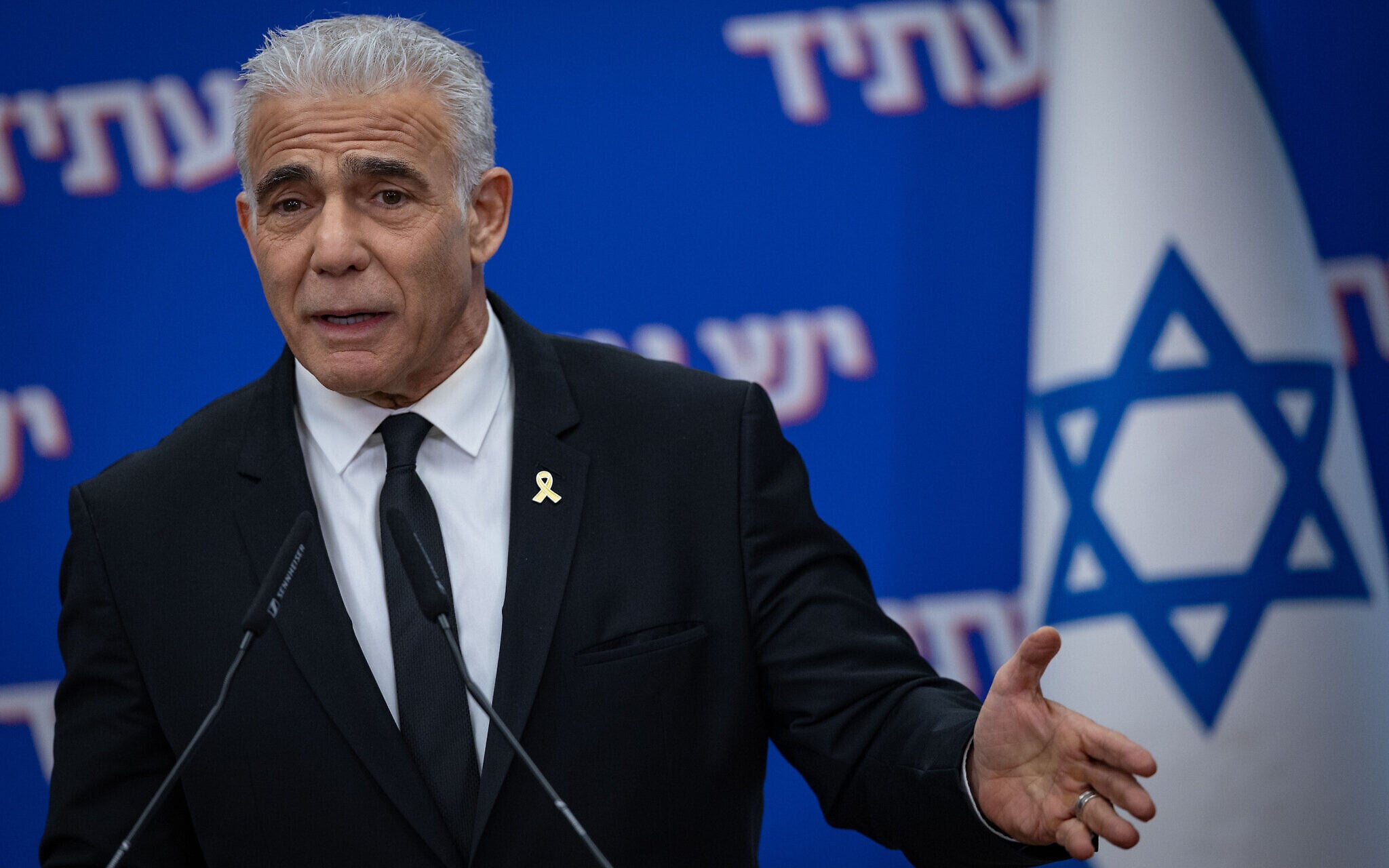
Opposition Leader MK Yair Lapid leads a Yesh Atid faction meeting at the Knesset in Jerusalem, on November 10, 2025 (Yonatan Sindel/Flash90)
Opposition leader Yair Lapid says that the coalition’s proposed bill regulating ultra-Orthodox conscription will not pass.
“It won’t happen. This bill won’t pass,” says the Yesh Atid chair, speaking to the press before a faction meeting at the Knesset. “We’ll stop it in the committee. If not in the committee, in the plenum. If not in the plenum, in the courts. And if not in the courts, in the streets. It won’t become law.”
Lapid notes that multiple coalition MKs have already expressed public opposition to Knesset Foreign Affairs and Defense Committee chairman Boaz Bismuth’s proposed bill, which allows continued exemptions to conscription for yeshiva students, and that his party is in communication with other coalition MKs.
“Ask yourselves if you’re willing to disgrace the memories of the fallen and betray everything you’ve believed your entire lives for a bill that will collapse far before it gets to the finish line,” he says, directly addressing coalition MKs.
High Court cuts hearing on AG’s dismissal short after government fails to send lawyer
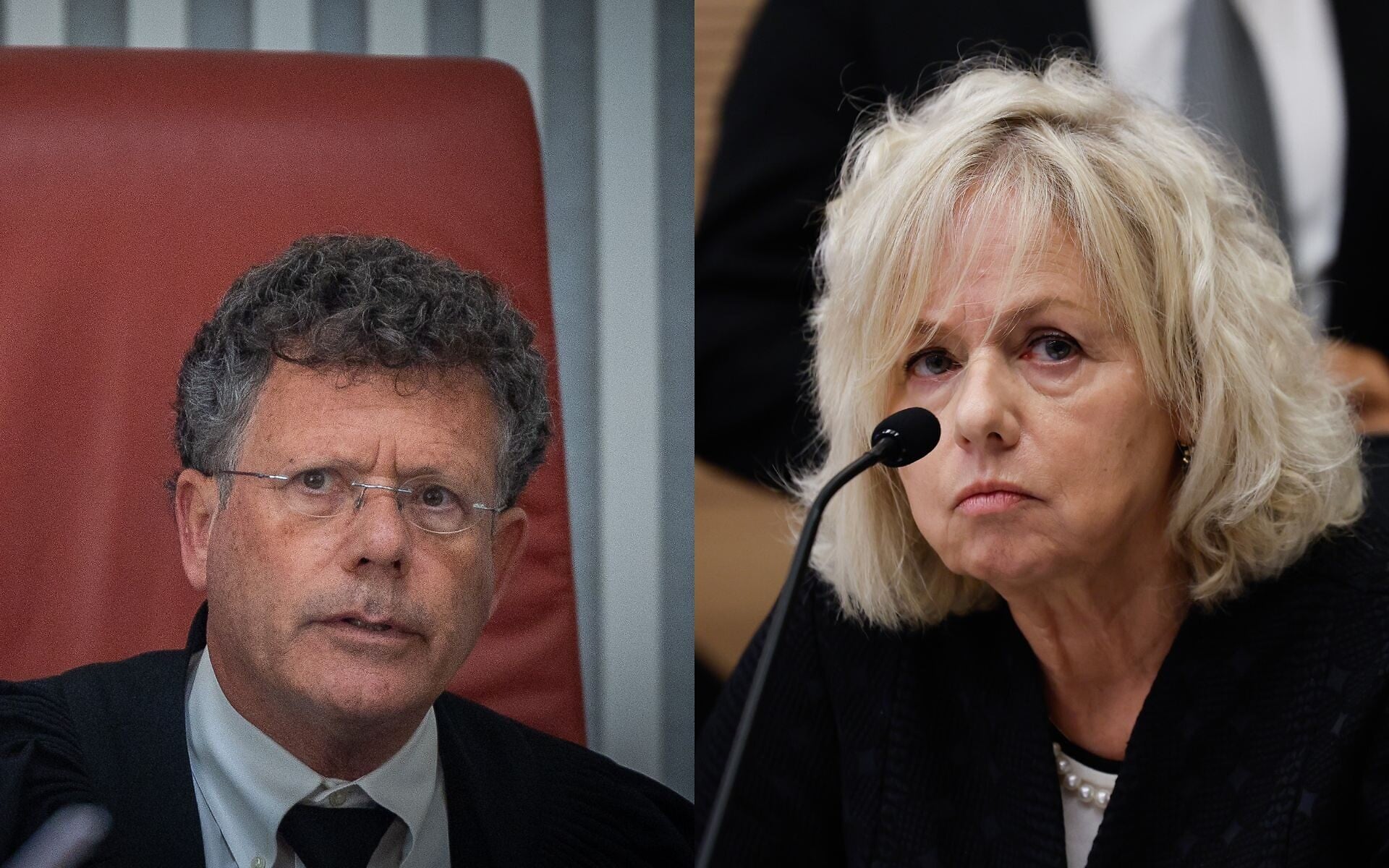
This composite image shows Supreme Court President Isaac Amit (L) and Attorney General Gali Baharav-Miara (Yonatan Sindel and Oren Ben Hakoon/Flash90)
Supreme Court President Isaac Amit states during an extremely short hearing that there is “no point” holding oral arguments on the government’s decision to fire Attorney General Gali Baharav-Miara “in front of an open goal,” a reference to the fact that the government declined to send a lawyer to represent it at the hearing.
The hearing was intended to focus on the core arguments laid out in petitions filed against the government’s dismissal of Baharav-Miara in August, which argued that the manner of the dismissal was fundamentally flawed and illegitimate. The government had created a new committee staffed only with cabinet ministers to replace a public, professional committee, which had previously been tasked with recommending whether or not an attorney general should be fired.
Amit notes that Justice Minister Yariv Levin and Diaspora Affairs Minister Amichai Chikli submitted a final written response to the petitions in mid-November, asking for the case to be dismissed, but says that since the government has decided not to send a legal representative to the court, the seven-justice panel will write its ruling based on written material submitted to it, the without further oral argument.
The Supreme Court president says this decision was made unanimously by all seven members of the judicial panel.
Hungary raises flag over new embassy branch in Jerusalem

A Hungarian flag flies next to the country's new embassy branch in Jerusalem on December 1, 2025. (Lazar Berman/The Times of Israel)
Hungary, one of Israel’s closest allies in Europe, raises its flag over a new embassy branch it is opening in Jerusalem.
The Hungarian Academy in Jerusalem, a cultural center located next to the YMCA in Jerusalem’s Talbiyeh neighborhood, will officially open its doors early next year, Hungary’s Embassy tells The Times of Israel. The director will arrive in January.
The Czech Republic has an embassy branch facing Hungary’s new cultural center, and Slovakia has one down the street.
Hungary has operated a trade office in Jerusalem since 2019. Its primary embassy branch is in Tel Aviv.
Seven countries have embassies in Jerusalem: The US, Guatemala, Honduras, Kosovo, Papua New Guinea, Paraguay and Fiji. Other countries’ embassies are located in Tel Aviv.

Yair Golan to Herzog: Your father, the former president, ‘would have kicked Netanyahu out the door’
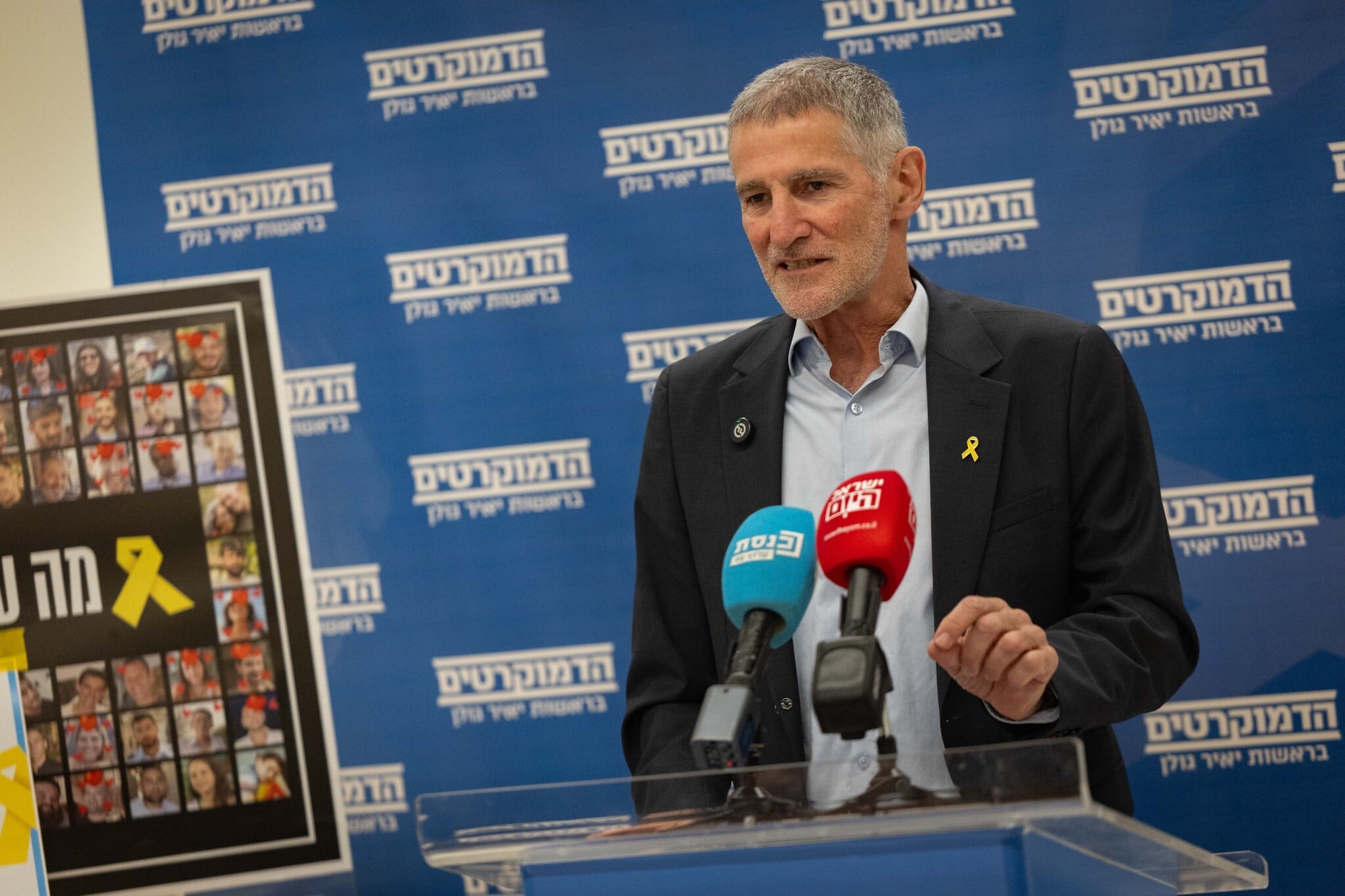
Democrats leader Yair Golan leads a faction meeting at the Knesset on October 27, 2025. (Yonatan Sindel/Flash90)
Democrats leader Yair Golan says that Prime Minister Benjamin Netanyahu’s “illegal” pardon request to President Isaac Herzog and the coalition’s proposed bill regulating ultra-Orthodox conscription are part of the same campaign to remain in power.
“While Netanyahu is running a pardon campaign for himself and talking to us about unity, he is simultaneously spearheading a law that exempts tens of thousands of Haredim from military service,” says the leader of the left-wing party ahead of a faction meeting.
“They are one campaign: Netanyahu’s personal survival campaign to remain in power: a campaign in which the state’s institutions, security, rule of law, and the public are all sold out, trampled upon, and abandoned to save a single person,” he says.
Addressing President Herzog directly, Golan says, “You, who grew up in the political home of Ben-Gurion, of Rabin, a home where the rule of law was sacred, you must decide: Are you loyal to the state and the law, or are you ‘keeping Netanyahu united?’”
Golan was referencing an infamous gaffe Herzog made during an impromptu live television debate with Netanyahu when they ran as rivals in the 2015 election. Herzog, meaning to say he would keep Jerusalem united if elected prime minister, accidentally vowed to “keep Netanyahu united,” to snickers from the premier and much media ridicule.
“I know that your father, President Chaim Herzog, would have kicked Netanyahu out the door, without hesitation and without blinking,” Golan adds.
Syrian government replaces Assad regime’s state newspaper with its own
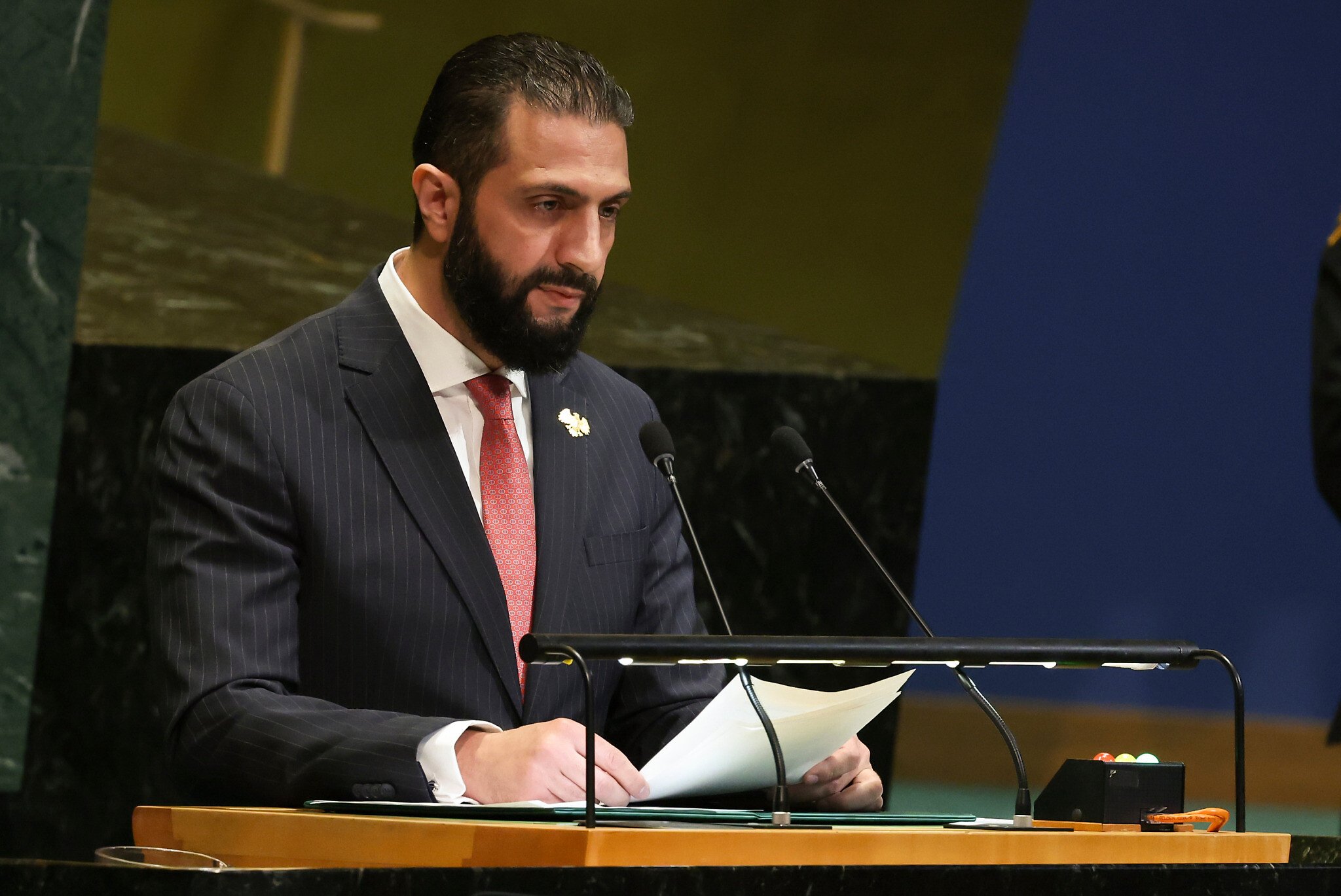
Syria President Ahmad Sharaa speaks during the 80th session of the United Nations General Assembly, September 24, 2025, at UN headquarters. (AP/Heather Khalifa)
Syria publishes the first print issue of the official Al Thawra Al Souriya newspaper, the latest government-owned media outlet to launch since the fall of longtime ruler Bashar al-Assad last year.
The move brings print media back for the first time in five years. Assad’s government stopped printing dailies during the COVID-19 pandemic, citing rising printing costs and distribution challenges.
Al Thawra Al Souriya, meaning “the Syrian revolution” in Arabic, will replace Al Thawra, which was an Assad-era state newspaper.
Information Minister Hamza Mustafa said at the launch ceremony that he wanted the newspaper to be “a mirror to people’s pain, their daily lives and their hopes in a space of free discussion.”
Under Assad, media freedoms were heavily restricted, with strong security control over content and regular harassment of journalists.
State media would repeat the government narrative and only a handful of privately owned outlets, aligned with the government, were allowed to operate under tight control.
Syria’s new authorities took over and relaunched pre-existing outlets, including state media such as news agency SANA, and private publications have been allowed to operate.
Israeli delegation heads to Germany to hand over Arrow 3 missile defense system

The Arrow air defense system is seen in a video published by the Defense Ministry on November 13, 2023. (Defense Ministry)
An Israeli delegation has departed for Germany to participate in a ceremony marking the handover of Israel’s Arrow 3 long-range missile defense system to the German Air Force.
The delegation, led by Defense Ministry Director General Amir Baram, includes the chief of the ministry’s Directorate of Defense Research & Development, Danny Gold; Israel Aerospace Industries CEO Boaz Levy; the director of Israel’s Missile Defense Organization, Moshe Patel; and other top officials, the ministry says.
The ministry says the ceremony will mark the “initial operational capability handover” of the Arrow 3 to the German Air Force, and the first time that Israel is delivering the advanced air defense system to another country.
The nearly €4 billion ($4.6 billion) sale of the Arrow 3 to Germany, considered the largest defense export deal in Israel’s history, was signed in September 2023.
The Arrow 3 system is designed to take out ballistic missiles while they are still outside of the atmosphere. It has downed hundreds of ballistic missiles launched at Israel by Iran and the Iran-backed Houthi terror group in Yemen during the current war.
Saturday night rallies at Hostages Square to end, says family of slain hostage Ran Gvili; pre-Sabbath gatherings instead
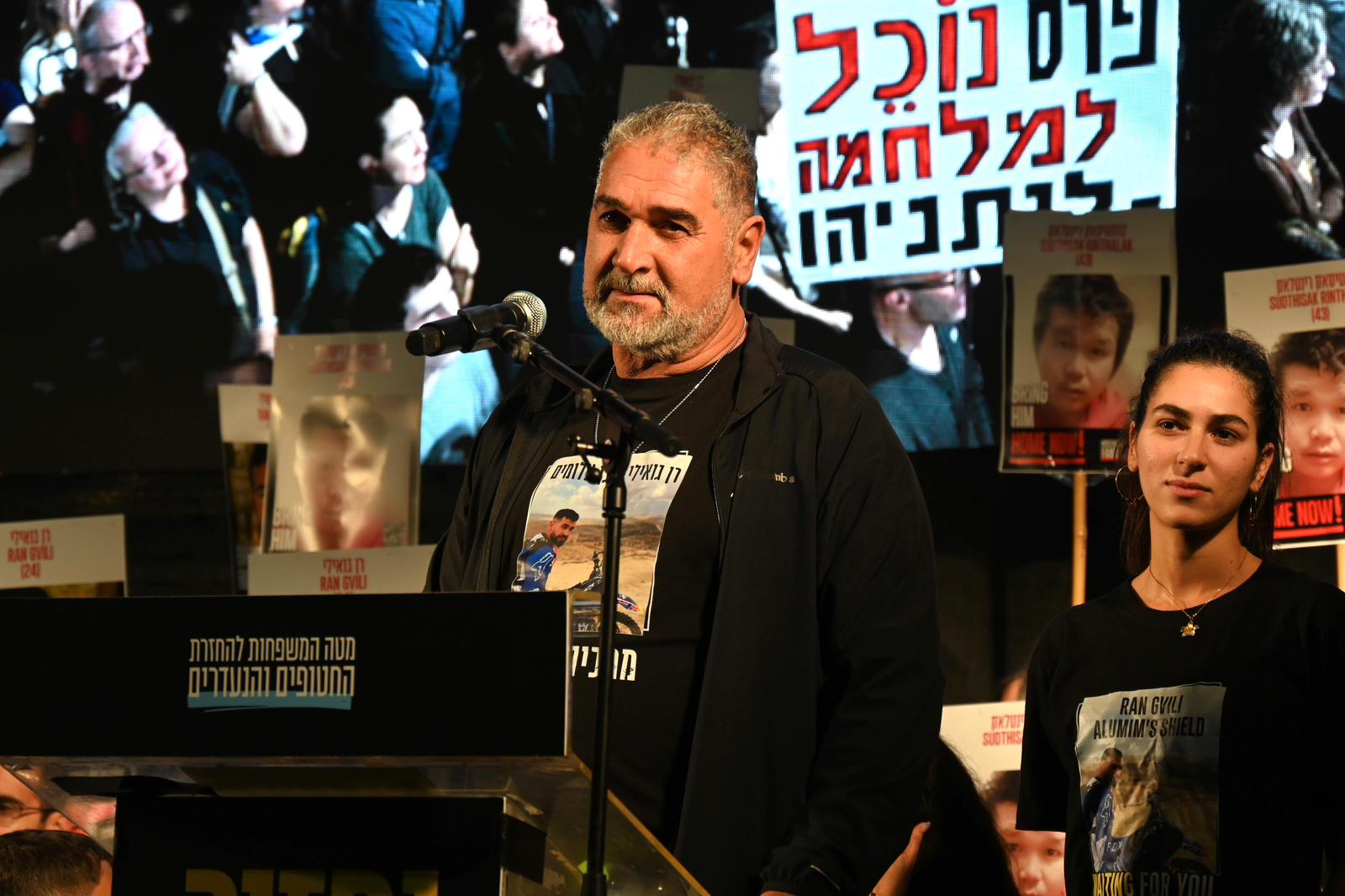
Itzik Gvili, the father of slain hostage Ran Gvili, speaks at Hostages Square, in Tel Aviv, on November 29, 2025. (Uriel Even Sapir/The Hostages and Missing Families Forum)
The family of Ran Gvili, one of the two remaining deceased hostages held in Gaza, says that the weekly Saturday night rallies that have been held for two years at Hostages Square will end, as they pivot to pre-Sabbath gatherings held on Friday afternoons at the Tel Aviv plaza.
With the release of the body of Dror Or last week, the two remaining slain hostages whose bodies are held in Gaza are Ran Gvili and Thai worker Sudthisak Rinthalak, whose family is in Thailand.
The Hostages and Missing Families Forum, the ad-hoc organization that has supported the hostages’ families for the last two years, told The Times of Israel last week that it will be greatly narrowing its activities now that there are only two families left to support and far fewer donations to support them.
The Gvili family belongs to both that forum as well as the right-wing Tikvah Forum, whose smaller number of hostages’ families advocated military pressure in Gaza rather than ceasefire deals.
The Gvilis say they are exhausted from waiting but won’t be worn down in the struggle for their son’s return.
“The time will come for a thanksgiving rally, a closing rally, and a moment to thank the people of Israel,” says the family. “Please do not take down the yellow flags; do not remove Rani’s photos from the streets. The struggle is not over — it is only changing its form.”
The family invites supporters to join them this Friday at Hostages Square for the Kabbalat Shabbat service, to hear about their son and to welcome the Sabbath.
Gvili, a member of the police’s Yasam counter-terror unit, rushed to the frontlines the morning of October 7, 2023, heading to besieged Kibbutz Alumim. He fell in battle during the Hamas-led attack, and terrorists abducted his body into Gaza.
The family noted that it has been 787 days that Gvili has been held in Gaza, and that Israel must not move to the second stage of the peace deal for Gaza as long as even one hostage remains in the Strip.
“We wish to remind the mediators, led by the Prime Minister of Qatar, that the essence of the agreement is the return of the hostages,” say the Gvilis. “The Hamas terror organization has violated the agreement from the outset. Qatar, Hamas’s partner in the October 7 massacre, should not be searching for excuses to back away from Hamas’s obligation to return the last of the hostages, nor assist the organization in violating the agreement. Rani and Sudthisak are not bargaining chips, and we cannot abandon them — they must come home.”
Levin, Chikli: Gov’t won’t take part in ‘absurd performance’ of High Court case on AG dismissal
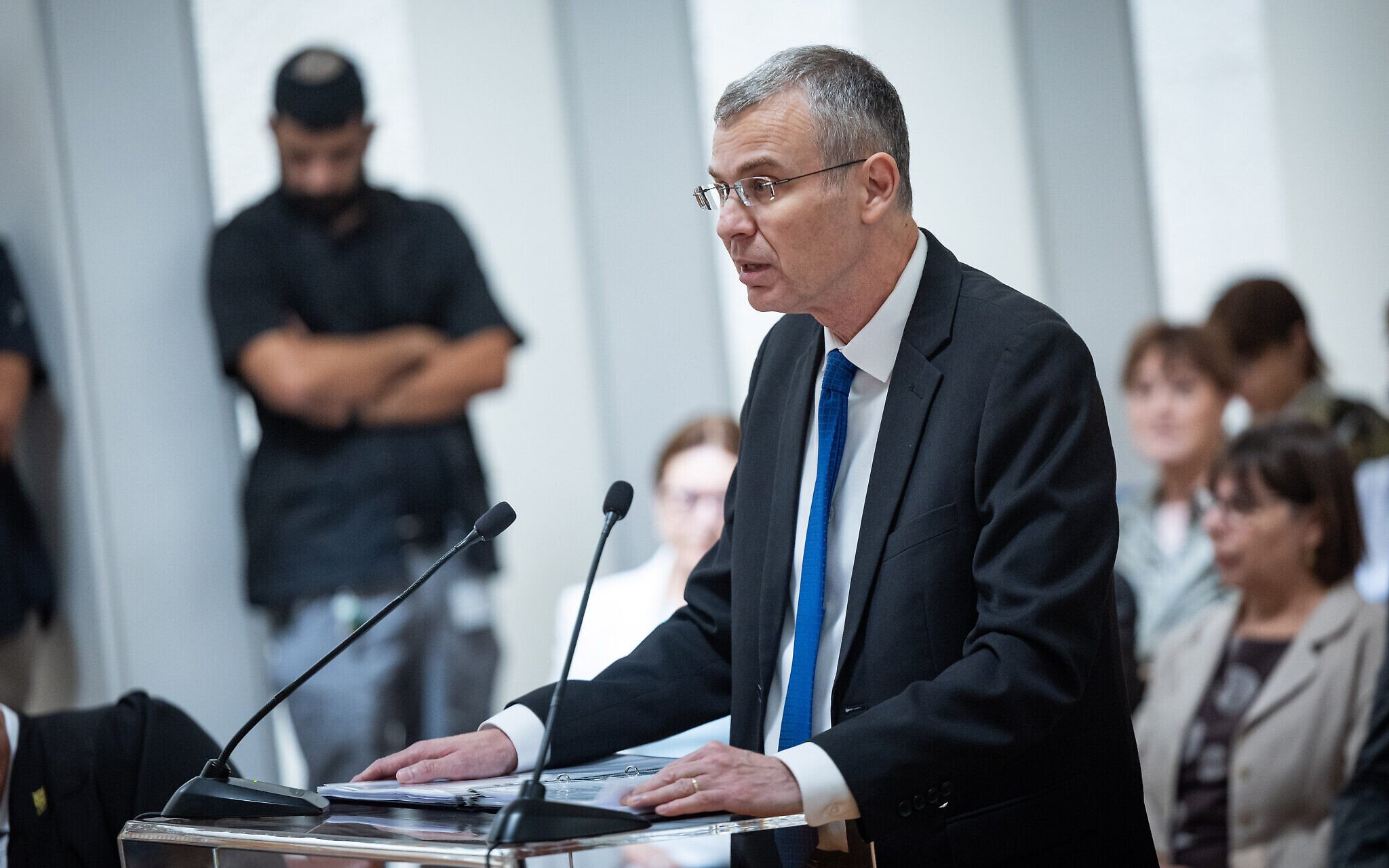
Justice Minister Yariv Levin speaks a ceremony for outgoing Supreme Court Justice Yosef Elron at the Supreme Court in Jerusalem, September 18, 2025. (Yonatan Sindel/Flash90)
Justice Minister Yariv Levin and Diaspora Affairs Minister Amichai Chiki release a statement aiming to justify their decision not to send a lawyer to represent the government in a High Court hearing over the decision to fire the attorney general, saying “the government will not participate in this absurd performance.”
The two ministers are responding to the High Court’s decision not to hold oral arguments over the petitions demanding the court annul the dismissal of Attorney General Gali Baharav-Miara earlier this year, owing to the fact that the government decided not to send a lawyer to argue its position.
“There is no legal process in the world in which a government official who has been removed from office subjugates the legal advisory service and the State Attorney’s Office to represent herself instead of the government, and to prevent her own dismissal,” say the two ministers.
Levin and Chikli also protest the fact that since the High Court froze the dismissal of Baharav-Miara pending a final decision, she has remained in office and issued a legal submission on behalf of the state asserting that her dismissal was unlawful.
“The government cannot participate in a process whose outcome is predetermined – making the government the only entity in the State of Israel upon whom the decision as to who will be its legal adviser is forced on it,” say Levin and Chikli.
Trump warns Israel not to ‘interfere’ in Syria, days after IDF battle with gunmen

US President Donald Trump speaks to reporters after speaking to troops via video from his Mar-a-Lago estate on Thanksgiving, November 27, 2025, in Palm Beach, Florida. (AP Photo/Alex Brandon)
US President Donald Trump warns Israel against destabilizing Syria and its new leadership, days after IDF soldiers battled gunmen in the country’s south.
“It is very important that Israel maintain a strong and true dialogue with Syria, and that nothing takes place that will interfere with Syria’s evolution into a prosperous State,” Trump says on his Truth Social platform.
Trump says he is “very satisfied” with Syria’s performance under its new president, Ahmed al-Sharaa, a former rebel who made a historic visit to the White House in November.
Trump has been pushing for a security pact between Israel and Syria since Sharaa’s Islamist coalition overthrew longtime ruler Bashar al-Assad a year ago.
But tensions have risen over strikes by Israel on Syria, where the IDF maintains a presence in the south. In the deadliest so far, Israeli troops came under fire during an arrest operation, with six soldiers sustaining injuries. Syrian media said 13 people were killed in the clash.
Trump says Sharaa “is working diligently to make sure good things happen, and that both Syria and Israel will have a long and prosperous relationship together.”
He adds that the United States is “doing everything within our power to make sure the Government of Syria continues to do what was intended” to rebuild the war-torn country.
Good relations between Syria and Israel would add to his efforts for a wider Middle East peace amid the fragile Gaza ceasefire, which took effect in October, Trump adds.
Over 60 heads of local authorities: Haredi conscription bill presents ‘danger’ to society
More than 60 heads of local authorities jointly assail the bill regulating Haredi conscription that was unveiled by Likud MK Boaz Bismuth earlier today.
“IDF conscription is one of the most meaningful expressions of the shared Israeli destiny,” the officials write in a letter to Prime Minister Benjamin Netanyahu, Defense Minister Israel Katz and Bismuth, who chairs the Knesset Foreign Affairs and Defense Committee, according to Hebrew media. “It defines our national resilience, which depends on responsibility and shared contribution to the state and defending its citizens.”
The officials also point to the IDF’s need for additional manpower and say, “The conscription law being advanced presents a danger to the social fabric and will deepen the crisis between the country’s citizens and its institutions.”
The letter comes as several members of the governing coalition have attacked the bill, which would enshrine exemption from enlistment for large numbers of Haredi men. The opposition has also decried the bill.
IDF solider wounded in Gaza, apparently by friendly fire, military says
An IDF soldier was moderately wounded in an apparent incident of friendly fire in the northern Gaza Strip earlier today.
According to the military, the soldier was wounded by shrapnel caused by a tank shell that was fired during operational activity in the area.
The soldier was taken to a hospital and his family was notified, the military adds.
Israel reportedly gives 2-week extension to measure allowing Palestinian banks to operate

Illustrative: A man counts stacks of Israeli shekel and US dollar banknotes at an informal money exchange stall in Deir al-Balah in the central Gaza Strip on July 2, 2024. (Bashar TALEB / AFP)
Israel has reportedly granted a two-week extension to an indemnity waiver allowing Israeli banks to conduct transactions with Palestinian ones.
The waiver was set to expire yesterday, in what risked collapsing the Palestinian economy in the West Bank, given that the Oslo Accords, signed in the 1990s, require it to run on the Israeli shekel. The extension was reported by several Palestinian news sites.
Finance Minister Bezalel Smotrich had been refusing to sign the waiver as part of his efforts to undermine the West Bank-based Palestinian Authority.
Prime Minister Benjamin Netanyahu sought to strip Smotrich of his authority on the issue last month, but the far-right minister threatened to collapse the government, leading the premier to back off, an Israeli official told The Times of Israel.
The two-week extension is a temporary solution, as Netanyahu seeks to address this issue, which has sparked alarm in the Trump administration, a US official said.
High Court: Courts can close hearings to public following series of disturbances
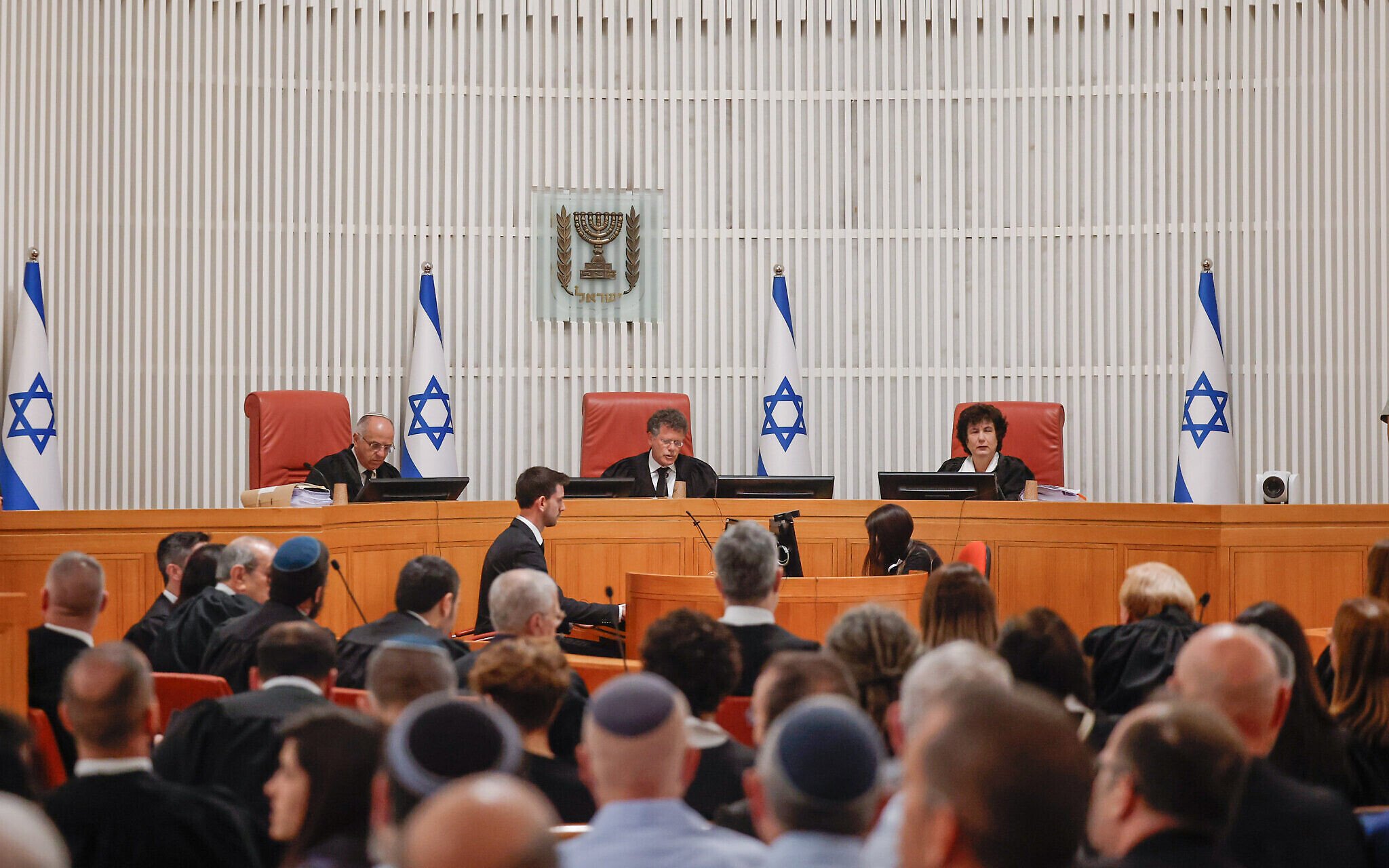
The High Court of Justice hears petitions against the firing of Shin Bet chief Ronen Bar in Jerusalem, April 8, 2025. (Yonatan Sindel/FLASH90)
The High Court of Justice issues a decision allowing judicial panels in all courts to close their hearings to the public if it has reason to fear that there will be riots, disturbances, or other significant interruptions by attendees during the scheduled hearing.
Closing hearings to the public will be possible, however, only when the hearing is broadcast live by the Judicial Authority, or broadcast on a closed circuit TV system, so that viewers from the public are able to watch proceedings in a separate room in the courthouse.
The High Court decision is issued by the seven-justice panel hearing petitions against the government’s dismissal of the attorney general. It says that the reason for the move is several recent instances in which High Court and lower court proceedings have been disturbed by members of the audience, including lawmakers, who have repeatedly shouted at lawyers and judges during the hearings, and resisted being removed from courtrooms.
“Unfortunately, we have recently witnessed a new phenomenon that was previously unheard of – interruptions to hearings by the audience present in the courtroom, and attempts to make it difficult for lawyers to plead and for the court to do its job,” says the court.
It notes that some lawyers have reported being harassed by members of the public waiting outside courtrooms, while court security guards have been verbally abused when evicting audience members disturbing court proceedings.
“This is an attempt to intimidate the court, the parties [to legal proceedings], and their attorneys – and in effect, to prevent the court from carrying out its role in serving the public,” the court says.
Netanyahu and Trump reportedly speaking by phone following US president’s warning on Syria

US President Donald Trump (left) speaks with Prime Minister Benjamin Netanyahu in the Knesset, October 13, 2025. (Chip Somodevilla/ Pool via AP)
Prime Minister Benjamin Netanyahu and US President Donald Trump are speaking by phone, according to multiple Hebrew media reports.
The call comes after Trump warned Israel against destabilizing Syria and its new leadership, days after IDF soldiers battled gunmen in the country’s south.
“It is very important that Israel maintain a strong and true dialogue with Syria, and that nothing takes place that will interfere with Syria’s evolution into a prosperous State,” Trump said on his Truth Social platform.
The call also comes after Netanyahu requested a pardon in his long-running corruption trial, something Trump has supported.
IDF chief orders ‘thorough’ probe of killing of 2 Palestinian terror operatives who surrendered

IDF Chief of Staff Lt. Gen. Eyal Zamir (center) meets with Central Command chief Maj. Gen. Avi Bluth (left) and Judea and Samaria Division commander Brig. Gen. Kobi Heller, in the northern West Bank on December 1, 2025. (Israel Defense Forces)
IDF Chief of Staff Lt. Gen. Eyal Zamir has instructed army officials to complete an investigation into the deadly shooting of two Palestinian Islamic Jihad terror operatives who had surrendered to Border Police officers in the West Bank city of Jenin last week.
Zamir toured several villages in the northeast of the West Bank earlier today, where the IDF has been conducting a counterterrorism operation since Wednesday.
The military says that, during an assessment, Zamir noted that the shooting in Jenin requires “thorough clarification,” and he instructed that the “operational investigation be completed immediately after the conclusion of the ongoing Justice Ministry’s Department for Internal Police Investigations inquiry.”
The DIPI has opened a criminal investigation into three Border Police officers involved in the incident.
“We are operating continuously to thwart terror. We will strengthen the defense and security of the communities in Judea and Samaria [the West Bank]. We will not allow the terror threat to grow and will act to thwart it in advance through proactive offensive activity,” Zamir also says during the assessment, according to remarks provided by the IDF.
Trump invites Netanyahu to visit the White House ‘in the near future,’ PM’s office says
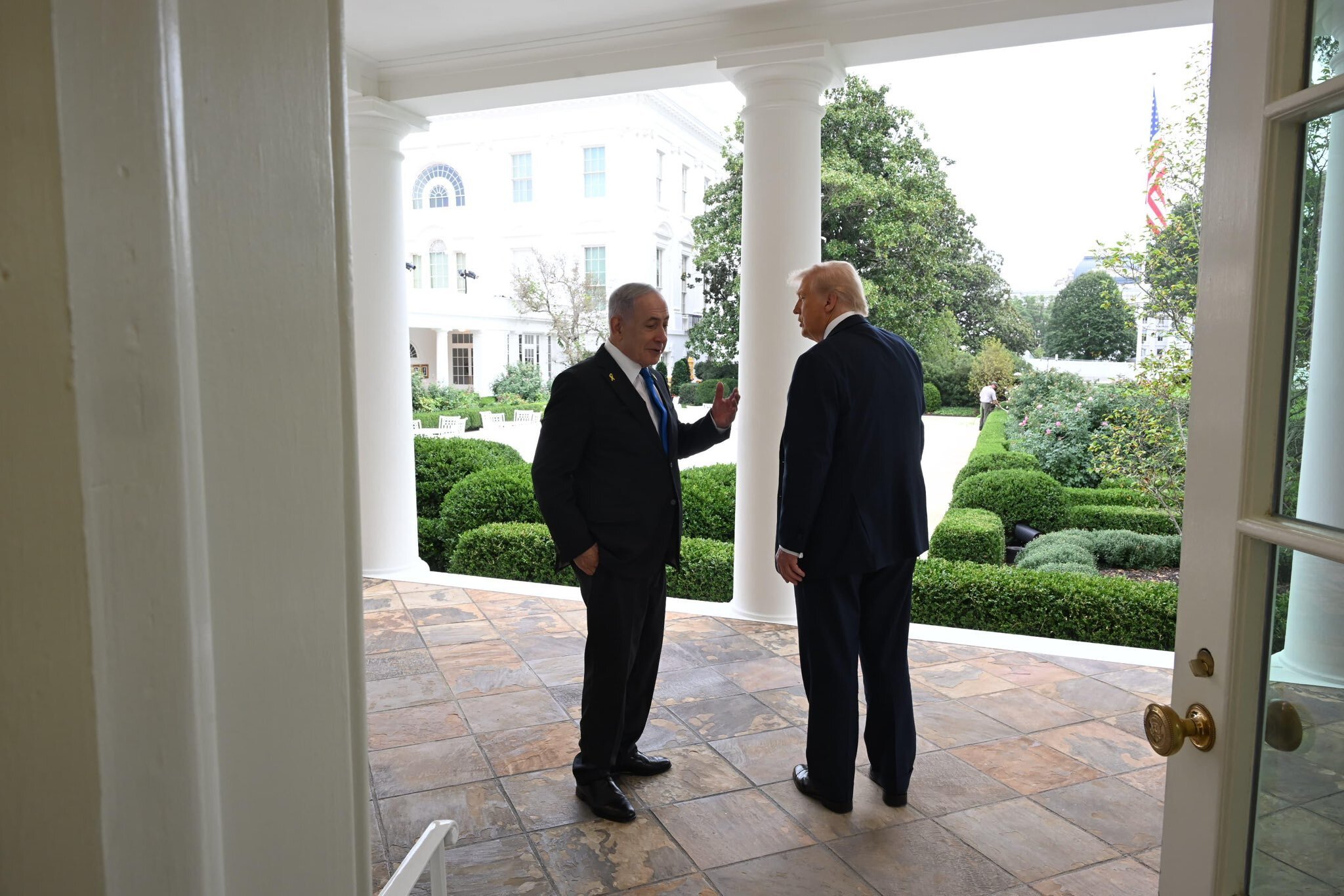
Prime Minister Benjamin Netanyahu (left) talks with US President Donald Trump at the White House in Washington DC, September 29, 2025. (Avi Ohayon / GPO, via Reuters)
US President Donald Trump invites Prime Minister Benjamin Netanyahu to visit the White House “in the near future,” during a phone call this evening, according to Netanyahu’s office.
The two leaders stress “the importance of and commitment to dismantling Hamas’s military capabilities and demilitarizing the Gaza Strip, and discussed the expansion of the peace accords,” according to the Israeli readout.
The visit would be Netanyahu’s fifth since Trump returned to the White House in January.
The call comes after Trump warned Israel against destabilizing Syria and its new leadership, days after IDF soldiers battled gunmen in the country’s south.
“It is very important that Israel maintain a strong and true dialogue with Syria, and that nothing takes place that will interfere with Syria’s evolution into a prosperous State,” Trump said on his Truth Social platform.
The call also comes a day after Netanyahu formally requested a pardon from President Isaac Herzog in his corruption trial, without acknowledging guilt — a pardon Trump has personally backed including in a public exhortation to Herzog in the Knesset in October and a subsequent letter.
Terrorist who invaded Nahal Oz on October 7 killed in Gaza airstrike last month, IDF says
A Palestinian Islamic Jihad terrorist who invaded Israel during the Hamas-led October 7, 2023, onslaught was killed in an airstrike in Gaza last month, the military says it is able to confirm.
The Israeli strikes on November 22 came in response to an attack by a Palestinian gunman on troops in the Strip’s south.
The IDF says that it can now confirm that one of those strikes killed Alaa Khudar, who it says served as the chief of Islamic Jihad’s elite forces in Gaza City.
On October 7, 2023, Khudar invaded Kibbutz Nahal Oz, the army says, adding that he also led other attacks on Israeli troops and civilians during the war.
צה"ל חיסל את אחראי הנוח'בה של ארגון הטרור הג'יהאד האיסלאמי בחטיבת העיר עזה אשר פשט לקיבוץ נחל עוז בטבח הרצחני ב-7 באוקטובר
בעקבות הפרת הסכם הפסקת האש במהלכה מחבלי חמאס ירו לעבר כוחות צה"ל ב-22 בנובמבר 2025, צה"ל תקף בהובלת פיקוד הדרום, באמצעות חיל האוויר ובהכוונת אמ"ן ושב"כ,… pic.twitter.com/2pS42d30nf
— צבא ההגנה לישראל (@idfonline) December 1, 2025
New German tribunal launched for Nazi-looted art cases

Illustrative. Courier service staff prepare to ship the 16th-century Italian painting 'Madonna with Child,' attributed to Alessandro Turchi, which was looted from a private Polish collection by Nazi Germany during World War II, at the Polish embassy in Tokyo on June 1, 2023. (AP Photo/ Eugene Hoshiko/ File)
A new German tribunal starts work on resolving disputes over cultural property seized by the Nazis, a move the government hopes will streamline the process for outstanding claims.
The Arbitration Panel for Stolen Goods from the Nazi Era will issue binding decisions and “better address the cases still open today,” a government statement says.
The new body will replace an advisory commission that previously handled such disputes, but unlike that commission, its decisions will be binding.
It will also enable claimants to launch a case on their own, as opposed to the previous system, where both the claimant and the current holder of the disputed property had to agree to arbitration.
Between Adolf Hitler’s rise to power on January 30, 1933, and Germany’s capitulation in World War II on May 8, 1945, hundreds of thousands of cultural goods were stolen, mostly from Jewish owners.
At the end of 1998, after decades of inertia, Germany and 43 other states committed to locating and returning artworks stolen by the Nazis.
However, 80 years after the fall of the Third Reich, not all looted assets have been returned to the victims’ descendants.
The new body shows that Germany is “assuming its historical responsibility,” said German Culture Minister Wolfram Weimer.
When the previous government announced plans for the new tribunal in January, a group of lawyers and victims’ descendants expressed concerns that it might ultimately disadvantage them.
The Central Council of Jews in Germany and the Jewish Claims Conference, an organization seeking compensation for Holocaust survivors, support the new system and were involved in its conception.
Transportation minister says drivers who text will be fined NIS 10,000
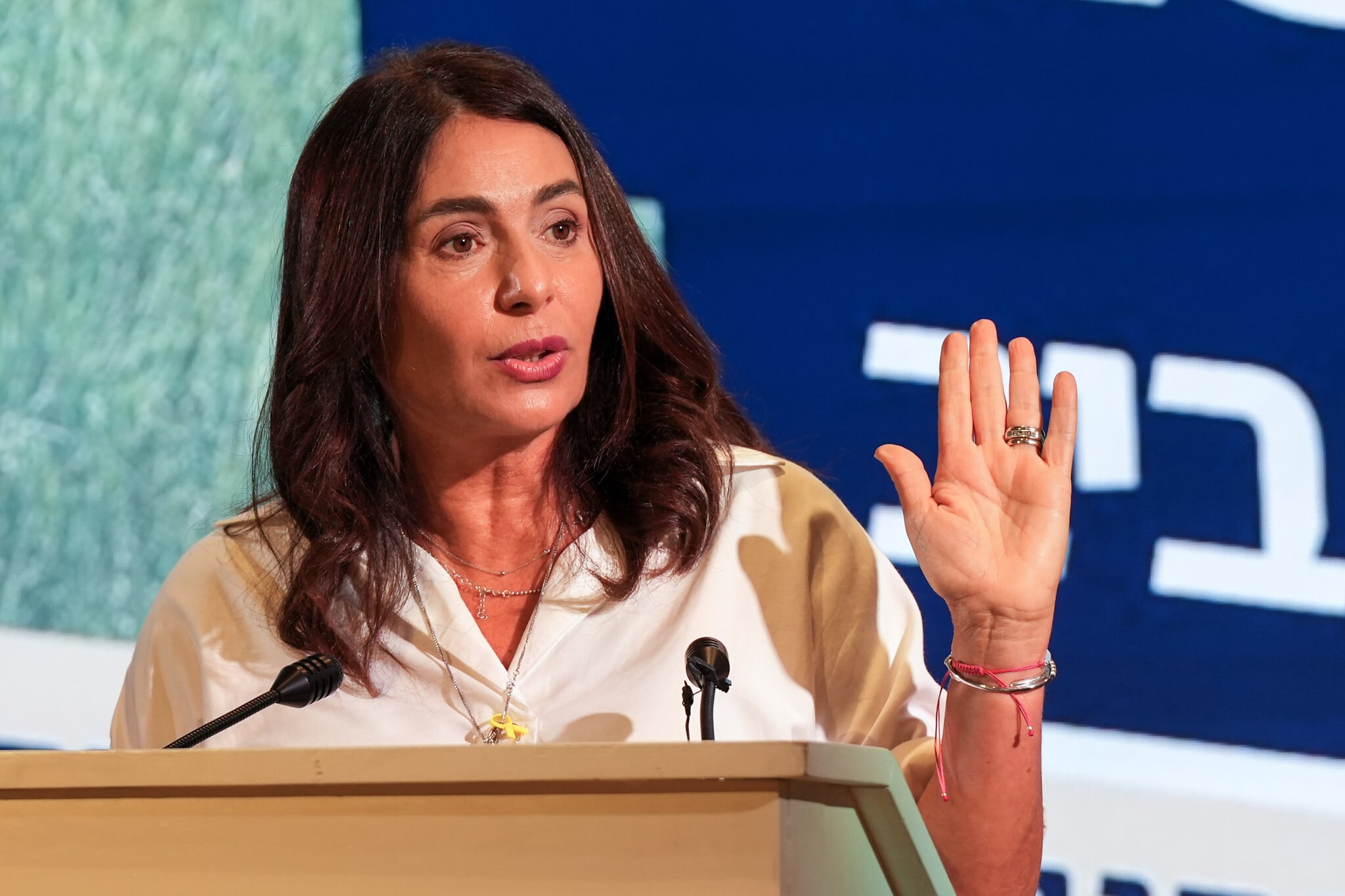
Transportation Minister Miri Regev attends a ceremony marking the beginning of construction of the Israel Railways line from Kiryat Shmona, in the northern Israeli city of Kiryat Shmona, August 18, 2025. (Ayal Margolin/ Flash90)
Transportation Minister Miri Regev says police will begin enforcing hefty fines of NIS 10,000 ($3,000) against drivers who use their phones on the road.
Speaking at a conference on transportation, energy and infrastructure hosted by the Yedioth Ahronoth news group, the minister blames a recent uptick in traffic accidents on the behavior. More than 400 people have been killed on Israeli roads this year.
According to Regev, law enforcement will begin issuing the steep fine without so much as a court hearing on the first offense. Drivers run the risk of having their cars seized if caught using their phones a second time on the road.
“We will go so far as to confiscate the vehicle. If they [police] catch a person texting, they will immediately give him an NIS 10,000 fine the first time. He won’t go to court,” she says, according to Ynet. “The second time, it will be the confiscation of the vehicle.”
French authorities detain two minors in terror probe, said to plan to attack Israeli targets
French authorities have launched an investigation into a group suspected of planning attacks, reportedly on Israeli targets, and two minors have been charged and placed in pre-trial detention as a result of it, France’s national anti-terrorism prosecutor’s office says.
In a statement issued after a report in French media, the office also says that since the start of 2025, a total of 20 minors have faced terrorism-related charges.
Media outlet Franceinfo reports that the two minors had been planning an attack on “Israeli targets,” citing a source close to the investigation. The anti-terrorism prosecutor’s office does not immediately confirm that in its statement.
Retired IAF chief says Oct. 7 was ‘tasting menu’ of future threats, urges defense innovation

Retired Israeli Air Force commander and former Defense Ministry director general Amir Eshel speaks at the DefenseTech Summit at Tel Aviv University, December 1, 2025. (Defense Ministry)
Retired Israeli Air Force commander and former Defense Ministry director general Amir Eshel warns that the threats Israel faces in the coming years will be far more severe than those seen in the Hamas-led October 7, 2023, attack, and calls for urgent national preparation and large-scale investment in defense innovation.
“October 7 was experienced in Israel as a modern war and a successful one, which is true. I want to argue that we went through, in some aspect, a tasting menu,” Eshel says at the DefenseTech Summit, held by the Defense Ministry’s R&D directorate and Tel Aviv University. “The next wars – ours and everyone else’s – will be orders of magnitude more challenging. We must prepare now.”
Eshel outlines a future battlefield flooded with “magnitudes [more threats] than the Iranian attack on October 1, 2024,” including stealth and AI-powered autonomous drones, along with electronic warfare, directed-energy weapons, cyber operations, and attacks on critical civilian and military infrastructure. “It will be a different ball game,” he says.
Modern armies, he warns, “currently lack effective defensive solutions against those evolving threats.”
Despite rising global demand for security technologies, Eshel says commercial investors remain hesitant due to fears of tech bubbles and past experiences in the offensive cyber sector.
He urges a national focus “to acquire ‘good enough,’ mass-produced, and affordable offensive and defensive capabilities,” adding that Israel’s defense exports will become increasingly vital as new US regulations on emerging technologies take effect.
“Israel remains one of the global leaders, but competition is first,” he says. “Israel’s qualitative military edge is based on US support and genuine Israeli technology. We should boost our efforts to preserve and extend the edge… This is the moment.”
Iran sentences award-winning director Jafar Panahi to year in prison in absentia, lawyer says

Iranian director, screenwriter, and producer Jafar Panahi poses during a photocall for the film, 'Un simple accident' (A Simple Accident) at the 78th edition of the Cannes Film Festival in Cannes, southern France, on May 21, 2025. (Miguel MEDINA / AFP)
Iran has sentenced Palme d’Or-winning filmmaker Jafar Panahi, in absentia, to one year in prison, and has ordered a travel ban over “propaganda activities” against the country, his lawyer tells AFP.
The sentence includes a two-year travel ban and prohibition of Panahi from membership in any political or social groups, lawyer Mostafa Nili tells AFP, adding that they would file an appeal.
Nili says the charges against Panahi were engaging in “propaganda activities” against the state but did not elaborate. “Mr. Panahi is outside Iran right now,” he adds.
Panahi, 65, won the Cannes Film Festival’s top prize this year for “It Was Just an Accident,” a film in which five ex-inmates contemplate whether to exact revenge on a man they believe to be their former jailer.
Last month, he was on a tour of the United States visiting Los Angeles, New York, and Telluride to promote his latest Oscar-hopeful movie.
The film has been selected by France as its official nomination for the Academy Awards, and is widely expected to make the shortlist for the Best International Feature at the gala event in March.
Panahi’s win was reported by Iranian media, which, at the time, hailed the award with a picture of him.
In 2010, Panahi was banned from making movies and from leaving the country after supporting mass anti-government protests a year earlier and making a series of films that critiqued the state of modern Iran.
Convicted of “propaganda against the system,” he was sentenced to six years in jail, but served only two months behind bars before being released on bail.
A year after being handed a 20-year ban on filmmaking, he dispatched a documentary with the title “This is Not a Film” to the Cannes Festival on a flash drive stashed in a cake.
In 2022, he was arrested in connection with protests by a group of filmmakers, but was released nearly seven months later.
Last year, multi-award-winning director Mohammad Rasoulof fled Iran to escape a prison sentence on charges of “collusion against national security.”
US officials warn Netanyahu not to turn ‘new regime in Syria into an enemy’ – report
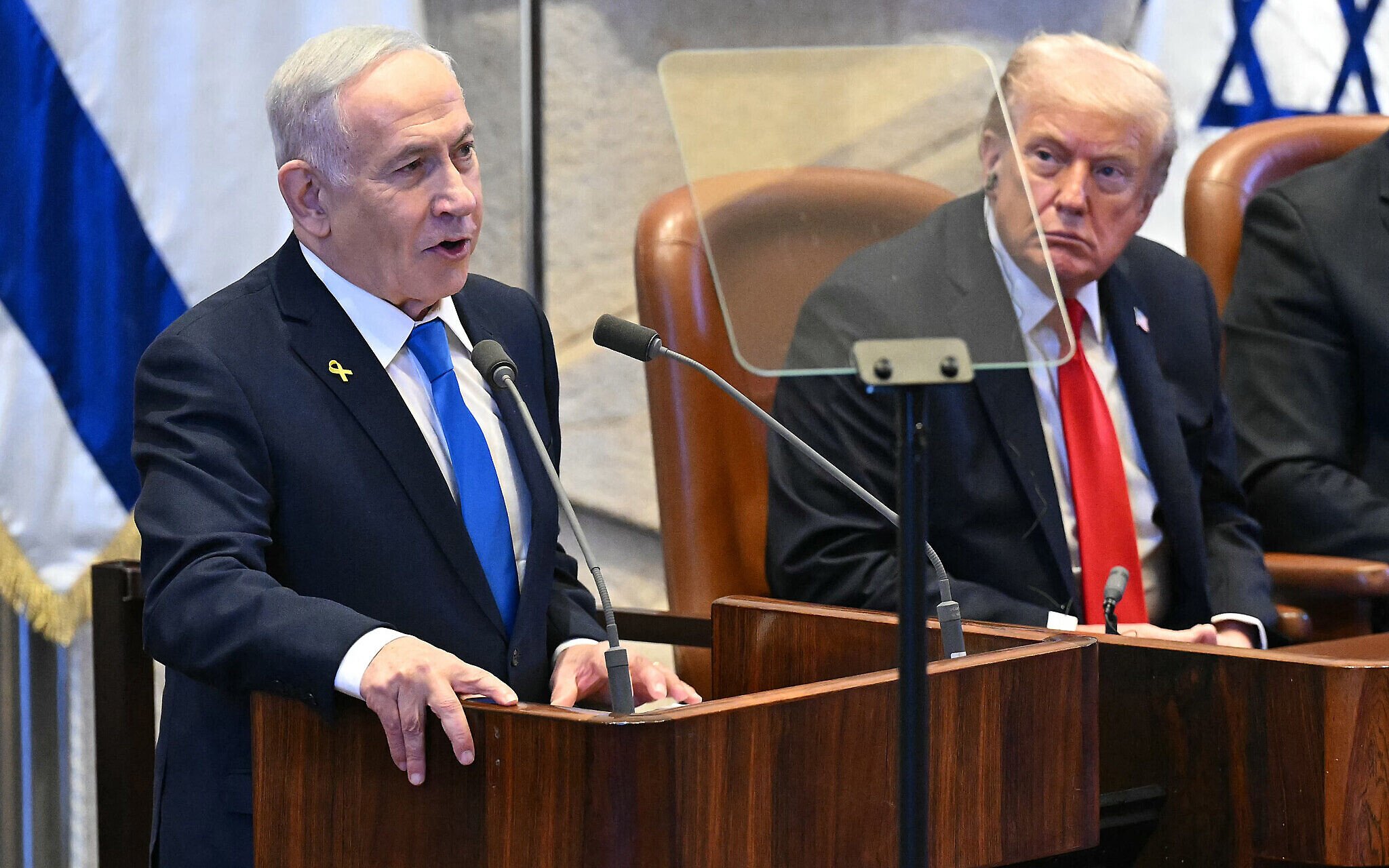
US President Donald Trump (R) listens to Prime Minister Benjamin Netanyahu as he addresses the Knesset, in Jerusalem on October 13, 2025. (SAUL LOEB/ POOL/ AFP)
The Trump administration is very frustrated with Israeli actions in Syria, and the issue is expected to be one of the principal topics of discussion during Prime Minister Benjamin Netanyahu’s White House visit, which is due to take place later this month, Channel 12 reports.
A social media post by US President Donald Trump that warns Israel not to “interfere” in Syria gave voice to those frustrations, which American officials expressed last night and this morning to their Israeli counterparts.
The post came days after Israeli troops were under fire from gunmen during an arrest operation in Syria, sparking clashes in which 13 people were killed, according to Syrian reports.
The network quotes a US official as saying, “Syria doesn’t want problems with Israel, it’s not like the situation in Lebanon,” but warns that Netanyahu needs to change course before “he turns the new regime in Syria into an enemy of Israel.”
Netanyahu’s office announced the impending visit earlier today, a day after he requested a pardon in his ongoing corruption trial from President Herzog, a move Trump also supports.
Netanyahu aides say he won’t admit guilt after request for pardon in corruption trial – report
Prime Minister Benjamin Netanyahu and his wife Sara attend a Christian conference in Jerusalem, on July 27, 2025. (Chaim Goldberg/ Flash90)
Amid speculation that Prime Minister Benjamin Netanyahu’s pardon request on Sunday is an opening bid meant to start talks toward a modified admission of guilt, associates of the premier tell Channel 12 that Netanyahu will not admit guilt in his corruption trial.
“The prime minister will not admit guilt… The pardon request is not an ‘opening stance,'” the aides tell the Hebrew network.
According to the report, the request was prepared on Thursday, and throughout the weekend Netanyahu’s family debated whether to submit it.
Ultimately, Netanyahu’s associates, as well as his wife, Sara Netanyahu, supported the move, seeing it as “a win-win situation,” the report adds.
Their reasoning was reportedly that if President Isaac Herzog were to grant the pardon, the indictment would be thrown out and the trial would end; if he were to grant it only in exchange for an admission of guilt, Netanyahu’s camp could claim he was being pushed into an admission through extrajudicial means; and if Herzog were to refuse the request, they could publicly argue that the prime minister set aside his honor and requested a pardon while the legal establishment — including the president — was “mobilizing to convict him at any cost,” according to the network.
The report adds that Netanyahu discussed the pardon request with US President Donald Trump during their phone call this evening, and that the president — who himself urged Herzog to pardon the premier — welcomed the move.
Finance Ministry paper reportedly says draft bill won’t lead to a bump in Haredi enlistment
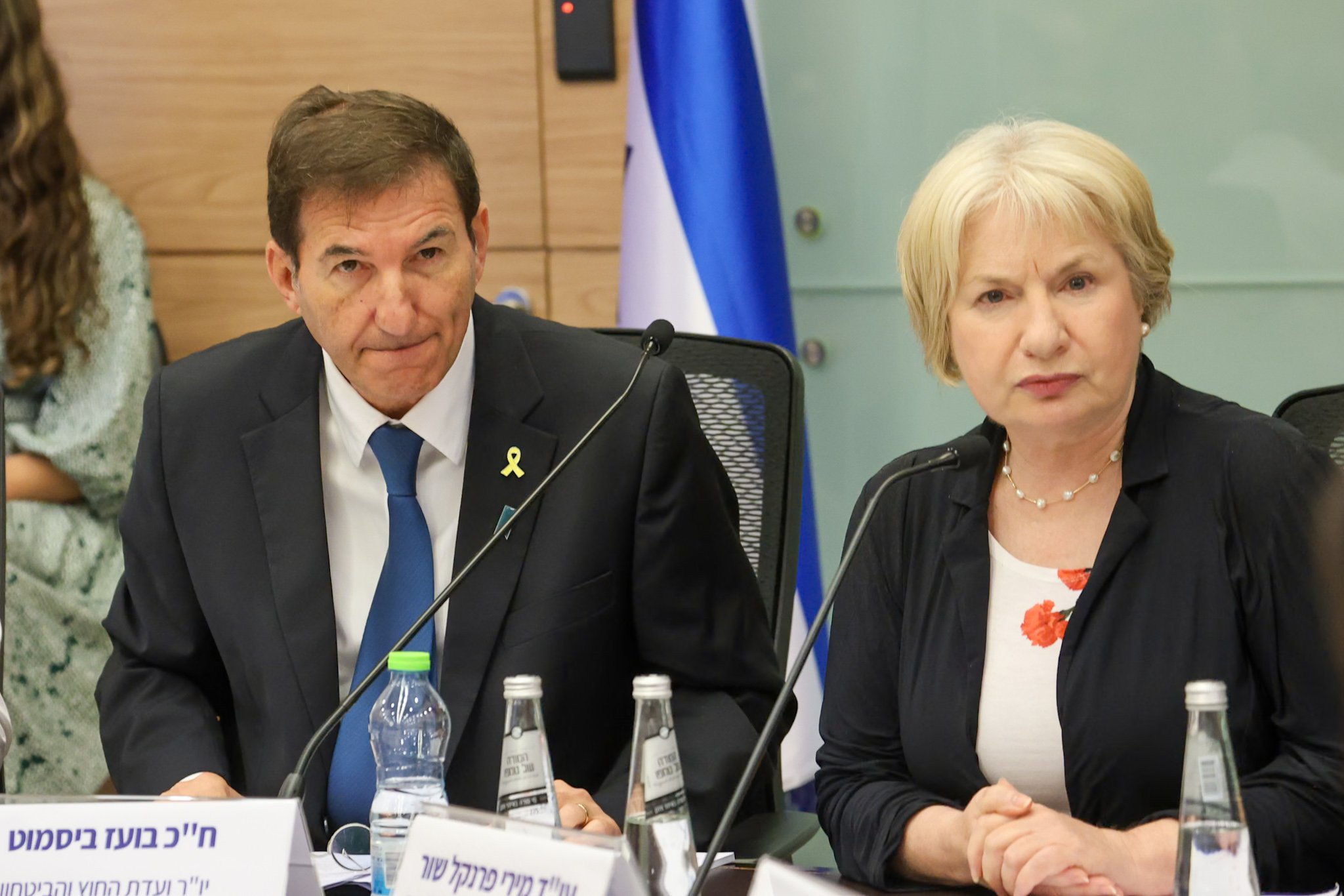
Knesset Foreign Affairs and Defense Committee legal adviser Miri Frenkel Shor (right) and chairman Boaz Bismuth during a discussion on ultra-Orthodox conscription, September 8, 2025. (Dani Shem-Tov/ Office of the Knesset Spokesperson)
A senior official in the Finance Ministry’s budget department has assessed that the recently unveiled bill regulating ultra-Orthodox conscription will not lead to an increase in enlistment, and could instead reduce the number of Haredim who join the military, Channel 12 reports.
The assessment was written to Knesset Foreign Affairs and Defense Committee legal advisor Miri Frenkel Shor. According to the network, the budget department warns that the bill jettisons the most effective sanctions against draft evaders, such as yeshiva stipends and daycare subsidies, while also artificially inflating enlistment rates by counting Haredim who choose to engage in civilian national service rather than join the military.
The Finance Ministry has long advocated for harsh sanctions on draft evaders. In a position paper sent to members of the Knesset Foreign Affairs and Defense Committee earlier this year, Yogev Gardos, the head of the ministry’s budget department, argued that sanctions would only be effective if they have a significant impact on household income, continue “over a long period of time,” and cannot be bypassed through alternative funding channels.
According to Gardos, benefits that could be cut under a sanctions regime for draft dodgers include daycare subsidies, yeshiva stipends, discounts on National Insurance Institute payments, housing subsidies, and property tax discounts.
Sanctions should also be personal and tied directly to the actions of an individual, rather than being linked to the collective failure to meet enlistment targets, Gardos added, asserting that to do otherwise would undercut any incentive to enlist.
The Finance Ministry made the same points in a 16-page opinion sent to the Defense Ministry in December, and an internal position paper circulated several days later.
Hardening tone, Smotrich said to tell his party he can’t support current text of draft bill

Finance Minister Bezalel Smotrich attends a committee meeting at the Knesset in Jerusalem on August 14, 2025. (Yonatan Sindel/Flash90)
Finance Minister Bezalel Smotrich told members of his far-right Religious Zionism party this afternoon that he cannot stand behind Likud MK Boaz Bismuth’s proposed bill regulating ultra-Orthodox conscription in its current form, the Kan public broadcaster reports.
Speaking with party MKs during their weekly faction meeting in the Knesset, Smotrich reportedly said that the legislation, as currently written, “does not permit supporting it.”
Smotrich’s comments within the closed-door meeting appear harsher in tone than what he told reporters a press conference this afternoon, when he said that his party “will vote only for a law that will bring about the real and rapid enlistment of the ultra-Orthodox into the army, to meet the needs of the IDF and ease the burden on soldiers, reservists, and their families.”
Smotrich had said that the party is preparing proposed changes to the bill and will “insist on their inclusion during the legislative process.” But he also appeared to argue that it is better to support this “imperfect” bill than none at all.
“It’s possible to continue opposing any law because it’s imperfect, and remain without ultra-Orthodox enlistment for many more years,” Smotrich said. “Or one can demonstrate leadership and backbone, withstand some pressure, insist on the truly important issues, and bring about an agreed-upon framework that will enact a real revolution and, after 77 years of serious distortion, begin to correct it.”
According to Kan, Smotrich dressed down Immigration Minister Ofir Sofer, a member of his party, during the meeting, due to a press conference Sofer had held earlier in the day at which he said that he would vote against the bill even if it costs him his position in cabinet.
In addition to Smotrich’s criticism, the Ynet news site reports that Religious Zionism MKs Ohad Tal and Simcha Rothman also lambasted Sofer for making his statement before the party could decide its official position.
In addition to Sofer, party lawmakers Moshe Solomon and Michal Woldiger have publicly expressed opposition to bill.
Speaking with Kan this evening, Likud MK Eliyahu Revivo said that due to internal opposition, the coalition does not currently have a majority in favor of the controversial legislation.
“I’m saying this based on knowledge, not speculation,” he told the network, echoing comments made earlier in the day during a discussion in the Foreign Affairs and Defense Committee.
Car-ramming suspected near Hebron, one lightly injured, alleged assailant fled
Medics and security forces are responding to reports of a suspected car-ramming on the Route 35 highway near the West Bank city of Hebron.
First responders say that one person is lightly wounded at the scene, and the alleged assailant fled.
The IDF says that immediately following the suspected attack, troops returned fire at the vehicle, which fled.
“IDF troops are conducting extensive searches after the terrorist,” the military says.
Two minors, one Russian, detained in France, suspected of plotting antisemitic attack
A French police officer stands in front of the Louvre Museum after a robbery, in Paris on October 19, 2025. (Dimitar DILKOFF / AFP)
Two minors, including a Russian national, have been placed in custody in Paris on suspicion of plotting an antisemitic attack, according to judicial and press sources.
The Russian, a Chechen 16-year-old who came to France with his mother four years ago, had sent a photo on WhatsApp of himself holding a knife and announced that he was “going to kill Jews in five days,” Le Parisien newspaper reports.
He was in contact with the other 16-year-old, who lives in the Paris region, and threatened to target a site of religious worship, the newspaper adds.
Confirming the press reports, France’s national anti-terror prosecutor’s office tells AFP that the pair had been charged with “participation in a terrorist criminal association with the aim of preparing one or more crimes against persons.”
France has charged 20 minors for terrorism-related offenses in 2025 so far, with prosecutors pointing to an uptick in young people being indicted for such plots over the past five years.
The pair’s detention brings this year’s total past the 19 minors charged with terrorism-related offenses across the whole of 2024.
‘You’re an animal’: Ex-hostage Alon Ohel says he was chained for year and a half, starved

Surviving hostage Alon Ohel speaks with Channel 12 in an interview aired on December 1, 2025. (Screenshot/Channel 12)
Alon Ohel, who was held captive by terrorists in Gaza for more than two years following the Hamas-led October 7, 2023, attack, tells Channel 12 that his legs were chained for a year and a half and that he and his fellow captives were intentionally starved.
“They take your freedom of movement, put chains on your legs,” he says.
In his first lengthy interview since being released, along with 19 other surviving hostages, on October 13, Ohel, 24, tells the network he was treated “like a monkey.”
“I would eat like a dog,” he says. “You’re not a person, you’re an animal.”
He adds, “Even in prison, there’s a system. I wasn’t in prison, I was in captivity. They’re crazy people. If you’re not strong mentally, you can go crazy.”
He added that his captors chose to starve them, even as he and his fellow hostages knew that those holding them had food. He said that at one point, all he was allowed to eat was dried dates, and that he appeared skeletal at times.
“You get used to starvation, to pains in your body all the time,” he says, adding that he spent “hours lying like a corpse.”
He says that he felt strengthened when he saw footage of Israeli protests calling for him and the other captives to be freed. He adds that Eli Sharabi, another hostage who was held with him until being released in a previous ceasefire earlier this year, became a father figure.
“We connected from the first moment,” he said. “There was this click, I can’t explain it.”
During one moment of frustration, he recounted how Sharabi hugged him and “it was the hug of a father, because the longing kills you, it’s so hard.”
“He carried me on his back many times,” Ohel adds.
Sharabi was a husband and father to two. His wife and children were murdered in the October 7 attack, which he learned only after his release.
“Eli would say to break is OK, to fall apart, to cry, but never lose hope,” Ohel says.
Ohel adds that he made a conscious choice to stay alive, and would speak to his mother at night.
“I would talk to her at night, yeah,” he said. “‘Everything’s okay, I’m alive,’ I would say it like that, out loud. I knew that’s what I needed to do, to talk to my mom, so she would maybe feel me, maybe.”
He adds, “My story really begins when I chose life. I had a choice at any given moment to take myself and give up, and I chose not to.”
IDF solider lightly injured in car-ramming, search continues for assailant
An IDF soldier was lightly injured in the car-ramming attack this evening near the West Bank city of Hebron, the military says.
According to the IDF, the assailant accelerated his vehicle into troops stationed at the Yehuda Junction, injuring one servicewoman, who was taken to a hospital for treatment.
Other soldiers at the junction opened fire on the car as it fled, hitting it, the military says.
“The forces are carrying out extensive searches and are blocking roads in the area in order to locate the terrorist,” the IDF adds.
Palestinian terror operative killed in Gaza drone strike, IDF says
A Palestinian terror operative who approached Israeli troops in the central Gaza Strip earlier today was killed in an airstrike, the military says.
The IDF says the operative was identified crossing the Yellow Line — demarcating the military’s withdrawal in the territory — by soldiers of the Gaza Division’s Southern Brigade who are stationed in the area.
The operative approached troops “in a way that posed an immediate threat,” the military says, adding that the soldiers directed a drone strike, which “eliminated the terrorist.”
‘Bibi sees ghosts everywhere’: US said to fume at PM over repeated strikes in Syria
The Trump administration is reportedly fuming at Prime Minister Benjamin Netanyahu over Israel’s repeated strikes in Syria.
“We are trying to tell Bibi he has to stop this because if it continues he will self-destruct,” a senior US official tells the Axios news site.
“Syria doesn’t want problems with Israel. This isn’t Lebanon,” a second senior US official says. “But Bibi is seeing ghosts everywhere.”
“We are trying to tell Bibi he has to stop this because if it continues he will self-destruct — miss a huge diplomatic opportunity and turn the new Syrian government to an enemy,” the official continues.


read more: