

Hebrew Language Olympiad expands to reach native Arabic speakers and Diaspora pupils
For the first time, non-Jewish Israelis are among 5,600 competing to solve a creative slew of linguistic challenges as contest organizers seek to turn love of language into a force that binds
 Add ToI as a Preferred Source on Google
Zev Stub is the Times of Israel's Diaspora Affairs correspondent.
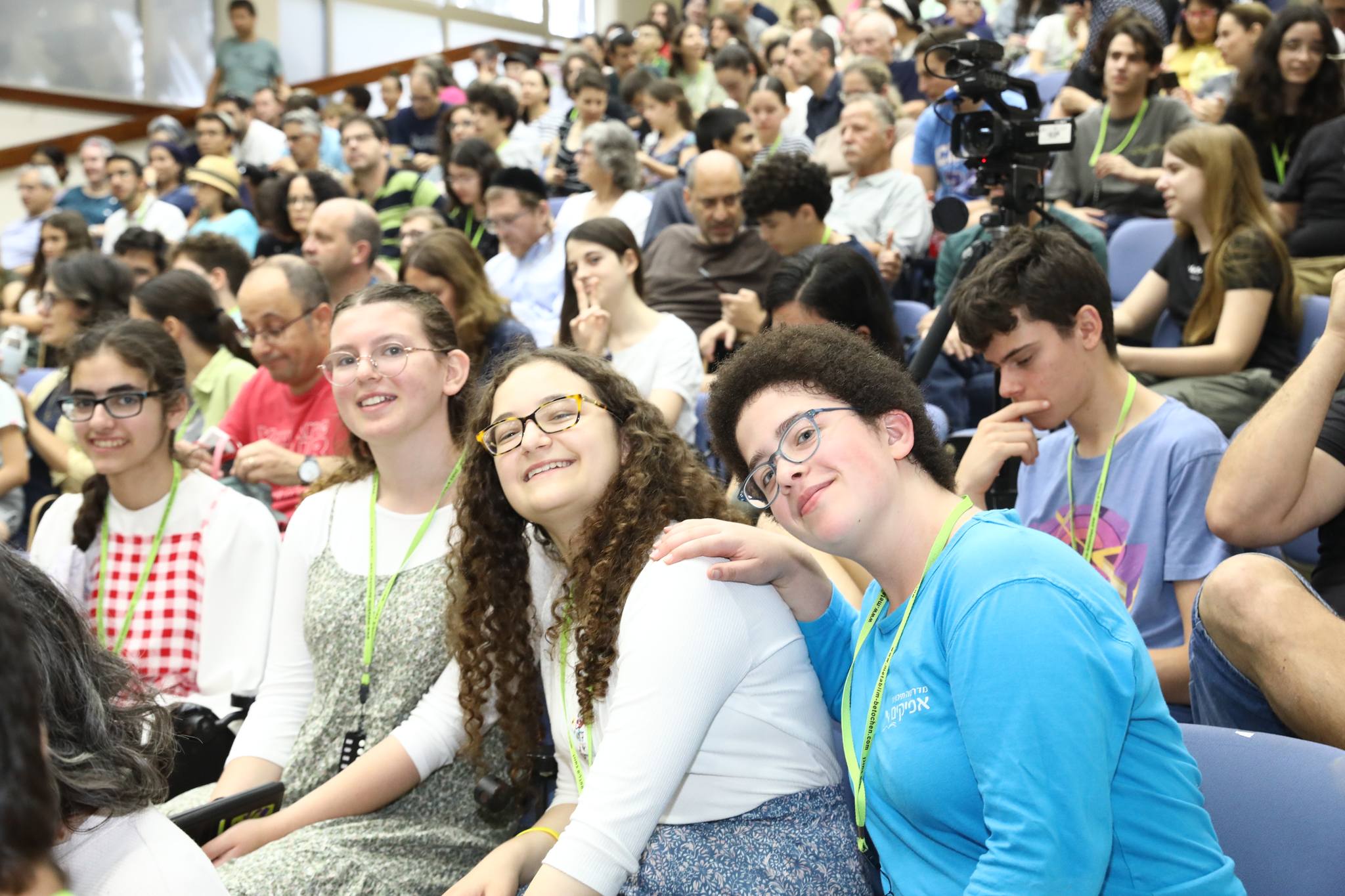
When the Hebrew Language Olympiad presents the awards to its 2025 winners in Jerusalem on Friday, one unlikely champ will accept his via a video call from Egypt.
Mahmoud, who is Muslim, joined the competition after speaking with an Israeli friend who had previously competed. As a person who loves languages and embraces challenges, Mahmoud was enthusiastic to participate.
“Hebrew, like any language, is a way to bring people together,” said Mahmoud, who asked that his last name be withheld from this article over concerns for his safety and privacy. “Languages are not just sounds that come out of the mouth; they are also how we can understand each other and make peace, which we so need in our day. This event gives me hope for a better world.”
Whether or not the Hebrew Language Olympiad can help bring peace in the Middle East, the contest’s organizers hope it will at least help spark greater interest in Hebrew.
“Our dream is that students from all over the world will participate, strengthening the learning and teaching of the Hebrew language,” Einat Gonen, a senior lecturer at Tel Aviv University’s Hebrew language department and the founder of the Hebrew Language Olympiad, told The Times of Israel.
Launched in 2021 at Tel Aviv University as an initiative directed at Israeli Jews, the contest is now expanding its horizons as it seeks to challenge students to think about language in new ways through novel linguistic challenges and unusual riddles. There are two groups, middle school and school, and all are welcome to try their luck in the first round.
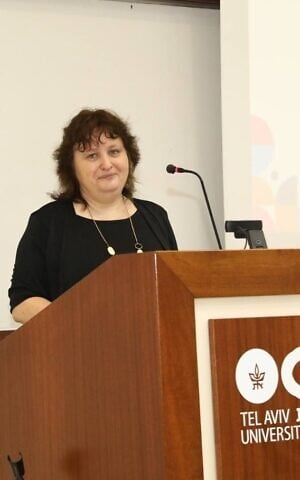
More than 5,600 people participated in this year’s event, held in collaboration with the Hebrew Language Academy, the Ministry of Education, and the Consortium for Teaching Hebrew at Brandeis. It is a project of the Koret Center for Jewish Civilization, part of TAU, and receives support from Israeli high-tech companies Check Point Software Technologies and Final.
This year, the Olympiad was expanded to include two other groups: learners of Hebrew as a non-native language living outside of Israel, and native Arabic speakers from Israel’s Muslim, Bedouin, and Druze communities.
Some 690 Arabic speakers from Israel competed in this year’s competition, along with 281 students from countries around the world, including the United States, Brazil, Germany, Sweden, Russia, Cyprus, Switzerland, England and Egypt. Most of the contestants in the latter group studied in Jewish schools or were children of Israeli parents living abroad, Gonen said.
“This is helping to create a new audience for Hebrew education in the Diaspora,” Gonen said, adding that even more are expected to participate next year.
This year’s Olympiad opened with an online competition during Israel’s Hebrew Language Week in January, with finals held in March and April at Tel Aviv University and other partner universities abroad. The awards ceremony was originally scheduled to be held in Jerusalem in July, but was postponed due to Israel’s surprise 12-day war with Iran.
The Olympiad is more than just a glorified spelling bee, Gonen explained. Rather than test rote mastery of school-taught topics such as morphology, syntax, and composition, it is designed to force students to think critically to apply linguistic concepts in novel ways.
“For example, a question might contrast examples of biblical Hebrew with Hebrew from the Talmudic era, and ask students to infer the underlying principles before applying them to a new case,” Gonen said. Non-native Hebrew speakers are given a simpler set of questions that stress familiarity with the language over fluency.
Some puzzles may take as much as 20 to 30 minutes to solve, requiring a rigorous thinking process, Gonen said.
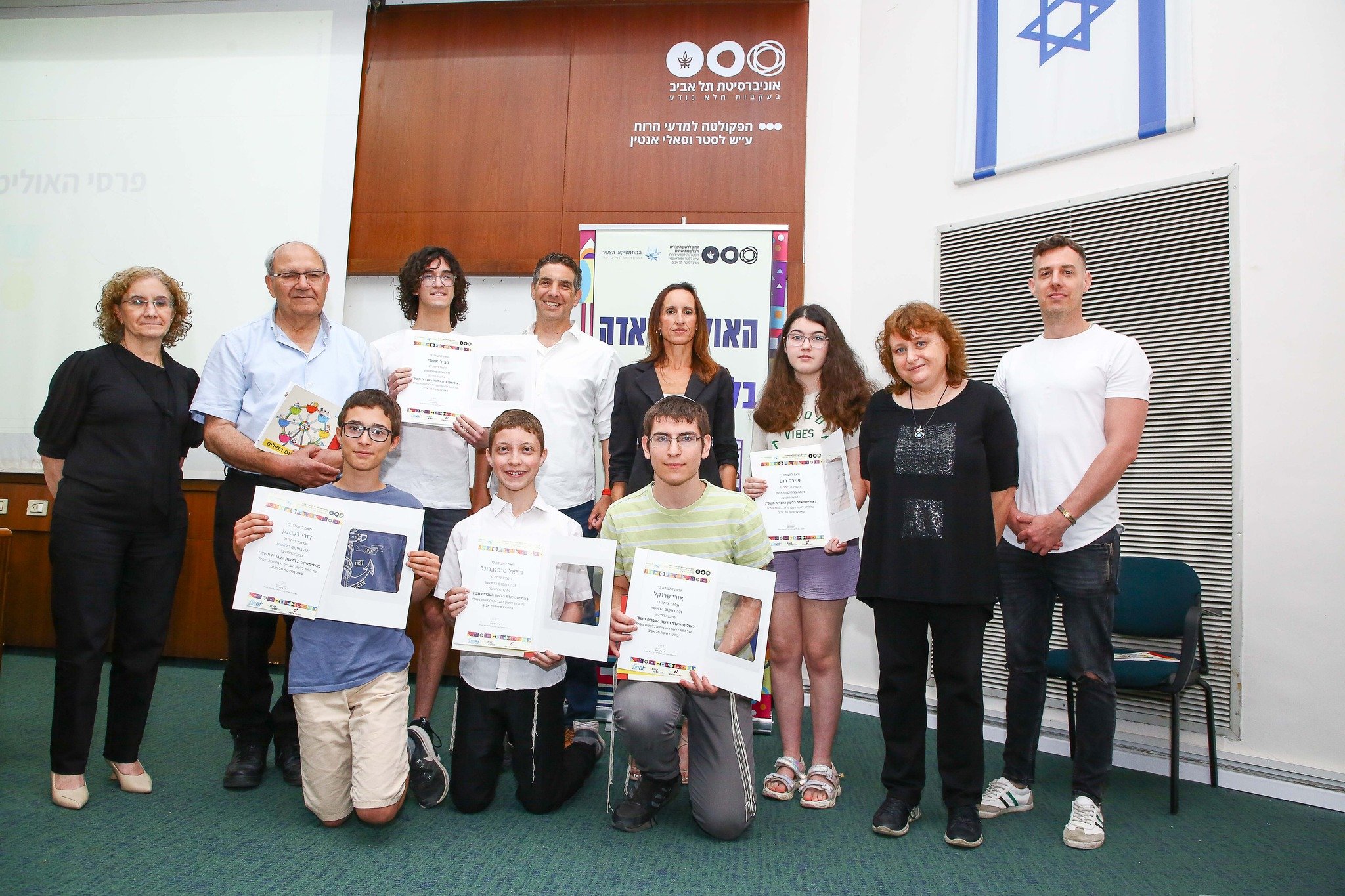
“The goal isn’t necessarily to succeed or get a perfect answer, it’s to enjoy the process,” Gonen said. She noted, however, that one contestant actually did get a perfect score this year, Ma’ayan Bar-Helmer, an Israeli 11th-grader who was awarded first place with outstanding honors.
“Our language is the way we think and communicate, and it has so much to offer, so the stronger the connection to it, the better,” Bar-Helmer said.
Expanding Hebrew education abroad
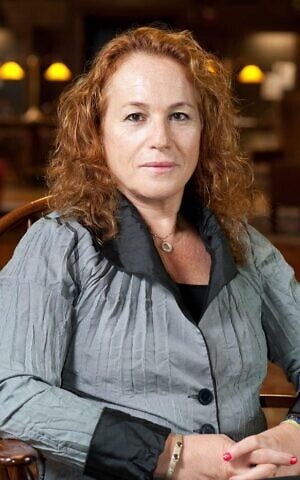
Hebrew language education in the Diaspora has undergone a significant evolution in recent decades, noted Prof. Vardit Ringvald, head of the Consortium for the Teaching of Hebrew at Brandeis University, which partnered with the Olympiad to expand abroad.
In the 1980s and ’90s, the widely accepted approach was to teach Ivrit b’Ivrit (Hebrew in Hebrew), teaching general subjects such as history or Bible in Hebrew rather than in translation, often with the help of Israeli-born teachers recruited to teach in authentic Israeli Hebrew. However, many now see this approach as insufficient, leading to poor retention rates. (Comedian Elon Gold captured the essence of this problem when he joked, “I don’t speak Hebrew because I only went to yeshiva for 15 years.)
Toward the end of the 1990s, Ringvald said, educational research pushed schools toward proficiency-oriented models, treating Hebrew and other languages with measurable outcomes in speaking, listening, reading, and writing. Organizations such as Hebrew at the Center, which Ringvald co-founded, helped promote best practices in immersion and assessment that have significantly improved retention rates, she said.
Many Jewish day schools in the US have adopted this approach, and the School of Hebrew at Middlebury College that Ringvald founded is sending more educators to Jewish communities in Europe, Australia, and South Africa, she said.
“Our challenge now is bringing this approach to more schools around the world,” Ringvald said. “This competition is part of our mission, helping more people appreciate the beauty of the language.”









The Times of Israel Community.