

Ministers said to push for limiting protests, but face opposition from AG
Reports quote Gilad Erdan arguing that police are unable to enforce social distancing guidelines at large demonstrations, requiring their size to be capped
 Add ToI as a Preferred Source on Google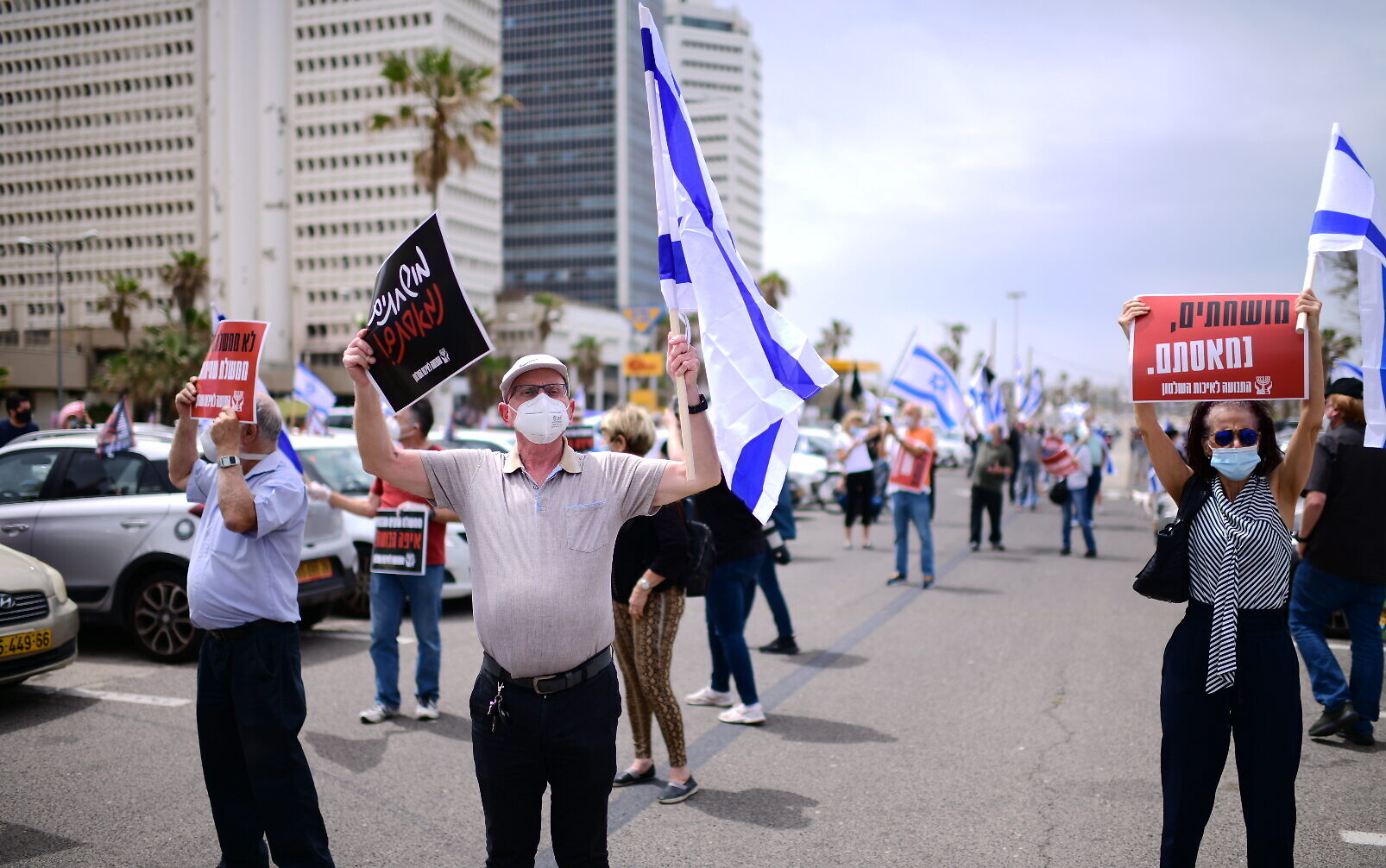
Government ministers reportedly pushed to limit the size of protests as part of restrictions aimed at containing the coronavirus, but faced opposition to doing so from Attorney General Avichai Mandelblit.
At Friday’s cabinet meeting, during which ministers approved lifting further restrictions on businesses, Public Security Minister Gilad Erdan argued that police were unable to enforce social distancing guidelines at large protests and it was therefore necessary to cap the number of people taking part in a demonstration, according to Hebrew media reports.
“Police have no way of enforcing demonstrations of thousands [of protesters], for example keeping a distance of two meters or spaces between groups,” he was quoted saying by the Walla news site.
Erdan, whose ministry oversees police, said general guidelines limiting protests should be drawn up and called for the cabinet to hold a vote approving them.
“I request that the government instruct the Justice Ministry to determine with the police rules of coordinating and approving protests including limiting their size, so it will be possible to enforce the fulfillment of Health Ministry directives,” he was reported to say. “The situation at the moment is that there is no way to limit the size of a protest beforehand.”
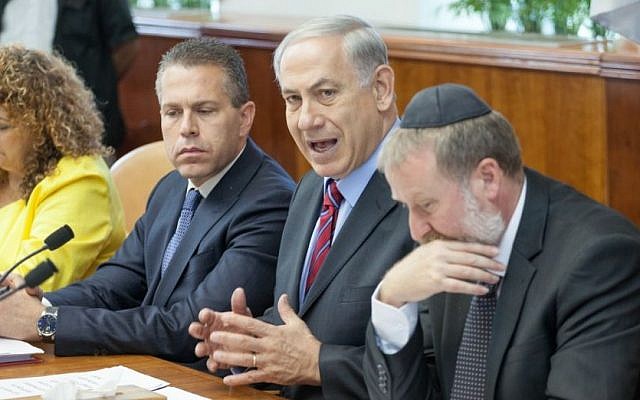
Erdan’s stance received backing from other unnamed government ministers, but reports said Mandelblit opposed approving limitations on protests through the emergency ordinances that the cabinet has been using to impose far-reaching restrictions to limit the spread of the virus.
“If you want, bring [it] for legislating in the Knesset,” Mandelblit reportedly said.
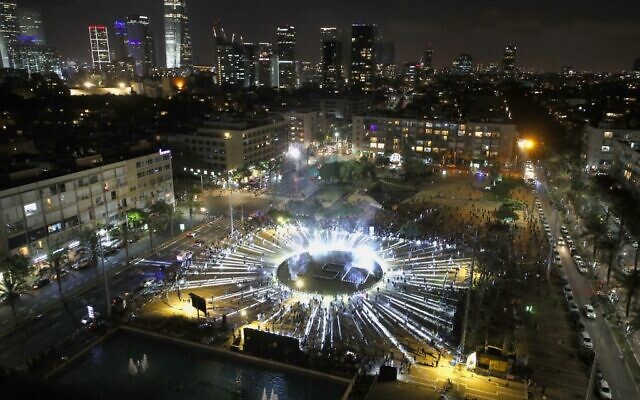
Protests are one of the few public activities allowed under Israel’s strict lockdown rules. Demonstrators on the right and left have both regularly held rallies — including both in support of and against Prime Minister Benjamin Netanyahu — some of which have drawn a few thousand protesters.
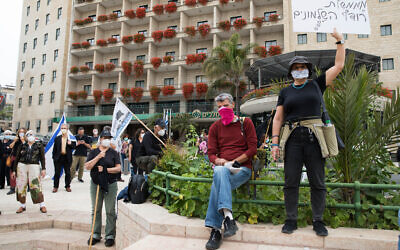
Small businesses owners, self-employed Israelis and workers in industries hit hard by the curbs on economic activity have also held rallies over what they say is a lack of government assistance.
Erdan and other ministers have previously pushed for limiting the number of demonstrators who can take part in a protest, but a report from Sunday said Netanyahu told them his hands were tied on the matter.
“That makes sense but if I advance something like this they’ll say it’s political because the demonstrations are against me and therefore I’m prevented [from doing so],” Netanyahu was quoted saying by Channel 13 news.
Some of the most prominent protests in recent weeks have been the so-called black flag demonstrations against the alleged erosion of Israeli democracy under Netanyahu and his indictment on corruption charges, including one in Tel Aviv on Sunday that drew thousands of protesters.
The demonstrators have also railed against the Blue and White party for working to form a coalition with Netanyahu’s Likud, the terms of which the parties reached agreement on this week, bringing an apparent end to over 16 months of political deadlock that left Israel without a fully functioning government.


The Times of Israel Community.